Connect with us

Business

‘I want nice, thin blood pouring through my heart'”: Trump talks health concerns, saying he takes more aspirin than recommended

Published

on


President Donald Trump defended his energy and health in an interview with The Wall Street Journal and disclosed that he had a CT scan, not an MRI scan, during an October examination about which he and the White House delayed offering details.

Trump, in the interview published Thursday, said he regretted undergoing the advanced imaging on his heart and abdomen during an October visit to Walter Reed National Military Medical Center because it raised public questions about his health. His physician said in a memo the White House released in December that he had “advanced imaging” as a preventative screening for a man his age.

Trump had initially described it as an MRI but said he didn’t know what part of his body he had scanned. A CT scan is a quicker form of diagnostic imaging than an MRI but offers less detail about differences in tissue.

The president’s doctor, Navy Capt. Sean Barbabella, said in a statement released Thursday by the White House that Trump underwent the exam in October because he planned to be at Walter Reed to meet people working there. Trump had already undergone an annual physical in April.

“President Trump agreed to meet with the staff and soldiers at Walter Reed Medical Hospital in October. In order to make the most of the President’s time at the hospital, we recommended he undergo another routine physical evaluation to ensure continued optimal health,” Barbabella said.

Barbabella said he asked the president to undergo either a CT scan or MRI “to definitively rule out any cardiovascular issues” and the results were “perfectly normal and revealed absolutely no abnormalities.”

White House press secretary Karoline Leavitt said in a statement Thursday that the president’s doctors and the White House have “always maintained the President received advanced imaging” but said that “additional details on the imaging have been disclosed by the President himself” because he “has nothing to hide.”

“In retrospect, it’s too bad I took it because it gave them a little ammunition,” Trump said in the interview with The Wall Street Journal. “I would have been a lot better off if they didn’t, because the fact that I took it said, ‘Oh gee, is something wrong?’ Well, nothing’s wrong.”

The 79-year-old became the oldest person to take the oath of office when he was sworn in as president last year and has been sensitive to questions about his health, particularly as he has repeatedly questioned his predecessor Joe Biden’s fitness for office.

Biden, who turned 82 in the last year of his presidency, was dogged by scrutiny of his age and mental acuity at the end of his tenure and during his abandoned attempt to seek reelection.

But questions have also swirled around Trump’s health this year as he’s been seen with bruising on the back of his right hand that has been conspicuous despite a slathering of makeup on top, along with noticeable swelling at his ankles.

The White House this summer said the president had been diagnosed with chronic venous insufficiency, a common condition among older adults. The condition happens when veins in the legs can’t properly carry blood back to the heart and it pools in the lower legs.

In the interview, Trump said he briefly tried wearing compression socks to address the swelling but stopped because he didn’t like them.

The bruising on Trump’s hand, according to Leavitt, is from “frequent handshaking and the use of aspirin,” which Trump takes regularly to reduce the risk of heart attack and stroke.

He said he takes more aspirin than his doctors recommend but said he has resisted taking less because he’s been taking it for 25 years and said he is “a little superstitious.” Trump takes 325 milligrams of aspirin daily, according to Barbabella.

“They say aspirin is good for thinning out the blood, and I don’t want thick blood pouring through my heart,” Trump said. “I want nice, thin blood pouring through my heart. Does that make sense?”

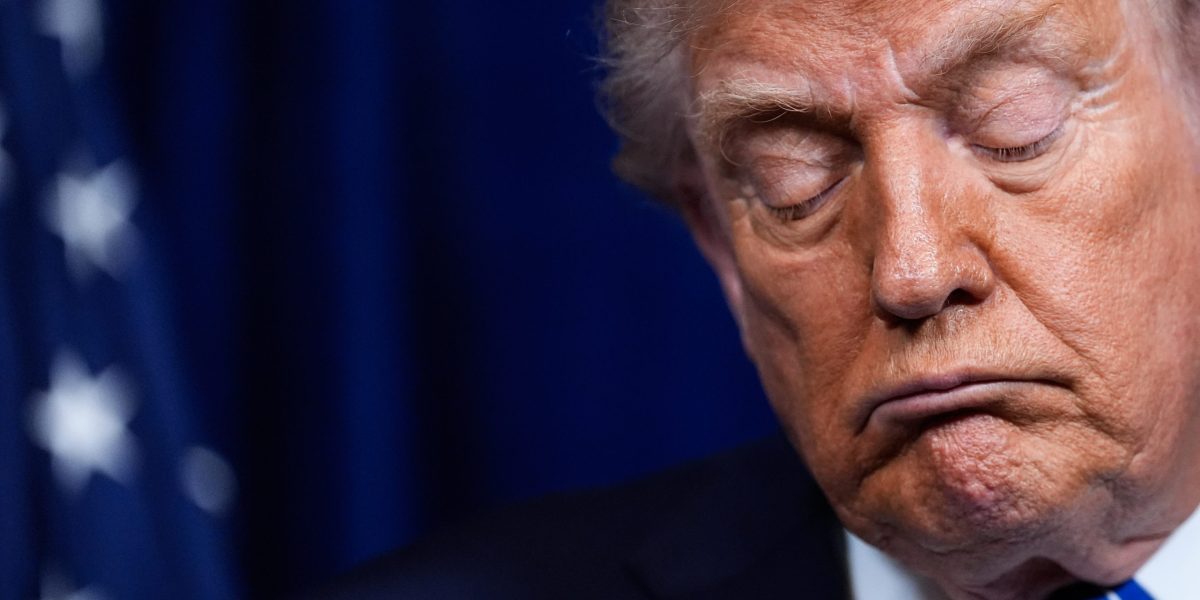
Trump, in the interview, denied he has fallen asleep during White House meetings when cameras have caught him with his eyes closed, instead insisting he was resting his eyes or blinking.

“I’ll just close. It’s very relaxing to me,” he said. “Sometimes they’ll take a picture of me blinking, blinking, and they’ll catch me with the blink.”

He said that he’s never slept much at night, a habit he also described during his first term, and said he starts his day early in the White House residence before moving to the Oval Office around 10 a.m. and working until 7 p.m. or 8 p.m.

The president dismissed questions about his hearing, saying he only struggled to hear “when there’s a lot of people talking,” and said he has plenty of energy, which he credited to his genes.

“Genetics are very important,” he said. “And I have very good genetics.”

This story was originally featured on Fortune.com


Source link

Continue Reading

Business

Meet Sweden, the unicorn factory chasing America in the AI race

Published

on


Reading the media these days, you would be forgiven for thinking the technology, journalism, and investment communities were inadvertently wishing an AI ‘bubble’ into existence. Whether a bubble exists or not remains debatable, but the conversation itself has taken on a life of its own. Every article predicting the collapse of the NASDAQ increases investor nervousness, which leads to another article about the collapse of the NASDAQ, and so the world turns ad infinitum. 

Often the most effective insulation against market volatility is for the technology of the day to be ubiquitously woven into the fabric of society, such that it cannot lose value quickly. When there is a disconnect between people’s real-world experiences and the excitement felt on trading floors or in boardrooms, trouble can loom.

We can learn something in this regard from the world’s 89th most populous country: my native Sweden. In the 1990s, the Swedish government introduced a piece of legislation called Hem‑PC‑reformen (the Home‑PC reform), which aimed to put a computer in every house. This move is often credited as the starting gun for subsequent decades of technological progress and “punching above our weight.” This was not a corporate strategic manifesto or shiny new tech tool built by a CEO; it was a countrywide policy for all of us, designed to firmly cement a new technology into our lives.

Fast-forward to today, and Stockholm has the highest number of unicorns per capita of any city in the world outside of Silicon Valley. Sweden’s AI startups are soaring. Legora, which automates tasks for lawyers, is raising capital at a $1.8 billion valuation. Einride, the electric vehicle unicorn, recently announced $100 million to scale autonomous freight. The ‘vibe-coding’ platform Lovable, which helps people build apps with AI, is one of the fastest-growing businesses in the world. And last month, the enterprise technology company Workday acquired our own business, Sana, for $1.1 billion.

Not bad for a country with half the population of the state of New York, tucked away by the Arctic Circle. People keep asking how a nation like ours can achieve so much. Though there’s no secret sauce, there are a few essential ingredients.

The aforementioned Home‑PC reform was catalysed by winter darkness that can last 18 hours, meaning we Swedes spent hours at our computers experimenting within an early internet environment. 

That digitally literate generation then built world-beating technology companies. Skype was founded in 2003 to popularize video call technology. So was King, the maker of Candy Crush. In 2005, Klarna was born. 2006, Spotify. In 2009, Mojang laid the first blocks of Minecraft.

We Swedes are very proud of these success stories. They show us what is possible on the global stage. They have also provided huge liquidity moments for our ecosystem. Skype and Mojang were bought by Microsoft, Activision by King, all at multiple billion-dollar price tags. Spotify went public in 2018, and Klarna earlier this year. Each of these success stories created another group of millionaires, many of whom feel a duty to reinvest back into Sweden’s technology and startup sectors.

This flywheel effect has made our AI sector what it is today. Our scaleups stand on the shoulders of giants, within an environment conducive to business building. There is capital available for deserving entrepreneurs, often deployed by quality investment firms like EQT, Northzone, and Creandum. It is relatively easy to start a company here, and our stock options system incentivizes building businesses. Stockholm is home to both the engineering university KTH and the business school Handelshögskolan, with many founders securing degrees from both (alongside many successful entrepreneurs who ignore university entirely). We also have very high English language proficiency rates.

The government continues to play a crucial role, too. Sweden spends a higher proportion of GDP on Research & Development (3.57%) than any other European country. Any employee in Sweden can take six months off to start a business, a scheme known as tjänstledighet. And to mirror that successful PC Home Reform policy from the 90s, the Prime Minister this year supported a Swedish AI Reform scheme that makes agentic AI free for all civil servants, students, teachers, research institutions, and non-profits.

There are also aspects of our culture that help us build great companies. We are the country of Volvo and IKEA, of a Swedish design ethos known for blending function and form. Many software engineers I know here are passionate about aesthetics, meaning an app’s landing page is often treated with the same eye for detail as a Bruno Mathsson chair.

Finally, we are also a humble nation (he says while writing a piece about how great a nation we are!). Putting one’s head above the rest is typically frowned upon. Though this can have its societal drawbacks, it has helped foster a high-trust, low-ego environment in our technology. Information is freely shared between different organizations and entrepreneurs, in the knowledge that each Swedish AI success benefits all.

We still have our challenges, of course, ranging from the seemingly trivial (Scandinavian Airlines, please launch a direct flight to San Francisco) to the fundamental (we still rely on American investors for later-stage capital). 

But there is no denying that the Swedish approach to technology – broad and deep acceptance – is a useful tale for the rest of the world. If we are worried about the speed at which AI companies have increased in value, and when other economic metrics will catch up to prevent a bubble, we need to weave that technology into our daily lives.

The opinions expressed in Fortune.com commentary pieces are solely the views of their authors and do not necessarily reflect the opinions and beliefs of Fortune.


Source link

Continue Reading

Business

$90 billion Waste Management CEO worked trash routes at 1 a.m. with workers—here’s why

Published

on


For a night owl like Waste Management CEO Jim Fish, waking up for 1 a.m. safety briefings could make for a brutally long day. But Fish did it because his late father-in-law, a union pipefitter, told him if he showed up to those meetings—not just once, but regularly—he would learn a lot and build a rapport with line workers. 

Fish’s father-in-law hit the nail on the head.

“It was so valuable to me in terms of learning the business and learning the people,” Fish told Fortune. “Part of what I learned—I was always a finance guy—was that it’s not always just dollars and cents.”

Waste Management has named safety as a cornerstone of the company’s operations and has set a goal to reduce its total recordable injury rate (TRIR) by 3% annually with a TRIR target of 2.0 by 2030. If the company hits the target, that means workers would have suffered two recordable injuries per 100 employees per year or per 200,000 hours worked. Last year, the company reduced overall injuries by 5.8%, according to its sustainability report, and lost-time injuries by 2.4%.

“You make investments in safety or investments in people and they don’t necessarily show up on the bottom line—at least not immediately,” Fish said. “Safety tends to show up in longer terms, and if you do have a safe organization, that will eventually show up on your income statement—but it takes a while.”

Waste Management, with $22 billion in revenue in 2024, is the U.S. and Canada’s largest provider of trash and recycling transfer and disposal services. With a market cap of about $90 billion, the Houston, Tex.-based company counts more than 60,000 employees. Fish, 63, has served as president and CEO since November 2016 but has been with the company for two decades. Prior to taking the top job, Fish held roles including chief financial officer, senior vice president of the eastern group, and area VP for Pennsylvania and West Virginia. 

Up until halfway through his time as CFO, Fish would go out about every four to six weeks and haul trash with crews—generally about every time he went to a middle-of-the-night safety meeting. Eventually, the board told him they weren’t crazy about the idea of him throwing trash, but he could still ride along in the trucks with workers. Now, Fish said he visits about 20 to 30 sites a year, and takes about five to 10 trips to ride along with drivers. He tells them any subject is fair game, including sports, politics, safety, or pay, but they have to make sure to chat because Fish might fall asleep otherwise. 

“Most drivers are a little nervous when I get in the cab but after about 10 minutes they kind of loosen up and tell me what they’re thinking,” said Fish. 

That’s why, he said, those early morning meetings were so valuable, and his learnings went far beyond injury stats and safety briefings. 

He picked up on why Boston’s productivity plummeted during winter months, said Fish. He couldn’t see why there would be such a difference between winter and summer but then going out in below-zero temperatures where his hands and feet were freezing changed his mind completely, he said. It’s the kind of issue that might only show up as a data fluctuation in a corporate office but becomes clearer and more meaningful after riding through icy routes covered with snow-engulfed trash and recycling cans. 

“It makes a huge difference if there’s ice and snow on the road or if the can is iced in,” said Fish. “And that sounds kind of simple, but it wasn’t something that I really, fully even understood sitting in a corporate office until I actually went out into the field.”

Another key learning came from witnessing the diversity of Waste Management’s workforce and making small tweaks to make sure employees were clearly informed.  

While visiting a district in Rhode Island where about 95% of the drivers in the company’s residential business line were either Puerto Rican or Dominican, Fish attended a 1 a.m. briefing. The safety results in that line of business were pretty “terrible,” Fish admitted, and he wanted to understand why. He picked up on the fact that most of the workers spoke English but their first language was Spanish. The manager there didn’t speak any Spanish, so he used another driver to translate for him while he delivered safety information. 

Fish decided to look into promoting somebody from the district who wanted to be a manager—and who was bilingual. The company made the promotion to a driver.

“Magically, or probably not magically, their safety results turned around immediately,” said Fish. “There was something being lost in the translation.”

The change also addressed an inadvertent signal that was being sent to workers, which was that they might never have an opportunity to move up in the company because they were native Spanish speakers, he said. The inadvertent message was that the managers there would likely always be “a white guy like Jim,” said Fish, who has also been working regularly on his Spanish. 

Explicitly addressing that narrative improved safety results and empowered people to apply for positions they might not have thought they were qualified for previously, he said. The company also hired someone at the site to teach Spanish to other workers so they could become conversant. 

“Their safety results absolutely turned around and I don’t think that was a coincidence at all,” he said. “Nothing was lost in translation anymore and the drivers couldn’t say, ‘Well, I didn’t understand what my manager was saying’ because the manager was saying it in both English and Spanish.”

The bilingual manager Waste Management hired at the site became one of the company’s best, said Fish. He unfortunately passed away from a heart attack, said Fish, but he continued up the ladder from driver to route manager, district manager, and then senior district manager. He likely would have continued moving up if he hadn’t tragically passed away. Fish noted the manager was also singled out to go on a trip for the top 200 employees to the Ritz Carlton in Hawaii with his wife. 

Ultimately, in Fish’s view, the core of the company and where Waste Management differentiates itself from competitors, is at the critical field level—not the C-suite. Better understanding the workforce and how it can be more productive and efficient could best be gleaned by showing up to the grueling early mornings every month early in his executive career.

“I know my title is important, but I’m not more important than anybody else at this company,” said Fish. “I’m not a better employee or better father… we just have different level positions.”


Source link

Continue Reading

Business

This is the next Trump construction project, joining the White House ballroom, Rose Garden replacement and others

Published

on


President Donald Trump has spent much of his two-week vacation in Florida golfing. But when he gets back to the White House, there’s a military golf course that he’s never played that he’s eyeing for a major construction project.

Long a favored getaway for presidents seeking a few hours’ solace from the stress of running the free world, the Courses at Andrews — inside the secure confines of Joint Base Andrews in Maryland, about 15 miles (24 kilometers) from the White House — are known as the “president’s golf course.” Gerald Ford, Ronald Reagan, George H.W. Bush, Bill Clinton, George W. Bush and Joe Biden have spent time there, and Barack Obama played it more frequently than any president, roughly 110 times in eight years.

Trump has always preferred the golf courses his family owns — spending about one of every four days of his second term at one of them. But he’s now enlisted golf champion Jack Nicklaus as the architect to overhaul the Courses at Andrews.

“It’s amazing that an individual has time to take a couple hours away from the world crises. And they’re people like everybody else,” said Michael Thomas, the former general manager of the course, who has golfed with many of the presidents visiting Andrews over the years.

Andrews, better known as the home of Air Force One, has two 18-hole courses and a 9-hole one. Its facilities have undergone renovations in the past, including in 2018, when Congress approved funding to replace aging presidential aircraft and to build a new hangar and support facilities. That project was close enough to the courses that they had to be altered then, too.

Trump toured the base by helicopter before Thanksgiving with Nicklaus, who has designed top courses the world over. The president called Andrews “a great place, that’s been destroyed over the years, through lack of maintenance.”

Other golfers, though, describe Andrews’ grounds as in good shape, despite some dry patches. Online reviews praise the course’s mature trees, tricky roughs, and ponds and streams that serve as water hazards. The courses are mostly flat, but afford views of the surrounding base.

‘They all like to drive the cart’

The first president to golf at Andrews was Ford in 1974. Thomas began working there a couple years later, and was general manager from 1981 until he retired in 2019.

He said the Secret Service over the years used as many as 28 golf carts — as well as the president’s usual 30-car motorcade — to keep the perimeter secure.

“It’s a Cecil B. DeMille production every time,” said Thomas, who had the opportunity to play rounds with four different presidents, and with Biden when he was vice president.

He said the commanders in chief generally enjoyed their time out on the course in their own unique ways, but “they all like to drive the cart because they never get an opportunity to drive.”

“It’s like getting your driver’s license all over again,” Thomas laughed.

Trump golfs most weekends, and as of Friday, has spent an estimated 93 days of his second term doing so, according to an Associated Press analysis of his schedules.

That tally includes days when Trump was playing courses his family owns in Virginia, around 30 miles (48 kilometers) from the White House, and near his Florida estate Mar-a-Lago, where he’s spending the winter holidays. It also includes 10 days Trump spent staying at his golf club in Bedminster, New Jersey, where his schedule allowed time for rounds of golf.

Trump has visited Andrews in the past, but the White House and base have no record of him playing the courses.

Another of Trump construction projects

Andrews’ military history dates to the Civil War, when Union troops used a church near Camp Springs, Maryland, as sleeping quarters. Its golf course opened in 1960.

The White House said the renovation will be the most significant in the history of Andrews. The courses and clubhouse need improvements due to age and wear, it said, and there are discussions about including a multifunctional event center as part of the project.

“President Trump is a champion-level golfer with an extraordinary eye for detail and design,” White House spokesman Davis Ingle said in a statement. “His vision to renovate and beautify Joint Base Andrews’ golf courses will bring much-needed improvements that service members and their families will be able to enjoy for generations to come.”

Plans are in the very early stages, and the cost of — and funding for — the project haven’t been determined, the White House said. Trump has said only that it will require “very little money.”

The Andrews improvements join a bevy of Trump construction projects, including demolishing the White House’s East Wing for a sprawling ballroom now expected to cost $400 million, redoing the bathroom attached to the Lincoln bedroom and replacing the Rose Garden’s lawn with a Mar-a-Lago-like patio area.

Outside the White House, Trump has led building projects at the Kennedy Center and wants to erect a Paris-style arch near the Lincoln Memorial, and has said he wants to rebuild Dulles International Airportin northern Virginia.

On Wednesday, meanwhile, the Trump administration ended a lease agreement with a non-profit for three public golf courses in Washington — which could allow the president to further shape golfing in the nation’s capital. The White House, however, said that move isn’t related to the plans for Andrews.

Presidential perks of golfing at Andrews

When the president is golfing, Andrews officials block off nine holes at a time so no one plays in front of him, allowing for extra security while also ensuring consistent speed-of-play, Thomas said.

That’s relatively easily done given that the courses aren’t open to the public. They’re usually reserved for active or retired members of the military and their families, as well as some Defense Department-linked federal employees.

Thomas remembers playing a round with the older President Bush, a World Golf Hall of Fame inductee known for fast play, while first lady Barbara Bush walked with Millie, the first couple’s English Springer Spaniel. George W. Bush also played fast, Thomas said, and got additional exercise by frequently riding his mountain bike before golfing.

When he wasn’t golfing at Andrews, Obama tried to recreate at least part of the experience back home. He had a White House golf simulator installed after then-first lady Michelle Obama asked Thomas how they might acquire a model that the president had seen advertised on the Golf Channel. Thomas gave her a contact at the network.

Obama famously cut short a round at Andrews after nine holes in 2011 to hustle back to the White House for what turned out to be a top-secret review of final preparations for a Navy SEAL raid on the compound of Osama bin Laden.

But, while Thomas was golfing with presidents, he said he never witnessed play interrupted by an important call or any major emergency that forced them off the course mid-hole. There also were never any rain-outs.

“If there was rain coming, they’d get the weather forecast before we would,” Thomas said. “They would cancel quick on that.”

This story was originally featured on Fortune.com


Source link
Continue Reading

Trending

Copyright © Miami Select.