Connect with us

Business

I oversee a lab where engineers try to destroy my life’s work. It’s the only way to prepare for quantum threats

Published

on


The first time I handed over my credit card to a security lab, it came back to me broken. Not physically damaged, but compromised. In less than 10 minutes, the engineers had discovered my PIN.

This happened in the early 1990s, when I was a young engineer starting an internship at one of the companies that helped create the smart card industry. I believed my card was secure. I believed the system worked. But watching strangers casually extract something that was supposed to be secret and protected was a shock. It was also the moment I realized how insecure security actually is, and the devastating impact security breaches could have on individuals, global enterprises, and governments.

Most people assume security is about building something that’s unbreakable. In reality, security is about understanding exactly how something breaks, under what conditions, and how quickly. That is why, today, I run labs where engineers are paid to attack the very chips my company designs. They measure power fluctuations, inject electromagnetic signals, fire lasers, and strip away layers of silicon. Their job is to behave like criminals and hostile nation-states on purpose, because the only honest way to build trust is to try to destroy it first.

To someone outside the security world, this approach sounds counterintuitive. Why spend years designing secure hardware, only to invite people to tear it apart? The answer is straightforward: Trust that has never been tested is not trust. It is assumption. Assumptions fail quietly at first, and they fail at the worst possible moment.

Over the past three decades, I have watched secure chips move from a specialized technology into invisible infrastructure. Early in my career, much of my work focused on payment cards. Convincing banks and payment networks that a chip was safer than a magnetic stripe was not easy. At the time, there were fears about surveillance and tracking. What few people recognized was that these chips were becoming digital passports. They proved identity, authenticated devices, and determined what could and could not be trusted on a network.

Today, secure chips sit quietly inside credit cards, smartphones, cars, medical devices, home routers, industrial systems, and national infrastructure. Most people never notice them, which is often taken as a sign of success. In reality, that invisibility also creates risk. When security disappears from view, it is easy to forget that it must still evolve.

At a basic level, a secure chip does one essential thing. It protects a secret – a cryptographic identity that proves a device is genuine. All other security measures build upon that foundation. When a phone unlocks, when a car communicates with a charging station, when a medical sensor sends data to a hospital, or when a software update is delivered to a device in the field, all of those actions depend on that secret remaining secret.

The challenge is that chips do not simply store secrets. They use them. They calculate, communicate, and respond. The moment a chip does that, it begins to leak information. Not because it is poorly designed, but because physics cannot be negotiated. Power consumption shifts. Electromagnetic emissions change. Timing varies. With the right equipment and enough expertise, those signals can be measured and interpreted.

This is what happens inside our attack labs every day. Engineers listen to chips in much the same way an electricity provider can infer your daily routine from your power usage. They stress-test devices until they behave differently than intended. They introduce faults and observe how the chip responds. From those observations, they learn how an attacker would think, where information escapes, and how defenses must be redesigned.

Quantum computing enters this picture without drama or science fiction. Quantum does not change what attackers are after – they still want the secret. What quantum changes is the speed at which they can get it. Problems that would take classical computers thousands of years can collapse to minutes or seconds once sufficient quantum capability exists. The target remains the same. The timeline disappears.

This is why static security fails. Any system designed to be secure once and then left untouched is already aging toward obsolescence. If a system is never attacked, it will eventually fail, because the world around it does not stand still. Attack techniques evolve and improve. Tools become cheaper, more powerful, and more accessible – especially in the age of Artificial Intelligence. Knowledge about successful attacks spread globally, emboldening others to seek similar successes. 

Many organizations make the same mistake. They assume they will see the threat coming. They wait for visible breaches or public incidents before acting. With quantum, that logic breaks down. The first actors with meaningful quantum capability will not announce it. They will use it quietly. In fact, this is already happening now with Harvest Now-Decrypt Later (HNDL) attacks, where large amounts of encrypted data is collected and stored today for future quantum decryption. By the time attacks become obvious, the damage will already be done.

That reality is why governments and regulators are moving now. Across industries, requirements are emerging that systems must become quantum resilient within defined timelines. This is not driven by theory or hype. It is driven by the simple fact that updating cryptography, hardware, and infrastructure takes years, while exploiting weaknesses can take moments.

When I walk through our labs today, what strikes me most is not the sophistication of the tools, but the discipline of the process. Access is tightly controlled. Engineers are vetted and audited. Every experiment is documented. This is not curiosity-driven hacking. It is structured, repeatable testing designed to surface weaknesses early, while there is still time to fix them. Every successful attack becomes an input for a stronger design.

This is what leaders, system owners, and policymakers need to understand. Security does not fail suddenly. It fails quietly, long before anyone notices. Preparing for quantum threats is not about predicting the exact moment a breakthrough occurs. It is about accepting that once it does, there will be no grace period. The only responsible approach is to assume your systems will be attacked and to make sure that happens under controlled conditions, before someone else decides the timing for you.

The opinions expressed in Fortune.com commentary pieces are solely the views of their authors and do not necessarily reflect the opinions and beliefs of Fortune.

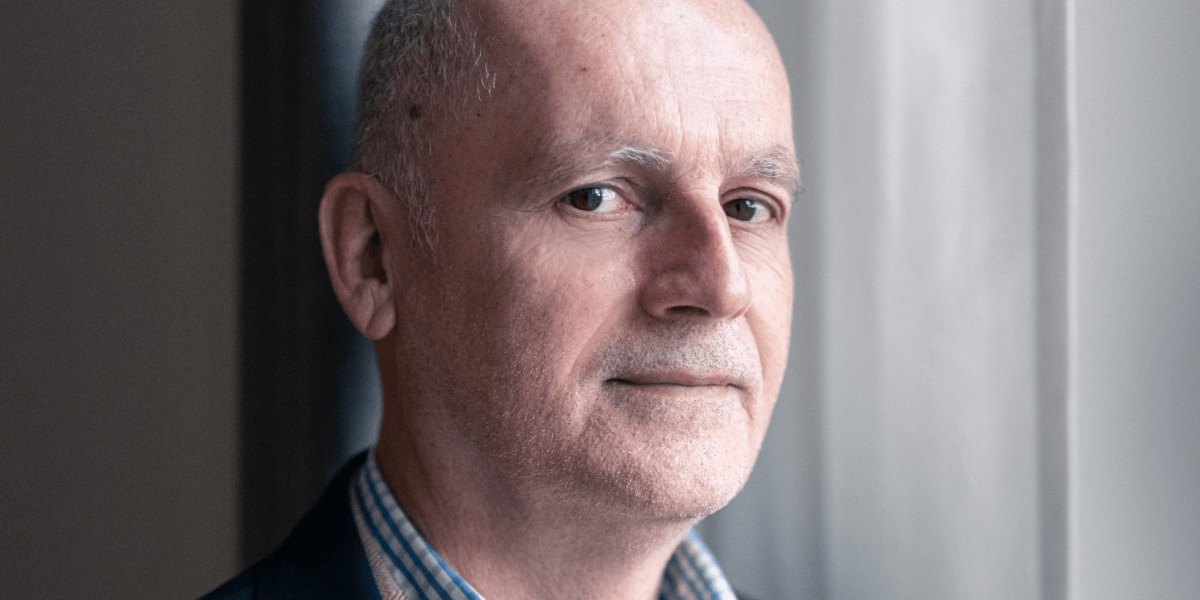

Source link

Continue Reading

Business

Fortune Article | Fortune

Published

on


The eight European countries targeted by U.S. President Donald Trump for a 10% tariff for opposing American control of Greenland blasted the move Sunday, warning that the American leader’s threats “undermine transatlantic relations and risk a dangerous downward spiral.”

In an unusual and very strong joint statement coming from major U.S. allies, Denmark, Norway, Sweden, France, Germany, the United Kingdom, the Netherlands and Finland on Sunday said troops sent to Greenland for the Danish military training exercise “Arctic Endurance” pose “no threat to anyone.”

Trump’s Saturday announcement sets up a potentially dangerous test of U.S. partnerships in Europe. The Republican president appeared to indicate that he was using the tariffs as leverage to force talks over the status of Greenland, a semiautonomous territory of NATO ally Denmark that he regards as critical to U.S. national security.

“We stand in full solidarity with the Kingdom of Denmark and the people of Greenland,” the group said. “Building on the process begun last week, we stand ready to engage in a dialogue based on the principles of sovereignty and territorial integrity that we stand firmly behind. Tariff threats undermine transatlantic relations and risk a dangerous downward spiral.”

There are immediate questions about how the White House could try to implement the tariffs because the EU is a single economic zone in terms of trading. It was unclear, too, how Trump could act under U.S. law, though he could cite emergency economic powers that are currently subject to a U.S. Supreme Court challenge.

European Union foreign policy chief Kaja Kallas said China and Russia will benefit from the divisions between the U.S. and Europe. She added in a post on social media: “If Greenland’s security is at risk, we can address this inside NATO. Tariffs risk making Europe and the United States poorer and undermine our shared prosperity.”

Trump’s move was also panned domestically.

U.S. Sen. Mark Kelly, a former U.S. Navy pilot and Democrat who represents Arizona, posted that Trump’s threatened tariffs on U.S. allies would make Americans “pay more to try to get territory we don’t need.”

“Troops from European countries are arriving in Greenland to defend the territory from us. Let that sink in,” he wrote on social media. “The damage this President is doing to our reputation and our relationships is growing, making us less safe. If something doesn’t change we will be on our own with adversaries and enemies in every direction.”

‘These tariffs will hurt us’

Six of the countries targeted are part of the 27-member EU, which operates as a single economic zone in terms of trading. It was not immediately clear if Trump’s tariffs would impact the entire bloc. EU envoys scheduled emergency talks for Sunday evening to determine a potential response.

The tariff announcement even drew blowback from Trump’s populist allies in Europe.

Italy’s right-wing premier, Giorgia Meloni, considered one of Trump’s closest allies on the continent, said Sunday she had spoken to him about the tariffs, which she described as “a mistake.”

The deployment to Greenland of small numbers of troops by some European countries was misunderstood by Washington, Meloni told reporters. She said the deployment was not a move against the U.S. but aimed to provide security against “other actors” that she didn’t name.

French President Emmanuel Macron wrote on social media that “no intimidation or threats will influence us, whether in Ukraine, Greenland or anywhere else in the world when we are faced with such situations.” He added that “tariff threats are unacceptable and have no place in this context.”

Jordan Bardella, president of Marine Le Pen’s far-right National Rally party in France and also a European Parliament lawmaker, posted that the EU should suspend last year’s tariff deal with the U.S., describing Trump’s threats as “commercial blackmail.”

Trump also achieved the rare feat of uniting Britain’s main political parties — including the hard-right Reform UK party — all of whom criticized the tariff threat.

“We don’t always agree with the U.S. government and in this case we certainly don’t. These tariffs will hurt us,” Reform UK leader Nigel Farage, a longtime champion and ally of Trump, wrote on social media. He stopped short of criticizing Trump’s designs on Greenland.

Meanwhile, U.K. Prime Minister Keir Starmer, who leads the center-left Labour Party, said the tariffs announcement was “completely wrong” and his government would “be pursuing this directly with the U.S. administration.”

The foreign ministers of Denmark and Norway are also expected to address the crisis Sunday in Oslo during a news conference.

__

Leicester reported from Paris and Cook from Brussels. Associated Press writers Jill Lawless in London, Barry Hatton in Lisbon, Portugal, Aamer Madhani in Washington and Josh Boak in West Palm Beach, Florida, contributed to this report.


Source link

Continue Reading

Business

Ford CEO Jim Farley: Blue-collar labor shortages are hampering AI data center expansion, reshoring

Published

on


The United States can’t actualize its moonshot AI goals if it’s lacking key workers to bolster the infrastructure to build the technology, according to Ford CEO Jim Farley.

With AI predicted to balloon to a $4.8 trillion market by 2033, Farley warned the U.S. has overlooked the labor needed to build and sustain data centers and manufacturing facilities. While President Donald Trump imposed sweeping tariffs to revive factory jobs, there continues to be recruitment and retention problems in U.S. manufacturing.

“I think the intent is there, but there’s nothing to backfill the ambition,” Farley told Axios in September 2025. “How can we reshore all this stuff if we don’t have people to work there?”

Farley’s concern about staffing AI data centers and factories is part of what he identifies as a crisis affecting the “essential economy” of blue-collar workers making up $12 trillion in U.S. GDP, per the Aspen Institute. The Ford CEO has said that AI could wipe out half of white-collar jobs, while creating mass demand for skilled trades.

But the labor force to fill this growing clamor for workers isn’t there, Farley said. The country is short 600,000 factory workers and 500,000 construction workers right now, and will need 400,000 auto technicians over the next three years, he wrote in a LinkedIn post in June 2025.

Analysts have attributed this shortage to an aging domestic workforce, as well as restrictive immigration policies limiting population growth. Farley blames a lack of awareness surrounding the shortage.

For its part, Ford announced last month it would scrap the rollout of some of its larger EV models and repurpose a Kentucky battery factory to manufacture batteries for data centers and large-scale industrial customers.

“We all sense that America can do better than we are doing,” Farley said at the Aspen Ideas Festival last June. “We need a new mindset, one that recognizes the success, the importance of this essential economy and the importance to our vibrancy and sustainability as a country.”

AI infrastructure labor shortage

This labor shortage is already being felt in the AI sector. Dame Dawn Childs, CEO of Pure Data Centres Group, a U.K.-based data center operator, said while data center demand is booming, a shortage of construction workers is hampering expansion plans.

“There’s just not enough skilled construction workers to go around,” she told the BBC last year.

In addition, data centers are also struggling to carry out specialized functions because of shortages in skilled labor. Uptime Institute, IT service management firm, found in a 2020 survey of data center operators that half were experiencing challenges finding candidates for open positions, compared to 38% in 2018. An April 2025 Deloitte report found this problem has persisted, with 51% of 120 surveyed U.S.-based power company and data center executives saying a shortage of data center related skilled labor was a “core challenge.” More than 60% of respondents said it was their top challenge.

The scarcity is beginning to hit even the largest tech companies. Oracle has delayed the completion dates of some of the data centers its developing for OpenAI from 2027 to 2028 due to labor shortages, as well as a lack of materials, Bloomberg reported in December, citing anonymous sources. Meanwhile, demand for computational data centers continues to skyrocket, projected to require $6.7 trillion in global capital expenditure between now and 2030, according to McKinsey. Large cloud service providers called hyperscalers are expected to spend $300 billion in 2025 alone.

“On the surface, this looks like a people problem, and most are,” Farley told Axios. “But it’s actually not that simple. It’s an awareness problem. It’s a societal problem.”

Farley said solving the labor shortage will also require policy changes. He has advocated for increased investment in vocational training and apprenticeship opportunities, as well as pro-trade policies and capacity-building regulatory reform.

“If we are successful—when we are successful—we’ll take on bigger, higher-class problems,” he said. “Right now, the problems we’re trying to solve are pretty practical. I need 6,000 technicians in my dealerships on Monday morning.”

A version of this story originally published on Fortune.com on September 29, 2025.

More on Ford CEO Jim Farley:

Join us at the Fortune Workplace Innovation Summit May 19–20, 2026, in Atlanta. The next era of workplace innovation is here—and the old playbook is being rewritten. At this exclusive, high-energy event, the world’s most innovative leaders will convene to explore how AI, humanity, and strategy converge to redefine, again, the future of work. Register now.


Source link

Continue Reading

Business

This Harvard professor spent 8 years traveling the world researching the secret history of capitalism and how ‘marginal’ and ‘weak’ it used to be

Published

on


Sven Beckert isn’t here to judge capitalism, even though he just wrote a provocative, ambitious, 1,300-page book on its history. As he writes several times in the book (which this editor has read), he’s not even sure what it is. He’s trying to understand it.

The Harvard professor, who Zoomed in to talk to Fortune from his home office in Cambridge, Mass., explained that his new book, Capitalism: A Global History, is the product of an eight-year odyssey to seek understanding of the way we actually live out our economic lives. “Often, when I teach the history of capitalism here at Harvard, many of my students think that capitalism is kind of the state of nature.” But that’s just not the case when you look at the historical record, he added.

When pressed to explain what his book accomplishes, he said it’s two-pronged: to offer a more global perspective on the history of capitalism and to “denaturalize” the history of whatever capitalism is. Capitalism is neither eternal nor natural, in Beckert’s telling; itʼs a human invention that spread and evolved over centuries through deliberate choices, sometimes extraordinary violence, and incredible institutional innovation. Capitalism rose from the margins of medieval trade to dominate modern life, and so it could also, someday, fade or transform again.

These may be considered bold claims by some who take capitalism’s primacy as inevitable, but the book has been generally well reviewed. Although some critics have taken shots at it for being a bit of a “doorstop,” like Beckert’s previous tome, the Pulitzer finalist, award-winning The Empire of Cotton, the ambition and narrative boldness of this global history have been generally praised. 

In the Boston Globe, Hamilton Cain wrote that Beckert weaves a sprawling tapestry that “unfurls with the suspense and intricacy of a detective novel,” with capitalism’s ascendance reading a bit like a crime story, even a whodunit. Adrian Woolridge of Bloomberg Opinion criticized it for nearly the identical thing, saying that the book “ignores [the] secret sauce” of innovation, focusing more on its exploitative history than on how it created new value. Beckert insisted that his book is all about the question of how, not why. He attempted to chart “how we get from a world in which this logic exists, but it’s marginal, to a world in the year 2025, where [it] almost structures all of our economic life—and almost all of our lives.”

From marginal to dominant

Beckert told Fortune that his research showed traces of capitalist logic can be seen in the historical record as far back as 1,000 years ago, but for hundreds of years it “remained marginal to economic life.” In his book, he talks many times of “islands” and “nodes,” as capitalists were at first outsiders, regarded as almost freakish by people who lived their life without the constant accumulation of more money to invest. Then, when the tide started to turn and capitalism became ascendant, in the last 500 years, the islands and nodes shifted to the holdouts from the capitalist way of life, like the farmers of the 20th century. 

“The first thing I always say is that capitalism is not the same as the existence of markets,” Beckert said. He pointed out that “economic life” existed for all of human history, but not the relentless accumulation and reinvestment of capital, which was practiced by a few merchant communities on the outskirts of society. Capitalism “has existed in many different parts of the world,” Beckert insisted, “but it was also rather thinly spread and rather weak … This kind of capitalist logic that is so crucial to economic life today, that is something relatively novel.”

Beckert points out in his book that until the fall of the USSR in the late 1980s, something like 30% of the world was living in a non-capitalist system, and much of the rural west was able to avoid the capitalist way of life by, for example, growing their own food as subsistence farmers. (Tom Lee of Fundstrat recently compared the emergence of artificial intelligence to flash-frozen food in the 1920s, which changed the composition of the economy from 40% subsistence farmers to just 2%.)

The professor highlighted ancient mercantile communities of capitalists in unexpected places such as the Port of Aden, in Yemen, or Cambay, in modern Gujarat, India. Goods were traded across oceans from Aden as early as 1150, he finds, while Song-dynasty China invented paper money centuries before Europe; and textiles thrived in ancient Indian hubs ages before the Industrial Revolution. But these capitalists were encircled for hundreds of years by a sea of subsistence farmers and tributary empires that operated on completely different principles. “The extremely global nature of early merchant communities, that was something that I, broadly speaking, I did have a sense of,” Beckert said, but hadn’t put together in quite this way before.

“They were always connected to a state,” Beckert said of the early merchants, but they were also freewheeling and kind of separate from that state,” he said, that is, until things drastically changed in the 19th century. Beckert highlights the disturbing case of Hermann Röchling, the German steel industrialist who saw such capitalist opportunities that he closely allied himself with successive German governments and found himself “on trial for war crimes, not just in one war, but in two wars, World War I and World War II, which must be a world historical record.”

How capitalism moved to the center

To illustrate just how unnatural the capitalist logic was once considered, Beckert’s book highlights the odd case of Robert Keayne, a Puritan merchant in 1639 Boston. Keayne was dragged before a court and church elders nearly 400 years ago, but not for stealing. Instead it was for the “very evil” practice of selling goods for a profit that exceeded community standards. He was nearly excommunicated for behaving in a way that is now considered the basic function of business. It would take centuries, Beckert argues, for the “covetous” accumulation of wealth to be rebranded as a public good, or in other words, for capitalism to be regarded as normal.

For his part, Beckert insisted that he’s not trying to judge capitalism, even if some harsh judgments emerge throughout his book. “The ability to write this book is, of course, itself an outcome of the capitalist revolution,” he told Fortune, arguing that at this juncture in the 21st century, the logic of capitalism has brought enormous productivity gains, unprecedented economic growth and made many people much wealthier. He wouldn’t be able to fly to Barbados or Cambodia for research without it, he acknowledged.

And Beckert did travel far and wide over eight years to dig up what he regards as a kind of secret history of the origins of capitalism. From the dusty outskirts of Phnom Penh to the archives of the Godrej company in India to the relics of the sugar plantations of Barbados (where he spent 10 days), Beckert surprised himself again and again by what he found. 

When the American colonies emerge on the scene, for example, more than a third of the way into his narrative, Beckert points out that West Indies were much more central to global capitalism than the 13 territories that would become the United States. The city of Boston, he notes, might have perished if it didn’t figure out how to become a service hub for Barbados, whose sugar plantations generated huge revenues. “That’s also kind of an amazing story,” Beckert agreed. “For us, Barbados is a foreign country and it’s far away, but for them [Bostonians in the early 1700s], it was also part of the British empire. And then it was … kind of a suburb to Boston—or vice versa. They were tightly integrated with one another.”

Beckert said he was surprised in what his research turned up of the darkness of capitalism’s past. “I did know a lot about the history of slavery, but being on this island and then reading the historical records and reading the kind of horrific accounts of what happened on this island in the 1600s, that was also not really surprising, but it was really quite shocking, the degree of violence that I found within this history.”

Could capitalism end?

Beckert told Fortune that he believes the world is currently in a “moment of transition,” similar to the shift that occurred in the 1970s when the Keynesian order gave way to neoliberalism. One of the largest surprises of the book is at its very conclusion, when he suggested that someday, capitalism could end. The fact that “it rests on the ever expanding accumulation of capital” implies that somehow, someway, the capital will run out. “In the distant future,” he writes, historians will look back at our times and “find it difficult to understand our ways of thinking, our ways of being.”

Ultimately, Beckert said he views his book not as a moral tale with capitalism as the villain, but as an investigation into human agency. By revealing that capitalism was once fragile, marginal, and weak—and that it required centuries of specific political choices, violence, and institutional building to become dominant—he hopes to show that the future remains unwritten. “This is not like a machine that kind of unfolds on its own,” Beckert said. “This is a human-created order.”

As the global economy faces new shocks in the mid-2020s, Beckert’s history offers a reminder: The economy is not a force of nature. It was made by people, and it can be remade by them. “The future is open,” he told Fortune. “People build a word that’s different from the word that they were born into [and] sometimes the least powerful have made a huge difference in the trajectory of the development of capitalism. So, I think that is important to see at the contemporary moment.”


Source link

Continue Reading

Trending

Copyright © Miami Select.