At Cuernavaca’s Grill, a Mexican restaurant in the Fashion District of downtown Los Angeles, owner Nayomie Mendoza is used to seeing customers line up for lunch.
AFP
But the vibrant neighborhood filled with boutiques and shops has become a ghost town amid raids by US Immigration and Customs Enforcement (ICE) agents carrying out President Donald Trump‘s hard-line policy of sweeping up and deporting undocumented immigrants.
Even in the early summer season when tourists flock to the southern California city, Mendoza is left staring at empty tables.
“A lot of our neighbors are afraid to go out” because of the ICE presence in Los Angeles, Mendoza said, with the city boasting a significant Latino workforce.
“Our sales… they’ve been down by 80 percent,” Mendoza told AFP.
“It’s hurting more than ever.”
The “saving grace” for the restaurant in this time has been delivery orders, she said.
As a so-called “sanctuary city” with hundreds of thousands of undocumented people, Los Angeles has been in the crosshairs of the Trump administration since the Republican returned to power in January.
After ICE raids spurred unrest and protests last month, Trump dispatched the National Guard and US Marines to quell the disruption.
Washington does not seem to be backing down anytime soon.
“Better get used to us now, because this is going to be normal very soon. We will go anywhere, anytime we want in Los Angeles,” US Border Patrol official Gregory Bovino told broadcaster Fox News on Monday.
“The federal government is not leaving LA,” he added.
Local businesses dependent on foot traffic are the collateral damage of the raids, Mendoza said.
“This is probably worse than COVID,” she said, referring to mandatory lockdowns during the pandemic.
Manuel Suarez, a street vendor near Cuernavaca’s Grill, agreed.
“Now is worse because during the pandemic, even though it was a pandemic, there were sales,” said the toy vendor, who has worked in the Fashion District for 35 years.
“Now it’s completely in crisis,” he told AFP.
Suarez said many merchants have closed their stores as a precaution as raids intensify in the city, or have otherwise cut the number of employees due to drops in sales.
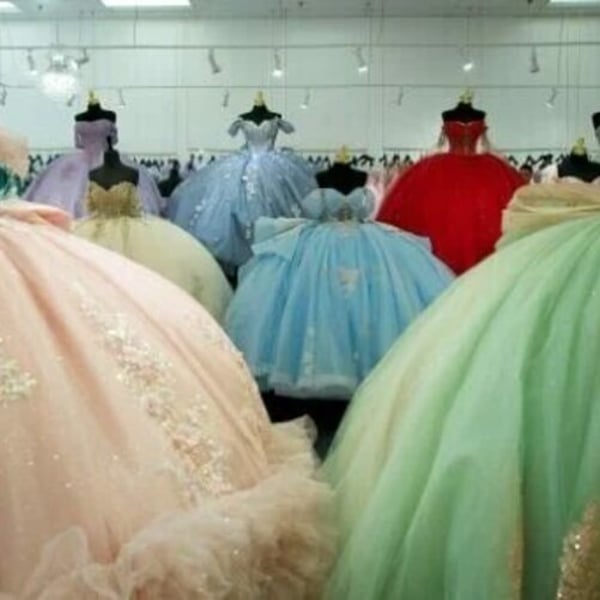
“Here in downtown and in LA, there’s been a lot of raids because of ICE, so it has brought fear into our Latin community,” said Jose Yern, manager of Anita‘s Bridal Boutique, a Fashion District shop specializing in dresses for Latin American “quinceanera” coming-of-age ceremonies.
“They are scared to come in (to the district). But if they’re coming in, they’re coming specifically to a specific store, doing what they need to do, and then heading back home,” he added.
Shopkeepers communicate with one another via walkie-talkies, reporting any noise, helicopter or law enforcement presence to warn those who are undocumented.
“It’s unfortunate that the government does not understand that when it attacks us, we all lose,” said a vendor who did not want to disclose his name for privacy reasons.
“But we are not leaving. What’s going to happen here is that we are going to be playing cat and mouse. Let’s see who tires out first.”
In February, the French low-impact clothing brand Faguo will launch several thousand T-shirts and a sweatshirt produced by Losanje, a specialist in the industrialisation of upcycling for clothing and accessories.
Faguo x Losanje
For this series, Faguo has opted to produce Lugny T-shirts, featuring the brand’s tree logo on the chest, along with the Dirac hooded sweatshirt. The former, available in blue and dark green, is priced at €60, while the latter, in blue, costs €105. The pieces were made from garments collected at sorting centres in France and across Europe, then cut and assembled by Faguo’s teams.
“We felt it was important to choose our iconic pieces for this collaboration, to help shift perceptions of upcycling,” Anaïs Barry, Losanje’s marketing and communications director, tells FashionNetwork.com. “Our aim is always to dress people with the smallest possible environmental impact. With upcycling, we reduce that impact by a further 90% compared with a standard Faguo garment. But we’re also counting on the pieces appealing in their own right as products.”
For Losanje, the stakes are high. The French company, whose aim is to prove that upcycling can be an industrial alternative to producing new clothes, has delivered what could be, in Europe and worldwide, the first 100% upcycled collection produced in several thousand unique pieces, according to Simon Peyronnaud, president and co-founder of Losanje.
“We’ve already released drops with brands such as Miu Miu and Marine Serre, collaborations that involved dozens or hundreds of pieces,” explains the executive. “This time, we’re looking at genuine repeatability. It’s been a highly instructive collaboration, and one we have high expectations for, to demonstrate that we can source existing materials here at home rather than from cotton fields.”
Faguo x Losanje
Losanje claims to have reused over 320 tonnes of textile products in five years via upcycling, through collaborations with the SNCF, La Poste, the Comité Paris 2024 and Roland-Garros, among others. To support its growth, the company recently inaugurated a new factory in Nevers, in the Nièvre department.
“We’re moving from a 700-square-metre industrial workshop to a real 2,500-square-metre factory, purpose-built to take us to the next level,” explains Simon Peyronnaud, whose company currently employs 25 people. He hints at several ongoing projects with brands and groups keen to invest in an upcycled offering.
This article is an automatic translation. Click here to read the original article.
Morleys, the small UK department stores chain, has announced a new CEO and another tweak to its top team.
Morleys
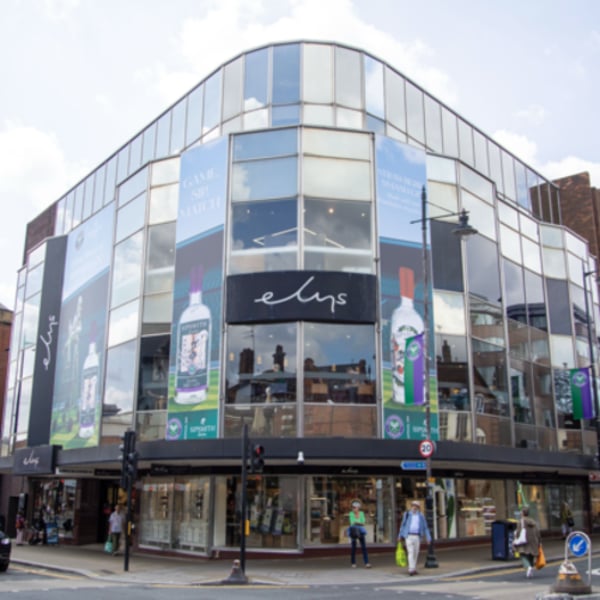
The company — which owns the Morleys stores, as well as Elys and Jollys — said this week that Allan Winstanley will be stepping down from his role as CEO at the end of this month, “following a successful tenure leading the business”.
In his place, it has named Ray Clacher to the top job, effective 5 January. It said he “brings extensive experience across the retail and fashion sectors”.
Most recently, he was chief commercial officer at BrandAlley and before this, he held senior leadership roles within the Li & Fung Group, including group managing director for Gieves & Hawkes, Kent & Curwen and Cerruti 1881.
Earlier in his career, he worked at UK retail businesses DH Evans and House of Fraser, “giving him a deep understanding of the UK department store landscape”.
Clacher said it’s an “exciting time” for the group with the reopening of its Jollys store in Bath planned for August 2026.
He added: “The business has a proud history and a strong position in the UK department store market, and I look forward to working with the team to build on this success and drive growth in the years ahead”.
The company’s chairman Bernard Dreesmann said that his “breadth of experience across premium fashion, commercial retail and department stores makes him exceptionally well placed to lead Morleys into its next chapter”.
Buying director Daren Gittins “has also decided to take a planned break from the business to pursue his passion for travel” as of the end of April 2026.
He’s spent 13 years with Morleys and “has played a pivotal role in shaping the department store group’s buying strategy”.
Platinum extended its steep rally to a 17-year high, driven by tight supplies and elevated trading activity in a new Chinese futures contract.
Platinum jewellery is one of the main uses of the precious metal – Platinum Days of Love- Facebook
Spot prices climbed as much as 4.9% on Wednesday, and have chalked up gains of more than 2% each day since Thursday. The metal has more than doubled this year, set for the biggest annual gain in Bloomberg data going back to 1987.
The surge has come as the London market shows signs of tightening, as banks park metal in the US to insure against the risk of tariffs. Exports to China have also been robust this year, and optimism for the nation’s demand has been bolstered as futures recently began trading on the Guangzhou Futures Exchange.
Highlighting the tight supply, the annualised cost of borrowing platinum for one month was at about 14% on Wednesday in London, a historically high level that indicates traders are unwilling to part with metal while inventories are low.
“We’ve got this really tight environment globally, with three-way geographic competition for metal between the US, Europe, and China,” said Ed Sterck, director of research at the World Platinum Investment Council. “You’ve still got really elevated lease rates, which is indicative of a shortage of metal.”
Against a tight background, the metal has been hit by a wave of investment that poured into precious metals this year, a rush that helped silver to also double in price and soar to a record.
As traders wait for the outcome of Washington’s Section 232 probe- which could lead to tariffs or trade restrictions on platinum- more than 600,000 ounces of the metal are sitting in US warehouses, an amount much higher than usual.
In China, the newly launched platinum futures on GFEX have attracted a wave of speculators, with prices rising well above other international benchmarks.
While Sterck said trading volumes on the new offering were significant, he noted that the contract wasn’t yet fully open for non-domestic traders to take advantage of premium prices by sending platinum to China. Smoothing out the arbitrage process would make it easier for the futures contracts to pull global benchmarks higher, as inflows cause other markets to tighten.
The exchange has shared ambitions about opening vaults overseas in the future, to take a larger role in the price discovery process, according to Sterck.
“China’s the biggest market in the world for a lot of commodities, but hasn’t necessarily been as influential in global price discovery yet,” he said.
Platinum is on course for a third annual deficit this year, helped by supply disruptions in major producer South Africa. The auto and jewellery sectors are among the biggest consumers, but high borrowing costs have been an issue for manufacturers that use the metal to produce goods ranging from chemicals to glass to laboratory equipment. Industrial users often choose the less capital-intensive option of leasing, rather than buying the commodity outright. Given the cost of borrowing, a move to buying instead could propel prices higher.
The electric-vehicle transition had long weighed on platinum and its sister metal palladium, both of which are used in catalytic converters to filter pollution. Still, slower-than-expected adoption of EVs in some markets has boosted sentiment, and the European Union this week eased requirements that would have halted sales of new gasoline and diesel-fuelled cars starting in 2035.
Platinum was up 2.2% at $1,885.40 an ounce by 3:55 p.m. in London. Sister metal palladium gained as much as 3.1%.