Connect with us

Business

HSBC’s Willem Sems on diversification outside of the US to China

Published

on


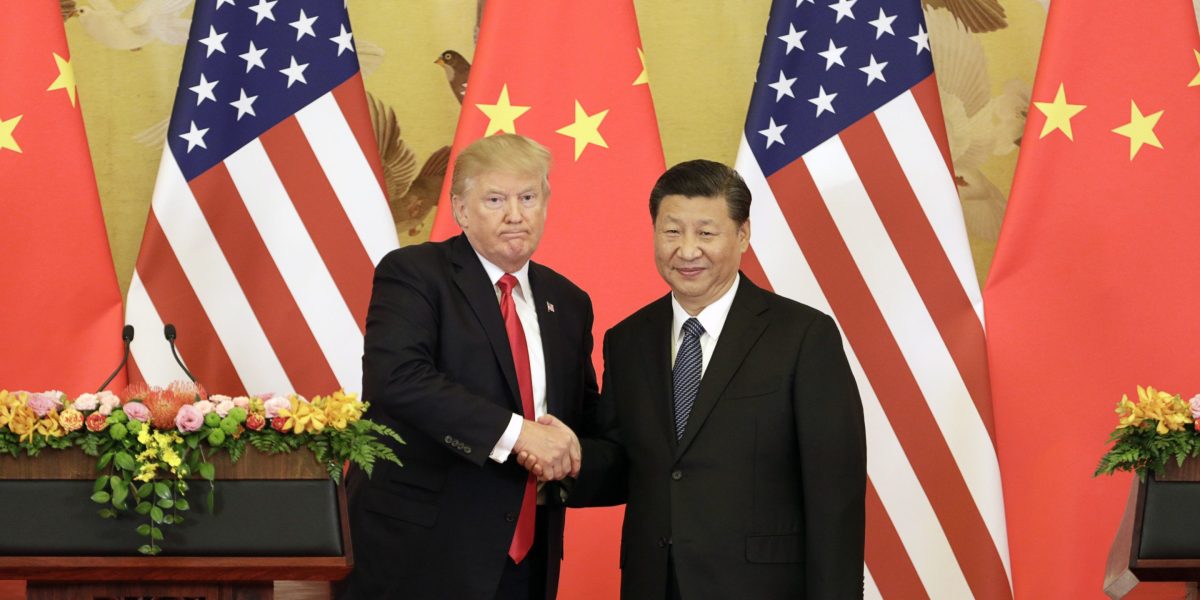
When President Trump returned to the White House his intention was clear: Make America Great Again. But the United States’s economic partners, and some of its rivals, are also benefitting from having the unorthodox showman back in the Oval Office.

Investors are watching the U.S. stock market with both enthusiasm and trepidation: The S&P 500 is up 15% over the past year, Treasuries have remained relatively steady, and the Fed’s monetary policy is expected to begin a downwards trajectory.

But overlaying the strong fundamentals are questions: Is the soaring growth of the Magnificent 7 stocks overvalued on the unfulfilled promises of AI? Will Trump’s unusual foreign policy materially damage the domestic economy? And where might the true winners of the artificial intelligence race emerge from?

Increasingly, investors are answering those questions by diversifting into a key region says Willem Sels, the global chief investment officer for HSBC’s global private bank. That region is China.

America continues to prove to its economic resilience and earnings deliverables, Sels told Fortune in an exclusive interview, but geopolitical uncertainty is pushing investors towards balancing risk with other regions.

Traditionally, the question of political influence over portfolios has centered on emerging markets, said Sels, but over the past few years that has moved into developed markets as well. As such, diversification has become more of a focus—particularly for business owners looking to spread risk between the economy they operate in and the assets used to protect their wealth.

“When a client comes in the door … the first discussion is please build a global portfolio. Maybe try to have as little as possible in your home country if you already have your business here, because that’s diversification,” Sels said. “Clearly the debate over the last few months was about, will there be diversification away from the U.S.? And there are a number of elements to that.”

Part of the question is how dominant U.S. Big Tech has become in equity markets, with the Magnificent 7 stocks (Alphabet, Amazon, Apple, Meta, Microsoft, Nvidia and Tesla) providing most of the growth. As such, if these stocks hiccup it can have major ramifications for portfolios.

“Clearly you potentially need to do something around that … to diversify,” Sels said, “We highlight things like make sure that you don’t only have the growth stocks but have some value stocks, do some sector diversification, do some geographical diversification and so on. 

“The other thing that triggered that diversification discussion obviously was the rapid policy changes in the U.S., and the growth of the debt pile, which led people to ask the question, is there a de-dollarization story and what does that mean in terms of my portfolio and other people’s portfolio? What we’ve seen in the data is that there have been two months or so where there were some outflows out of bonds and equity markets, but that has not lasted—to a large extent because policy has become a little bit clearer.”

Safe haven out of Europe and into China

“People are adding a little bit to other regions, adding a little bit to other sectors to be less concentrated in the U.S. market, but they are not fleeing away from it,” Sels continued. “There was enthusiasm for European stocks, but it was very short-lived. The Asian investors over the last 15 [to] 20 years that I’ve been going there find it very hard to get excited about Europe.”

Part of the problem is that these investors don’t see as many new or emerging companies which could materially change the European economy, and there’s also the issue of brand recognition beyond companies like LVMH and BMW, Sels said.

“This is the first time that we’re again seeing flows from Europe into China,” Sels added. “That is to a large extent because of the AI trade that people want to play, and then secondly this concept of anti-involution … with the supply side reforms which would address the issue of overcapacity, therefore the deflation issue and therefore the earnings growth, because what you have in China is a lot of very competitive companies … therefore they have no pressing power and therefore earnings growth has been reasonably weak.”

China has signaled a shift in priorities to address involution, with the country’s Central Finance and Economic Affairs Commission telling President Xi Jinping in a meeting last month that Beijing must “focus on key and difficult issues, regulate enterprises’ disorderly and low-price competition” and “guide enterprises to improve product quality and promote the orderly exit of outdated production capacity.”

Beijing is no stranger to the issue. In 2015 the government launched similar action to address overcapacity, particularly in key regions like steel and coal, in order to boost corporate profitability.

Flash forward to 2025 and “they’re now addressing that,” Sels said, “Therefore we think that earnings expectations will go up … one of the main obstacles for our clients had been the belief that [Chinese companies are] over-competing and therefore your earnings are not there, the economic growth is potentially there, but your earnings are not there.” 

“That’s now changing, so we’re seeing flows back and obviously also encouraged by ‘How can I diversify my big U.S. trunk of assets?’”

AI discount

With discussions about diversification out of U.S. remaining active, China seems to have emerged as the region to balance that risk, Sels said. And Beijing’s typically lower share prices also offer the category of the moment, AI, at a bargain.

In a note published last week, HSBC noted that within the AI ecosystem, infrastructure stocks are outperforming enablers and adopters—at 22.2% versus 11.3% and 13.5% since July. Indeed, this week Chinese chipmaker Cambricon Technologies briefly became the country’s most expensive stock, surging 10% on Wednesday to 1,465 yuan ($204.62). At the time of writing, the share price has dropped back but is up 112% for the year to date.

And while Cambricon exemplifies the more expensive end of the scale, Sels highlights that other equivalents to U.S. stocks can be found at a “30 to 40% discount.”

“We’re basically saying, listen, don’t just look at the chips makers but also look at the guys that build out the infrastructure around it. The guys that build out the energy, the electricity supply around it, the robotics and automation where it is not just a matter of we move the data a little bit—this is real, big innovation. And so by diversifying throughout the AI ecosystem, I think you address a little bit the question about valuations.”

China’s stock market is soaring: The SSE Composite Index is up 33.4% over the past year while the S&P 500 is up 14.9%. While the growth in China is marked, HSBC’s research points out U.S. AI-related capex (driven by the “Big 4” of Amazon, Alphabet, Microsoft, and Meta along with
Stargate and other private companies) are outspending China’s “Big 4” (Alibaba, ByteDance, Tencent, and Baidu, as well as telecom services companies) by eight to 10 times.

Moreover, HSBC’s research adds: “U.S. firms achieve higher returns on AI capex, with cloud platforms generating significantly more revenue than their Chinese counterparts – close to USD $400bn in the U.S. vs. USD $60bn in China in 2024, according to Statista.”

So while clients may be balancing against over-reliance on American companies, Sels said, the upside fundamentals of the U.S. remain strong—enough so to take a recession off the table. Indeed, while blips in tech stocks recently led to questions over an AI bubble, the HSBC boss remained bullish: “We certainly think that that AI liftoff is structural in nature.”


Source link

Continue Reading

Business

The ‘Great Housing Reset’ is coming: Income growth will outpace home-price growth in 2026

Published

on


Homebuyers may experience a reprieve in 2026 as price normalization and an increase in home sales over the next year will take some pressure off the market—but don’t expect homebuying to be affordable in the short run for Gen Z and young families.

The “Great Housing Reset” will start next year, with income growth outpacing home-price growth for a prolonged period for the first time since the Great Recession era, according to a Redfin report released this week. 

The residential real estate brokerage sees mortgage rates in the low-6% range, down from down from the 2025 average of 6.6%; a median home sales price increase of just 1%, down from 2% this year; and monthly housing payments growth that will lag behind wage growth, which will remain steady at 4%.

These trends toward increased affordability will likely bring back some house hunters to the market, but many Gen Zers and young families will opt for nontraditional living situations, according to the report. 

More adult children will be living with their parents, as households continue to shift further away from a nuclear family structure, Redfin predicted.

“Picture a garage that’s converted into a second primary suite for adult children moving back in with their parents,” the report’s authors wrote. “Redfin agents in places like Los Angeles and Nashville say more homeowners are planning to tailor their homes to share with extended family.”

Gen Z and millennial homeownership rates plateaued last year, with no improvement expected. Just over one-quarter of Gen Zers owned their home in 2024, while the rate for millennial owners was 54.9% in the same year.

Meanwhile, about 6% of Americans who struggled to afford housing as of mid-2025 moved back in with their parents, while another 6% moved in with roommates. Both trends are expected to increase in 2026, according to the report.

Obstacles to home affordability 

Despite factors that could increase affordability for prospective homebuyers, C. Scott Schwefel, a real estate attorney at Shipman, Shaiken & Schwefel, LLC, told Fortune that income growth and home-price growth are just a few keys to sustainable homeownership. 

An improved income-to-price ratio is welcome, but unless tax bills stabilize, many households may not experience a net relief, Schwefel said.

“Prospective buyers need to recognize that affordability is not just price versus income…it’s price, mortgage rate and the annual bill for living in a place—and that bill includes property taxes,” he added.

In November, voters—especially young ones—showed lowering housing costs is their priority, the report said. But they also face high sale prices and mortgage rates, inflated insurance premiums, and potential utility costs hikes due to a data center construction boom that’s driving up energy bills. The report’s authors expect there to be a bipartisan push to help remedy the housing affordability crisis.

Still, an affordable housing market for first-time home buyers and young families still may be far away.

“The U.S. housing market should be considered moving from frozen to thawing,” Sergio Altomare, CEO of Hearthfire Holdings, a real estate private equity and development company, told Fortune

“Prices aren’t surging, but they’re no longer falling,” he added. “We are beginning to unlock some activity that’s been trapped for a couple of years.”


Source link

Continue Reading

Business

Nvidia’s CEO says AI adoption will be gradual, but we still may all end up making robot clothing

Published

on


Nvidia CEO Jensen Huang doesn’t foresee a sudden spike of AI-related layoffs, but that doesn’t mean the technology won’t drastically change the job market—or even create new roles like robot tailors.

The jobs that will be the most resistant to AI’s creeping effect will be those that consist of more than just routine tasks, Huang said during an interview with podcast host Joe Rogan this week. 

“If your job is just to chop vegetables, Cuisinart’s gonna replace you,” Huang said.

On the other hand, some jobs, such as radiologists, may be safe because their role isn’t just about taking scans, but rather interpreting those images to diagnose people.

“The image studying is simply a task in service of diagnosing the disease,” he said.

Huang allowed that some jobs will indeed go away, although he stopped short of using the drastic language from others like Geoffrey Hinton a.k.a. “the Godfather of AI” and Anthropic CEO Dario Amodei, both of whom have previously predicted massive unemployment thanks to the improvement of AI tools.

Yet, the potential, AI-dominated job market Huang imagines may also add some new jobs, he theorized. This includes the possibility that there will be a newfound demand for technicians to help build and maintain future AI assistants, Huang said, but also other industries that are harder to imagine.

“You’re gonna have robot apparel, so a whole industry of—isn’t that right? Because I want my robot to look different than your robot,” Huang said. “So you’re gonna have a whole apparel industry for robots.”

The idea of AI-powered robots dominating jobs once held by humans may sound like science fiction, and yet some of the world’s most important tech companies are already trying to make it a reality. 

Tesla CEO Elon Musk has made the company’s Optimus robot a central tenet of its future business strategy. Just last month, Musk predicted money will no longer exist in the future and work will be optional within the next 10 to 20 years thanks to a fully fledged robotic workforce. 

AI is also advancing so rapidly that it already has the potential to replace millions of jobs. AI can adequately complete work equating to about 12% of U.S. jobs, according to a Massachusetts Institute of Technology (MIT) report from last month. This represents about 151 million workers representing more than $1 trillion in pay, which is on the hook thanks to potential AI disruption, according to the study.

Even Huang’s potentially new job of AI robot clothesmaker may not last. When asked by Rogan whether robots could eventually make apparel for other robots, Huang replied: “Eventually. And then there’ll be something else.”


Source link

Continue Reading

Business

The ‘Mister Rogers’ of Corporate America shows Gen Z how to handle toxic bosses

Published

on


After two decades of climbing the corporate ladder at companies ranging from ABC, ESPN, and Charter Communications (commonly known as Spectrum), Timm Chiusano quit it all to become a content creator. 

He wasn’t just walking away from high titles, but a high salary, too. In his peak years, Chiusano made $600,000 to $800,000 annually. But in June of 2024, after giving a 12-week notice, he “responsibility fired himself” from his corporate job as VP of production and creative services at Charter.

He did it all to help others navigate the challenges of a workplace, and appreciate the most mundane parts of life on TikTok.

@timmchiusano

most people are posting their 2024 recaps; these are a few of my favorite moments from the year that was, but i need to start reintroducing myself too i dont have a college degree, no one in my life knew that until i was 35 when i eventually got my foot in the door in my early 20’s after a few years of substitute teaching and part time jobs, i thought for sure i had found the career path of my dreams in live sports production i didn’t think i had a chance of surviving that first college football season but i busted my ass, stuck around and got promoted 5 times in 5 years then i met a girl in Las Vegas, got married in 7 months, and freaked out about my career that had me travelling 36 weeks a year i had to find a more stable “desk job”, i was scared shitless that i was pigeonholed and the travel would eventually destroy my marriage i crafted a narative for espn arguing they needed me on their marketing team because of my unique perspective coming from the production side i got rejected, but kept trying and a year i got that job the 7 years with espn were incredible, but also exhausting and raised all kinds of questions about corporate america, toxic situations, and capitalism in general why was i borderline heart attack stressed so often when i could see that my ideas were literally generating 2,000 times the money that i was getting paid? in 2012 i had a kid and in 2013 i got the biggest job of my career to reinvent how to produce 20,000 commercials a year for small business it took 12 rounds of interviews, a drug test i somehow passed, and a background check that finally made me tell my wife of 8 years that i didnt have a college degree they brought me in the thursday before my first day and told me what i told grace in that clip the next decade was an insane blur; i saw everything one would ever see in their career from the perspective of an executive at a fortune 100 i started making tiktoks, kinda blacked out at some point in 2019 and responsibly fired myself in 2024 to see what i might be capable of on my own with all the skills i picked up along my career journey now the mission is pay what i know forward, and see if i can become the mr rogers of corporate america cc: @grace beverley @Ryan Holiday @Subway Oracle

♬ original sound – timm chiusano

What started as short-video vlogs on just about anything in 2020 (reviews on protein bars, sushi, and sneakers) later transitioned to videos on growing up, and dealing with life’s challenges, like coming to terms when you have a toxic boss. Today, his platform on TikTok has over 1 million followers

With the help of going viral from his “loop” format where videos end and seamlessly circle back to the beginning, he began making more videos as a side-hustle on top of his day-to-day tasks in the office.

“How can I get people to be smarter and more comfortable about their careers in ways that are gonna help on a day-to-day basis?” Chiusano told Fortune.

Today, he could go by many titles: former vice president at a Fortune 100 company, motivational speaker, dad, content creator, or as he labels himself, the Mister Rogers of Corporate America. 

Just as the late public television icon helped kids navigate the complexities of childhood, Chiusano wants to help young adults think about how to approach their careers and their potential to make an impact. 

“Mister Rogers is the greatest of all time in his space. I will never get to that level of impact. But it’s an easy way to describe what I’m trying to do, and it consistently gives me a goal to strive for,” he said. “There are some parallels here with the quirkiness.”

Firing himself after 25 years in the corporate world

Even with years in corporate, Chiusano doesn’t resemble the look of a typical buttoned-up executive. Today, he has more of a relaxed Brooklyn dad attire, with a sleeve of tattoos and a confidence to blend in with any trendy middle aged man in Soho. During our interview, he showed off one of the first tattoos he got: two businessmen shaking hands, a reference to Radiohead’s OK Computer album.

“This is a dope ass Monday in your 40s,” began one of his videos.

It consisted of Chiusano doing everyday things such as eating leftovers, going to the gym, training for the NYC marathon, taking out the trash, dropping his daughter off at school, a rehearsal for a Ted Talk, eating lunch with his wife, and brand deal meetings. Though the content sounds pretty normal, that’s the point. 

“The reason why I fired myself in the first place was to be here,” he says in the video while picking his daughter up from school.

Today, Chiusano spends his days making content on navigating workplace culture, public speaking, brand deals, brand partnerships, executive coaching, writing a book, and the most important job: being a dad to his 13-year-old daughter Evelyn.

“I’m basically flat [in salary] to where I was, and this is everything I could ever want in the world,” he said. “The ability to send my kid to the school she’s been going to, eat sushi takeout almost as much as I’d like, and do nice things for my wife.”

In fact, when sitting inside one of his favorite New York City spots, Lure Fishbar, he keeps getting stopped by regulars who know him by name. He points out that one of his favorite interviews he filmed here was with legendary filmmaker Ken Burns.

Advice to Gen Z

In a time where Gen Z has been steering to more unconventional paths, like content creation or skill trades rather than just a 9-to-5 office job, Chiusano opens up a lens to what life looks like when deciding to be present rather than always looking for what’s next—a mistake he said he made in his 20s. 

Instead, he wants to teach the younger generation to build skills for as long as you can, but “if you are unhappy, that’s a very different conversation.”

“I think some people will make themselves more unhappy because they feel like that’s what’s expected of a situation,” he said.

“I would love to be able to empower your generation more, to be like somebody’s gonna have to be the head of HR at that super random company to put cool standards and practices in place for better work-life balance for the employees.” 


Source link

Continue Reading

Trending

Copyright © Miami Select.