
Politics
How would property tax reforms impact Florida? The state’s number crunchers aren’t sure yet


As Gov. Ron DeSantis and House Speaker Daniel Perez continue to debate how worthwhile and successful eight property tax relief proposals will be, Florida’s top accountants are looking into how they’d financially impact localities statewide.
The answer is … to be determined.
Number crunchers from the Governor’s Office, Senate, House and Office of Economic & Demographic Research convened this week for the first of multiple Revenue Impact Estimating Conference meetings on the subject.
Those hoping to get numerical insights on how each of the proposed changes would affect homeowners and the budgets of their counties and cities surely came away disappointed.
The meeting Friday was solely focused on methodology and which of three expected levels of impact — low, medium and high — the Conference would examine in future discussions.
For most of the proposals, Conference members leaned toward considering the “high” impact. They reasoned that a full account of assessed property values is now available only for the last fiscal year, and that many other homes currently being built would add to the overall number by the time any of the proposed changes take effect.
For other proposals, including one that would exempt seniors from paying non-school property taxes on their homesteads, the Conference chose the “middle” option, since its scope was more immediately calculable.
The panel is set to meet again on the subject next week.
The joint resolutions the Conference discussed, which would go on the 2026 ballot for voter approval if approved in the coming Session, included:
— HJR 201 by Rep. Kevin Steele: Eliminates non-school homestead property taxes outright. If approved, homeowners would no longer pay city/county non-school levies on their primary residence.

— HJR 203 by Rep. Monique Miller: Phases out non-school homestead property taxes over 10 years by adding a new $100,000 exemption each year to a homeowner’s non-school tax base. After a decade, the non-school portion on homesteads would be fully exempted.
— HJR 205 by Rep. Juan Porras: Exempts Florida residents 65 and older from paying non-school homestead property taxes.
— HJR 207 by Rep. Shane Abbott: Creates a new homestead exemption for non-school taxes equal to 25% of a home’s assessed value. This broad exemption would cut bills for current homeowners and aid first-time buyers entering the market.
— HJR 209 by Rep. Demi Busatta: Establishes a property insurance relief homestead exemption by granting an additional $100,000 non-school exemption to homestead owners who maintain property insurance, linking relief to insured, more resilient homes.
— HJR 211 by Rep. Toby Overdorf: Eliminates the cap on “portability” of Save Our Homes (SOH) benefits, allowing homeowners to transfer their accumulated SOH differential to a new primary residence, even when the replacement home is of lesser value, thereby preserving long-built tax savings.
— HJR 213 by Rep. Griff Griffitts: Slows the growth in the assessed value of non-school homestead property taxes to 3% over three years for homestead property (currently it’s 3% per year) and 15% over three years for non-homestead property (currently at 10% per year).
— HB 215 by Rep. Jon Albert: Makes statutory changes, including requiring a two-thirds vote to increase millage rates and allowing newly married couples to merge their accumulated SOH benefits when establishing a shared household.
In unveiling the proposals Oct. 16, Perez said voters — not lawmakers — would ultimately decide if “some, all, or none” of the options would become law. He also emphasized two common features across the proposals: None would allow cuts to law enforcement funding, and all would exempt school taxes, which supply roughly 46% (about $21 billion) of school funding.

Universal and SeaWorld have announced the details on one of the best theme park deals of the year: concerts that are included in regular park admission during their annual food festivals.
Both theme parks are bringing in major artists as part of Universal Mardi Gras: International Flavors of Carnaval and SeaWorld’s Seven Seas Food Festival.
Disney World also welcomes well-known artists and nostalgic favorites to play for theme park guests. But the Mouse has not officially released the 2026 schedule for the Garden Rocks concerts at the Epcot International Flower & Garden Festival. The festival runs March 4 to June 1.
Universal’s Mardi Gras concerts kick off Feb. 7 through March 28 on select nights. This year’s lineup features Grammy-winning DJ and producer Zedd, Bebe Rexha, and The All-American Rejects, who are returning for the second year in a row as the concert series’ finale.
The nightly concerts take place following Universal’s Mardi Gras parade featuring elaborate floats and plenty of bead throwing.
At SeaWorld, the music includes KISS rocker Gene Simmons, the Beach Boys, Flo Rida, Fitz and the Tantrums, the Fray and Boyz II Men during the concert series running on select nights from Jan. 31 to May 17.
“This is the biggest and most diverse concert lineup we’ve ever presented as part of Seven Seas Food Festival,” said SeaWorld Orlando Park President Jon Peterson in a statement. “With chart-topping artists, throwback favorites, and every concert included with park admission, we’re delivering one of the best entertainment values in Central Florida.”
The majority of the dates have been announced, although SeaWorld said a few additional acts will be announced later in the year.
Orlando has deep ties to boy band history, which you’ll find at the theme parks’ festival concerts.
You won’t see Justin Timberlake anytime soon playing behind a backdrop of roller coasters. But Chris Kirkpatrick of NSYNC performs Feb 22 at the Pop 2000 Tour night at SeaWorld. Meanwhile, Kirkpatrick’s former bandmate Joey Fatone teams up with the Backstreet Boys’ AJ McLean at Universal Orlando Feb. 21.

Politics
Tampa Bay Lightning arena agreement worth up to $358.5M heads to Hillsborough County Commission

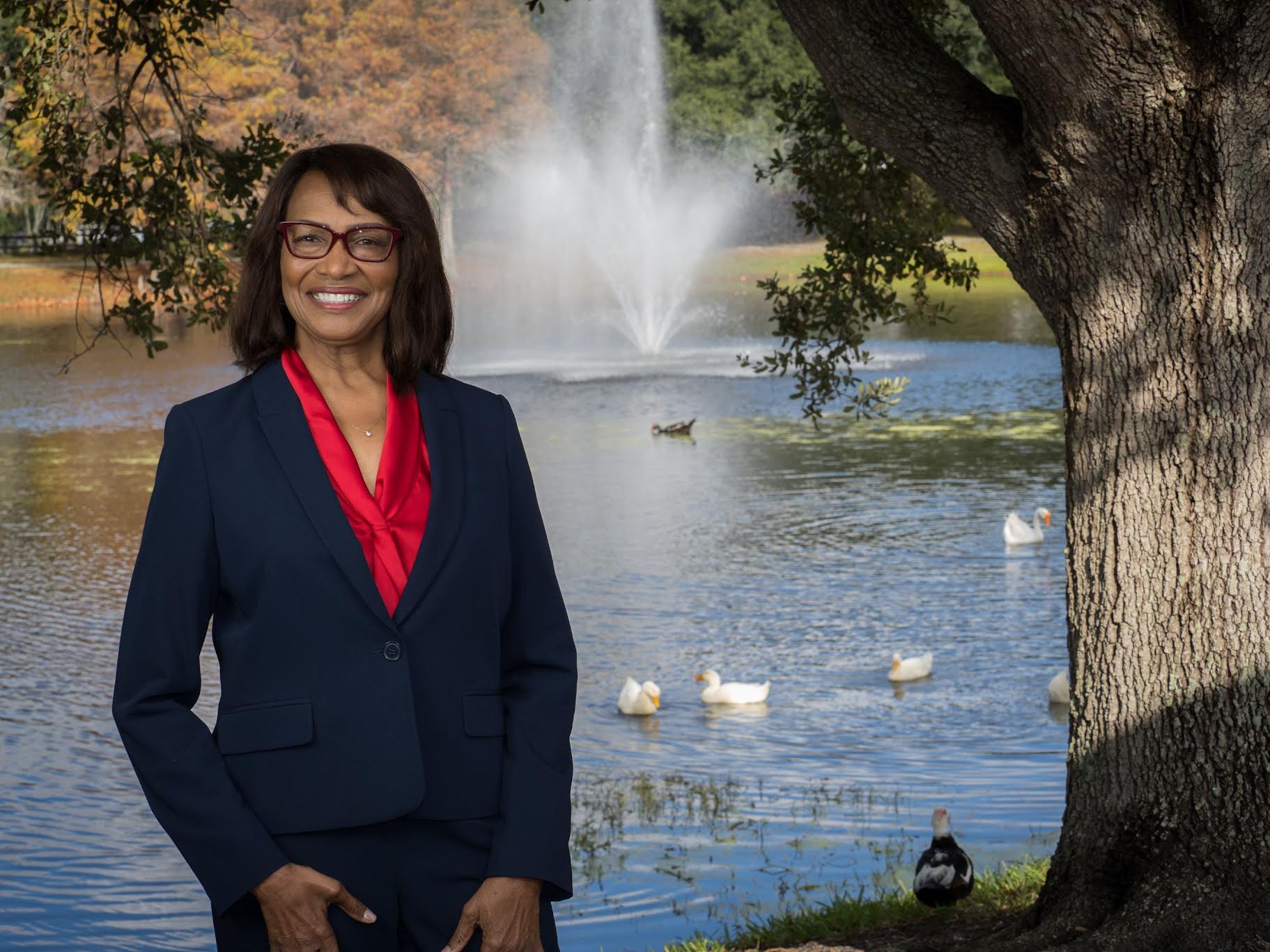
Patricia Rumph, a retired state corrections department employee, is running for Orange County Commission’s District 7 in August.
“I am running for County Commission because service is not something I talk about, it is something I have lived every day of my life,” Rumph said.
Rumph’s campaign priorities are public safety, investing in strong infrastructure, affordability, and environmental stewardship, she said in a statement to announce her candidacy.
Rumph is joining a crowded field for a two-year term representing District 7 in the nonpartisan race. The other candidates are Selina Carter, Eatonville Mayor Angie Gardner, Stacey Gordon-Ali, Framily Support Network co-founder Aaron Lewis, Sonya Shakespeare, and former Orlando City Commissioner Vicki Vargo.
A County Commissioner’s current annual salary is $130,262.
District 7, which covers Maitland, Eatonville, Pine Hills, Orlovista and Fairview Shores in the northern part of Orange County, is one of the two new County Commission seats added after last year’s redistricting.
“As District 7 is formed, this is a moment to build something new and to do it the right way,” Rumph said. “Our residents deserve a commissioner who is present, accountable, and deeply invested in the people who call this district home.”
Rumph’s 30-year career in the Florida Department of Corrections included jobs as Correctional Probation Senior Officer, Human Resources Specialist, and Fiscal Assistant. She retired in 2017.
She received a Bachelor of Science in Business Administration from the University of Central Florida.
“In 2020, Rumph was appointed Orange County’s Inaugural Community Ambassador, a role created to build trust between law enforcement and residents and to lead initiatives focused on reducing gun violence and violent crime,” she said in a press release.

“Prior to that appointment, she served for three years as President of the Pine Hills Community Council and has held leadership roles on numerous county boards and advisory committees.”
She was also named the League of Women Voters of Orange County Grassroots Champion of the Year, noted a press release highlighting her public service.
“From Pine Hills to neighborhoods across District 7, I have worked side by side with residents to make our communities safer, stronger, and more connected,” Rumph said in a statement. “This new district deserves leadership that knows our neighborhoods, listens to our families, and fights for opportunity in every zip code. I am ready to bring proven, community-rooted leadership to the County Commission.”


TMZ Sports Streaming Live From Newsroom, Join The Conversation!

Footasylum announces ‘landmark’ Trinity Leeds store, Europe and Middle East also on expansion radar

SeaWorld, Universal announce musical acts ahead of annual food festivals
-

 Politics8 years ago
Congress rolls out ‘Better Deal,’ new economic agenda
-
Entertainment9 years ago
New Season 8 Walking Dead trailer flashes forward in time
-
Politics9 years ago
Poll: Virginia governor’s race in dead heat
-
Politics8 years ago
Illinois’ financial crisis could bring the state to a halt
-
Entertainment8 years ago
The final 6 ‘Game of Thrones’ episodes might feel like a full season
-
Entertainment9 years ago
Meet Superman’s grandfather in new trailer for Krypton
-
Business9 years ago
6 Stunning new co-working spaces around the globe
-
Tech8 years ago
Hulu hires Google marketing veteran Kelly Campbell as CMO