Connect with us

Business

How transportation startups feel about Trump 2.0

Published

on


There have been dozens of Tesla Cybertrucks this week in Bentonville, Ark., shuttling startup founders and executives between their private planes and hotels and the row of airplane hangars outside a small, municipal airport where the UP.Summit took place this week.

It’s not every day that so many of the companies I cover actually come to me and the small city I’ve decided to call home. But once a year—when the transportation-focused VC firm UP.Partners hosts this event (this year with Walmart heirs Tom and Steuart Walton as co-hosts)—they do just that. 

I’ve spent the last two days peering into the commercial space station the startup Vast plans to send into orbit next year; doing flight simulations for Joby Aviation’s electric air taxi and Regent’s Seaglider vessel; and sitting across from the son of Robinhood cofounder Baiju Bhatt in a mockup of Blue Origin’s astronaut capsule, which is sending people into space. Tesla’s new Cybercab, and two of its Optimus robots, were here for attendees to gawk at, and Tesla Chief Designer Franz von Holzhausen laughed on stage about the mishap at the initial unveiling of the Cybertruck in 2019, when he threw a steel ball at the window and it broke.

The energy is always high at this annual event—likely in part because of UP.Partners cofounder Cyrus Sigari’s boundless energy and enthusiasm for flying cars and the Jetsons. But there was something else that kept popping up in conversations I had this year: Donald Trump.

If you’ve been paying attention to the transportation and aviation/aerospace industries for any amount of time—flying cars! Mars missions! Autonomous planes!—you know that the enthusiasm around those shiny, cool toys can quickly run dry when you consider the enormous regulatory hurdles that still lie between these companies and many of their products coming to market in the U.S. Here’s an example: Three years ago at this same event, Zipline CEO Keller Rinaudo Cliffton was celebrating his company’s tens of thousands of drone deliveries in Africa. Flash forward to today and I still can’t get anything sent to my house from the company, even though my home is only about a 15-minute drive away from one of their delivery outposts. Executives at transportation companies have long fumbled through questions about certification and product timelines, as there’s so much that is completely out of their control.

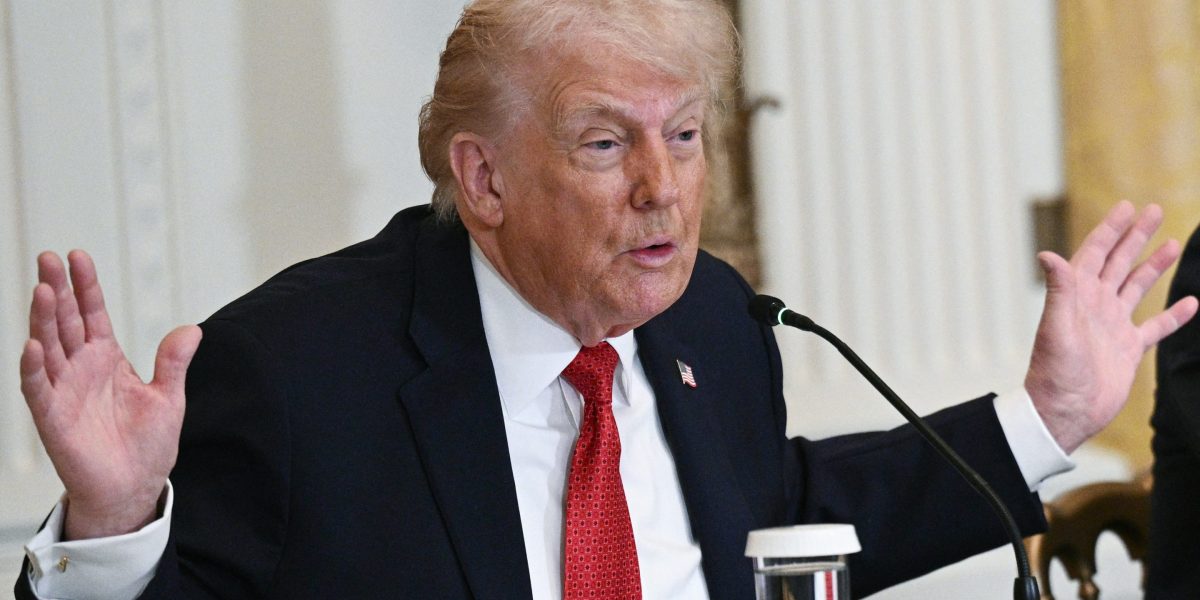
But these days, the regulatory piece is actually starting to feel more attainable for many companies that have been playing the waiting game. Adam Woodworth, the CEO of Wing, Alphabet’s drone delivery company, described on stage how his team are in the early stages of scaling up their delivery operations to several cities around the country. I was surprised to hear Walmart innovation executive Greg Cathey be so brazen about Walmart’s plans to bring drone delivery to “most areas that we operate in” due to changes in the regulatory environment. Adam Goldstein, CEO of air taxi startup Archer Aviation, told me about joining the White House’s eVTOL Integration Pilot Program, a group put together after one of Trump’s executive orders pushed the FAA to accelerate the process of getting air taxis into the skies. And Billy Thalheimer, CEO of Regent, a startup building seaglider vessels to shuttle people—and cargo—along the coasts, said that the speed and clarity with which his company has received responses from the Coast Guard has been significant since Trump was elected. 

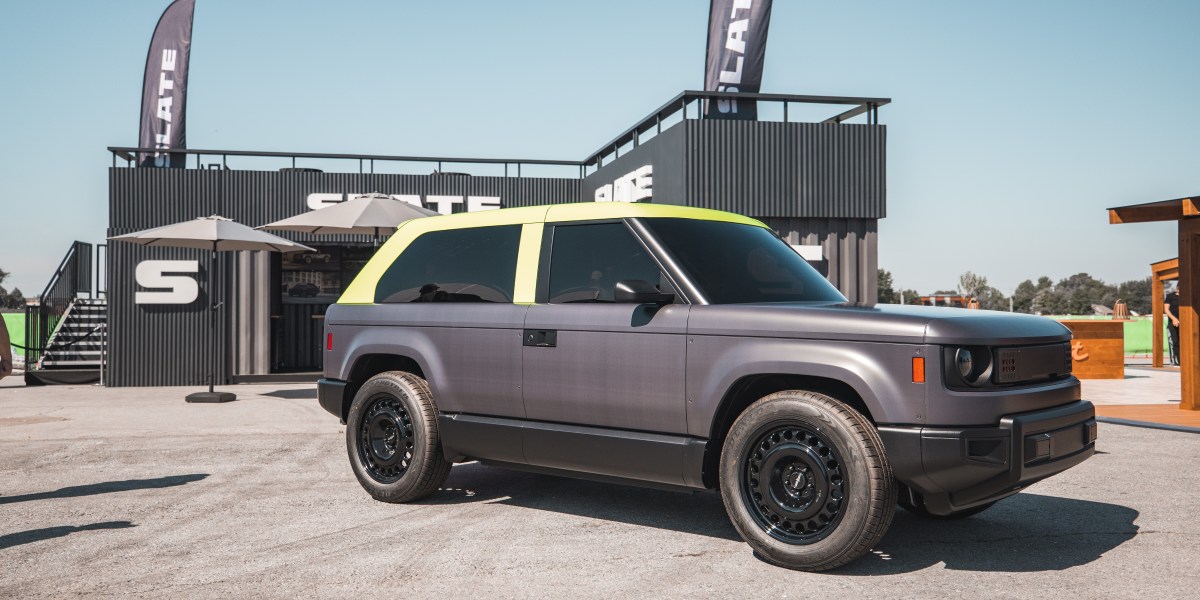
All this enthusiasm has its limits, of course. Just yesterday, the EV tax credit went away—a notable loss for EV companies like Tesla, Slate Auto, and Scout, which were all present at the Bentonville event. Even for some of the most obvious benefactors of the Trump Administration’s tech agenda, it’s not all milk and roses. Wing CEO Woodworth said he was thrilled to see the new regulation around flying beyond visual line of sight—at first. 

“We were less excited when we started reading it, because there’s a lot of steps back in that rule,” Woodworth said on stage, noting how there had already been a lot of progress made between industry and regulators in the time since the initial rule was drafted.

Politics aside, everyone is excited to talk about what comes next—and the money they still want from investors to make it happen. And I sure got a laugh when, upon arriving on my e-bike— at a transportation conference, no less—there was no place to park my bike, and everyone at the check-in counter seemed bewildered as to what I should do with it.

Until next time,

Jessica Mathews
X:
@jessicakmathews
Email: jessica.mathews@fortune.com

Submit a deal for the Term Sheet newsletter here.

Joey Abrams curated the deals section of today’s newsletter. Subscribe here.

VENTURE DEALS

Einride, a Stockholm, Sweden-based provider of digital, electric, and autonomous solutions for road freight, raised $100 million in funding from EQT Ventures and others.

Phaidra, a Seattle, Wash.-based developer of AI agents for AI factories, raised $50 million in Series B funding. Collaborative Fund led the round and was joined by Helena, Index Ventures, NVIDIA,

Vibe.co, a New York City-based ad platform designed to bring hyper-targeting to connected TV, raised $50 million in Series B funding. Hedosophia led the round and was joined by Elaia, Singular, and others. 

Baselane, a New York City-based banking and financial platform designed for real estate investors, raised $34.4 million across Series A and B rounds. Thomvest Ventures led the $20 million Series B round and Matrix Partners led the $14.4 million Series A round.

Kanastra, a São Paulo, Brazil-based fintech company for private credit funds and securitizations, raised $30 million in Series B funding. F-Prime led the round and was joined by the International Finance Corporation and others.

Moonlake AI, a San Francisco-based AI research lab, raised $28 million in seed funding from AIX Ventures, Threshold, NVIDIA Ventures, and others.

Predicta Biosciences, a Cambridge, Mass.-based precision oncology company, raised $23.4 million in Series A funding. Engine Ventures led the round and was joined by Illumina Ventures, Lightchain Capital, Mass General Brigham Ventures, and others. 

Remitee, a Buenos Aires, Argentina-based remittance infrastructure provider, raised $20 million in funding. Krealo led the round and was joined by Copec Wind Ventures, Soma Capital, Redwood Ventures, Latitud, and Algorand.

Filament, a New York City-based invite-only connection platform for professionals, raised $10.7 million in seed funding from EQT Ventures, Flybridge Capital, Oceans Ventures, and others.

DJUST, a Paris, France-based business-to-business operations platform, raised €7 million ($8.2 million) in a Series A extension. NEA led the round and was joined by Elaia and Speedinvest.

Mesta, a San Francisco-based global fiat and stablecoin payment network, raised $5.5 million in seed funding. Village Global led the round and was joined by Circle Ventures, Paxos, Canonical Crypto, WTI,  and existing investors Garuda Ventures, Everywhere Ventures, and Inventum Ventures.  

PRIVATE EQUITY

Arlington Capital Partners acquired a majority stake in Concord Biomedical Sciences and Emerging Technologies, a Boston, Mass.-based provider of translational research and product development services for the medical device, pharmaceutical, diagnostic, and biomedical research industries. Financial terms were not disclosed.

Future Standard agreed to acquire the Digital Infrastructure platform of Post Road Group, a Stamford, Conn.-based alternative investment advisory platform. Financial terms were not disclosed. 

Magirus, a portfolio company of Mutares, agreed to acquire Achleitner Fahrzeugbau GmbH, a Radfeld, Austria-based designer and developer of customized vehicles for offroad, police, military, and paramilitary application. Financial terms were not disclosed.

VisuSewer, a portfolio company of Fort Point Capital, acquired MOR Construction Services, a Glen Mills, Penn.-based provider of utility and commercial wastewater infrastructure services. Financial terms were not disclosed.



Source link

Continue Reading

Business

SpaceX to offer insider shares at record-setting valuation

Published

on


SpaceX is preparing to sell insider shares in a transaction that would value Elon Musk’s rocket and satellite maker at a valuation higher than OpenAI’s record-setting $500 billion, people familiar with the matter said.

One of the people briefed on the deal said that the share price under discussion is higher than $400 apiece, which would value SpaceX at between $750 billion and $800 billion, though the details could change. 

The company’s latest tender offer was discussed by its board of directors on Thursday at SpaceX’s Starbase hub in Texas. If confirmed, it would make SpaceX once again the world’s most valuable closely held company, vaulting past the previous record of $500 billion that ChatGPT owner OpenAI set in October. Play Video

Preliminary scenarios included per-share prices that would have pushed SpaceX’s value at roughly $560 billion or higher, the people said. The details of the deal could change before it closes, a third person said. 

A representative for SpaceX didn’t immediately respond to a request for comment. 

The latest figure would be a substantial increase from the $212 a share set in July, when the company raised money and sold shares at a valuation of $400 billion.

The Wall Street Journal and Financial Times, citing unnamed people familiar with the matter, earlier reported that a deal would value SpaceX at $800 billion.

News of SpaceX’s valuation sent shares of EchoStar Corp., a satellite TV and wireless company, up as much as 18%. Last month, Echostar had agreed to sell spectrum licenses to SpaceX for $2.6 billion, adding to an earlier agreement to sell about $17 billion in wireless spectrum to Musk’s company.

Subscribe Now: The Business of Space newsletter covers NASA, key industry events and trends.

The world’s most prolific rocket launcher, SpaceX dominates the space industry with its Falcon 9 rocket that launches satellites and people to orbit.

SpaceX is also the industry leader in providing internet services from low-Earth orbit through Starlink, a system of more than 9,000 satellites that is far ahead of competitors including Amazon.com Inc.’s Amazon Leo.

SpaceX executives have repeatedly floated the idea of spinning off SpaceX’s Starlink business into a separate, publicly traded company — a concept President Gwynne Shotwell first suggested in 2020. 

However, Musk cast doubt on the prospect publicly over the years and Chief Financial Officer Bret Johnsen said in 2024 that a Starlink IPO would be something that would take place more likely “in the years to come.”

The Information, citing people familiar with the discussions, separately reported on Friday that SpaceX has told investors and financial institution representatives that it is aiming for an initial public offering for the entire company in the second half of next year.

A so-called tender or secondary offering, through which employees and some early shareholders can sell shares, provides investors in closely held companies such as SpaceX a way to generate liquidity.

SpaceX is working to develop its new Starship vehicle, advertised as the most powerful rocket ever developed to loft huge numbers of Starlink satellites as well as carry cargo and people to moon and, eventually, Mars.


Source link

Continue Reading

Business

U.S. consumers are so strained they put more than $1B on BNPL during Black Friday and Cyber Monday

Published

on


Financially strained and cautious customers leaned heavily on buy now, pay later (BNPL) services over the holiday weekend.

Cyber Monday alone generated $1.03 billion (a 4.2% increase YoY) in online BNPL sales with most transactions happening on mobile devices, per Adobe Analytics. Overall, consumers spent $14.25 billion online on Cyber Monday. To put that into perspective, BNPL made up for more than 7.2% of total online sales on that day.

As for Black Friday, eMarketer reported $747.5 million in online sales using BNPL services with platforms like PayPal finding a 23% uptick in BNPL transactions.

Likewise, digital financial services company Zip reported 1.6 million transactions throughout 280,000 of its locations over the Black Friday and Cyber Monday weekend. Millennials (51%) accounted for a chunk of the sizable BNPL purchases, followed by Gen Z, Gen X, and baby boomers, per Zip.

The Adobe data showed that people using BNPL were most likely to spend on categories such as electronics, apparel, toys, and furniture, which is consistent with previous years. This trend also tracks with Zip’s findings that shoppers were primarily investing in tech, electronics, and fashion when using its services.

And while some may be surprised that shoppers are taking on more debt via BNPL (in this economy?!), analysts had already projected a strong shopping weekend. A Deloitte survey forecast that consumers would spend about $650 million over the Black Friday–Cyber Monday stretch—a 15% jump from 2023.

“US retailers leaned heavily on discounts this holiday season to drive online demand,” Vivek Pandya, lead analyst at Adobe Digital Insights, said in a statement. “Competitive and persistent deals throughout Cyber Week pushed consumers to shop earlier, creating an environment where Black Friday now challenges the dominance of Cyber Monday.”

This report was originally published by Retail Brew.


Source link

Continue Reading

Business

AI labs like Meta, Deepseek, and Xai earned worst grades possible on an existential safety index

Published

on


A recent report card from an AI safety watchdog isn’t one that tech companies will want to stick on the fridge.

The Future of Life Institute’s latest AI safety index found that major AI labs fell short on most measures of AI responsibility, with few letter grades rising above a C. The org graded eight companies across categories like safety frameworks, risk assessment, and current harms.

Perhaps most glaring was the “existential safety” line, where companies scored Ds and Fs across the board. While many of these companies are explicitly chasing superintelligence, they lack a plan for safely managing it, according to Max Tegmark, MIT professor and president of the Future of Life Institute.

“Reviewers found this kind of jarring,” Tegmark told us.

The reviewers in question were a panel of AI academics and governance experts who examined publicly available material as well as survey responses submitted by five of the eight companies.

Anthropic, OpenAI, and GoogleDeepMind took the top three spots with an overall grade of C+ or C. Then came, in order, Elon Musk’s Xai, Z.ai, Meta, DeepSeek, and Alibaba, all of which got Ds or a D-.

Tegmark blames a lack of regulation that has meant the cutthroat competition of the AI race trumps safety precautions. California recently passed the first law that requires frontier AI companies to disclose safety information around catastrophic risks, and New York is currently within spitting distance as well. Hopes for federal legislation are dim, however.

“Companies have an incentive, even if they have the best intentions, to always rush out new products before the competitor does, as opposed to necessarily putting in a lot of time to make it safe,” Tegmark said.

In lieu of government-mandated standards, Tegmark said the industry has begun to take the group’s regularly released safety indexes more seriously; four of the five American companies now respond to its survey (Meta is the only holdout.) And companies have made some improvements over time, Tegmark said, mentioning Google’s transparency around its whistleblower policy as an example.

But real-life harms reported around issues like teen suicides that chatbots allegedly encouraged, inappropriate interactions with minors, and major cyberattacks have also raised the stakes of the discussion, he said.

“[They] have really made a lot of people realize that this isn’t the future we’re talking about—it’s now,” Tegmark said.

The Future of Life Institute recently enlisted public figures as diverse as Prince Harry and Meghan Markle, former Trump aide Steve Bannon, Apple co-founder Steve Wozniak, and rapper Will.i.am to sign a statement opposing work that could lead to superintelligence.

Tegmark said he would like to see something like “an FDA for AI where companies first have to convince experts that their models are safe before they can sell them.

“The AI industry is quite unique in that it’s the only industry in the US making powerful technology that’s less regulated than sandwiches—basically not regulated at all,” Tegmark said. “If someone says, ‘I want to open a new sandwich shop near Times Square,’ before you can sell the first sandwich, you need a health inspector to check your kitchen and make sure it’s not full of rats…If you instead say, ‘Oh no, I’m not going to sell any sandwiches. I’m just going to release superintelligence.’ OK! No need for any inspectors, no need to get any approvals for anything.”

“So the solution to this is very obvious,” Tegmark added. “You just stop this corporate welfare of giving AI companies exemptions that no other companies get.”

This report was originally published by Tech Brew.


Source link

Continue Reading

Trending

Copyright © Miami Select.