Sports
How the Rays’ Campus‑Adjacent District Will Pay Off for Decades
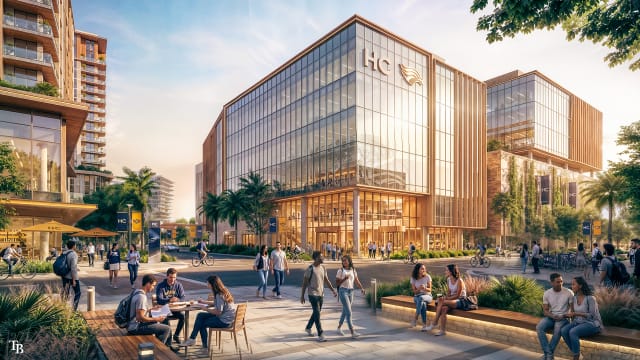

Hillsborough County stands at an inflection point. The Tampa Bay Rays’ proposal to build a stadium and mixed‑use district on the Hillsborough Community College Dale Mabry campus is not a one‑off stadium subsidy; it is a multi‑decade neighborhood investment that can reshape the county’s tax base, workforce opportunities, and regional profile. Too many politicians still see only the upfront cost of a single building, but smart cities that win in the 21st century think like developers, not accountants. They treat sports venues as anchors for districts, not as ends in themselves. This is precisely what the Rays’ plan mirrors—the Atlanta Battery, the Columbus Arena District, the Mets’ Metropolitan Park around Citi Field, and, most recently, the District of Columbia’s push to bring the Washington Commanders back to RFK through a broader redevelopment vision. Those projects all started with a stadium, but the real payoff came from what grew around it.
Sports Talk Florida Must Reads
Díaz sparks comeback against Gil and Rays rally for 5-3 win that extends Yankees’ skid to 3
Buccaneers add some key personnel
This Is a Neighborhood, Not a Stadium
Raymond James Stadium in Tampa is a classic example of a suburban football plant: a single building surrounded by seas of parking, used a handful of days per year. The Rays’ proposal is conceptually different. On roughly 120 acres, the project envisions a $2.3 billion ballpark plus private‑financed residential, retail, hotel, and office spaces, tied into a campus‑adjacent, walkable environment. The economic analysis attached to the plan projects around $34 billion in total economic impact and nearly 12,000 jobs over time. That kind of figure is not from ticket sales alone; it comes from a year‑round mixed‑use neighborhood where people live, work, shop, and gather every day, not just on game days.
The Atlanta Battery Model
The Rays’ ownership has explicitly cited The Battery Atlanta as the model. The Braves’ Truist Park sparked a transformation of a car‑centric office corridor into a thriving mixed‑use district with restaurants, offices, residences, and hotels. Over a decade, the project generated hundreds of millions in new tax revenue and became a regional destination. The public investment was visible, but the long‑term return—property values, sales tax, and jobs—far exceeded it. Hillsborough County has the chance to do the same, except its anchor is not just a stadium, but a community‑college campus. That adds workforce development, education, and innovation to the mix, deepening the long‑term value.
Columbus and the Arena District Effect
Columbus’s Nationwide Arena anchors a 100‑acre Arena District that flipped a stagnant downtown fringe into a dense, tax‑generating neighborhood. Over two decades, the area added billions in assessed value and helped stabilize the broader downtown core. The initial public costs were real, but the back‑end upside in property and sales tax, plus quality‑of‑life benefits, made the project a clear win. This is the template: build a placemaking district, not a stadium. When the Rays’ plan is viewed through this lens, the $1+ billion public‑private package starts to look like seed capital for a new urban node, not a one‑time giveaway.
The Washington Commanders and the RFK Redevelopment Vision
Washington, D.C.’s effort to bring the Commanders back to the RFK Stadium site is another example of how modern cities frame stadium projects as district‑scale redevelopment, not sports subsidies. The District’s negotiations have centered on unlocking federal land, extending the site lease, and enabling a multi‑billion‑dollar transformation of the Anacostia River corridor. The stadium is only one piece of a larger plan that includes housing, retail, parkland, and community amenities.
City leaders have repeatedly emphasized that the value proposition is not the football team itself—it’s the opportunity to convert an underutilized, fenced‑off expanse of asphalt into a vibrant neighborhood that generates tax revenue, activates the waterfront, and reconnects surrounding communities. The Commanders are the catalyst, but the long‑term return comes from the district that grows around them. This is exactly the mindset Hillsborough County must adopt: the stadium is the spark, not the product.
The Mets’ Metropolitan Park as a Parallel
In Queens, the New York Mets are advancing “Metropolitan Park,” an $8 billion mixed‑use district around Citi Field that includes a hotel, entertainment, retail, a casino, and a large public park. This is not a stadium subsidy; it is a multi‑decade bet on land value creation. New York is betting that the district will pay back the city many times over in tax receipts and ridership benefits. If Queens can treat a baseball park as the backbone of a regional entertainment and real estate play, then Hillsborough can treat the Rays’ campus‑adjacent project as the backbone of a Bay‑area‑facing neighborhood.
How the Rays’ Plan Lifts the Whole Region
The Rays’ mixed‑use district fits naturally within a larger regional ecosystem. The Buccaneers’ stadium and the Yankees’ minor‑league complex at George M. Steinbrenner Field are already generating visitors and events. Over time, a successful Rays‑anchored district can amplify demand for those facilities by creating a more connected, destination‑rich corridor. More people drawn to the new district will also visit nearby venues, increasing their concession and ticket revenue, and supporting ancillary services like hotels, restaurants, and transportation. The Rays’ project does not stand alone; it becomes a multiplier for existing sports and tourism assets.
Why Long‑Term Thinking Beats Short‑Term Math
Politicians who fixate on the sticker price of the stadium are thinking like accountants, not city builders. They ignore land‑use economics, value capture, and the compounding effect of a stable, tax‑generating neighborhood. The Atlanta Battery, Columbus Arena District, the RFK redevelopment push in Washington, and Metropolitan Park all show that the real payoff from these projects arrives over 10, 20, or 30 years. They treat the stadium as a catalyst, not the endpoint. Hillsborough County has a choice: it can reject the Rays’ plan as “too expensive,” or it can embrace it as seed capital for a new economic node tied to education, housing, and recreation.
A Defining Moment For County Leaders
For Hillsborough County leaders, the message should be clear. The Rays’ proposal is not a legacy‑building vanity project; it is a place‑based growth strategy. The county can either:
- Invest now to activate a 120‑acre campus‑adjacent site into a mixed‑use district, or
- Leave it underutilized while other cities accelerate ahead with district‑level redevelopment plays.
Once the district starts generating homes, offices, and retail, the incremental tax receipts will grow year after year. The initial investment looks like a liability only if you refuse to look beyond the first decade. Everyone who understands modern urban economics knows that the real return on a stadium is what happens around it, not the concrete and steel of the bowl itself.