Connect with us

Business

How the AI data center boom is breathing new life into dirty, old coal plants
Published

on


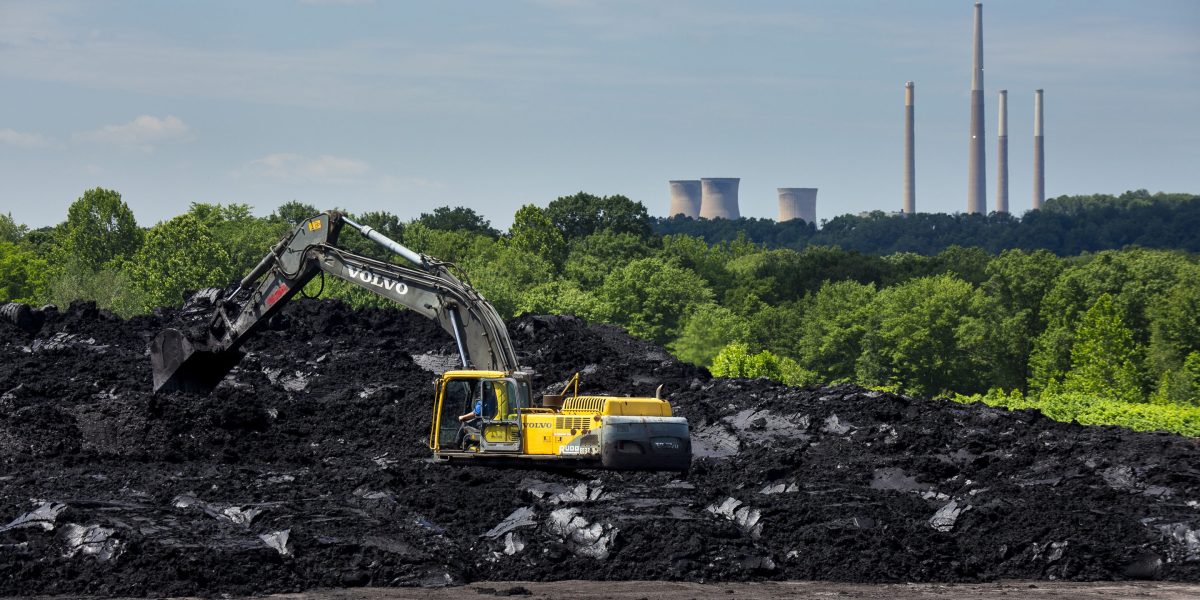
When the Homer City power plant—the largest coal-fired facility in Pennsylvania—shuttered in 2023, it marked the end of a dirty era for the coal plants that dominated America’s electric grid for over half a century. Now, in a whirlwind turnaround, many of them are being revived to fuel the AI era.

Earlier this year, developers announced they would take the coal plant’s corpse—and its invaluable grid interconnections—and resurrect it into the Homer City Energy Campus, a sprawling AI data center complex powered by the largest natural gas-fired power plant in the country, opening on a fast-tracked timeline in 2027.

With U.S. electricity demand projected to surge by as much as 60% through 2050 to fuel the AI boom—initiating a race against time to build sufficient power generation—the strong old bones of closed or retiring coal plants offer a shortcut to get new power projects online much more quickly. They can skip the two-year queue for high-voltage grid connections—regardless of whether these projects are for gas, wind, solar, geothermal, or even new-age nuclear.

“Our grid isn’t short on opportunity — it’s short on time,” said Carson Kearl, Enverus senior analyst for energy and AI. “These grid interconnections are up for grabs for new power projects when these coal plants roll off.

“The No. 1 priority for Big Tech has changed to [speed] to energy, and this is the fastest way to go in a lot of cases,” Kearl told Fortune.

American coal power plunged from 50% of the nation’s grid as recently as 2005 down to just 16% and falling today, courtesy of the shale gas drilling rush and the rise of renewables. But coal still represents more than half of the grid’s carbon emissions. While wind and solar power are emission-free, switching to new gas plants still represents a 60% emissions reduction from coal.

In the last two decades, as more coal plants closed, U.S. power emissions plummeted 40%, accounting for more than 75% of the nation’s total decline in carbon dioxide emissions, according to the Environmental Protection Agency.

The energy research firm Enverus estimates that at least 70 gigawatts of retired coal power capacity—enough to power 50 million homes, or almost 100 data centers—can be converted to clean (or cleaner) power sources.

Power generator and utility owner Xcel Energy (No. 319 on the Fortune 500) is in the process of converting old coal plants to both gas-fired and renewable power from Minnesota to Texas. And many more projects are on the way in the years to come, said Xcel chairman and CEO Bob Frenzel.

“Tech is looking for speed, they’re looking for electricity and, in some cases, we have both,” Frenzel told Fortune. “We’ve been able to use those interconnections quite successfully to repower with more efficient and more clean energy resources.”

Xcel Energy CEO Bob Frenzel, at the 2025 Semafor World Economy Summit, discusses energy needs and economic outlooks.

Switching to wind, solar, gas, nuclear, and more

Most new power construction in the U.S. is currently concentrated on solar, wind, and accompanying battery energy storage, but the Trump administration’s war on renewables—just when the country needs more power—means wind and solar tax credits expire after 2027.

The clean energy projects underway largely will get built—some utilizing coal interconnections—but much more coal-to-gas switching will occur to meet the needs of AI, especially in gas-rich regions such as Pennsylvania, Texas, and Colorado.

“We as an industry are racing to meet the needs of this new critical national security asset,” Frenzel said of the AI boom. “We’re excited about the opportunity, but it’s going to take an all-hands approach to get it done.

“After [renewable tax credits expire], we as a country must commercialize other assets. Gas is a great bridge fuel, and we’re going to continue to use a lot of gas,” Frenzel added.

In the 2030s, new nuclear and geothermal power facilities will come online, he said, but those generation sources require more development time and permitting hurdles.

In Sherburne County, Minnesota, Xcel is retiring its legacy coal plant, taking the first unit offline last year and fully closing it by 2030. In its place, Xcel is developing an array of solar, wind, and battery power. The project includes the longest-duration battery storage in the country, a 100-hour battery system developed by Form Energy. The goal is to power a data center hub there, Frenzel said. Xcel and Meta are working together on a Minnesota project. Amazon also recently bought adjacent land, although its plans are currently paused.

In the Texas Panhandle, Xcel just converted its Harrington coal plant to gas-fired power. Up next, is the nearby Tolk coal facility also slated for a switch to gas. Xcel plans to build about 2 gigawatts of new wind and solar power in the area to meet oil and gas industry electrification needs, as well as for the transformation of a crypto mining site into a data center complex, Frenzel said.

Likewise, Xcel is almost finished converting its Pawnee coal plant in Colorado to gas-fired power. Xcel’s Hayden coal plant in Colorado is slated for closure in 2028, and geothermal power is under consideration for that site. Xcel is working with data center developer QTS in the state.

In a more unique twist on coal-to-gas switching, the Intermountain coal plant in Utah is switching to gas, but it’s also utilizing a green hydrogen blend with the gas to make it burn cleaner. And some coal-to-gas involves using battery storage as well. The AES Petersburg coal plant in Indiana is switching to a gas-fired and battery storage combo complex.

Elsewhere in the country, even coal-to-nuclear plans are underway. Bill Gates’ TerraPower is developing a next-generation nuclear plant slated to open by 2030 on an expedited schedule—in a partnership with Sabey Data Centers—utilizing the interconnections of the Naughton coal and gas plant, which will start closing next year.

Still, even as coal plant retirements were moved up in recent years, some are being pushed backwards again toward their original closure dates now that the grid is being strained and the Trump administration is championing coal power.

For instance, Maryland’s last coal plant, Brandon Shores, was slated to close this year, but will now stay up until 2029 as a power bridge for the AI boom. Likewise, the J.H. Campbell coal plant in Michigan was extended from its May closure date until at least November.

The Trump administration’s orders to keep “beautiful clean coal” alive are only temporary. The plants are still going to close; they just received stays on their execution dates.

The “clean coal” phrasing was part of a lobbying and marketing push for more modernized—and less dirty—coal plants about 15 years ago, but the language has largely disappeared outside of the White House as coal continues to be replaced by renewables and cleaner, cheaper gas.

The coal lobbying group, Americans for Balanced Energy Choices, rebranded in 2008 as the American Coalition for Clean Coal Electricity. They gave up on that in 2019, changing to the more succinct and generically named America’s Power. Since then, utilities and railroads have left the group, leaving its membership only to coal companies.

Coal smoke and steam vapor pour out of the Bruce Mansfield Power Plant across from a largely abandoned children's park in Shippingport, Pennsylvania prior to the plant shuttering in 2019.
Coal smoke and steam vapor pour out of the Bruce Mansfield Power Plant across from a largely abandoned children’s park in Shippingport, Pennsylvania prior to the plant shuttering in 2019.

Big Appalachian gas opportunity

In July, about 85 miles west of Homer City in Pennsylvania, it was announced by the project’s developers that the old Bruce Mansfield coal plant, padlocked in 2019, would be converted to gas-fired power as the new Shippingport Power Station to help fuel the AI revolution.

That same day, the developers also publicized the largest natural gas producer in the Appalachia region, EQT, would supply both the Shippingport and Homer City projects with a combined 1.5 billion cubic feet per day of gas supplies.

“Just to put this in perspective, that’s enough natural gas to power two of New York City. Scale matters,” EQT CEO Toby Rice told Fortune. “Homer City and Shippingport are just the first steps of multiple steps in multiple projects, because I do believe that cluster effect is real. They already have connections to the grid, which is a huge fast pass.”

EQT is ready to help lead an AI tech boom in Pennsylvania and the broader Appalachia region with the advantage that it’s home to the largest natural gas field in the country, the Marcellus Shale. And EQT has its own pipeline business to connect directly to data centers as needed.

Rice is leading the charge to make natural gas as clean as possible, through improved technology and upcoming carbon capture and storage projects. It incudes a marketing push—after all, “natural gas” sounds much nicer than “methane.” “People need to understand the natural gas decarbonization train has not slowed down,” he said.

Rusty Hutson, the CEO of gas producer Diversified Energy agrees. Methane is the product, he said, and the producers don’t want to waste the gas in emissions. “We want to sell it. At the end of the day, going through a pipeline and going through a meter is much more beneficial to us than any emissions are,” Hutson told Fortune.

While EQT will focus on drilling new wells to feed the AI beast, Diversified operates more mature gas wells that are often unwanted by the biggest players.

“Data centers, especially in the Appalachian basin, are going to be a huge demand on natural gas,” Hutson said. “We can’t afford to lose any production because other companies are focused on the drill bit and not really on existing wells and existing operations. That’s where we come in to maintain and produce those wells in an efficient manner to keep them in production for longer.”

As Rice and Hutson argued, the trend is much bigger though than an Appalachia story. Enverus’ Kearl said the AI race may very well be won or lost based on how rapidly old coal plants can be repowered to other generation sources nationwide.

“Repowering isn’t just a cost play—it’s a political and logistical shortcut to growing 24/7, low-carbon power,” Kearl said.


Source link

Continue Reading

Business

Construction workers are earning up to 30% more in the data center boom

Published

on


Big Tech’s AI arms race is fueling a massive investment surge in data centers with construction worker labor valued at a premium. 

Despite some concerns of an AI bubble, data center hyperscalers like Google, Amazon, and Meta continue to invest heavily into AI infrastructure. In effect, construction workers’ salaries are being inflated to satisfy a seemingly insatiable AI demand, experts tell Fortune.

In 2026 alone, upwards of $100 billion could be invested by tech companies into the data center buildout in the U.S., Raul Martynek, the CEO of DataBank, a company that contracts with tech giants to construct data centers, told Fortune.

In November, Bank of Americaestimated global hyperscale spending is rising 67% in 2025 and another 31% in 2026, totaling a massive $611 billion investment for the AI buildout in just two years.

Given the high demand, construction workers are experiencing a pay bump for data center projects.

Construction projects generally operate on tight margins, with clients being very cost-conscious, Fraser Patterson, CEO of Skillit, an AI-powered hiring platform for construction workers, told Fortune.

But some of the top 50 contractors by size in the country have seen their revenue double in a 12-month period based on data center construction, which is allowing them to pay their workers more, according to Patterson.

“Because of the huge demand and the nature of this construction work, which is fueling the arms race of AI… the budgets are not as tight,” he said. “I would say they’re a little more frothy.”

On Skillit, the average salary for construction projects that aren’t building data centers is $62,000, or $29.80 an hour, Patterson said. The workers that use the platform comprise 40 different trades and have a wide range of experience from heavy equipment operators to electricians, with eight years as the average years of experience.

But when it comes to data centers, the same workers make an average salary of $81,800 or $39.33 per hour, Patterson said, increasing salaries by just under 32% on average.

Some construction workers are even hitting the six-figure mark after their salaries rose for data center projects, according to The Wall Street Journal. And the data center boom doesn’t show any signs it’s slowing down anytime soon.

Tech companies like Google, Amazon, and Microsoft operate 522 data centers and are developing 411 more, according to The Wall Street Journal, citing data from Synergy Research Group. 

Patterson said construction workers are being paid more to work on building data centers in part due to condensed project timelines, which require complex coordination or machinery and skilled labor.

Projects that would usually take a couple of years to finish are being completed—in some instances—as quickly as six months, he said.

It is unclear how long the data center boom might last, but Patterson said it has in part convinced a growing number of Gen Z workers and recent college grads to choose construction trades as their career path.

“AI is creating a lot of job anxiety around knowledge workers,” Patterson said. “Construction work is, by definition, very hard to automate.”

“I think you’re starting to see a change in the labor market,” he added.


Source link

Continue Reading

Business

Netflix cofounder started his career selling vacuums door-to-door before college—now, his $440 billion streaming giant is buying Warner Bros. and HBO

Published

on


Reed Hastings may soon pull off one of the biggest deals in entertainment history. On Thursday, Netflix announced plans to acquire Warner Bros.—home to franchises like Dune, Harry Potter, and DC Universe, along with streamer HBO Max—in a total enterprise value deal of $83 billion. The move is set to cement Netflix as a media juggernaut that now rivals the legacy Hollywood giants it once disrupted.

It’s a remarkable trajectory for Netflix’s cofounder, Hastings—a self-made billionaire who found a love for business starting as a teenage door-to-door salesperson.

“I took a year off between high school and college and sold Rainbow vacuum cleaners door to door,” Hastings recalled to The New York Timesin 2006. “I started it as a summer job and found I liked it. As a sales pitch, I cleaned the carpet with the vacuum the customer had and then cleaned it with the Rainbow.”

That scrappy sales job was the first exposure to how to properly read customers—an instinct that would later shape Netflix’s user-obsessed culture. After graduating from Bowdoin College in 1983, Hastings considered joining the Marine Corps but ultimately joined the Peace Corps, teaching math in Eswatini for two years. When he returned to the U.S., he obtained a master’s in computer science from Stanford and began his career in tech.

The idea for Netflix reportedly came a few years later in the late 1990s. After misplacing a VHS copy of Apollo 13 and getting hit with a $40 late fee at Blockbuster, Hastings began exploring a mail-order rental service. While it’s an origin story that has since been debated, it marked the start of a company that would reshape global entertainment.

Hastings stepped back as CEO in 2023 and now serves as Netflix’s chairman of the board. He has amassed a net worth of about $5.6 billion. He’d be even richer if he didn’t keep offloading his shares in the company and making record-breaking charitable donations.

Netflix’s secret for success: finding the right people

Hastings has long said that one of the biggest drivers of Netflix’s success is its focus on hiring and keeping exceptional talent.

“If you’re going to win the championship, you got to have incredible talent in every position. And that’s how we think about it,” he told CNBC in 2020. “We encourage people to focus on who of your employees would you fight hard to keep if they were going to another company? And those are the ones we want to hold onto.”

To secure top performers, Hastings said he was more than willing to pay for above-market rates. 

“With a fixed amount of money for salaries and a project I needed to complete, I had a choice: Hire 10 to 25 average engineers, or hire one ‘rock-star’ and pay significantly more than what I’d pay the others, if necessary,” Hastings wrote. “Over the years, I’ve come to see that the best programmer doesn’t add 10 times the value. He or she adds more like a 100 times.”

That mindset also guided Netflix’s leadership transition. When Hastings stepped back from the C-suite, the company didn’t pick a single successor—it picked two. Greg Peters joined Ted Sarandos as co-CEO in 2023.

“It’s a high-performance technique,” Hastings said, speaking about the co-CEO model. “It’s not for most situations and most companies. But if you’ve got two people that work really well together and complement and extend and trust each other, then it’s worth doing.”

Netflix’s stock has soared more than 80,000% since its IPO in 2002, adjusting for stock splits.

Netflix brought unlimited PTO into the mainstream

Netflix’s flexible workplace culture has also played a key role in its success, with Hastings often known for prioritizing time off to recharge. 

“I take a lot of vacation, and I’m hoping that certainly sets an example,” the former CEO said in 2015. “It is helpful. You often do your best thinking when you’re off hiking in some mountain or something. You get a different perspective on things.”

The company was one of the first to introduce unlimited PTO, a policy that many firms have since adopted. About 57% of retail investors have said it could improve overall company performance, according to a survey by Bloomberg. Critics have argued that such policies can backfire when employees feel guilty taking time off, but Hastings has maintained that freedom is core to Netflix’s identity. 

“We are fundamentally dedicated to employee freedom because that makes us more flexible, and we’ve had to adapt so much back from DVD by mail to leading streaming today,” Hastings said. “If you give employees freedom you’ve got a better chance at that success.”

Netflix’s other cofounder, Marc Randolph, embraced a similar philosophy of valuing work-life balance.

“For over thirty years, I had a hard cut-off on Tuesdays. Rain or shine, I left at exactly 5 p.m. and spent the evening with my best friend. We would go to a movie, have dinner, or just go window-shopping downtown together,” Randolph wrote in a LinkedIn post.

“Those Tuesday nights kept me sane. And they put the rest of my work in perspective.”


Source link

Continue Reading

Business

‘This species is recovering’: Jaguar spotted in Arizona, far from Central and South American core

Published

on


The spots gave it away. Just like a human fingerprint, the rosette pattern on each jaguar is unique so researchers knew they had a new animal on their hands after reviewing images captured by a remote camera in southern Arizona.

The University of Arizona Wild Cat Research and Conservation Center says it’s the fifth big cat over the last 15 years to be spotted in the area after crossing the U.S.-Mexico border. The animal was captured by the camera as it visited a watering hole in November, its distinctive spots setting it apart from previous sightings.

“We’re very excited. It signifies this edge population of jaguars continues to come here because they’re finding what they need,” Susan Malusa, director of the center’s jaguar and ocelot project, said during an interview Thursday.

The team is now working to collect scat samples to conduct genetic analysis and determine the sex and other details about the new jaguar, including what it likes to eat. The menu can include everything from skunks and javelina to small deer.

As an indicator species, Malusa said the continued presence of big cats in the region suggests a healthy landscape but that climate change and border barriers can threaten migratory corridors. She explained that warming temperatures and significant drought increase the urgency to ensure connectivity for jaguars with their historic range in Arizona.

More than 99% of the jaguar’s range is found in Central and South America, and the few male jaguars that have been spotted in the U.S. are believed to have dispersed from core populations in Mexico, according to the U.S. Fish and Wildlife Service. Officials have said that jaguar breeding in the U.S. has not been documented in more than 100 years.

Federal biologists have listed primary threats to the endangered species as habitat loss and fragmentation along with the animals being targeted for trophies and illegal trade.

The Fish and Wildlife Service issued a final rule in 2024, revising the habitat set aside for jaguars in response to a legal challenge. The area was reduced to about 1,000 square miles (2,590 square kilometers) in Arizona’s Pima, Santa Cruz and Cochise counties.

Recent detection data supports findings that a jaguar appears every few years, Malusa said, with movement often tied to the availability of water. When food and water are plentiful, there’s less movement.

In the case of Jaguar #5, she said it was remarkable that the cat kept returning to the area over a 10-day period. Otherwise, she described the animals as quite elusive.

“That’s the message — that this species is recovering,” Malusa said. “We want people to know that and that we still do have a chance to get it right and keep these corridors open.”


Source link

Continue Reading

Trending

Copyright © Miami Select.