Business
How Taylor Morrison CEO Sheryl Palmer leads differently after almost 20 years—and who she’s met along the way
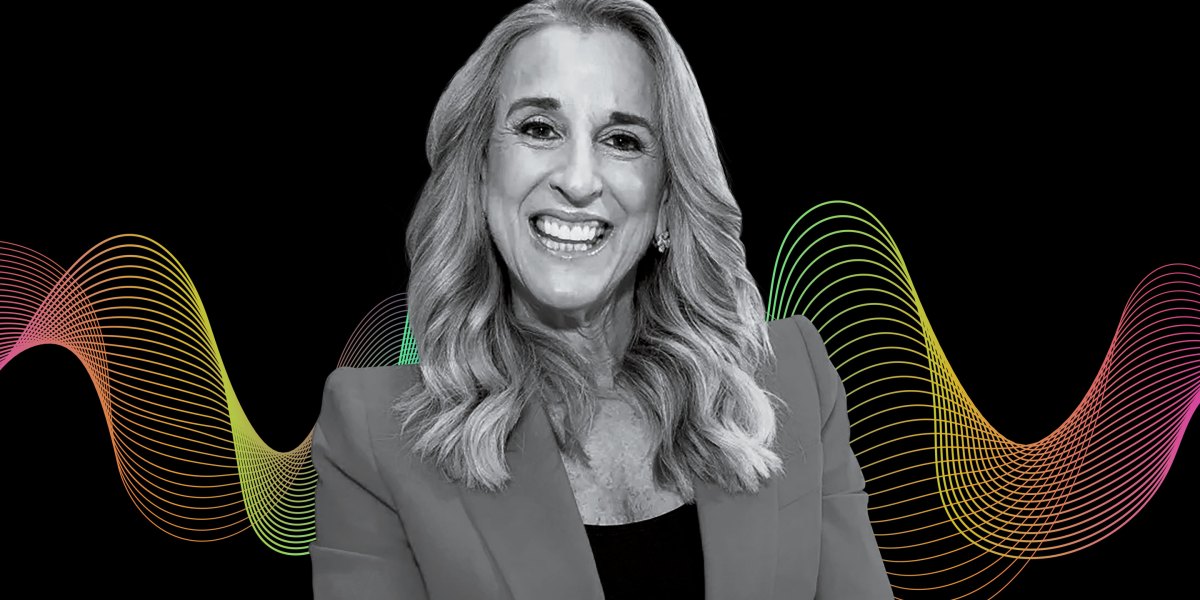
On this episode of Fortune’s Leadership Next podcast, cohosts Diane Brady, executive editorial director of the Fortune CEO Initiative and Fortune Live Media, and editorial director Kristin Stoller talk to Sheryl Palmer, chairman and CEO of Taylor Morrison. They reflect on the pressure CEOs face to speak about societal issues; how to work effectively with both sides of the political aisle; and why Palmer has spent almost 20 years with the company despite a brief resignation in 2010.
Listen to the episode or read the transcript below.
Transcript:
Diane Brady: Hello everybody, and welcome to Leadership Next. I’m Diane Brady.
Kristin Stoller: And I’m Kristin Stoller.
Brady: Quantum computing has the potential to transform industries by solving optimization problems, boosting machine learning, and sparking innovation in logistics, finance, and material science. Jason Girzadas, CEO of Deloitte US, is a longtime sponsor of this podcast and is here with us today. Hi Jason, thanks for joining us.
Jason Girzadas: Great to see you Diane.
Brady: So what is quantum computing, and how do you see it transforming industries?
Girzadas: Well, quantum computing has been a topic for some time in research circles, certainly closely watched by business, but it’s fundamentally a different computing paradigm that uses the principles of physics instead of mathematics to drive the computing outcomes. That’s been largely the domain of research, and it’s becoming seen as being a more viable commercial computing methodology and an approach. And I think the real uses will be ultimately around very complex optimization scenarios, further enhancements to scaling, machine learning, and also very complicated simulations that could be relevant to a whole host of different business applications.
Stoller: Jason, what steps should leaders take to prepare for both its potential benefits as well as its potential risks?
Girzadas: It’s really about readiness planning right now, and preparing an organization to understand the implications. So it’s about understanding what skill sets would be required, what type of cybersecurity protocols would need to be in place, and begin to think about the types of use cases that would be very germane around optimization and simulation.
Stoller: Excellent advice. Thank you so much, Jason.
Brady: Thanks, Jason.
Brady: In this episode, we are speaking with Sheryl Palmer, who is the Chairman and CEO of Taylor Morrison. And Sheryl, you are the first and only woman to lead a public home builder. Still to this day. You went there in 2007 and it’s an incredible job you’ve done, we’ll be talking about that. We are taping this episode here in Scottsdale, Arizona, before an audience of leaders. So thank you—for Deloitte’s North America Next Generation CEO program. Thank you all for joining us for this live conversation.
Stoller: Absolutely, and thank you, Sheryl, for joining us as well.
Sheryl Palmer: Yeah, of course.
Stoller: So one of the things I love, Sheryl, and that you’re so good at, is—I love hearing stories. You’re really good at telling stories. You have interviewed so many high profile people, and I have it here, George W. Bush, Michelle Obama, Steve Case. You told Diane and I that you also worked for Ray Kroc at McDonald’s, which is a really fun surprise. But I’d love to hear your top story of interacting with them and the leadership lessons that you think about to this day.
Palmer: Oh, goodness, so many. But if I were to–specific to your question, Kristin–you know, I think about—I’ve had the absolutely amazing opportunity to interview George W. three times, and so the first time was very systematic. I had to go through Secret Service to get all my questions. And the third time was very casual, and his authenticity and candor really came out because he was just not—he wasn’t on guard at all. He was very engaging. But what I loved about him was just his genuine one care: that I looked good in the interview, which how unique would that be? Right? We’re walking from the green room, and he’s like, “don’t worry. You got this. It’s my job to make you look good.” And I’m like, “No, I don’t think it goes that way, but I so appreciate that.” But he was really quite genuine. And then from a leadership standpoint, and this might sound so silly, but three interviews, I also had the opportunity to be in the rotunda when his dad passed and I’d sent him a note that I was sending my respects, and each one of those four communications, I got a handwritten letter from him, and that’s a lost…
Stoller: My mom says it really matters.
Palmer: And it really matters!
Brady: I just want to, because we’re before an audience of leaders, I want to also level-set why you’re doing interviews. You’ve got a podcast: is that something you’re doing because you think it’s important for a CEO to do? Is it something you’re doing just because of natural curiosity? And just give us some sense as to why you’re doing these interviews? It’s intimidating for us, the interviewers, as you can imagine.
Palmer: Well, you know, I’ve been very fortunate. The first time was a circumstance where we were owned by private equity, and at our closing dinner when we went public, one of my new board members was Senator Flake, and he arranged it. And so it was just a very small intimate group, probably about 50 of us, and that was my first time. I had dinner with him, and then I interviewed him. Then I got asked to do the others. One was for a veterans cause, and he supports and paints veterans. But what it did for me, Diane, is in the research, which you will know so much better than I do, I learned so much. I read like three of his books, and I reached out to find friends that knew him personally, so that you’re more prepared. And that, to me, is the exciting part. Same with Donna Brazile and Karl Rove, when I interviewed them together. On TV, they’re very different, and this was for the home building association that they had very different beliefs. But the reality is, they’re two humans that are on different sides of the aisle, but at the end of the day, they’re still friends, and so being able to get into that chemistry and really get into the issues that can affect the veterans, if it was George Bush or our home builder association with the other two, you actually can make a difference through that process.
Brady: Well, let’s stay in the moment. You have a fascinating background—some of the people you’ve met—but you actually gave up an opportunity to go to Washington, which many of you in this room will have to do throughout your careers if you don’t already do it, to come here. Life’s about tough choices. What did you give up to be here? And why?
Palmer: Well, it really wasn’t a tough choice, because I had already made the commitment quite some time ago, and we have been trying to schedule a meeting with the new director of the FHFA, Bill Pulte. And in our industry, I think I’m known as the one with a lot of mortgage knowledge. I’ve taken the time to really understand. And so Bill had reached out to me and said, “I really need you at this meeting.” And so there were five CEOs in total that were going to join. He had reached out, and so I really wanted to be there. But in all fairness, we had been trying to schedule this for three months, and two weeks ago, he finally settled on a date, and we tried to see, could I be in both places? And it just wasn’t possible. So as important as that was, I know the meeting is in good hands with a lot of my peers, and I’m delighted to be here.
Stoller: But you’ve been going to Washington—this wouldn’t have been your first time, right? So I wonder, Sheryl, what advice do you have for CEOs who are going to have to do this at some point in their career, you know, dealing with administrations on both sides of the aisle?
Palmer: You know, it’s a really good question Kristin, because, like anywhere, it’s about relationships. And when you’re—I remember my first time on the Hill, you know, I was really focused on lobbying particular initiatives. This goes back almost 20 years, and it was daunting. It was scary, I have to be honest. It was like, these guys, they’re representatives of our country. They’ve been voted in by the people. They must be so informed. First thing I learned is they’re not as informed as you think, about all the issues.
Brady: We see that on TV.
Palmer: Okay, good. And I say that with respect that they’re learning almost as they’re walking in the meeting on some issues. And here, for the folks that are out there lobbying, these are really big, important issues that affect our business and affect the consumer. I mean, our business affects consumers all over the country, and so I was actually a little tiffed that they wouldn’t take the time, just like we talked about being prepared. But what you quickly realize is it’s not about the relationships you build when you’re in D.C. It’s about the relationships you build when you’re not in their office with their staff, because now all of a sudden, you have a different and personal connection, and that’s when real things happen, and it doesn’t matter what the issue is. So it’s about education, informing, relationships, and perseverance, because none of this stuff happens fast. I think about the Great Financial Crisis and how difficult that was. And how impactful the decisions they were making in banking [were] on our industry, and honestly, they were somewhat oblivious to it. And so it’s really about educating.
Brady: Now, you came to the role in 2007, and I hope you don’t mind that I mentioned that you’re the first and only woman. I don’t want to see everything through a gender lens, of course. But I am curious, first of all, what positioned you to get that? You started at McDonald’s…
Palmer: …I did.
Brady: You even knew Ray Kroc, who I believe, yelled at you.
Palmer: He did.
Brady: So what made you the right person to lead Taylor Morrison was in a very interesting time, the company had just come together, pre-IPO. Frankly, we knew at least some type of crisis was looming. In 2007, it hadn’t fully come to rest yet. What made you the right person for that job?
Palmer: It hadn’t come to roost across the country, but it had in certain markets. And I had been the area president in Nevada for another brand. Another big, top five builder, and they had gone through a significant crisis. It was the first place that it hit. I left that to actually stay home with my kids, because they were heading off to college, and I felt like I’ve been traveling my entire career. And then this opportunity came, and when I joined, honestly, I joined Morrison Homes in 2006, so I’m just about at my 20 years. And I joined as an area president. It seemed like five minutes after I joined, there were discussions about—and we were a private U.S. company of a U.K. public, so we were a [subsidiary] of a U.K. public [company]. And it seemed like five minutes after I joined there was discussion about the two U.K. publics that had North American holdings coming together. So we spent about seven, eight months working on that. And there’s a lot of different laws in the U.K. So somebody else was brought in, the CEO of one of the companies was appointed, and about 90 days later, the CEO from the U.K. said, I think we need to make a change, and asked me to come to meet the board in the U.K. And I did. And you know, to be quite honest, there’s a little bit of fake it till you make it when you take on a new, big role. And it was private, so I didn’t have any public concerns about how to run a public company. Got the role, and it was all about surrounding myself with good people. I don’t think either of the companies, if I were to be really honest, I don’t think either of the companies would have made it independent at that time. Because, you’re right. It was 2006, then 2007 when I took over. But the next five years were really tough, and then the U.K. sold us to private equity.
Stoller: Was there a moment either, you know, around 2008 during the housing crash, or, you know, a few years later, when you did the IPO, that you thought, this is too much for me. I want out?
Palmer: There was a point in 2010 where I actually resigned.
Stoller: Really? Tell us about that.
Palmer: I was owned by two private equity firms. They, and I hate to talk about the woman card, but they really didn’t have females…
Brady: …I talk about the women card all of the time, I just like to disclose…
Palmer: …they didn’t have any women in their portfolio as leaders, and, honestly, their style was about second guessing every decision, and you can’t run a company that way. I mean, I can’t stop with every decision and go ask permission, and if you don’t have trust in my judgment, then I’m the wrong person. And so I made a really, really hard decision, and thought, the best thing I can do for this company is step away and they can bring somebody in that they have confidence in. And so I took the day off because I knew this would be hard for me. I had been there for, you know, a number of years already, and I sent the note, and I had one of the board members call, and I’m like, I’ll be happy to stay, you know, as long as you need, or I’ll be happy to pack up. Whatever works best for you, but I’m happy to help find my replacement. And he calls, he’s like, “so where are you going?” And I’m like, “just like I said in my letter, I’m not.” But I had been through other experiences in life, that life is short, and, you know, things really matter. And he’s like, “you really don’t have another job?” I’m like, “No. I mean, what I said is true. I’ll stay as long as you need.” And he called one of the other private equity guys and asked him to come meet. And I’m like, “we don’t need to do that. It’s really okay.” And they came, we met for dinner, and after about four hours, he’s like, “I’d really ask you to give me another chance.” And next year, I was the CEO of the Year for their private equity firm. I took the company public
Stoller: How did he convince you? What did he say?
Palmer: You know, at that point, I had nothing to lose, and sometimes it’s okay just to stand alone and not have the fear of repercussions. I had already resigned, and you don’t resign and think you’re staying, that wasn’t my plan. And he just, I was very honest with him on the whys and the way he was treating and the way he was undermining, and how difficult it was to operate a company that way. And if you don’t trust, then really you should move on.
Brady: Which gets back to one of the questions that this program addresses, which is, not who wants to be a CEO, but why would you want to be a CEO? Let’s start with, when did you realize, you know what, I can run this thing, and I want to run this?
Palmer: When I got it. I mean, if I were truly honest, it was a big move from running a region to running a company that was being merged. So two big companies. But that’s, like I said, it’s when you really surround yourself with experts in every function, and you know enough to be dangerous at 5,000 feet because you’re generally operating at 30,000 and you have to know when to, like, swoop in and when to swoop out and let your team do what they do. You know, the honest-to-God truth, Diane, is I didn’t know anything more the day I took the job than the day before. But when you get in the role, you have access to a lot more information and a lot more people, and if you use that well and the team well, you begin to grow confidence.
Brady: So when you lead in, day one, now you’re 18 years into the job. 20, if you include when you joined the unit. How do you lead differently today? Obviously the environment is different. But when you think about yourself as a leader, and you go back to that starting-out point, any advice you would give yourself?
Palmer: Well, leading in crisis is different than leading a stable business. When we brought the two companies together, it was a crisis. The Great Financial Crisis was hard, and it was almost taking a street fighting mentality, and it did mean you were involved in a lot of details. I would say COVID [was] similar. It’s a crisis when someone is uncertain and scared and nervous, and everyone’s got a different emotion, and there’s no right or wrong. You do swoop in. But I think my lesson is to know the times when to do that and when to back away.
Stoller: I’ll also add on that, because Sheryl, I feel like for me, in my career, I’ve been told the only way to get ahead is by job hopping, moving companies. You’ve now been at the same one for 20 years. Why didn’t you move around? Why have you stuck it out for that?
Palmer: I love what we do. I love what our company does. When I joined, [and] our two companies came together, we were [worth] less than $1 billion dollars, and this year we’ll be closer to $9 billion. We went down to 600 people, and now we’re at almost 3,500. So I feel like, in some ways, I gave birth to this company, and what we’ve built—we’ve done seven acquisitions. Most of my senior team has been here. I think among my 10 direct reports, we have over 150 years of experience in the company. So I did it for the people. I’ve stayed for the people. I love what we do, and I love the impact. And it’s really important to stay grounded, Kristin, in what we do. It’s not just running a company, but building communities where people get—it’s soft and squishy. It really is, but it’s important to keep a foot on the ground and recognize the impact that we have every day when families get to move into a home and raise their families.
Stoller: You have a very diverse workforce too. You have people of all ages. One of the things I was always really curious about, especially now, when you have all these external pressures coming at you, and a young generation—Gen Z, Gen alpha—who really want their CEOs to be very candid, very open: how do you balance that with with the pressures you have from up top? Everybody wants to know you. You can’t know all of them.
Palmer: Yeah, it’s interesting. I have a CMO who is remarkably talented. She joined the organization I think just about 10 years ago, very young. I think I brought her in as a PR manager, and now she’s our CMO, and she keeps me pretty grounded on the difference in our workforce, and particularly about the issues. And my own internal policy is I will talk about the issues within the organization, [but] I won’t talk about people. So for me, if I can keep that separation, it should never be personal. I think for anybody in my role, it should never be personal. But what the organization knows they have, from me, is total honesty and transparency. COVID is a great example of that. I had half the organization that was like, do not make us get a vaccine. You know, that is not your decision. I had half the organization that’s like, don’t let them come to work if they don’t get a vaccine. And all I could really do is provide facts and data. We never made a decision that you had to do that. Now there was almost a time where we would have been required, but that came and went. But I was so transparent. I had weekly calls with the entire organization when we had to lay off people. These are hard conversations, but I didn’t hide behind a computer. I didn’t hide behind a memo I would get on camera. And so I don’t know them all, but I think they all think they know me really well.
Brady: One of the things, and keeping with the demographics—talk a little bit about what differentiates you from the other home builders, because I think that we tend to sometimes see it as—we talk about home building as more of a macro issue, right? Like what’s happening to housing prices. You have many different brands that I think are adapting to how people buy. You know, you’ve got a brand for renters. Talk about how you are seeing the market right now, because there’s no question there’s an affordability crisis. What are you doing about it?
Palmer: There is a significant affordability crisis, and we’ve attacked it with our rental brand, Yardly, and it’s still building lifestyle communities like we do. So we buy land, we build houses, we have a management company that rents them, but it allows for affordability with gates and a lifestyle component. So it’s very similar to what we do, but then we ultimately sell that asset to somebody that does this for a living. I used to have a business in Canada. We sold it, and we built high rises. And I remember, Diane, so vividly that over my years there we probably started with an average square footage in those units of 1,300 square feet. And maybe they sold for $600,000 or $700,000. By the time I sold that business, our average size was 600 square feet, still selling for $600,000 or $700,000 so you can only do so much to squish it down. So there’s other ways, but it all starts with the land. And it starts with some of the things we talked about with policy, because 25% of the average selling price of a home today is spent on regulation. Before I buy land, before I get a building permit, before I build the house, 25% of that average sales price is on regulation. So that’s where we’re spending a lot of time in Washington. That’s why I was supposed to be there today to talk about the things we can do. Because other countries have figured it out honestly, much better than we have.
Stoller: That’s what I’m wondering. Because you travel a lot and you get a lot of different perspectives on that. What do you think other countries are doing that the U.S. should adopt?
Palmer: Well, I had the fortune when I was owned by the Taylor Wimpey company in the U.K., and I was on their board for about eight years. So their whole process is different. We had board meetings every month. Nine months a year I was over in the U.K. But one of the most basic differences, Kristin, is every single map. So when we get an entitlement and get land approved to build houses, we get a final map. And every entitlement or final map had an overlay that said 15% of these houses are going to have to be delivered at an affordable level, meaning they have to be sold to someone at a median income, and we had to build them the same way. We all were bidding for this land, we all knew the same rules. And I’m not an advocate that we should go build section 16 housing and just go build a community of cheap or affordable houses, but integrate people, and that’s what it allowed for. So I wish we could do something like that here. There’s a few markets that have figured it out, but not enough.
Brady: One of the big questions that a lot of leaders have to deal with is, do I want to go public? And sometimes you have a choice, of course, but what have you learned in terms of running a public company? Because that’s something that a lot of companies I see now try to put off, and when you’re such a public figure—it’s very different to be a public figure now than it was two decades ago. So talk a little bit about that and just share your experience and any advice you’ve had.
Stoller: And leading through IPO, I think that’s a hard thing to do.
Palmer: But so fun. I mean, honestly, the best experience of my career.
Stoller: I haven’t heard fun yet, but I’m curious.
Palmer: It’s a lot of work, but I guess it’s because I love what I do so much. But getting to go on the road for 17 days and tell your story, probably no less than 250 times, about how we’re positioned, how we’re different. We’re the biggest home building IPO that’s ever happened. I think it’s going to be a hard one to beat, to be honest. And it was amazing. It was an amazing experience ringing the bell the first time. I think my cheekbones hurt by the end of that day. But just the pride of—I grew up in New York, but I had never been to the stock exchange. But the why, Diane, [inaudible]. I mean, if you were to really be honest about it. Sometimes I feel I live my life in six week increments. Earnings, call a board meeting, earnings, call a board meeting, and it’s a treadmill you’re on 20 hours a day.
Brady: You have this great story—this gets to the other point I was mentioning about being a public figure—where you approached Arnold Schwarzenegger. I believe he was working out at the time, and he had that like “I’ve been recognized.” But I talk to a lot of CEOs who—that is the constant scrutiny. I think you become, to your point, very humanizing to your team. And we have not talked about the various ways that you’ve done that, but you’ve done a lot. I do think to understand the public figure nature of a role, especially in areas like home building, there’s a lot of anger out there about the cost of housing, and you could be sort of a symbol of that to a lot of people. So I’d love to just get your sense as to how you navigate that, because I think you lean into it in many ways.
Palmer: Yeah, now it’s amazing how much time a day companies are spending on security. And with what happened in New York many weeks ago, it’s a little daunting. And everyone should appreciate that. Everyone believes they have the right to know everything about you and everything you’re doing at any time. I know when I separated from my husband, 10 years ago, everyone felt like they needed to know every detail. And so there are things in life that should be private, and that’s hard in a public role. I have chosen to own the impact of what we do, and so I’ve leaned in instead of out. So I do do a fair amount of media, but it’s helpful for our industry, because consumers need to be educated, and so I don’t do it for self promotion. I do it because it helps consumers recognize because, with all due respect, not everything that’s shared in the media is accurate. And so to be able to have a voice and share, I hear how often it’s impactful. Also, interestingly enough, this was the part that was surprising to me, how impactful It is to my team. They have a great deal of pride that their CEO is out and making a difference and tackling the big issues, but I’ll tackle the big issues in our industry once again. I think where it’s been most difficult for me, just honestly, is police violence, things that really don’t affect our industry, but every CEO is asked, “what’s your opinion on this or that?”
Stoller: Yeah, and when do you choose to speak up?
Palmer: And that’s the debate that I have with my team on many of these big ones. And is there a way to speak up and not take a view? Because no view, when you have these issues that are so divisive in our country today, there’s no winning. I mean, there just isn’t. Winning is being strong enough and competent enough to say how you feel, but how you do it is really important, because some people are going to agree and some aren’t. The people that agree, those are potential home buyers, and the people that don’t, aren’t. That’s not how I want to be displayed.
Brady: I want to ask, I know we’re winding up soon. The official part of this, when I talk to a lot of leaders, they often have a philosophy or tactics and strategies. For example, the more complex the external environment, sometimes people feel you need radical simplicity internally. Give me some sense as to what you’ve learned and advice you have as to the tactics for leading in what is always going to be a very complex environment that’s not going away. What have you done to sort of prioritize and know where you make the best impact?
Palmer: Great question. Volatility, to your point, is not going away. I’ve always been a believer, and I don’t know if I always have or I’ve just learned it over time, but don’t let a good crisis be wasted. When you can influence change, when you’re running 100 miles an hour, it’s really hard. But I look at the environment that we’re in today, and it’s very difficult. To your point, the affordability crisis is daunting, and our homeless challenges across the country are growing. Don’t waste the opportunity to really make a different impact. And sometimes that impact in today’s environment would be through innovation and technology and making sure we can control the things we can in the business today. And sometimes it’s about: how do you get through the other side and be in a position—many people pull back in an environment like this, in my opinion. This is the time to lean in and start making a difference. You know, we bought a big, transformational public company three weeks before COVID. I went from the smartest person in the industry, to: how stupid was that after it closed? And I believed in what we did, and you have to stay with that. We came out the other side much better. It was a good move, but it doesn’t always appear that way, and you have to, like I said before, you have to have the courage to stand alone and fight for what you believe in, because in the public market, a lot of people that don’t understand the business feel like they have a better view on it. If I could mention one other, coming right before COVID, I introduced a theme in our organization called Love the Customer. Now, love is not something that’s generally used in home building, right? It’s pretty street fighting, macho…
Brady: …I love this kitchen.
Palmer: Yeah, love doesn’t have to be sexual, right? I mean, people love football. They love bacon, right? But I would tell you, when I traveled the country to share this new mantra of who we are and how we’re going to rep ourselves internally and externally, they thought I’d lost my mind. Finally, and now, seven years into it, we stand alone because our customer experience stands apart, and that matters. So dare to be different and look for how you can differentiate yourself amongst all the noise. I think that’s really valuable, and surrounding yourself with the best of the best, you have to have a lot of humility to do that. But to me, those are probably two ingredients that really allow you to manage and lead through anything.
Stoller: That’s a great way to end. Thank you so much. Sheryl for joining us.
Brady: Thank you.
Palmer: Thank you.
Brady: Leadership Next is produced and edited by Hélène Estèves.
Stoller: Our executive producer is Lydia Randall.
Brady: Our head of video is Adam Banicki.
Stoller: Our theme is by Jason Snell.
Brady: Leadership Next is a production of Fortune Media. I’m Diane Brady.
Stoller: And I’m Kristin Stoller.
Brady: See you next time.
Leadership Next episodes are produced by Fortune‘s editorial team. The views and opinions expressed by podcasters and guests are solely their own and do not reflect the opinions of Deloitte or its personnel. Nor does Deloitte advocate or endorse any individuals or entities featured on the episodes.
