Connect with us

Business

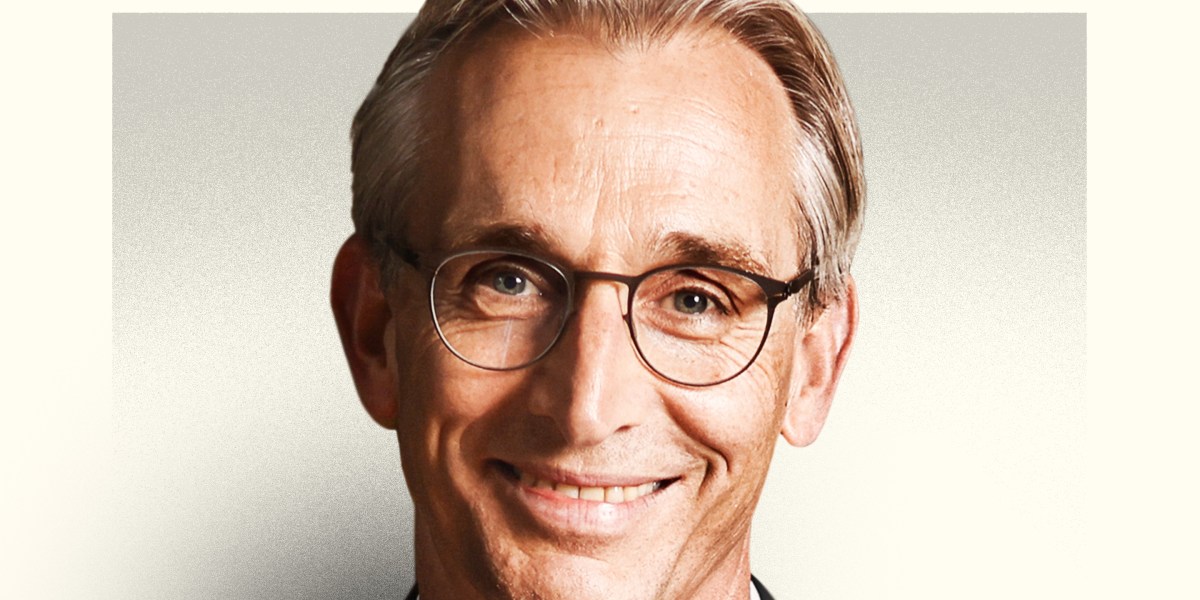
How Roy Jakobs is leveraging Dutch directness and a proactive mindset to transform Philips into a modern health-tech leader in the 21st century
Published

on


CEO Agenda provides unique insights into how leaders think and lead and what keeps them busy in a world of constant change. We look into the lives, minds and agendas of CEOs at the world’s most iconic companies.

Founded in 1891 as a light bulb manufacturer, Philips has transformed itself into a health-tech leader in the 21st century. Its early work in lighting laid the foundation for the development of X-ray tubes, which became the cornerstone of its health care business. 

The 134-year-old technology company faced perhaps the most significant crisis in its history following the 2021 U.S. recall of Philips breathing devices, including CPAP and BiPAP machines, owing to potential health risks. Roy Jakobs, who joined Philips in 2010, became CEO of the Dutch company in 2022, around the time of the crisis. Since then, he has helped bring the company into stabilization. While annual revenue has remained steady—reaching $19.5 billion in 2024—the company’s share price has risen a total of 81% since Jakobs took over. Though today the company’s share price remains below its 25-year average, Jakobs is committed to driving a long-term turnaround.

Alongside the recall, one of Jakobs’s first major actions as CEO was announcing a restructuring plan that cut 10,000 jobs—around 13% of the workforce—a move aimed at helping the company absorb settlement payouts. 

Rising patient expectations—along with technologies like remote robotics, digital health platforms, and AI-driven machine learning—are rapidly transforming health care. In response, Jakobs is driving continuous innovation at Philips by enhancing hospital patient monitoring through IntelliVue bedside, wearable, and transport monitors—seamlessly integrated with the Philips Patient Information Center iX for real-time data access—and advancing Azurion image-guided therapy platforms to support minimally invasive procedures.

210 Philips rank on Fortune 500 Europe

“Explaining the why is very important,” he says. “It’s not about where you do innovation. It’s about the impact.” He emphasizes how crucial it is for companies to stay relevant in an ever-changing market, and to do so honestly and with integrity. 

From boardrooms to soccer sidelines (he’s an avid sports enthusiast), Jakobs brings a grounded yet global mindset shaped by his (and Philips’s) Dutch heritage. Whether it’s planning his calendar around family events or sparking innovation across continents, Jakobs exemplifies what it means to lead with intent.

This interview has been edited for length and clarity.


Down to business 

Fortune: Walk us through your career journey.

I started working at Shell, where I ran several operations. Then I was at Elsevier. When I joined, it was still a majority print-based business in the sciences, and it moved very rapidly. 

That triggered why Philips invited me over in 2010, when lighting started to digitize rapidly and LED lighting was introduced. A major transformation from analog to digital light was starting, and Philips wanted to lead. I feel I can contribute to the heritage of strong global companies built in a small country, especially in key fields like energy, science, and health care.

How does the Dutch business style differ from that of other multinationals? 

You need to think globally. There’s an outward perspective in how you engage with the world, respecting differences but also opportunities. That’s what the Dutch have been doing—going out, traveling the world, and grabbing opportunities. 

The Dutch can also be very direct. I like clarity as a personal leadership style. There is value in speaking out, respectfully. There is also a part of Dutchness that is consensus-driven—you need to take many stakeholders into account if you want to do business. That’s a strength. We also think broadly—about patients, people, society, and sustainability. But at the same time, if you’re too consensus-driven, it can make you slower. That’s something to be mindful of.

You’ve led a major restructuring and significant repositioning of the business. What have you learned from the experience?

You need to be grounded in the reality you face, and if you restructure respectfully and with the right intent, you will gain support. 

I had to significantly reduce headcount. In the same period, we drove our [employee] engagement score up by 12 points—because of how we did it. We were respectful and clear about why we did it and what we wanted to achieve, which was a simpler, leaner organization and to get Philips winning again.

It’s all about how you stay relevant and how you do it together with the audience you serve. Explaining the why is very important. It’s not about where you do innovation—it’s about the impact.

“There’s an outward perspective in how you engage with the world, respecting differences but also opportunities. That’s what the Dutch have been doing—going out, traveling the world, and grabbing opportunities.”

Roy Jakobs

Philips is known for consumer-facing innovation—how have you approached its communication strategy? 

As a consumer brand, you have a wide reach with billions of consumers. In health care, patients are more focused on getting the best care than on the brand itself. 

I’ve been refocusing the company on driving towards delivering better and more care—because the challenge in health care is only getting bigger due to the growing gap between demand and supply. I also engage with the government and relevant stakeholders on the payer side. We’ve been in health care for 100 years and are known as a trusted partner. While consumer branding differs from B2B, our legacy and ongoing activities continue to build our presence.

With challenges in China and global trade, where is your focus as CEO, and how do you navigate these tensions?

The system is under pressure as government funding shifts to energy and defense, so we need to become more efficient due to reduced health care support. 

There are big differences globally—countries like the U.S. spend 20% of GDP and need efficiency, while others like Indonesia are still building up. China has been challenged since COVID because its economy has not been back in full force. The country is strengthening, but it is still not back to where it was. The U.S. still has strong health care demand and is looking for solutions. 

Tariffs are also something we are dealing with. COVID made us aware of constraints, especially if you have a too long or too diversified supply chain. Since COVID we started to regionalize more. You need to be local.

How do you think we can address the productivity gap between Europe and the U.S.?

Philips is a big European company. We drive many activities in other parts of the world.

You need to have financial capital streams that support talented startups, especially in tech. It’s easier to access capital in the U.S. than in Europe. We need to [fix] that.

If you want to remain competitive, you need to have an energy cost that is competitive globally. Europe is expensive because of its heavy reliance on outside sources, including Russia. We need to strengthen our energy infrastructure. 

We’ve been advocating for appropriate AI regulation that supports but does not overburden it.

Being productive

What’s your morning routine that sets you up for the day?

I get up early, play sports if I can. I want to be not only a CEO, but also a father and good husband, so careful planning is essential. 

I plan my time, especially when traveling, so I can be present. I carve out time for my sons’ soccer matches and make sure to show up when it matters. A big part of staying connected, whether with customers, stakeholders, or family, is clear communication.

Coffee or tea?

I studied in Italy, so I start with a cappuccino and then shift to regular coffee or espresso. I also love tea.

Tell us a bit about your sports interests?

I like sports for many reasons. I get energy out of it, and I also like the social aspect of sports. I play soccer, tennis, and also run. I like to learn from sports, with the team.

I also think [sports] is very important, especially since we’re a health care company. So [we should] lead by example. There’s value in being fit for the energy that we need for the daily grind.

Do you have a set end to your workday? Are you strict about stopping work, or do you tend to continue with emails and tasks into the evening once you’re home?

I’m quite flexible. Running a global business means that sometimes I need to be early for China or Asia, or late for the U.S. Work and personal [life] are intertwined. 

I appreciate spending time with my family on Friday nights, especially cooking dinner together.

Getting personal 

What apps or methods do you use to be more productive?

I use my iPad as my notebook, and that works for me. 

Jakobs joins colleagues for an early morning game of soccer in Shanghai.

Courtesy of Royal Philips

Who is on your personal board?

I have a broad network of people whom I can get inspiration from. Some are friends, my professional coach, my sister. Sometimes people assume that a CEO knows everything, but I’m the first to admit if I don’t. That’s why I have a team. 

As a consumer, what is your favorite company and why?

Apple. I love the combination of design and the user focus. 

What is your favorite cuisine to either cook or eat?

Italian. I love eating and cooking. Living in Bologna, I learned to appreciate Italian cuisine. Simple recipes yield magnificent outcomes—we should do the same in business.

CEO Agenda provides unique insights into how leaders think and lead, and what keeps them busy in a world of constant change. We look into the lives, minds and agendas of CEOs at the world’s most iconic companies. Dive into our other CEO Agenda profiles.


Source link

Continue Reading

Business

If the Fed cuts interest rates today it may be the last round of cheaper money until June 2026

Published

on


Enjoy your Fed interest rate cut today—it may be the last one for a while. There is a 90% certainty that U.S. Federal Reserve Chairman Jerome Powell will announce a 0.25% cut to the base rate this afternoon, bringing it down to the 3.5% level, according to speculators on the CME FedWatch Fed funds futures index. But after that, the FedWatch index is indicating no certainty for any further cuts in 2026.

Today’s cut is priced in at level of certainty approaching 90%. But here are what the levels of certainty for keeping the rate at 3.5% look like for 2026, per FedWatch:

  • January: 72.2%
  • March: 55.8% 
  • April: 47.6%

Only in June does a plurality—41.9%—emerge for a further cut to 3.25%.

Analysts are all over the place in their guesses about how many further rounds of cheaper money the Fed will deliver next year, and with good reason: President Trump is set to replace Powell with a new Fed chair in May. 

“We see the Fed cutting rates twice in 2026, with moves in March and in June,” ING’s James Knightley et alargued earlier this month. Plus, “the potential for a more dovish FOMC tilts the risks toward additional rate cuts later in the year.”

“But does this matter, given that we know the Federal Reserve’s structure is changing?” Knightley wrote.

At Deutsche Bank, the forecast is “one further 25bp cut in each of 2026 and 2027.”

Pantheon Macroeconomics’ guess is for three cuts, “We expect 75bp of easing in 2026, but fiscal policy and FOMC personnel changes cloud the outlook.”

The presumed favorite candidate for the new Fed chair is Kevin Hassett, widely regarded as a “dove” who will follow Trump’s preference for lower rates regardless of rising inflation. But there are three others in the running: Fed governors Kevin Warsh, Christopher Waller and Michelle, Bowman, and BlackRock Chief Investment Officer of Global Fixed Income Rick Rieder.

It’s not certain if the new appointee will tip the Federal Open Markets Comittee into a more dovish position (favoring more cuts) or whether the Fed’s institutional commitment to apolitical economics will prevail, which would imply a slower schedule of cuts or perhaps—if inflation continues to rise—none at all. 

ING’s Knightley noted that by the end of 2026 it is possible that “five of the seven members of the Board of Governors are Trump appointees.” The Fed is about to become much more unpredictable, in other words.

Stock markets are largely in a holding pattern today as investors wait for the rate decision. It will be Powell’s commentary— and whether he says or doesn’t say certain words—that move markets this afternoon. S&P 500 futures were flat this morning prior to the open after the index closed flat yesterday.

Here’s a snapshot of the markets ahead of the opening bell in New York this morning:

  • S&P 500 futures were flat this morning. The last session closed down marginally 0.09%. 
  • STOXX Europe 600 was down 0.12% in early trading. 
  • The U.K.’s FTSE 100 was up 0.29% in early trading. 
  • Japan’s Nikkei 225 was down 0.1%. 
  • China’s CSI 300 was down 0.14%.
  • The South Korea KOSPI was down 0.21%.
  • India’s NIFTY 50 was down 0.32%. 
  • Bitcoin was at $92K.
Join us at the Fortune Workplace Innovation Summit May 19–20, 2026, in Atlanta. The next era of workplace innovation is here—and the old playbook is being rewritten. At this exclusive, high-energy event, the world’s most innovative leaders will convene to explore how AI, humanity, and strategy converge to redefine, again, the future of work. Register now.


Source link

Continue Reading

Business

Exclusive: U.S. businesses are getting throttled by the drop in tourism from Canada: ‘I can count the number of Canadian visitors on one hand’

Published

on


From Washington state to northern New England, American businesses that have long depended on Canadian visitors are seeing traffic dry up — and with it, a crucial source of revenue.

A new report shared exclusively with Fortune by the Joint Economic Committee (JEC) – Minority, a congressional standing committee dating back to 1946 responsible for documenting the economic conditions of the U.S., details how a sharp drop in Canadian tourism is hitting every U.S. state along the northern border. The findings come as President Trump has proposed annexing Canada, imposed several rounds of tariffs on Canadian goods, and repeatedly broken off trade talks with Ottawa, contributing to a chill in cross-border travel and spending.

From January to October 2025, the number of passenger vehicles crossing the U.S.-Canada border fell by nearly 20% compared with the same period in 2024, according to the JEC analysis, which draws on U.S. Customs and Border Protection travel statistics. In some border states, the decline reached 27%, a shift that local tourism agencies say is showing up in fewer tourists, more hotel vacancies, and weaker sales.

“Going back for generations, Canadians have visited New Hampshire and many other states along the U.S.-Canada border to see family or friends, stay in our hotels, share a meal at our restaurants, and shop at our stores,” said U.S. Senator Maggie Hassan (D-NH), Ranking Member of the Joint Economic Committee. “However, in the wake of President Trump’s reckless tariffs and needless provocations, fewer and fewer Canadians are making trips to the United States, putting many American businesses in jeopardy and straining the close ties that bind our two nations.”

Canadians have historically been among the most important international visitors to the U.S., both in sheer numbers and in spending. Analysts and tourism officials note that rising prices, a weaker Canadian dollar, and heightened political tensions have nudged many travelers to choose domestic trips within Canada or alternative international destinations instead. For U.S. border communities, that shift is being felt in real time.

“These are more than numbers; they represent missed revenue for local businesses, reduced hotel demand, and fewer dollars supporting jobs and investment in our community,” said Shirley Hughes, president and CEO of Visit Fargo-Moorhead in Fargo, North Dakota, and Moorhead, Minnesota.

In northern New Hampshire, the absence of Canadian license plates is especially stark. “Being only eight miles from the border, normally Canadians make up anywhere from 15-25% of visitors. Now, I can probably count the number of Canadian visitors on one hand. I’m just trying to plug along and keep my nose above the waterline,” said Elizabeth Guerin, owner of the Fiddleheads gift shop in Colebrook, New Hampshire.

The impact stretches beyond retail and lodging into wineries and attractions that rely on cross-border regulars.

“The drop in visits from Canadian tourists has had a noticeable impact on our bottom line. With Canadians making up about 10% of our business, fewer cross-border travelers mean fewer tastings, tours, and wine sales — a ripple effect that touches our entire operation, underscoring how important cross-border tourism is to our business model,” said Scott Osborn, president and co-owner of Fox Run Vineyards in Penn Yan, New York.

Some operators worry the damage will outlast any eventual thaw in U.S.–Canada trade relations, as Canadian travelers form new habits elsewhere.

“This is long-lasting damage to a relationship and emotional damage takes time to heal. While people aren’t visiting Vermont, they’ll be finding new places to visit, making new memories, building new family traditions, and we will not recapture all of that,” said Christa Bowdish, owner of the Old Stagecoach Inn in Waterbury, Vermont.

On the West Coast, festival organizers are also feeling the pinch.

“Since March of this year, we have not only seen Canadian traffic drop drastically, but we have also seen a drop in our number of attendees at our festival this year in late September. We knew that after March, we could not rely on our Canadian business because of fear at the border and lack of understanding of what is happening with tariffs and Canada drawing a strong line of promoting Canada first,” said Kevin Coleman, executive director of SeaFeast in Bellingham, Washington.

For businesses up and down the northern border, the question now is not just when Canadians will return in force, but how much of that lost business can ever be won back.

For this story, Fortune journalists used generative AI as a research tool. An editor verified the accuracy of the information before publishing. 


Source link

Continue Reading

Business

Activist investors are targeting female CEOs—and it’s costing Corporate America

Published

on


Good morning. When Victoria’s Secret reported stellar quarterly results last week, shares shot up 14% and likely gave Hillary Super some breathing room from the activist investors pushing the lingerie company to, among other things, consider whether the CEO of 16 months is up to the task of turning it around.

Of course, the potential of having to deal with an activist investor’s campaign goes with the territory of being a CEO, especially at a company that has been struggling. But Super’s saga is a reminder that women CEOs remain much likelier than their male counterparts to be targeted by activist investors.

This year, according to a report last week by the Conference Board, women have made up 8% of the CEOs in the Russell 3000 index but accounted for 15% of activist campaigns specifically targeting chief executives. Other women to have recently confronted activists: Cracker Barrel’s Julie Masino, who survived a campaign, and Vail Resorts’ Kirsten Lynch, who did not. 

What makes the Conference Board report especially frustrating is that it adds more proof points to an old, seemingly intractable trend.

In 2015, the New York Times’ DealBook pondered “Do Activist Investors Target Female CEOs?” while Fortune’s Pattie Sellers asked “Does Nelson Peltz have a problem with women?” In 2017, Harvard Law School found that women CEOs had almost a 50% higher probability than men of becoming the target of shareholder activism.

Why? One reason, the Conference Board theorized, is rooted in a stereotype that women are more cooperative. It’s also conceivable that the trend reflects the glass cliff phenomenon in which women often take the helm of companies in decline. But there is almost certainly some bias at play. The Conference Board research showed that women targeted by activists face the same odds of being canned whether they turn things around or not, while male CEOs are less likely to be ousted when results improve.

Some of the most prominent women chief executives ever have tangled with activists: PepsiCo’s ex-CEO Indra Nooyi, ex-Yahoo CEO Marissa Mayer, ex-DuPont CEO Ellen Kullman, ex-Mondelez CEO Irene Rosenfeld, ex-HP CEO Meg Whitman, and Mary Barra, still at GM. Michelle Gass, now thriving as CEO of Levi Strauss & Co, dealt with not one but three activist campaigns as she tried to fix Kohl’s.

Everyone should be held accountable when their company is failing or on a bad path. But it is worth wondering what this extra hurdle women CEOs face is costing us. Activist campaigns are bruising to the company but also to a CEO’s reputation. Does this mean boards might be more likely to avoid naming a woman to lower the odds of an activist campaign, or that fewer women will throw their hat in the ring?

Either way, it seems the phenomenon could needlessly be costing corporate America some much needed talent.—Phil Wahba

Contact CEO Daily via Diane Brady at diane.brady@fortune.com

Top news

Fed watch

All eyes will be on the Fed meeting today even though an interest rate cut is all but certain. Instead, investors will focus on Chair Jerome Powell’s tone and whether he characterizes Fed policy as “in a good place;” doing so would imply that a January cut is unlikely. 

Fed chair watch 

Meanwhile, President Donald Trump has narrowed down the candidates to replace Powell as Fed chair. The frontrunner is National Economic Council Director Kevin Hassett, but to clinch the job he’ll reportedly have to outshine three other contenders in the final round of interviews, suggesting he’s not a shoo-in for the job. 

Trump’s affordability tour

In his first in a series of speeches about “affordability,” President Trump mocked the term and insisted that Americans are doing better than ever. In reality, U.S. inflation is close to 3%, about where it was when Trump’s predecessor Joe Biden left office. 

Miami’s mayoral race

As Trump railed against affordability, Eileen Higgins, a Democrat, defeated Trump’s favored candidate in Miami’s mayoral race with a campaign focused in part on affordable housing. She’s the first Democrat to occupy Miami’s City Hall in three decades (and the first-ever woman), giving Democrats another jolt of momentum ahead of the 2026 midterms. 

Taiwan’s chip action

Taiwan is invoking a national security law to protect the trade secrets of its homegrown chipmaker TSMC and has used it to indict a TSMC supplier for allegedly letting a former employee steal details about TSMC’s top chips. 

Layoffs hit 1.1 million

Recruitment firm Challenger, Gray & Christmas has calculated the number of layoffs so far this year at 1.1 million, the sixth time since 1993 that layoffs have been that high. Technology was the hardest hit sector with 150,000 layoffs.

Americans ‘living on the financial edge’

Moody’s Analytics Chief Economist Mark Zandi told Fortunethat many Americans are “already living on the financial edge,” and that a drop in their spending could lead to a recession. If layoffs increase, then Zandi estimates that a “jobs recession” is certain. 

Sam Altman worries about ‘rate of change’

During an appearance on The Tonight Show with Jimmy Fallon, OpenAI CEO Sam Altman admitted that he’s worried about “the rate of change that’s happening in the world right now.” He added that the “rate at which jobs will change over may be pretty fast,” with hopes that “much better jobs” will follow. 

The markets

S&P 500 futures were up 0.05% this morning. The last session closed down 0.09%. STOXX Europe 600 was down 0.19% in early trading. The U.K.’s FTSE 100 was up 0.14% in early trading. Japan’s Nikkei 225 was down 0.1%. China’s CSI 300 was down 0.14%. The South Korea KOSPI was down 0.21%. India’s NIFTY 50 is down 0.32%. Bitcoin is up at $93K.

Around the watercooler

New contract shows Palantir is working on a tech platform for another federal agency that works with ICE by Jessica Mathews

Jamie Dimon taps Jeff Bezos, Michael Dell, and Ford CEO Jim Farley to advise JPMorgan’s $1.5 trillion national security initiative by Nino Paoli

Trump’s $12 billion farmer bailout is a ‘Band-Aid on a bigger wound’ the American agriculture industry is still reeling from by Sasha Rogelberg

Exelon CEO: The ‘warning lights are on’ for U.S. electric grid resilience and utility prices amid AI demand surge by Jordan Blum

CEO Daily is compiled and edited by Joey Abrams, Claire Zillman and Lee Clifford.


Source link

Continue Reading

Trending

Copyright © Miami Select.