Business
How Katseye and Cardi B are helping Gap Inc re-establish its cool factor
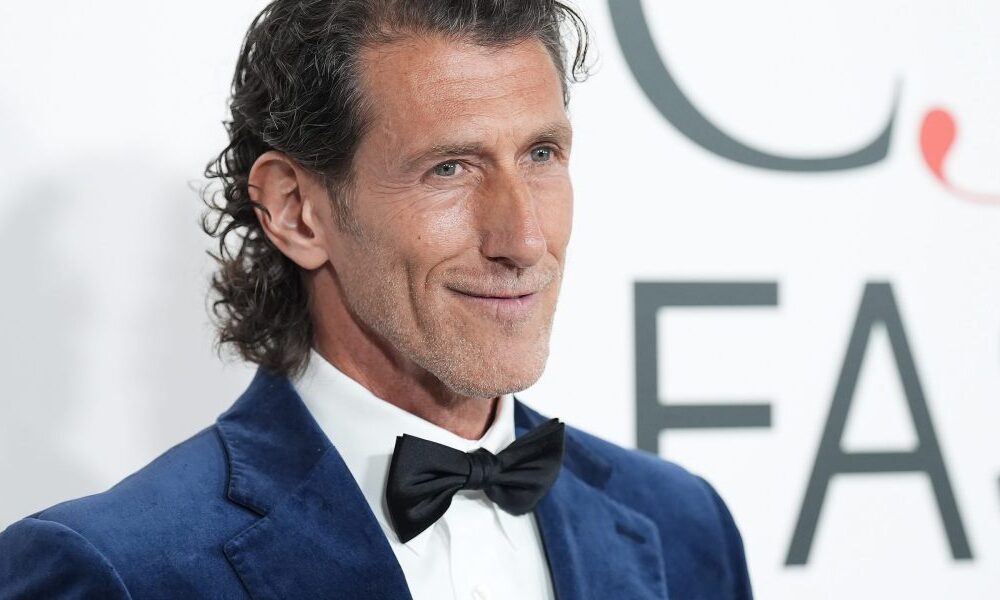
As Gap Inc. CEO Richard Dickson gives us a tour of the Gap’s remodeled store in New York’s Flatiron District, he pauses at a gallery of 16 framed sepia-toned pictures hanging above a staircase: work by legendary photographers Annie Leibovitz and Bruce Weber, capturing celebrities from musicians Debbie Harry to Willie Nelson to actress Lauren Hutton for long-ago ad campaigns.
He found the photos—and hundreds more—in the company’s archives soon after taking the helm of the brand’s parent company in 2023, Dickson said. They recalled a time when the Gap was firmly at the center of pop culture, and he thought they should be on display in the flagship store—a few yards away from gigantic posters of contemporary “Gap girl,” the influencer and cosmetics entrepreneur Hailey Bieber, who has launched a new jeans line with the Gap.
Since the very beginning of his tenure, Dickson has put restoring the “cultural relevance” of the Gap, along with sister brands Banana Republic, Old Navy and Athleta, at the very top of his agenda, alongside the more prosaic priorities for a clothing brand: quality, well-appointed stores and supply chain prowess. One of his early moves as CEO was to hire designer Zac Posen to be creative director of Gap Inc. and chief creative officer of Old Navy.
“We need to celebrate our history and now we add new people,” Dickson tells Fortune in an episode of Behind the Business. “When you look at Hailey Bieber, with the legendary talent we brought to the Gap over the years—it shows the continuity.”
There is more buzz these days around the Gap than there has been in years. Its “Better in Denim” ad campaign last year included a viral Busby Berkeley-style dance number, created with global girl group Katseye, that has been seen 80 million times. A limited-edition $100 hoodie designed with the group members earlier this year also sold briskly.
Other recent celebrity collaborators have included the Gen Z singer-songwriter Malcolm Todd and actress Inde Navarrette, as well as the designer and former Spice Girl Victoria Beckham. Meanwhile the Gap’s sister brand, Old Navy, is working with the rapper Cardi B on a jeans line.
Not just “stuff”
At the recently remodeled Flatiron Gap store, there are flicks at the brand’s long history, including photos of its first store in 1969 in San Francisco. A vinyl records section evokes the chain’s start as a record store that sold jeans (Levi’s initially, before its own label existed.).
At the brand’s peak, the Gap’s roster of stars from across the cultural spectrum included rapper LL Cool J, Sex and the City star Sarah Jessica Parker, and author Joan Didion.
But by the 2010s, the brand had lost its mojo, with sales plummeting and the company closing hundreds of stores. And there were culture and leadership issues: Before Dickson took the reins in 2023, Gap Inc. had gone through five CEOs in five years. Dickson said the company had developed a “positivity bias” that meant executives were not looking at Gap Inc.’s problems squarely in the face.
“We had great storytelling and brands, but somewhere along the way, we lost the story and became more about the stuff,” the CEO says. “Cultural connection and relevance actually are a fundamental part of brand management.”
Dickson knows a thing or two about culture’s potential to transform a brand. Before Gap Inc., he had been at Mattel since 2014. There, his achievements included revitalizing the “Barbie” brand and putting it back at the center of popular culture with creative marketing campaigns. His work helped set Barbie up for the enormous success of the blockbuster 2023 movie based on the doll.
“I love iconic American brands,” he says. “I’m really fascinated with brands that had a cultural impact then lost their way. I love a good turnaround.”
Breaking the discounting cycle
There are some signs that the Gap’s brand is recovering: In the first quarter of this year, its comparable sales rose 10% and have been rising for two years now. But the brand, which had sales of $3.5 billion last year (the company as a whole took in $15.4 billion), remains about half the size it was at its peak in the early 2000’s.
In the 2010s, the overall company was sustained by the steady performance of Old Navy, which now generates just more than half of revenues, but the downward spiral of the Gap was starting to seem inexorable. Though not the biggest brand anymore by a long shot (it generated 23% of company revenue last year, while Old Navy represented 55%), the Gap is spiritually crucial to the company as its founding label and namesake. Indeed, when Dickson changed its “GPS” stock ticker in 2024, he chose “GAP” as the new one.
Mark Breitbard, who became CEO of Gap brand in 2020, says the business had stagnated with dated stores, uninspiring clothing of all-too-often subpar quality, and from falling out of the cultural conversation. With merchandise that was boring consumers, discounting became the primary way to spur sales. Breitbard realized he had to stop that cycle—and to do that he needed to restore cultural relevance.
“They are ways of bringing new customers into the brand,” says Breitbard. “We are reinventing the brand through them.” He says the Hailey Bieber collection works because “she’s a Gap girl” and her look for the campaign, a white tank top with blue jeans, taps the brand’s classic “codes” but with a modern vibe.
What Gap is doing is hardly unique. Levi’s has also been tapping nostalgia and celebrities like Beyoncé to great success in the last few years, while Abercrombie & Fitch and American Eagle Outfitters have also re-elevated their brands. (Last year, AEO got a big boost from the attention and controversy generated by its “Sydney Sweeney Has Great Jeans” campaign, which some saw as praising white beauty standards.)
Riding a wave?
Despite the green shoots, Gap Inc’s shares are down 20% this year and have been largely flat since they soared right after Dickson’s appointment in 2023. His turnaround plan is very much still a “show-me” story, according to Simeon Siegel, an analyst with Guggenheim Partners. For one thing, many apparel retailers have seen sales growth this year, but much of that was just higher prices they could pin on tariffs and broader inflation. Siegel says the real test is whether Gap can raise prices because people really want its t-shirts and jeans.
“What is the purpose of cultural relevance?” Siegal asks, before answering his own question: “It should be to drive revenues, and also drive prices.”
Dickson himself concedes there is still much work to be done to fully rehabilitate the Gap, as well as its sister brands. Still, he’s pretty happy to see the company’s brands back on what he calls the scoreboard. “It’s a challenge,” he says. “But it’s an optimistic period where we feel like we are making a lot of progress.”