
Politics
How Florida’s largest electric utility is solving the data center problem

As data centers fuel the digital economy, powering everything from artificial intelligence to cloud storage, states across the country are grappling with an uncomfortable question: who pays for the massive energy demands these facilities bring with them?
In several markets across the U.S., consumer advocates and regulators have warned that the rapid growth of large-scale data centers can drive up electricity costs for everyday customers, forcing households and small businesses alike to subsidize large-scale industrial users. Those concerns have become more pressing as utilities face decisions about new generation, transmission upgrades, and long-term system planning.
Florida has so far avoided the data center boom seen elsewhere, but that may not last. With population growth continuing and interest in Florida-based projects increasing, Florida Power & Light Company says it has used the benefit of time — and lessons learned in other states — to put guardrails in place before high-load customers arrive.
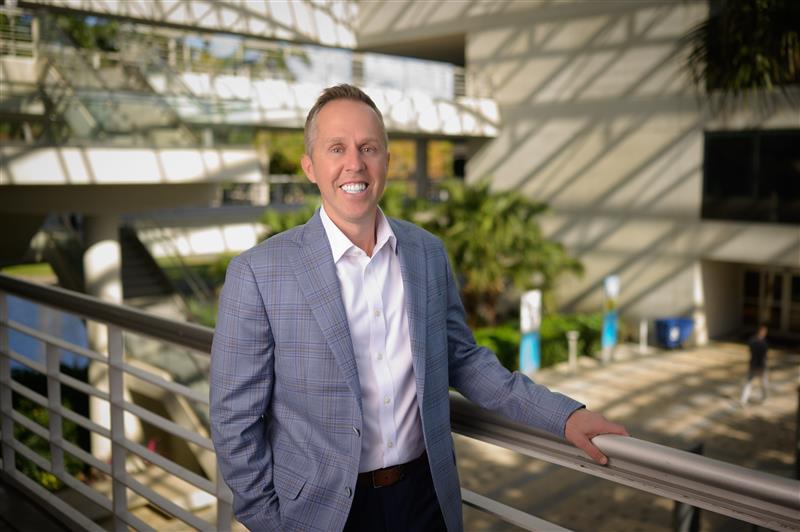
Scott Bores serves as president of Florida Power & Light Co., the prime subsidiary of multistate operator NextEra Energy, which supplies power to more than half of Florida’s population. Florida Politics sat down with Bores to discuss how FPL plans to protect its customers from rising costs if data centers take off in Florida.
We’ve seen countless reports in other states claiming that data centers raise power bills for everyday consumers. Will that happen here?
No. Last year, FPL proposed, and the Florida Public Service Commission (PSC) approved, the most forward-looking and strict consumer protections in America to ensure what you just described does not happen here.
Thanks to the PSC’s approval, we now have special rates that will apply to any large-load customer who requests service from FPL. Those rates are designed to ensure that data centers pay their own way — and Florida’s households do not subsidize the energy needs of these power-intensive projects.
When designing these protections, how did FPL approach the problem?
These big data centers haven’t yet made it to Florida. So, we fortunately have the benefit of time to learn from the experiences of other utilities who have seen heavy data center growth.
We all know data centers are energy-intensive. To serve them, FPL will need to build new power generation — power generation we wouldn’t otherwise need to build.

There’s a simple principle in utility ratemaking, which is that the cost-causer (or the data center in this case) should be the cost payer. So, for example, one of the protections we put in place is called an incremental generation charge. That charge requires the data centers to fund 100% of the cost of new power generation needed to serve their project.
But will FPL be spending to upgrade its system to accommodate these data centers?
We can keep system network upgrades to a minimum by steering data center projects toward areas that are already near our large (500 kV) transmission facilities and have land suitable for incremental generation capacity. We have already identified the first of three geographic zones that fit this description. These locations would allow the data center facilities to be built with minimal impact to infrastructure.
What other protections are in place?
We’ve also established requirements on the front-end designed to ensure the only data center projects that move forward are from mature, creditworthy companies that intend to stay in Florida. For example, if one of these large load customers wants FPL to serve their data center, they have to fund an engineering study to evaluate, among other things, the project’s feasibility and how much it would cost to connect to the grid. They have to pay the project cost to connect to our system. If they want to reserve capacity on FPL’s system, they must be able to meet strict collateral requirements tied to their credit. Not to mention, they also must be willing to agree to a minimum contract term of 20 years and be willing to pay the incremental generation charge we discussed earlier.
What about once the project is in service?
Once in service, the data center is subject to a minimum bill to ensure they pay for the capacity they reserve — even if they don’t end up needing all of it — as well as an exit fee for early termination. That exit fee would amount to an accelerated payment of the remaining 20-year incremental generation charge.
So they have to stand by their commitments, right?
Right – if they leave early, they’re still on the hook. So, we have protections on the front end to weed out bad projects before they move forward. We have protections during the planning phase that will keep network upgrades to a minimum. We have protections that keep the cost-causer — the data center — the cost payer. And once in service, we have protections to ensure data centers pay for the capacity they reserved and also ensure no one can cut and run without paying their fair share.
All of these combine to make up the strictest consumer protections in America as far as data centers are concerned.
FPL has an obligation to serve all customers, including any data centers that request our service. But we have designed these rates to ensure we can serve data centers in a responsible and thoughtful manner, and in a way that protects our existing customers.

Politics
Emily Duda Buckley family business gets philanthropic, gives $200K to cancel student lunch debt

As part of its 100th anniversary celebrations, family-operated agriculture and real estate company DUDA has donated $200,000 to the nonprofit All for Lunch program to eliminate school lunch debt for students in Seminole County who qualify for free or reduced meals.
The company, which owns a suite of brands across the country in both agriculture and real estate development, includes leadership from Emily Duda Buckley, who is running for House District 38 to replace term-limited incumbent David Smith.
Duda Buckley is the senior manager for external affairs for DUDA, where she leads the company’s external engagement strategy with a primary focus on community relations, philanthropy and industry partnerships. She also monitors public policy and regulatory developments that may impact business operations.
“Education begins with meeting basic needs,” Duda Buckley said of the company’s donation to All for Lunch. “Clearing school lunch debt helps remove a quiet but very real barrier for students and families, and our family business is honored to support Seminole County schools in this meaningful way. When we support students, we support the entire community.”
The Duda family presented a check Tuesday to All for Lunch and Seminole County Public Schools, at Pine Crest Elementary.
“As we celebrate 100 years, it’s important for us to give back to the community that helped shape who we are,” said Tracy Duda Chapman, Chief Legal and Administrative Officer at DUDA.
“Our family firmly believes in sharing our blessings, and eliminating this lunch debt allows us to put those values into action and support Seminole County families in a tangible way. No child should carry the weight of a lunch debt, and we’re honored to help ensure students have access to the nutritious foods they need to optimize learning.”
The donation from DUDA will clear lunch balances for more than 3,600 Seminole County students who qualify for free meals and another 1,425 who receive reduced-price meals, collectively helping more than 5,000 students eliminate stress and focus on learning.
“DUDA’s donation made an immediate difference for thousands of students. When a partner steps forward at this scale, it allows us to lift a burden that many parents quietly struggle with. This gift didn’t just erase debt — it offers relief for families navigating tight household budgets month-to-month,” All for Lunch founder and Executive Director Alessandra Ferrara-Miller said.
It’s estimated that 1 in 6 kids in Central Florida face hunger on any given day, and Seminole County school leaders say this type of philanthropic support is a huge relief to those students and their families.

“The extraordinary generosity of DUDA exemplifies that community partnerships make a significant impact on the lives of our students and families,” Seminole County Public Schools Superintendent Serita Beamon said.
“This support provides a fresh start for many of our families and helps to ensure students and their families can focus on learning. On behalf of our students, families, and staff, thank you for making such a meaningful difference.”
And Seminole County Schools are also using the Duda family philanthropy as a tool to attract additional donors. All for Lunch has established a special donation page in honor of DUDA’s 100th anniversary contribution, allowing anyone in Central Florida to chip in to make a difference.
Emily Duda Buckley is one of three Republicans currently vying for the HD 38 seat, and she’s off to an early lead, with nearly $134,000 raised. The other two Republicans in the race are far behind, with Marcus Hyatt banking more than $35,000 and Austyn Cydney Spell hasn’t reported any fundraising.

Three Pinellas County Commission seats are up for election this year, and Republicans incumbents are seeking re-election in all of them. Those office-holders appear relatively safe if 2025 campaign finance reports are any indication.
Brian Scott, who represents the countywide District 2 seat, is so far unopposed. Qualifying in the races runs June 8-12, so there is still time for a challenger to emerge. However, any would-be challenger would enter the race at an immediate funding disadvantage, with Scott raising more than $94,000 as of the end of 2025.
The other two incumbents facing re-election this year — Dave Eggers in District 4 and Kathleen Peters in District 6 — have drawn challengers, though neither have posted significant fundraising activity since entering the race.
There isn’t a Democrat challenging Eggers so far, but he faces intraparty opposition from fellow Republican Tony Ringelspaugh. Ringelspaugh, who describes himself as retired, raised just $1,000 since entering the race in October, and half of that was a contribution from himself to his campaign. As of Dec. 31, he hadn’t spent any of it.
Eggers, meanwhile, has raised nearly $19,000 and retains about $13,000. It’s a small sum compared to fundraising activity in past Pinellas County Commission races — note Scott’s nearly six-figure haul for a so far unopposed race — but it’s still enough to create a wide funding gap between his opponent.
And Ringelspaugh doesn’t appear to be actively campaigning at this point. His most recent post to his campaign Facebook page was on Oct. 15 announcing his bid. Ringelspaugh does not appear to have a campaign website, either.
Eggers also has strong institutional support, including recent nods from U.S. Reps. Gus Bilirakis and Anna Paulina Luna.
Eggers faced intraparty opposition four years ago, but won re-election that year with 68% of the vote. If no Democrat enters the race, and no one files as a write-in to close the Primary, the GOP Primary will be open to all voters.
District 4 covers the northernmost parts of Pinellas County, including Palm Harbor, East Lake, Tarpon Springs, Dunedin and Safety Harbor.
Peters is the top fundraiser among incumbents up for re-election this year, with $103,000 raised as of Dec. 31. Her opponent, architect David Glenn Jr., a Democrat, has collected less than $2,300.

While Glenn entered the race in December and only had three weeks of fundraising to report, his early activity doesn’t show a lot of momentum. All of his funds came from the candidate himself. Still, he has been at least somewhat active on social media and in the community, speaking at local Democratic clubs. His campaign website, though, doesn’t list any upcoming events.
Glenn previously said he was running to disrupt what he describes as entrenched county leadership. His platform emphasizes land use and development policy, arguing the need for more density and carefully planned growth. He also favors increased support for public transportation and affordable housing, and wants to crack down on nuisance short-term rental properties, among other priorities.
But getting that message to voters amid a six-figure funding deficit will be a challenge, and like her colleagues on the dais, Peters will have plenty of support from the county’s donor class.
Peter’s fourth-quarter haul, which was nearly $40,000, included top $1,000 donations from a number of local businesses and interests, including Marine construction companies Speeler Helicals, Bayside Dredging, Tampa Bay Marine Contractors, Haven Dock & Marine, Decks & Docks Lumber, Waterfront Property Services, and BCJ 2.
She also received top donations from a couple of bowling alleys, and from interests in real estate development, insurance, restaurant and automotive industries. The political committee supporting state Rep. Linda Chaney cut a $1,000 check in the fourth quarter, as did former state Rep. Jackie Toledo, both Republicans, among other donors.
First elected in 2018 with 60% of the vote over Democrat Amy Kedron, Peters was re-elected in 2022 without opposition.
Taken collectively, the three County Commission seats up for election this year may prove to be sleepy affairs unless current challengers step up campaign efforts.
The lack of competitive races so far may be a result of Pinellas County’s position as an increasingly red region. For Scott, countywide voter registration favors Republicans by about 47,000 voters. In Eggers’ District 4, Republicans outnumber Democrats by about 29,000 voters, and Democrats trail Republicans in Peters’ District 6 by about 23,000 voters.


Billionaire Marc Benioff challenges the AI sector: ‘What’s more important to us, growth or our kids?’

Yukmouth and El-Jay Host ‘TMZ After Dark’ Tour

Canali steps up its lifestyle positioning after ending 2025 with €205 million in revenue
-

 Politics8 years ago
Congress rolls out ‘Better Deal,’ new economic agenda
-
Entertainment9 years ago
New Season 8 Walking Dead trailer flashes forward in time
-
Politics9 years ago
Poll: Virginia governor’s race in dead heat
-
Politics8 years ago
Illinois’ financial crisis could bring the state to a halt
-
Entertainment8 years ago
The final 6 ‘Game of Thrones’ episodes might feel like a full season
-
Entertainment9 years ago
Meet Superman’s grandfather in new trailer for Krypton
-
Business9 years ago
6 Stunning new co-working spaces around the globe
-
Tech8 years ago
Hulu hires Google marketing veteran Kelly Campbell as CMO