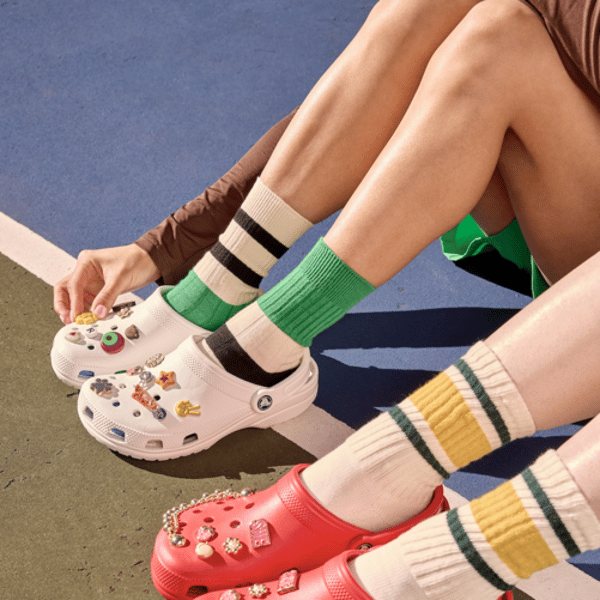
Crocs Inc., the perforated clogs commercialized by a trio of middle-aged American boating enthusiasts, has become the surprising shoe of choice for Chinese hipsters. Its comeback can provide valuable insights for Western firms struggling to connect with young consumers in a $7 trillion market where confidence has been dented.
Crocs
China’s uneven economy — exports have remained robust but spending is feeble after a property market collapse — has created the conditions for some companies to profit from “emotional consumption.” The phenomenon is similar to the so-called lipstick index coined by cosmetics mogul Leonard Lauder to describe people buying small treats to feel better during times of insecurity.
The concept has taken shape as a thriving industry embodied by the likes of homegrown Pop Mart International Group Ltd., Laopu Gold Co., and Luckin Coffee Inc. Crocs is one of the few American companies in that mix as an emotional consumption play. That’s unusual in a country feuding nearly daily with Washington over tariffs and where consumers are increasingly seeking cultural authenticity in the things they buy. In the most recent quarter, Crocs’ China sales were up more than 30%, while North American revenues were down by 6.5%.
People might not be spending on big-ticket items amid rising youth unemployment and a four-year economic downturn, however they’re craving instant dopamine kicks from opening blind boxes containing cute toys or trying creative drink flavors. Crocs has positioned itself as a beneficiary of this trend.
The ability to customize the clogs with a wide variety of shiny charms from fried chicken to cartoon characters adds to the individuality factor, especially when the images are shared online. And from the ads to the spokesmodels, the brand has become so localized that people aren’t sure about its origins. “Why are Crocs so expensive?” and “Where is it from?” are two of the top associated search terms.
Chinese consumers love anything dorky, cheesy, or fun, Allison Malmsten, a director at Daxue Consulting, a market research firm, told me. Once advertised as an “ugly” shoe, that perception is now key to its popularity. Embracing unconventional footwear allows users to thumb their noses at the establishment and declare their independence.
For decades, Western firms had profited from the seemingly unstoppable growth of China’s consumers. But with the economy slowing and the emergence of domestic rivals, some of those companies fell behind.
Crocs has been able to buck that trend after overcoming years of challenges. It entered the country through a distributor in 2006. After some initial success, there was a long fallow period compounded by troubles in the US. But a turnaround began taking shape about five years ago, coinciding with the move to hire actress Yang Mi as ambassador. Its path may offer lessons for other foreign retailers.
Starbucks Corp. is a case in point. It preceded Crocs into China by seven years, bringing coffee culture to the masses for the first time. And for most of its quarter-century run, it flourished. But over the years, smaller and nimbler rivals took that caffeine culture and ran with it. They charged less and innovated more. Two years ago, one of those upstarts, Luckin, dethroned Starbucks as the top coffee seller. A former China chief has been blamed for sticking too closely with what worked in the West and refusing to tailor offerings for the local market.
Another firm making a major effort to engage Gen Z shoppers is LVMH Moët Hennessy Louis Vuitton SE, the world’s biggest retailer of high-end goods. Even though sales in the region that includes China grew quickly in 2023 after the country fully lifted its pandemic controls, revenues flatlined a year later as insecure shoppers began eschewing luxury.
This summer, LVMH introduced The Louis, a three-story, pop-up exhibition in the heart of Shanghai. The cruise-ship themed fashion store has caught the eye of live streamers and created buzz around the brand. Visitors have lauded what they call the East-Meets-West fusion elements of the landmark. Like their global cohorts, young Chinese prize experiences over spending, which is in short supply, anyway. But perhaps they will return when their bank accounts are fuller.
China remains the world’s second-biggest retail market. The key is to localize operations as much as possible. Crocs has been able to put the right foot forward, proving that not all Western retailers in the country have lost their touch.
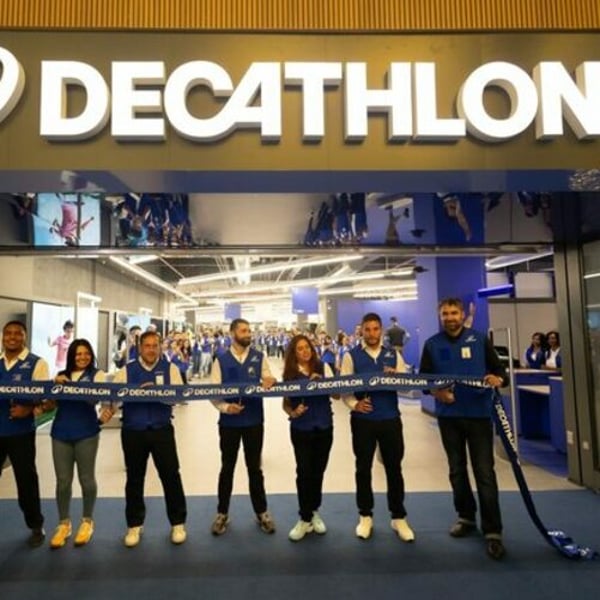
French sporting goods retailer Decathlon is continuing its expansion across Latin America. The business has opened its first store in El Salvador, a large-format location at the Multiplaza shopping centre in the country’s capital San Salvador.
Decathlon
‘This country, known for its rich culture, its Pacific coastline ideal for surfing, and its growing passion for outdoor sports, represents a strategic and vibrant market for our mission,” said the business in a release. Decathlon also stated that it aims to “bring people together through sport to make wellbeing accessible for all.”
Decathlon’s expansion into Latin American markets has marked a milestone, boosting access to sports equipment across a range of disciplines. The business currently has a presence in Mexico, Colombia, Chile, Brazil, Panama, Costa Rica, and now El Salvador.
Latin America has become a highly attractive market for European and other international brands, with new market entries up by more than 30% over the past three years.
This article is an automatic translation. Click here to read the original article.
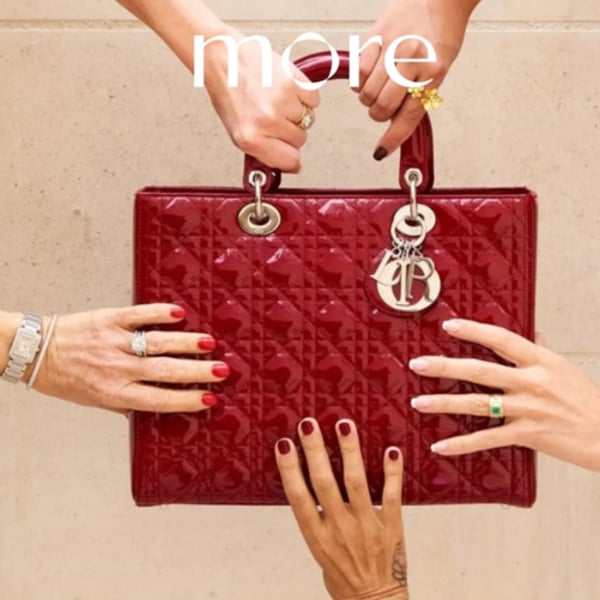
Two now becomes three. Fashion accessories/jewellery membership club More Luxury Club has joined forces with Cocoon Club and My Wardrobe HQ to operate under an ever-widening Cocoon Group umbrella to become a “circular luxury powerhouse”.
Image: More Luxury Club
With More Luxury Club founded “to redefine how people access and enjoy luxury goods, building a loyal community passionate about quality, longevity, and conscious consumption”, it dovetails neatly with the Cocoon Group ethos.
Cynthia Morrow, co-founder of More Luxury Club, explained: “Cocoon shares our belief that the future of luxury lies in sustainability, circularity, and community – and we are proud that our members will continue this journey within a company that shares our values and long-term vision”.
She noted that it’s an integration that “marks an important milestone for the circular fashion sector”.
Cocoon Group’s overall mission is “to build the leading ecosystem for circular luxury”, expanded benefits including access to designer rental, resale, subscription models and exclusive brand collaborations – “all within one unified platform”.
Following its recent merger with My Wardrobe HQ, Cocoon said it has become a consolidating force in the circular luxury sector, bringing together businesses such as Rotaro, Cercle, and now More Luxury Club, “positioning Cocoon as the definitive category leader”, offering the “most comprehensive, sustainable, and innovative way to access and enjoy luxury fashion in the UK”.
Cocoon Group CEO Coco Baraer Panazza, added: “Our mission is to build the most forward-thinking and sustainable way for people to enjoy luxury… as we continue to scale a smarter, more inclusive and more circular future for fashion together.”
Kering used to have a minority stake in Cocoon (which it took in 2021) but it exited that stake earlier this year.
What’s been a good year for Outlet Shopping at The O2 has just got better. The centre, linked closely to the O2 entertainment arena in the Greenwich Peninsular, southeast London, has opened two more new stores — fashion retailer TM Lewin and jewellery brand Lovisa — while also adding a recently-upsized unit for sportswear brand New Balance.
Image: TM Lewin
It all adds up to “growing momentum” for an outlet shopping destination that’s “on track for a stellar end to 2025” having enjoyed a 23% uplift in sales throughout November vs 2024, and footfall up 24% across the whole scheme, it said.
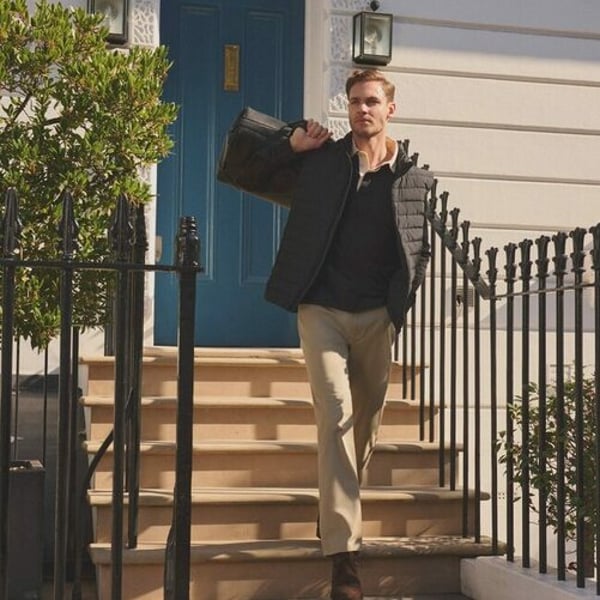
British heritage brand TM Lewin’s 1,827 sq ft store becomes the retailer’s only outlet location after returning to physical retail earlier this year. The space offers the brand’s range of shirts, suits, and accessories.
Dan Ferris, managing director at TM Lewin, said: “Our re-entry into physical retail has been a big move for us this year, and we have carefully selected locations where we believe our stores can get the best experience, regular customers, and be part of a community.”
Also making its outlet debut, Lovisa will open a 1,722 sq ft unit, adjacent to fashion retailers Dune London and Kurt Geiger, becoming the destination’s second dedicated jewellery retailer. It’s arrival supports the venue as a draw for accessories with demand “up 38% over November vs the same period in 2024”.
The store will offer its full range of necklaces, earrings and rings as well as its piercing facilities.
Long-standing tenant New Balance is also set to reinvest at the outlet, upsizing into a new 3,129 sq ft unit. The space will sport the brand’s new store concept, with additional space for wider stock collections.
Louisa Dalgleish, leasing director at Outlet Shopping at The O2, added: “As a destination already full of leading retail, the fact that we continue to attract such strong brands for their outlet debuts speaks volumes about our sustained momentum. Our success is a direct result of our collaborative landlord approach and the strength of our tenant mix, and our positive results throughout November are a clear indication that things show no sign of slowing down, with us remaining firmly front of mind for new entries into the outlet market.”





 Politics8 years ago