Connect with us

Business

How CEOs can stay clear-eyed during stock market AI selloff

Published

on


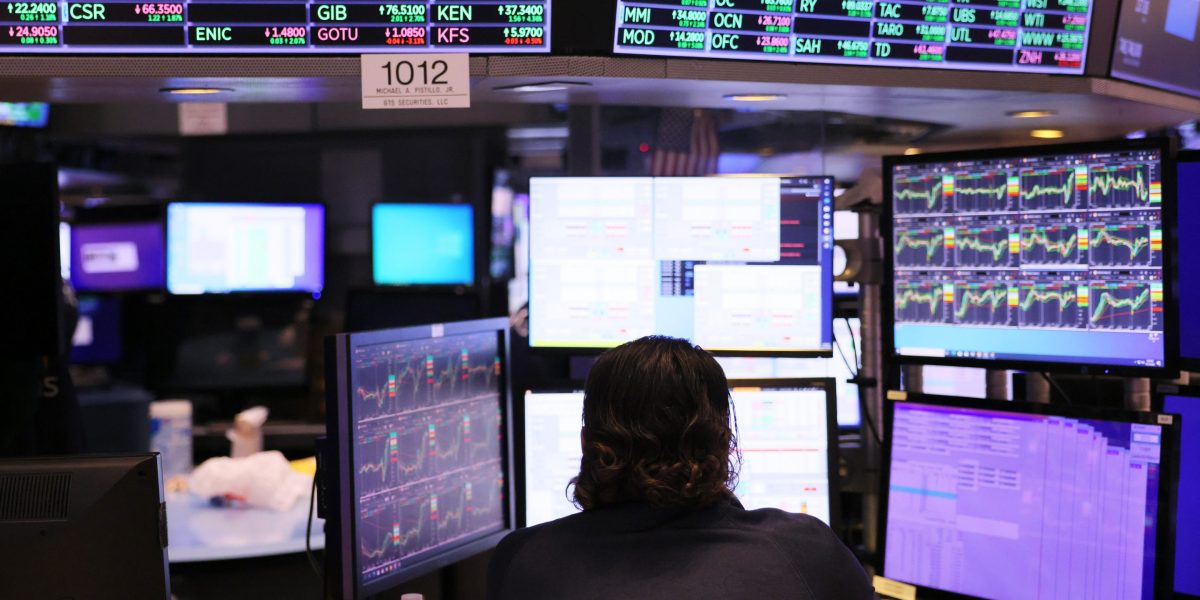
Good morning. Geoff Colvin writing this morning. Is the AI bubble popping? The S&P 500 has fallen in each of the past four days, major investors like Peter Thiel have revealed they have unloaded their stakes in high-flyers like Nvidia, and even Alphabet CEO Sundar Pichai has acknowledged “there are elements of irrationality through a moment like this.” But all would be wise to remember that the AI bubble is a financial phenomenon, not a technological one. Assuming they go together could be making an expensive mistake.

We’ve seen it before. When the internet bubble popped—the S&P plunged 49% in 31 months—many people concluded more or less, “You see? That internet thing was a big nothing.” Obviously they were wrong. The market had a seizure, and companies that were flimsily financed failed, but the technology continued to change the world.

Now AI, the next general-purpose technology after the internet, will transform the world even more than the internet did, regardless of the market’s mood. Business leaders must pull their eyes away from the sea of red flashing across Wall Street and stay focused on preparing their organizations for staggering changes. Here are three questions as thought starters, at increasing levels of mind blowing:

When will your company’s agentic AI disburse money all by itself? At Fortune’s latest Emerging CFO program last week, I asked three CFOs if they were letting AI do that already. Their answers ranged from “No” to “No!” But after thinking for a few moments, one of them said, “Within certain guardrails I think absolutely you’ll get there, especially on low-dollar, low-risk transactional type of things. I can certainly see that being a case.” Rethinking the impossible will have to become a habit.

Are you prepared for AGI? Artificial general intelligence has no strict definition, but in the AI world it usually means intelligence greater than human intelligence. Experts generally estimate AGI will be achieved sometime between the late 2020s and early 2030s. As that day approaches, leaders face a challenge unique in history: how to run an organization in a world where humans are, as AI godfather Geoffrey Hinton has said, the second-smartest species on the planet.

When will the one-person, billion-dollar company arrive? OpenAI CEO Sam Altman and his tech CEO friends started a betting pool on the answer to that question almost two years ago, as mentioned in last Friday’s note. For them, it’s a question of when, not if. How would you bet? How would your organization fare against a competitor with just a CEO and a whole lot of AI?

So much of this sounds crazy, but it must be confronted. The bottom line is there will be winners and losers. As always with a new general-purpose technology, fearless imagination will win.

Contact CEO Daily via Diane Brady at diane.brady@fortune.com

Top news

Trump fetes MBS

U.S. President Donald Trump hosted Saudi Crown Prince Mohammad bin Salman on Tuesday, calling him a “really good friend” and brushing off questions about a U.S. intelligence report that found MBS had ordered the murder of a journalist. “Things happen,” Trump said. (MBS has denied involvement.) The U.S. will sell F-35 fighter jets to Saudi Arabia, and the Trump administration is seeking billions in U.S. investment from the kingdom. 

Markets await Nvidia earnings

Wall Street is eagerly awaiting Nvidia’s earnings today; the chipmaker’s results after the closing bell will shed light on the underlying economics of the AI boom amid the market selloff fueled by AI bubble fears. In a new feature, Fortune’s Jim Edwards digs into why AI revenue needs to catch up with AI spending or risk an even bigger fallout in U.S. stocks whose yearly gains are heavily concentrated among the AI-focused Magnificent Seven. 

Meta’s antitrust win

Meta averted an existential crisis on Tuesday when a U.S. district court judge ruled it did not have a monopoly in social networking and therefore does not have to sell off Instagram and Whatsapp. 

FTSE 100 nears a milestone

Even with the recent sell-off, the U.K.’s benchmark FTSE 100 is close to surpassing 10,000 points for the first time. Stocks of mining giants and utilities have boosted the index 17% year-to-date, outpacing the S&P 500, the Nasdaq Composite, and the Dow Jones Industrial Average.

China’s patent machine

Tsinghua University has long been China’s leading science and technology school, and it’s now emerging as the world’s leading AI institution. It’s published more AI research papers among the 100 most-cited than any other university, Bloomberg reports, and has secured more patents than Harvard, MIT, Stanford, and Princeton combined. 

Kraken raises $200 million

Crypto exchange Kraken raised $200 million in funding from Citadel Securities, Fortune exclusively reported, affording Kraken a $20 billion valuation. The cash injection comes just two months after the company raised a $600 million round from a group of Wall Street and Silicon Valley figureheads.

The markets

S&P 500 futures are up 0.29% this morning. The last session closed down 0.83%. STOXX Europe 600 was up 0.06% in early trading. The U.K.’s FTSE 100 was up 0.15% in early trading. Japan’s Nikkei 225 was down 0.34%. China’s CSI 300 was up 0.44%. The South Korea KOSPI was down 0.61%. India’s NIFTY 50 is up 0.55%. Bitcoin was up at $95K.

Around the watercooler

‘Bond King’ Jeffrey Gundlach warns of the next financial crisis: ‘It has the same trappings as subprime mortgage repackaging in 2006’ by Nick Lichtenberg

Half of millennial and Gen Z couples pick engagement rings with lab-grown diamonds— ‘well beyond what the mining industry had expected,’ McKinsey says by Sydney Lake

Billionaire tech founder Joe Liemandt says getting an MBA isn’t worth it and you don’t learn a ‘fraction’ of what you would as an entrepreneur by Sydney Lake

How America fell behind in the rare-earth race—and how it hopes to come back by Eva Roytburg

CEO Daily is compiled and edited by Joey Abrams and Claire Zillman.


Source link

Continue Reading

Business

Cadillac returns as sponsor for PGA tour event at Trump National Doral

Published

on


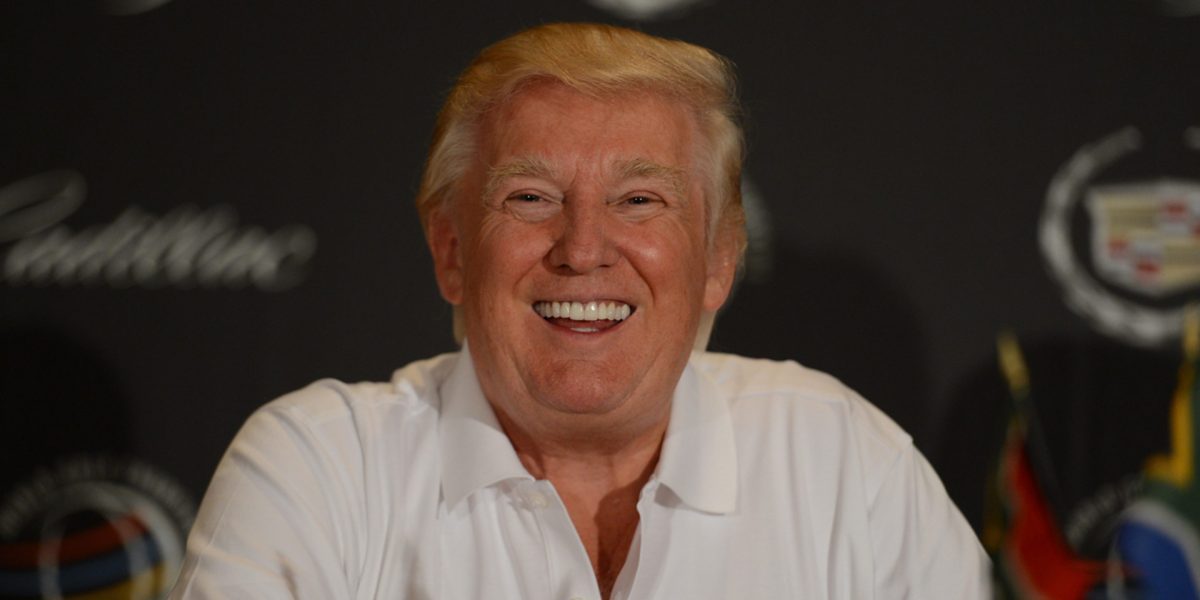
Cadillac is returning as the title sponsor of a lucrative PGA Tour event held at Trump National Doral, which will hold one of the $20 million signature events in 2026.

The Cadillac Championship will be held the first weekend in May on the course once dubbed the “Blue Monster.” Doral first became part of the PGA Tour schedule in 1962, and it was held each year through 2016 until becoming a World Golf Championship under various names.

Brian Rolapp, the CEO of the PGA Tour, referred to Trump National Doral as a “legacy venue on our schedule.”

“We appreciate the support of Cadillac as we bring a new era of the PGA Tour to our fans in Miami,” Rolapp said in a statement.

Cadillac was the title sponsor of the WGC at Trump National Doral from 2011 through 2016. But the automaker chose not to renew its contract, the PGA Tour could not find a replacement sponsor for Doral in 2016 when President Donald Trump was the presumptive Republican nominee and the WGC event was moved to Mexico City.

Doral is among eight courses that has held a regular PGA Tour event for at least 50 years — the others are Riviera, Pebble Beach and Torrey Pines in California; Colonial (Texas), Waialae (Hawaii), Harbour Town (South Caroline) and Muirfield Village (Ohio).

It returned to the golf landscape in 2022 by hosting a LIV Golf event each of the last four years until returning to the PGA Tour schedule for 2026. The tour designated Trump National Doral a signature event before it signed Cadillac as the title sponsor.

This story was originally featured on Fortune.com


Source link

Continue Reading

Business

Rob Reiner’s 32-year-old son in jail after fatal stabbing at Los Angeles home

Published

on


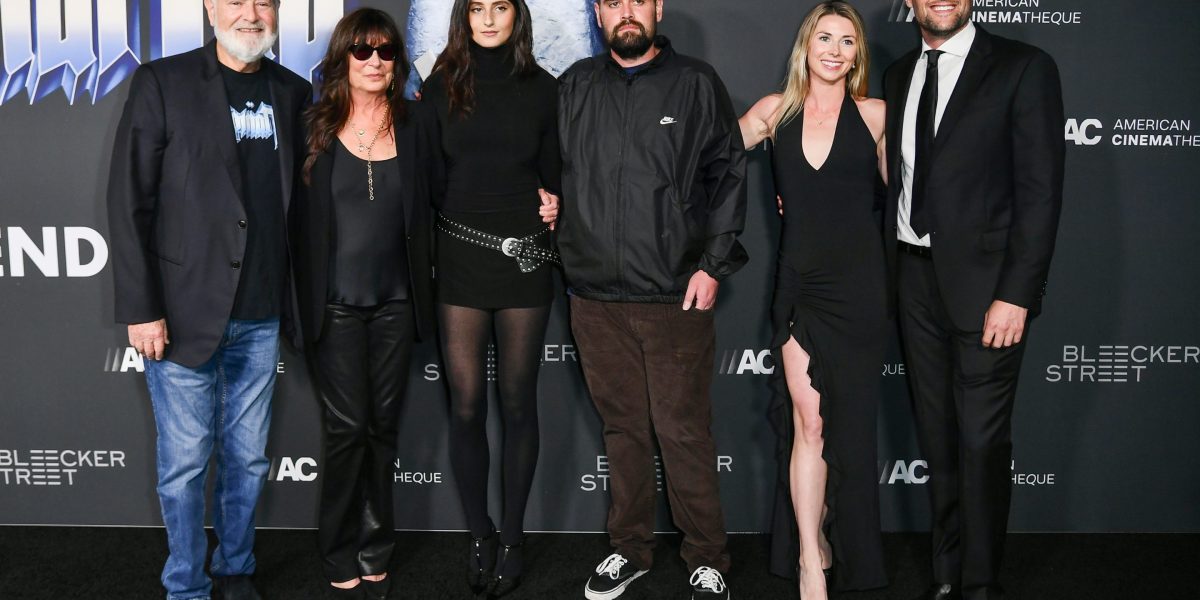
Rob Reiner’s younger son, Nick Reiner, was in jail Monday after being booked for what investigators believe was the fatal stabbing of the director-actor and his wife at their Los Angeles home a day earlier, authorities said.

It was not immediately clear what charges Nick Reiner, 32, would face. A police statement said he was being held without bail and the case will be presented to the district attorney’s office on Tuesday.

Representatives for the Reiner family did not immediately respond to a request for comment, and it wasn’t immediately clear if Nick Reiner had an attorney who could speak on his behalf.

Nick Reiner has spoken publicly of his struggles with addiction. By 18, he had cycled in and out of treatment facilities with bouts of homelessness and relapses in between. Rob and Nick Reiner explored their difficult relationship and Nick Reiner’s struggles with drugs in a semi-autobiographical 2016 film, “ Being Charlie.”

Rob and Michele Singer Reiner were found dead Sunday afternoon at their home in Los Angeles, and investigators believe they were stabbed, a law enforcement official told The Associated Press. The official, who was briefed on the investigation, could not publicly discuss the details and spoke to the AP on condition of anonymity.

Nick Reiner was arrested Sunday around 9:15 p.m., police said.

Reiner was long one of the most prolific directors in Hollywood, and his work included some of the most memorable movies of the 1980s and ’90s, including “This is Spinal Tap,” “A Few Good Men,” “When Harry Met Sally” and “The Princess Bride.”

His role as Michael “Meathead” Stivic in Norman Lear’s 1970s TV classic “All in the Family” as a liberal foil to Carroll O’Connor’s Archie Bunker catapulted him to fame and won him two Emmy Awards.

The son of comedy legend Carl Reiner, Rob Reiner married photographer Michele Singer Reiner in 1989. The two met while he was directing “When Harry Met Sally.” They had three children together: Nick, Jake and Romy.

Reiner told The New York Times in 1989 that the cinematographer on “When Harry Met Sally,” Barry Sonnenfeld, predicted he would marry her. “I look over and I see this girl, and whoo! I was attracted immediately,” Reiner said.

Michele Singer Reiner was a producer for “Spinal Tap II: The End Continues,” “God & Country,” “Albert Brooks: Defending My Life” and “Shock and Awe,” according to IMDB. Earlier in her career, she photographed the cover image of President Donald Trump’s 1987 bestseller “The Art of the Deal.”

Trump on Monday blamed Rob Reiner’s outspoken opposition to the president for the actor-director’s killing, delivering the unsubstantiated claim in a social media post that seemed intent on decrying his opponents even in the face of a tragedy.

Relatives of Lear, the legendary producer who died in 2023, said the Reiners’ deaths left them bereft.

“Norman often referred to Rob as a son, and their close relationship was extraordinary, to us and the world,” a Lear family statement said. “Norman would have wanted to remind us that Rob and Michele spent every breath trying to make this country a better place, and they pursued that through their art, their activism, their philanthropy, and their love for family and friends.”

Los Angeles Mayor Karen Bass called the deaths a devastating loss for the city.

“Rob Reiner’s contributions reverberate throughout American culture and society, and he has improved countless lives through his creative work and advocacy fighting for social and economic justice,” Bass said in a statement. “An acclaimed actor, director, producer, writer, and engaged political activist, he always used his gifts in service of others.”

Reiner was previously married to actor-director Penny Marshall from 1971 to 1981. He adopted her daughter, Tracy Reiner. Carl Reiner died in 2020 at age 98 and Marshall died in 2018.

Killings are rare in the Brentwood neighborhood. The scene is about a mile from the home where O.J. Simpson’s wife Nicole Brown Simpson and her friend Ron Goldman were killed in 1994.

__

Balsamo reported from Washington. Associated Press Entertainment Writer Andrew Dalton in Los Angeles contributed.


Source link

Continue Reading

Business

AI investment pressures, supply-chain risks, and strategy misalignment are all on the line for CFOs

Published

on


The talk is over. In 2026, it’s time to execute.

When the CFO Alliance, a finance-professional peer community, released its latest report, called Project Greenlight, in late November, the organization said that finance experts expect 2026 to be “the most pivotal year the finance function has faced in a decade.” There’s a lot at stake for CFOs and their organizations, according to the report, including supply-chain risks, pressure to make big AI investments, and the perils of stakeholder misalignment on strategy.

CFO Brew recently spoke with Nick Araco, the CEO of CFO Alliance, to get a sense of why 2026 is shaping up to be a high-stakes year. He also shared what’s top of mind for the finance leaders he’s been speaking with.

This interview has been edited for length and clarity.

What makes you think that 2026 will be such a pivotal year in finance?

2026 has to be a year where we replace debate with data and execution. I call it “informed execution.” We’ve seen such a rapid acceleration, given AI and technology advancements, converge with a year of volatility and uncertainty. Imagine you’re sitting in the seat of a CFO, where you’re at the intersection of that, and you’ve had a 2025 that’s caused you and your enterprises to hit a pause button. You had months, if not a whole year of pause. 2026 has to be a year of execution.

How did the group that worked on the Project Greenlight report identify the top execution risks, and how did it lay out a roadmap for addressing each?

What we did was convene about an hour-and-a-half’s time and openly debated until we got to a point where we agreed on the most material and critical areas of risk. You can imagine we started with a laundry list, because the CFO Alliance population of almost 10,000 or more is very diverse…At the end of the day, we identified four execution risks that most often stall plans, or stall action. [According to the report, these are geopolitical and regulatory disruption, technology and AI adoption, talent and team capabilities, and stakeholder alignment and governance.]

I want to focus on one specific risk: AI adoption. What would you say are the keys to identifying where an organization should be investing its money, but also how to track the ROI?

A year ago at this time, I would tell you that nine out of 10 of our members were saying, ‘We agree, it’s time to lean in, and it’s time to have the right discussions. Let’s bring in cross-functional leaders and cross-level leaders, and let’s make sure we are demonstrating comfort, and make sure that we’re demonstrating through our own actions, an embrace.’ Let me fast forward to where we are in 2025. These discussions need to be about enterprise value and performance. They need to be about, ‘How would this impact our business?’

I’m going to be very specific as to what the discussions need to be and are, because our members are using the following framework around AI. “What’s the specific opportunity or pain point that we are attempting to address…when it comes to AI? Why does it matter now? What’s blocking our progress that we’re even having this discussion? What’s one condition, and if we solve for this, what would be different by X date, and how would we know it helped us?” Those questions they’re using in every conversation, so they can tie it back to value.

What have been the biggest recurring topics in your conversations with CFOs from the past two or three months?

There are three key areas of focus: What type of leader do I want to be in ’26? How do I best stand up the highest performing finance function? And that includes accounting, treasury, FP&A, and capital markets or strategy functions. And then, from an enterprise standpoint, am I really at the forefront of understanding how technology and AI may disrupt our position in our industry, or our industry or business as a whole?

Standing up a high-performing finance function and team [is] more complex than ever before. I’m tired of the bashing of accounting…No one can do their job in finance without a strong accounting function. We’re done complaining about it; we’re going to do something about it. We’re going to try to make accounting sexy again by embracing the AI factor and bringing critical thinking into the accounting skill set.

This report was originally published by CFO Brew.


Source link

Continue Reading

Trending

Copyright © Miami Select.