CEO Agenda provides unique insights into how leaders think and lead and what keeps them busy in a world of constant change. We look into the lives, minds and agendas of CEOs at the world’s most iconic companies.
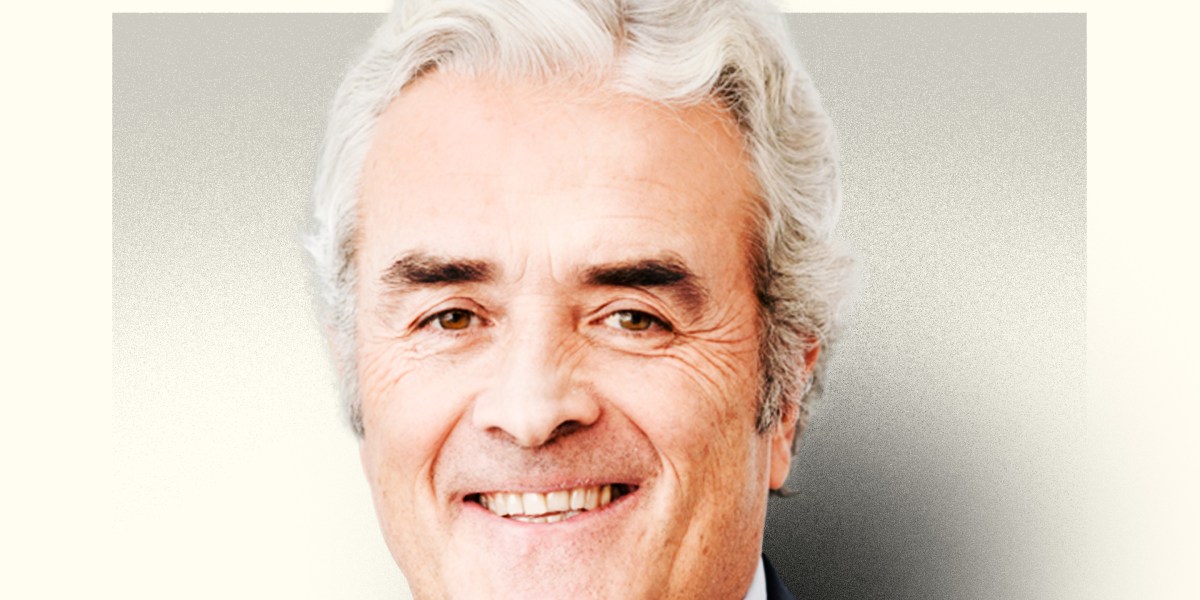
When Iñaki Ereño assumed the role of Group CEO of Bupa in 2021, the global healthcare landscape was being rewritten in real time. At the helm of a company serving over a million customers worldwide, Ereño faces the challenge of transforming a large and established organization into a faster, more agile, and digitally enabled provider of care.
Founded in 1947 with the purpose of helping people live “longer, healthier, happier lives,” Bupa is more than a health insurer: It builds hospitals and dental centers, offers global private medical insurance, and invests heavily in digital health.
Ereño’s mission? To wake the sleeping giant. Through what he calls the “elephant strategy,” the 61-year-old CEO has sought to digitize the business, embed customer-centric listening (including 300,000 annual detractor calls), and align a global workforce of around 100,000 people behind a single agenda. “The elephant is now running and the majority of the people know the elephant is running. We keep reminding everyone: don’t let the elephant go back to sleep,” he says.
A self-described “fanatic of the digital economy,” Ereño believes technology will define the next era of healthcare. Bupa has accelerated its use of AI and virtual platforms such as Blua, launched initially in Spain, to connect doctors and patients digitally and make consultations faster, smarter, and more personal.
In an interview with Fortune, Ereño discussed his evolution from lawyer to retailer to healthcare CEO, explained how his triathlon training anchors his leadership, and why, for him, productivity isn’t just about profit—it’s about delivering better care, faster.
This interview has been edited for length and clarity.
Down to business
Fortune:Walk us through your career journey.
Ereño: My background is in law, and very quickly I realized I didn’t want to be a lawyer. So I did an MBA and moved into corporate life. I view my life in three distinct periods. For one period of my life, I worked as a retailer. In another, I was an entrepreneur, and in the most recent period, I have worked in healthcare.
I joined Bupa 20 years ago in Spain [in Spain, Bupa is called Sanitas]. I joined Sanitas and was appointed CEO of Sanitas, and in 2012, I was appointed CEO [of a regional division within Bupa]. My evolution has progressed from my initial role as marketing director of Sanitas, then CEO of Sanitas, followed by CEO of a region, and finally Group CEO. It’s been a bit of a journey.
What was your role in the digital shift?
Covid was a huge challenge for all healthcare systems. For Bupa, we realized that our healthcare system was not digitized enough. Health can be digitized. I was in the executive team of Bupa for many years and that was my big fight: We needed to digitize the business more quickly. [Since then] it’s been a bit of a journey.
After Covid, we started calling ourselves the “sleeping elephant,” and so we built a strategy called the “elephant strategy.” I remember I went to the board with one slide: an elephant asleep on the left, an elephant waking up in the middle, and an elephant running on the right, with a big arrow from 2020 to 2024. We needed to wake up.
The elephant is now running, and the majority of the people know that the elephant is running. We keep reminding everyone: Don’t let the elephant go back to sleep.
What are you most proud of in the last five years?
In every presentation, we highlight the Triangle of Performance. At the top of the triangle is Financial Performance, supported by the two other sides: Customer Performance and Employee Engagement. We need to be good at all.
Customers are very important. We have 25 businesses in various countries that follow the same pattern. We map businesses by micro movements, and every year we do 300,000 detractor calls asking customers: “Why don’t you like us?”
Every year, we measure the results in terms of customer experience improvement and we take this very seriously. There is a lot of engineering work and logistics involved in making this happen.
We also have a team of 100,000 people. You’d assume that all of them have health coverage provided by Bupa—especially since we are Bupa. But that was not the case.
[Despite the fact] that it would cost around 50 million pounds to do this [it was essential that our own employees] have health coverage provided by Bupa. Now in the Bupa world, every employee is supported by Bupa.
We try to find out why we are not good, and work on it.
Which long-term trend are you most bullish or positive about for society and the economy at the moment?
The digital economy. We [Bupa] started a bit late but we’re catching up very quickly. We’re now fully digitized in all countries. Blua [is an example], which Bupa launched years ago. I like the digital economy and am a fanatic because it will help health.
When you look at Europe versus the U.S., how do you think people like yourself in a leadership role can address the productivity challenge?
Bupa and the whole healthcare industry are currently more focused on growth. We [believe we] are productive, but it’s not at the top of our mind. We think about how we can be more productive so that our customers will be happier and better served, rather than thinking about, “how can we make more money?”
We’ll be implementing an AI generative project where, instead of taking seven minutes for a doctor to see you [and understand who you are and what your issues are], it will take 30 seconds. So in 30 seconds, a doctor will be able to see you and a consultation that usually happens in maybe 15 minutes will now take only 30 seconds. This is the productivity we care about and is the productivity that has a positive impact on our customers.
Being productive
When do you get up in the morning and what sets up your routine for the day?
I don’t sleep that much and usually wake up around 6 a.m. and I start reading the newspaper. I read three Spanish newspapers, the FT and the Economic Times. I have my first coffee, take a shower, go to the office, and normally am in meetings by 8 a.m.
Sports have always been a big part of my life. I’m into triathlons and usually go to the gym with my youngest son, who lives with me in London. We go to the gym together, go to the supermarket, buy dinner (we usually go to an Amazon Fresh store or Whole Foods), have dinner, and then go to bed. I live a fairly basic life and it works for me.
What kind of coffee do you have in the morning?
I have a black coffee in the morning, a double espresso. When I share [my coffee intake] with doctors, they say maybe too much, Iñaki! But I can share this with you.
So I start with a double espresso, and then I have another one in the office with a little bit of milk, like a cortado. Then, after lunch, I have another cortado. I know it’s a lot of coffee.
Do you check back in later in the evening? Are you working over the weekend?
I might sound a bit naive, but I like the job I do and I like my company. I don’t feel like I need to be disconnected. When I am away on holiday, I take my mobile phone with me and I’m checking emails. I’m paid well, I have an [important] job and we’re a big company, so I need to stay connected.
Do you have any apps that you use, or any methods that you use to be as productive as possible?
I use [most digital tools], to be honest, but I’m not mega techy.
I used to take notes with a notebook and pencil, but not anymore, because one day I realized that it was taking me more time. I asked myself, “How many times have you come back to your notes?” and it was zero. So I stopped. I prefer to be present and in listening mode.
Getting personal
Who is on your personal board and who inspires or motivates you?
I work with a coach whom I met a few years ago. He is 75, very wise, and a member of my personal board. I have a Chief Executive Committee; there are always people that you tend to call more when you have a problem or need good advice. I also have people on my team that I can call. I have great conversations with my son. We all need people who really care.
Do you have a favorite company that you admire and why?
I love Amazon. Whole Foods is also fantastic.
What is your favorite cuisine to cook and to eat?
I eat too much, but thank God I enjoy exercising. I like all types of food, including a big steak, good paella, and seafood. I also like sweet food and desserts. My coach taught me to be kind to myself and I have learnt over the years to be kind to myself. If I want to eat ice cream, I will enjoy my ice cream.
CEO Agenda provides unique insights into how leaders think and lead, and what keeps them busy in a world of constant change. We look into the lives, minds and agendas of CEOs at the world’s most iconic companies.Dive into our other CEO Agenda profiles.
After nearly a year of promises tariffs would boost the U.S. economy while other countries footed the bill, a new study shows almost all of the tariff burden is falling on American consumers.
Americans are paying 96% of the costs of tariffs as prices for goods rise, according to research published Monday by the Kiel Institute for the World Economy, a German think tank.
In April 2025 when President Donald Trump announced his “Liberation Day” tariffs, he claimed: “For decades, our country has been looted, pillaged, raped, and plundered by nations near and far, both friend and foe alike.” But the report suggests tariffs have actually cost Americans more money.
Trump has long used tariffs as leverage in non-trade political disputes. Over the weekend, Trump renewed his trade war in Europe after Denmark, Norway, Sweden, France, Germany, the United Kingdom, the Netherlands, and Finland sent troops for training exercises in Greenland. The countries will be hit with a 10% tariff starting on Feb. 1 that is set to rise to 25% on June 1, if a deal for the U.S. to buy Greenland is not reached.
On Monday, Trump threatened a 200% tariff on French wine, after French President Emmanuel Macron refused to join Trump’s “Board of Peace” for Gaza, which has a $1 billion buy-in for permanent membership.
“The claim that foreign countries pay these tariffs is a myth,” wrote Julian Hinz, research director at the Kiel Institute and an author of the study. “The data show the opposite: Americans are footing the bill.”
The research shows export prices stayed the same, but the volume has collapsed. After imposing a 50% tariff on India in August, exports to the U.S. dropped 18% to 24%, compared to the European Union, Canada, and Australia. Exporters are redirecting sales to other markets, so they don’t need to cut sales or prices, according to the study.
“There is no such thing as foreigners transferring wealth to the U.S. in the form of tariffs,” Hinz toldTheWall Street Journal.
For the study, Hinz and his team analyzed more than 25 million shipment records between January 2024 through November 2025 that were worth nearly $4 trillion.They found exporters absorbed just 4% of the tariff burden and American importers are largely passing on the costs to consumers.
Tariffs have increased customs revenue by $200 billion, but nearly all of that comes from American consumers. The study’s authors likened this to a consumption tax as wealth transfers from consumers and businesses to the U.S. Treasury.
Trump has also repeatedly claimed tariffs would boost American manufacturing, butthe economy has shown declines in manufacturing jobs every month since April 2025, losing 60,000 manufacturing jobs between Liberation Day and November.
The Supreme Court was expected to rule as soon as today on whether Trump’s use of emergency powers to levy tariffs under the International Emergency Economic Powers Act was legal. The court initially announced they planned to rule last week and gave no explanation for the delay.
Although justices appeared skeptical of the administration’s authority during oral arguments in November, economists predict the Trump administration will find alternative ways to keep the tariffs.
Investors are “selling America” in spades Tuesday: The 10-year Treasury yield is at its highest point since August; the U.S. dollar slid; and the traditional safe-haven metal investments—gold and silver—surged once again to record highs.
The CEO of UBS Group, the world’s largest private bank, thinks this market is making a “dangerous bet.”
“Diversifying away from America is impossible,” UBS Group CEO Sergio Ermotti told Bloomberg in a television interview at the World Economic Forum in Davos, Switzerland, on Tuesday. “Things can change rapidly, and the U.S. is the strongest economy in the world, the one who has the highest level of innovation right now.”
The catalyst for the selloff was fresh escalation from U.S. President Donald Trump, who has threatened a 10% tariff on eight European allies—including Germany, France, and the U.K.—unless they cede to his demands to acquire Greenland.
Trump also threatened a 200% tariff on French wine and Champagne to pressure French President Emmanuel Macron to join his Board of Peace. Trump’s favorite “Mr. Tariff” is back, and bond investors are unhappy with the volatility.
But if investors keep getting caught up in the volatility of day-to-day politics and shun the U.S., they’ll miss the forest for the trees, Ermotti argued. While admitting the current environment is “bumpy,” he pointed to a statistic: Last year alone, the U.S. created 25 million new millionaires. For a wealth manager like UBS, that is 1,000 new millionaires a day. To shun that level of innovation in U.S. equities for gold would be a reactionary move that ignores the long-term innovation of the U.S. economy.
“We see two big levers: First of all, wealth creation, GDP growth, innovation, and also more idiosyncratic to UBS is that we see potential for us to become more present, increase our market share,” Ermotti said.
But if something doesn’t give in the standoff between the European Union and Trump, there could be potential further de-dollarization, this time, from Europe selling its U.S. bonds, George Saravelos, head of FX research at Deutsche Bank, wrote in a note Sunday. Indeed, on Tuesday, Danish pension funds sold $100 million in U.S. Treasuries, allegedly owing to “poor” U.S. finances, though the pension fund’s chief said of the debacle over Greenland: “Of course, that didn’t make it more difficult to take the decision.”
Europe owns twice as many U.S. bonds and equities as the rest of the world combined. If the rest of Europe follows Denmark’s lead, that could be an $8 trillion market at risk, Saravelos argued.
“In an environment where the geo-economic stability of the Western alliance is being disrupted existentially, it is not clear why Europeans would be as willing to play this part,” he wrote.
Back in the U.S., the markets also sold off as the Nasdaq and S&P both fell 2% Tuesday, already shedding the entirety of Greenland’s value on Trump’s threats, University of Michigan economist Justin Wolfers noted. Analysts and investors are uneasy, given the history of Trump declaring a stark tariff before negotiating with the country to take it down, also known as the “TACO”—Trump always chickens out—effect. Investors have been “burnt before by overreacting to tariff threats,” Jim Reid of Deutsche Banknoted. That’s a similar stance to the UBS bank chief: If you react too much to headlines, you’ll miss the great innovation that’s pushed the stock market to record highs for the past three years.
“I wouldn’t really bet against the U.S.,” he said.
Trump’s first year back in the White House closed with the U.S. national debt roughly $2.25 trillion higher than when he retook the oath of office, showing how fast Washington’s red ink is piling up even amid DOGE hype and promises to pay it down. Over the calendar year 2025, the growth in the national debt was even higher, some $2.29 trillion.
The acceleration in borrowing, with the national debt standing at $38.4 trillion and growing as of January 9, is sharpening warnings from budget watchdogs and Wall Street alike that the country’s fiscal path is becoming a growing vulnerability for the economy. The total national debt has grown by $71,884.09 per second for the past year, according to Congressman David Schweikert’s Daily Debt Monitor.
Over the 12 months from the close of trading on Jan. 17, 2025, to the end of day Jan. 15, 2026, the federal government added approximately $2.25 trillion to the national debt, according to calculations shared exclusively with Fortune by the Peter G. Peterson Foundation. That period roughly captures President Donald Trump’s first year back in office, as it is the last business day before last year’s Inauguration Day and the most recent day for which data are available. The jump from $37 trillion to $38 trillion in just two months between August and October was particularly notable, with the Peterson Foundation calculating at the time that it was the fastest rate of growth outside the pandemic. Michael A. Peterson, CEO of the nonpartisan watchdog dedicated to fiscal sustainability, told Fortune at the time that “if it seems like we are adding debt faster than ever, that’s because we are.”
As for how these figures compare to recent presidencies, the Peterson Foundation provided calculations (below) for each calendar year over the last quarter-century, revealing that President Joe Biden owns the highest year of national debt growth outside the pandemic, with almost $2.6 trillion in 2023. President Trump far and away holds the record, with nearly $4.6 trillion of national-debt growth occurring during the pandemic year of 2020, when massive federal spending occurred in the form of economic relief measures.
Trump and Biden together own the top five highest-debt-incurring years, two for Trump and three for Biden, across five of the last six years. While the figures are not adjusted for inflation, by and large, Trump and Biden have roughly doubled the rate of debt accumulation under President Barack Obama and tripled, even quadrupled the rate of growth under President George W. Bush, depending on which term you’re looking at. To be sure, both Bush and Obama presided over the aftermath of the Great Recession of 2008, with experts still debating whether their fiscal responses were large enough.
Interest costs explode
The surge in debt is landing just as interest costs on that debt become one of Washington’s fastest‑growing expenses. The specific line item for net interest in the federal budget totaled $970 billion for fiscal year 2025, but the Congressional Budget Office (CBO) calculated that, including spending for net interest payments on the public debt, this broke the $1 trillion barrier for the first time. The Committee for a Responsible Federal Budget, another nonpartisan watchdog, projects $1 trillion per year in interest payments from here on out.
Trump has repeatedly argued that his ambitious tariff program will be enough to tame the debt burden, casting duties on imports as a kind of magic revenue source for Washington. Treasury data show tariffs are bringing in significantly more money than before—likely in the $300 billion to $400 billion‑a‑year range—but even optimistic projections suggest those sums only cover a fraction of annual interest costs and an even smaller slice of total federal spending. As Trump retreated from many of his tariff threats—before the January 2026 spike that he threatened in relation to his desire for U.S. possession of Greenland—the CBO calculated that $800 billion of projected deficit reduction had also vanished.
At the same time, the administration has promised to share some of that tariff revenue directly with households through a proposed $2,000 “dividend” for every American, a pledge that independent analysts estimate could cost around $600 billion per year and further widen the deficit unless offset elsewhere. Economists say that the combination—more borrowing, high interest rates, and new permanent commitments—risks locking in structural deficits that keep the debt rising faster than the overall economy.
Markets and America’s ‘Achilles’ heel’
Financial markets are taking notice. As Washington auctions hundreds of billions of dollars in new Treasury securities each week, yields on longer‑term notes and bonds have moved higher, reflecting both tighter monetary conditions and investor unease about the sheer volume of U.S. borrowing. Recent analysis from Deutsche Bank and others has described America’s mounting debt load as an “Achilles heel” that could leave the dollar and broader economy more vulnerable to shocks, particularly as geopolitical tensions and tariff fights escalate.
Those worries are amplified by the prospect of future recessions or emergencies that could force the government to borrow even more heavily on top of today’s already‑elevated baseline. Rating agencies and international lenders have not sounded any immediate alarm about U.S. solvency, but they have increasingly highlighted fiscal risks in their outlooks, pointing to widening deficits and a political system that has struggled to impose discipline.
Voters are paying attention
If there is one thing Americans still broadly agree on, it is that the debt problem matters. Recent polling sponsored by the Peterson Foundation found that roughly 82% of voters say the national debt is an important issue for the country, even as they remain divided over which programs to cut or taxes to raise.
Trump first won office vowing to erase the national debt over time; a decade later, after his return to power, that figure has instead climbed to record highs. As the administration prepares for another year of governing—and another season of fiscal showdowns on Capitol Hill—the question is shifting from whether the debt is growing too fast to how long the world’s largest economy can keep outrunning its own balance sheet.
For this story, Fortune journalists used generative AI as a research tool. An editor verified the accuracy of the information before publishing.







 Politics8 years ago