Connect with us

Business

How Binance’s Yi He became ‘the most powerful woman in crypto’
Published

on


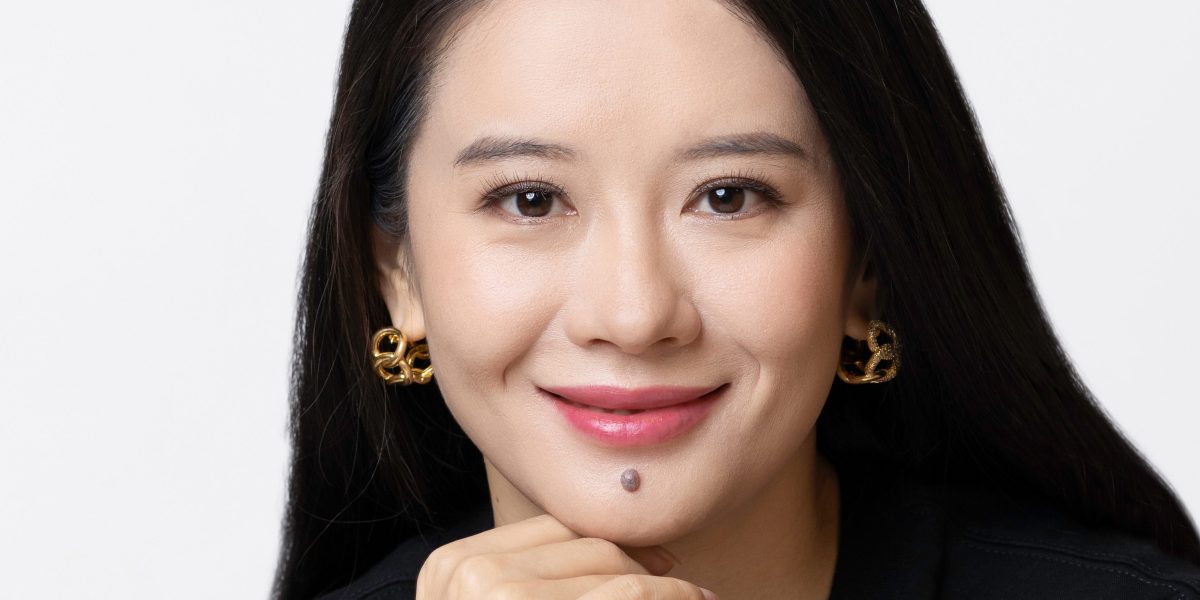
When Yi He was a girl in the 1980s, she walked to the well for water and relied on kerosene lamps at times to light the house. Things are different now. Today, Yi He is a celebrity to millions of Chinese and a multibillionaire thanks to her reported 10% stake in the world’s largest cryptocurrency exchange, Binance, where she wields enormous influence as a cofounder and senior executive. Still, life has not been easy.

Binance’s other cofounder, the flamboyant Changpeng Zhao, went to prison last year in the United States as part of a $4 billion plea deal. The situation created a huge business challenge for Binance and for Yi He, a painful personal one since Zhao was not only the company’s CEO but is the father of her young children.

Today, Binance appears to have weathered the ordeal. Zhao has served his sentence, and Binance, despite incurring the sort of blow that would have crippled most companies, is still on top as the world’s biggest cryptocurrency exchange. Yi He has been instrumental in achieving this, and after years of wielding power behind the scenes, is taking on a more public role running Binance.

In a rare interview, Yi He told Fortune about her journey from poor village girl to crypto billionaire, the tests she faced during Binance’s year of crisis, and her vision for an industry that is fast transforming global finance.

The common touch

In the course of her life and career, Yi He has overcome many obstacles—one of which has been learning English, which she only took up four years ago in her mid-thirties. During a long Zoom interview, He acquits herself well, only falling back on her translator when she struggles to explain a Chinese idiom or proverb.

The power of communication is something Yi He knows well. At Binance, she is renowned for her marketing and customer service skills, which helped vault the exchange to the biggest in the world in less than a year. To this day, she prides herself on listening to Binance clients on Telegram, X, WeChat, and any other platform where they might be found, and insists everyone else do the same. She has famously required that everyone who comes to work at Binance spend a few weeks on the front lines of customer service.

Yi He describes a recent encounter with a university student who had sent $500 worth of crypto to the wrong wallet, a common mistake and one that typically means the funds are gone for good. Yi He, though, took the time to track down and recover the misdirected funds, recalling how the student had told her, “It’s a small figure for you but everything to me.”

Yi He says she can empathize with such stories given her own experience growing up poor in Sichuan province, where she lost her father at age 9 and, when she was 16, spent long hours working to promote soft drinks outside a supermarket. Though she ultimately made her way to university—He pauses to recall the delights of being in a library for the first time—and a career as a TV host, she says her humble beginnings mean she can still relate to Binance’s many customers of modest means.

Yi He’s tale has echoes of Jennifer Lopez’s “Jenny From the Block,” a song about a beautiful woman who keeps the common touch even after she is rich and famous—the sort of story Americans lap up.

But that’s not how it plays in China, says Eowyn Chen, CEO of crypto firm Trust Wallet, who formerly worked for Yi He at Binance. According to Chen, Chinese people are less inclined to root for the underdog, and are more likely instead to hurl insults at those who have risen above their station. Chen says Yi He is the regular target of articles and social media barbs that seek to demean and ridicule her, but that her response is to turn negative rhetoric against those lobbing it.

“She tells people, ‘Sure, I came from a crappy background and made good, so why don’t you do the same?’” says Chen.

Yi He, whom Bloomberg dubbed “the most powerful woman in crypto,” has climbed to the top of the blockchain world using this mix of smarts, hustle, and cockiness—qualities she shares with her cofounder and romantic partner.

Building Binance

When Changpeng Zhao launched Binance in 2017, he had already built an outsize public persona as CZ, by which he is universally known today. Zhao built up the CZ mythology by taking outsize risks—like selling his Shanghai apartment in 2014 to buy more Bitcoin—and by enthusiastically joining in the daily shitposting for the very online community known as Crypto Twitter.

Zhao asked Yi He to join Binance in its early days but only after she had first recruited him years earlier, when she persuaded him to join her as chief technology officer at the exchange OKCoin (now OKX) in 2014. The pair shared an enthusiasm for crypto but other qualities as well. Zhao, like Yi He, spent his early years in an unheated, rural schoolhouse until his father immigrated to Canada where, in high school, Zhao worked minimum wage jobs at Chevron and McDonald’s. Zhao is also inclined to clap back at those who mock his background, even retweeting memes of himself in a Golden Arches uniform.

It was during their time at OKCoin that the pair became a couple as they gained experience operating a massive crypto business. Today, the pair, who never married but remain romantically involved, work closely as parents and business partners. Yi He is co-owner with Zhao of Binance’s venture capital arm turned family office, YZi Labs, and owns at least 10% of shares in the parent company, according to the Wall Street Journal.

On the nature of her relationship with Zhao, Yi He asked not to be quoted on the record and instead provided a written statement: “My personal life is independent from my professional life. My achievements and capabilities as cofounder are often overlooked with my personal life in question,” she wrote, while touting a Binance user base of 280 million customers.

Whatever the personal dimensions of the relationship, the professional side of it has proved highly effective, with Yi He roughly serving as the Binance equivalent of Sheryl Sandberg, the executive who helped build Facebook in its early days while helping to ground the then-unpolished CEO, Mark Zuckerberg.

In practice, this has meant Zhao occupying the role of Binance’s larger-than-life frontman and product visionary, with Yi He fanning massive growth through aggressive promotions, including car giveaways. Her approach found favor with the Chinese community abroad and also in China, where crypto is technically banned but still hugely popular, in part because it is an easily transferable asset beyond the reach of government capital controls.

A Binance employee who asked not to be named so as to discuss the firm’s executives described Yi He as an exacting boss, but one who supports employees and advocates for those around her. In discussing Binance’s day-to-day operations, Yi He said a core tenet at the company is “founder culture,” a phrase from the tech world that describes firms that retain the original drive of their early startup days.

In the case of Binance, those early days were defined in part by a willingness to play fast and loose with regulation, and to hopscotch from country to country in response to government scrutiny. While that strategy helped fuel Binance’s incredible growth, it has at times also been the company’s biggest weakness—one that caused it to lose its most prominent founder.

Binance after CZ

By early 2023, the walls were closing in. Following the collapse of Sam Bankman-Fried’s FTX exchange the previous year, the Biden administration redoubled its efforts to bring the crypto sector to heel—with a particular focus on the sector’s biggest player, Binance. The company’s lawyers had been in discussions with the Justice Department about various allegations for years, but finally the time had come to make a deal.

In September of 2023, the agency announced a sweeping settlement that would not only see Binance pay a whopping $4.3 billion fine—the largest of its kind in corporate history—but also force Zhao to step down as CEO and plead guilty to charges of failing to implement adequate anti-money-laundering measures. Both the Wall Street Journal and Reuters, meanwhile, cited multiple unnamed sources to claim the agency sought to force Yi He to leave the company as well. (“Binance’s plea agreements with the U.S. regulators are a matter of public record,” said a company spokesperson.)

Despite this massive blow to both its treasury and leadership, Binance two years later remains the biggest crypto exchange by far under Zhao’s successor, Richard Teng. A former top regulator from Singapore, Teng has helped the company implement a raft of compliance measures and project a new image that suggests it has evolved beyond the fast-and-loose tactics of its early days. In January, Binance also took a major step—for the first time introducing a formal board structure, featuring seven members including Teng and three independent directors.

Despite all this, a former employee at the company told Fortune that the power at Binance very much resides where it always has—with Zhao, Yi He, and two other early Binance executives, Lilai “Roger” Wang and Wei “Sonny” Zhou. The person, who asked not to be identified in order to speak candidly, added that Yi He has a final say in all personnel matters and exerts the greatest authority when it comes to customer experience decisions. The Binance spokesperson, meanwhile, said the claim is not accurate and that the company’s culture encourages employees to exercise a high degree of autonomy.

The founder of a venture capital firm, meanwhile, described Binance as a company run with an “iron fist” that, despite dealing with new legal constraints and the challenge of running a sprawling global operation, is in no danger of losing its place as market leader. This assessment appears to be supported by recent data, supplied by CoinGecko, that shows Binance holding on to the lion’s share of trading activity—39% of volume on centralized exchanges in June—despite the emergence of new competitors:

CoinGecko

For Yi He, Binance’s ongoing dominance comes as a validation of her customer-first strategy, and of the company founder’s personal devotion to crypto—a technology she views as transformational, to the same degree that the arrival of the internet changed traditional media and TV.

Yi He predicts that crypto will accelerate its push into the conventional financial system through stablecoins and other blockchain technologies and that, in five to 10 years, both realms will be fully integrated with each other.

On a personal level, Yi He says the mass adoption of crypto feels like yet another massive technological change she has experienced since the days of her girlhood not so long ago, when her house didn’t have electricity or running water.

As for the trials she’s experienced along the way, she cites a Mongolian proverb: “Since you have spoken well, do not speak of pain. If you speak of the good, do not mention the pain.”


Source link

Continue Reading

Business

Activist investors are targeting female CEOs—and it’s costing Corporate America

Published

on


Good morning. When Victoria’s Secret reported stellar quarterly results last week, shares shot up 14% and likely gave Hillary Super some breathing room from the activist investors pushing the lingerie company to, among other things, consider whether the CEO of 16 months is up to the task of turning it around.

Of course, the potential of having to deal with an activist investor’s campaign goes with the territory of being a CEO, especially at a company that has been struggling. But Super’s saga is a reminder that women CEOs remain much likelier than their male counterparts to be targeted by activist investors.

This year, according to a report last week by the Conference Board, women have made up 8% of the CEOs in the Russell 3000 index but accounted for 15% of activist campaigns specifically targeting chief executives. Other women to have recently confronted activists: Cracker Barrel’s Julie Masino, who survived a campaign, and Vail Resorts’ Kirsten Lynch, who did not. 

What makes the Conference Board report especially frustrating is that it adds more proof points to an old, seemingly intractable trend.

In 2015, the New York Times’ DealBook pondered “Do Activist Investors Target Female CEOs?” while Fortune’s Pattie Sellers asked “Does Nelson Peltz have a problem with women?” In 2017, Harvard Law School found that women CEOs had almost a 50% higher probability than men of becoming the target of shareholder activism.

Why? One reason, the Conference Board theorized, is rooted in a stereotype that women are more cooperative. It’s also conceivable that the trend reflects the glass cliff phenomenon in which women often take the helm of companies in decline. But there is almost certainly some bias at play. The Conference Board research showed that women targeted by activists face the same odds of being canned whether they turn things around or not, while male CEOs are less likely to be ousted when results improve.

Some of the most prominent women chief executives ever have tangled with activists: PepsiCo’s ex-CEO Indra Nooyi, ex-Yahoo CEO Marissa Mayer, ex-DuPont CEO Ellen Kullman, ex-Mondelez CEO Irene Rosenfeld, ex-HP CEO Meg Whitman, and Mary Barra, still at GM. Michelle Gass, now thriving as CEO of Levi Strauss & Co, dealt with not one but three activist campaigns as she tried to fix Kohl’s.

Everyone should be held accountable when their company is failing or on a bad path. But it is worth wondering what this extra hurdle women CEOs face is costing us. Activist campaigns are bruising to the company but also to a CEO’s reputation. Does this mean boards might be more likely to avoid naming a woman to lower the odds of an activist campaign, or that fewer women will throw their hat in the ring?

Either way, it seems the phenomenon could needlessly be costing corporate America some much needed talent.—Phil Wahba

Contact CEO Daily via Diane Brady at diane.brady@fortune.com

Top news

Fed watch

All eyes will be on the Fed meeting today even though an interest rate cut is all but certain. Instead, investors will focus on Chair Jerome Powell’s tone and whether he characterizes Fed policy as “in a good place;” doing so would imply that a January cut is unlikely. 

Fed chair watch 

Meanwhile, President Donald Trump has narrowed down the candidates to replace Powell as Fed chair. The frontrunner is National Economic Council Director Kevin Hassett, but to clinch the job he’ll reportedly have to outshine three other contenders in the final round of interviews, suggesting he’s not a shoo-in for the job. 

Trump’s affordability tour

In his first in a series of speeches about “affordability,” President Trump mocked the term and insisted that Americans are doing better than ever. In reality, U.S. inflation is close to 3%, about where it was when Trump’s predecessor Joe Biden left office. 

Miami’s mayoral race

As Trump railed against affordability, Eileen Higgins, a Democrat, defeated Trump’s favored candidate in Miami’s mayoral race with a campaign focused in part on affordable housing. She’s the first Democrat to occupy Miami’s City Hall in three decades (and the first-ever woman), giving Democrats another jolt of momentum ahead of the 2026 midterms. 

Taiwan’s chip action

Taiwan is invoking a national security law to protect the trade secrets of its homegrown chipmaker TSMC and has used it to indict a TSMC supplier for allegedly letting a former employee steal details about TSMC’s top chips. 

Layoffs hit 1.1 million

Recruitment firm Challenger, Gray & Christmas has calculated the number of layoffs so far this year at 1.1 million, the sixth time since 1993 that layoffs have been that high. Technology was the hardest hit sector with 150,000 layoffs.

Americans ‘living on the financial edge’

Moody’s Analytics Chief Economist Mark Zandi told Fortunethat many Americans are “already living on the financial edge,” and that a drop in their spending could lead to a recession. If layoffs increase, then Zandi estimates that a “jobs recession” is certain. 

Sam Altman worries about ‘rate of change’

During an appearance on The Tonight Show with Jimmy Fallon, OpenAI CEO Sam Altman admitted that he’s worried about “the rate of change that’s happening in the world right now.” He added that the “rate at which jobs will change over may be pretty fast,” with hopes that “much better jobs” will follow. 

The markets

S&P 500 futures were up 0.05% this morning. The last session closed down 0.09%. STOXX Europe 600 was down 0.19% in early trading. The U.K.’s FTSE 100 was up 0.14% in early trading. Japan’s Nikkei 225 was down 0.1%. China’s CSI 300 was down 0.14%. The South Korea KOSPI was down 0.21%. India’s NIFTY 50 is down 0.32%. Bitcoin is up at $93K.

Around the watercooler

New contract shows Palantir is working on a tech platform for another federal agency that works with ICE by Jessica Mathews

Jamie Dimon taps Jeff Bezos, Michael Dell, and Ford CEO Jim Farley to advise JPMorgan’s $1.5 trillion national security initiative by Nino Paoli

Trump’s $12 billion farmer bailout is a ‘Band-Aid on a bigger wound’ the American agriculture industry is still reeling from by Sasha Rogelberg

Exelon CEO: The ‘warning lights are on’ for U.S. electric grid resilience and utility prices amid AI demand surge by Jordan Blum

CEO Daily is compiled and edited by Joey Abrams, Claire Zillman and Lee Clifford.


Source link

Continue Reading

Business

5 VCs sounds off on the AI question du jour

Published

on


The views seem to range from bubble-wary to bubble-dismissive. We hashed it all out over eggs and sausages at Fortune’s IRL Term Sheet Breakfast at Brainstorm AI in San Francisco yesterday. This is Amanda Gerut, Fortune’s West Coast news editor, pinch-hitting for my colleague Allie Garfinkle.

Allie hosted five VCs with funds ranging in size from $5 million to $25 billion and views varied across the panel. This group alone is collectively going to deploy anywhere from tens to hundreds of millions over the next decade into companies with AI as a backdrop and these investments will either prove spectacularly right or wrong.

Here’s a roll call:

Jenny Xiao, partner at Leonsis Capital and former researcher at OpenAI, came in with a nuanced take. There’s something of a bubble, but it’s “relatively contained” in the infrastructure layer with overinvestment primarily in data centers, GPUs and in large language model companies. But right now, there’s actually underinvestment in the application layer because there are so many ways AI can make an impact in various enterprises, Xiao said. 

Vanessa Larco, former partner at New Enterprise Associates (NEA) and co-founder of new venture firm Premise, has a contrarian view. “Everyone thinks enterprise is safer,” Larco said. “But I actually think the consumer might, this time around in the current environment, be what survives.” Larco’s reasoning is that if a consumer adopts your AI product, it’s because you’re giving them something faster, “radically cheaper, or much easier to use.” Once you’ve done that and built a brand, it’s very hard for people to quit you. 

Rob Biederman, managing partner at Asymmetric Capital Partners and chairman of Catalant Technologies, had a sobering view. “In every boom, 99% or 99.9% of companies fail, and one or two of them become Amazon or Google,” said Biederman, who had to dash off to catch a flight. Only companies that can systematically create value for customers, which most of them aren’t doing right now, will survive. 

Aaron Jacobson, partner at NEA, said the history of technological innovation “is always overhyped in the near term and underhyped in the long term, and that will be true of AI.” So at some point there will be a correction and there will be cycles of pain around valuation and funding, “but ultimately, in 10 years, we’re going to have a lot of really big, impactful companies.”

Daniel Dart, founder and general partner of Rock Yard Ventures, had the boldest counter to fears about a bubble. He sees a total addressable market we can’t yet imagine. People think self-driving Waymos will replace Ubers, but Dart sees elementary schools and elderly care centers with Waymos waiting out front and that proves to him we’re still in the early innings. 

“You’re really going to tell me there aren’t going to be any trillion-dollar companies in 2030 or 2034? No one here is going to take that bet,” said Dart. “There is going to be so much value creation that it’s like the birth of fire.”

See you tomorrow,

Amanda Gerut
Email:
Amanda.gerut@fortune.com
Submit a deal for the Term Sheet newsletter here.

Joey Abrams curated the deals section of today’s newsletter.Subscribe here.

Venture Deals

Saviynt, an El Segundo, Calif.-based identity security platform, raised $700 million in series B funding. KKR led the round and was joined by SixthStreetGrowth, TenEleven and existing investor CarrickCapitalPartners.

fal, a San Francisco-based AI-generated media platform, raised $140 million in Series D funding. Sequoia led the round and was joined by KleinerPerkins, NVentures, and AlkeonCapital.

Radial, a New York City-based network designed to help patients access advanced mental health treatments, raised $50 million in Series A funding. GeneralCatalyst led the round and was joined by SolariCapital, SLHealthCapital, FounderCollective, BoxGroup, ScrubCapital, and DiedevanLamoen.

Relation, a London, U.K.-based developer of medicines for immunology, metabolic, and bone diseases, raised $26 million in funding from NVentures, DCVC, and MagneticVentures.

Aradigm, a New York City-based benefits platform for cell and gene therapies, raised $20 million in Series A funding. FristCresseyVentures led the round and was joined by AndreessenHorowitz and MorganHealth

PrimeSecurity, a Tel Aviv, Israel and New York City-based AI-powered platform designed to detect and mitigate risks during software design, raised $20 million in Series A funding. ScaleVenturePartners led the round and was joined by FoundationCapital, FlybridgeVentures, and others.

Algori, a Madrid, Spain-based AI-powered shopper insights platform for the fast-moving consumer goods industry, raised €3.6 million ($4.2 million) in funding from RedBullVentures, Co-invest Capital, AttaPoll, and others.

EmpromptuAI, a San Francisco-based platform designed to help transition SaaS products into AI-native systems, raised $2 million in pre-seed funding. PrecursorVentures led the round and was joined by AlumniVentures, FoundersEdge, RogueWomenVC, and others.

Private Equity

AppDirect, backed by CDPQ, acquired vComSolutions, a San Ramon, Calif.-based IT management platform, at an enterprise valuation of more than $100 million.

JensenHughes, backed by GryphonInvestors, acquired SafetyManagementServices, a West Jordan, Utah-based fire and life safety company. Financial terms were not disclosed.

NewStateCapitalPartners acquired a majority stake in Harrell-Fish, a Bloomington, Ind.-based mechanical installation and maintenance services provider. Financial terms were not disclosed.

PestCoHoldings, a portfolio company of ThompsonStreetCapital, acquired SouthwestExterminating, a Houston, Texas-based pest control provider. Financial terms were not disclosed.

ProsperityPartners, backed by UnityPartners, acquired a majority stake in Farkouh, Furman & Faccio, a New York City-based provider of tax, attest, accounting and business consulting services. Financial terms were not disclosed.

SEVA acquired a minority stake in Pronto, a Lehi, Utah-based team communications platform designed for front–line employers and higher education institutions. Financial terms were not disclosed.

Exits

ArclineInvestmentManagement acquired Altronic, a Girard, Ohio-based supplier of ignition, control, and instrumentation systems for critical infrastructure power systems, from HOERBIGERGroup. Financial terms were not disclosed.

BerkshirePartners agreed to acquire UnitedFlowTechnologies, an Irving, Texas-based process and equipment solutions company for water and wastewater systems, from H.I.G.Capital. Financial terms were not disclosed.

BessemerInvestors acquired Xanitos, a Newtown Square, Penn.-based provider of environmental services, patient transport, patient observation, and linen services, from AngelesEquityPartners. Financial terms were not disclosed.

ShareRockPartners acquired a majority stake in AMAGTechnology, a Hawthorne, Calif.-based physical security solutions provider, from AlliedUniversal.


Source link

Continue Reading

Business

Coupang CEO resigns over historic South Korean data breach

Published

on


Coupang chief executive officer Park Dae-jun resigned over his failure to prevent South Korea’s largest-ever data breach, which set off a regulatory and political backlash against the country’s dominant online retailer.

The company said in a statement on Wednesday that Park had stepped down over his role in the breach. It appointed Harold Rogers, chief administrative officer for the retailer’s U.S.-based parent company Coupang Inc., as interim head.

Park becomes the highest-profile casualty of a crisis that’s prompted a government investigation and disrupted the lives of millions across Korea. Nearly two-thirds of people in the country were affected by the breach, which granted unauthorized access to their shipping addresses and phone numbers.

Police raided Coupang’s headquarters this week in search of evidence that could help them determine how the breach took place as well as the identity of the hacker, Yonhap News reported, citing officials.

Officials have said the breach was carried out over five months in which the company’s cybersecurity systems were bypassed. Last week President Lee Jae Myung said it was “truly astonishing” that Coupang had failed to detect unauthorized access of its systems for such a long time.

Park squared off with lawmakers this month during an hours-long grilling. Responding to questions about media reports that claimed the attack had been carried out by a former employee who had since returned to China, he said a Chinese national who left the company and had been a “developer working on the authentication system” was involved.

The company faces a potential fine of up to 1 trillion won ($681 million) over the incident, lawmakers said.

Coupang founder Bom Kim has been summoned to appear before a parliamentary hearing on Dec. 17, with lawmakers warning of consequences if the billionaire fails to show.

Park’s departure adds fresh uncertainty to Coupang’s leadership less than seven months after the company revamped its internal structure to make him sole CEO of its Korean operations. In his new role, Rogers will focus on addressing customer concerns and stabilizing the company, Coupang said.

Join us at the Fortune Workplace Innovation Summit May 19–20, 2026, in Atlanta. The next era of workplace innovation is here—and the old playbook is being rewritten. At this exclusive, high-energy event, the world’s most innovative leaders will convene to explore how AI, humanity, and strategy converge to redefine, again, the future of work. Register now.


Source link

Continue Reading

Trending

Copyright © Miami Select.