
Politics
How Americans feel about changing the clocks


Yes, you’ll get a shot at an extra hour’s sleep. But even with that, it might be one of the most dreaded weekends on the American calendar: the end of daylight saving time.
Only 12% of U.S. adults favor the current system of daylight saving time, which has people in most states changing the clocks twice a year, according to a new AP-NORC poll, while 47% are opposed and 40% are neutral.
Around the country, the clocks will go back one hour at 2 a.m. Sunday (respective local times) to mark the return to standard time and more daylight in the mornings. The poll from The Associated Press-NORC Center for Public Affairs Research shows that for many Americans, it’s an unwelcome change — and if forced to choose, most would prefer to keep that extra hour of daylight in the evening.
Pranava Jayanti is among those who strongly oppose the switch. The 31-year-old Los Angeles resident grew up in India, where the clocks don’t change. When he came to the United States for graduate school, some relatives made sure he knew about it.
He thought he was prepared, “but when it actually happened, it still took me by surprise,” Jayanti said, because of how quickly it got dark in the latter half of the day.
There have been calls for the U.S. to stop making the twice-yearly changes, including a piece of legislation that stalled after the Senate passed it in 2022. Among those urging that the country stick to one time for the entire year are the American Medical Association and American Academy of Sleep Medicine, as well as President Donald Trump, who issued a social media post about it earlier this year.
Permanent daylight saving (not daylight savings, as many people say colloquially) would be unpopular with a significant chunk of people, though, the poll found — particularly those who prefer mornings.
Changing the clocks is unpopular
The United States first started using the time shift over a century ago, during World War I, then again in World War II. Congress passed a law in 1966 that allowed states to decide if they would have it or not, but required their choices to be uniform across their territories. All states except Arizona and Hawaii make the time shifts; those two states remain on standard time year-round.
Time changes are also undertaken in some other parts of the world, like Canada and Europe, but not in others, like Asia. Europe and North America change the clocks a week apart, resulting in a short period where the time difference between the regions is an hour shorter than the rest of the year.

But although about half of U.S. adults are opposed to the switch — including 27% who are “strongly” opposed — many don’t care one way or another. That’s particularly true of adults under 30, with 51% saying they neither favor nor oppose the practice. Those over 30 are more likely to be opposed to it, with about half saying they dislike the twice-a-year switching of clocks.
If they had to choose one time for the country to use, more than half of adults — 56% – prefer making daylight saving time permanent, with less light in the morning and more light in the evening. About 4 in 10 prefer standard time, with more light in the morning and less in the evening.
Those who consider themselves “night people” are much more partial to permanent daylight saving time: 61% of them say this would be their choice.
“Morning people” were just about evenly split, with 49% of them preferring permanent daylight saving time, and 50% wanting permanent standard time.
Vicky Robson is one of those night people. If the 74-year-old retired nurse had to pick one time to go by, it would definitely be permanent daylight saving.
“I don’t get up early in the morning, so I don’t need the light in the mornings,” said Robson, of Albert Lea, Minnesota. “I need it more in the late afternoon, early evening. I like when it’s light later, because that’s when I do things. I’ve always worked the evening shift and now that I’m retired, I would go out and take a walk after supper if it was light.”
Why the clock change still happens
There’s no overwhelming evidence that daylight or standard time would be better for society, although there is advice for how to adjust sleep and habits to deal with it.
New research from Stanford University has found that at least when it comes to humans and our internal clocks — our circadian rhythm — having a single time would be better for health than switching. It also found that standard time had slightly better health benefits than daylight saving time.
“The more light you have earlier in the morning, the more robust your clock is,” said Jamie Zeitzer, one of the study authors and co-director of the Center for Sleep and Circadian Sciences at Stanford.
But that’s only one aspect, he added. There are a range of others, from economics to people’s personal preferences.
“This is something that people feel very passionate about, and their passion is usually driven by … themselves, what they would prefer,” he said. “There is no time policy that you can have that will make everyone happy.”
America did try once, in the mid-1970s, to switch to permanent daylight saving time. It was supposed to be a two-year experiment, but lasted less than a year because it was so unpopular.
At this point, the time shift and the resulting change in daylight hours in different seasons have become part of our culture, said Chad Orzel, professor of physics and astronomy at Union College and author of “A Brief History of Timekeeping.”
“People really like having the long evenings in the summer,” he said. But “we drop back in the fall so that we don’t have the thing that everybody hates, which is it being dark until after you get to work. … We have earlyish sunrises in the winter and late sunsets in the summer. We like both of those things. The price we pay for that is we have to change the clocks twice a year.”
___
Republished with permission of The Associated Press.

Small-business owner Ola Hawatmeh’s bid to succeed fellow Republican Byron Donalds in Florida’s 19th Congressional District is getting a boost from one of South Florida’s most prominent Donald Trump-aligned state lawmakers.
Palm Beach Gardens state Rep. Meg Weinberger, dubbed “MAGA Meg” for the support she has given, and received from, Trump and his supporters, just threw her political influence behind Hawatmeh’s CD 19 campaign.
She believes Hawatmeh, a health and wellness entrepreneur, is most likely to win in November and keep the U.S. House in GOP hands post-Midterms.
“With Republicans needing to keep their slim majority in the U.S. House of Representatives,” Weinberger said in a statement, “we need more loyal America First Republicans like Ola to help President Donald Trump continue defending our God-given American freedoms and liberties.”
Hawatmeh, whose X page heavily features posts supporting Trump and Weinberger, also carries an endorsement from economist and Trump policy adviser Stephen Moore.
Hawatmeh said in a statement that she is “honored” to have Weinberger’s endorsement.
“Meg understands how important it is to help President Donald J. Trump retain the narrow Republican majority in the House of Representatives with true America First candidates,” she said.
Hawatmeh is running in a crowded Republican Primary to replace Donalds, the GOP front-runner in Florida’s gubernatorial race. Others competing for the party nomination include former U.S. Rep. Madison Cawthorn of North Carolina, Stephen Elliott, Johnny Fratto, Dylan Modarelli, former Illinois state Sen. Jim Oberweiss, Mike Petersen and Jim Schwartzel.
Democrat Howard Sapp, a longtime community leader in Fort Myers, has been running unopposed for his party’s nomination since February 2025.
CD 19 covers a swath of Southwest Florida spanning large parts of Charlotte, Collier, Glades, Hendry, Lee and Sarasota counties. Cities in the district include Bonita Springs, Cape Coral, Fort Myers, Fort Myers Beach, Marco Island, Naples and Sanibel.

The district leans heavily Republican, with a Cook Partisan Voting Index of R+14.

A proposal that would ban smoking and vaping marijuana in public places has cleared its first Senate committee stop.
The Senate Regulated Industries Committee voted to advance a bill (SB 986) sponsored by Sarasota Republican Sen. Joe Gruters to amend the Florida Clean Indoor Air Act to prohibit smoking or vaping marijuana products in public places. The measure was presented to the committee by Doral Republican Sen. Ana Maria Rodriguez, the bill’s co-sponsor, on Gruters’ behalf.
“There is currently no prohibition on smoking marijuana in public places if adult use is approved by the voters,” Rodriguez told the committee. “By banning public smoking of marijuana, we are protecting community health and quality of life, as well as protecting certain outdoor spaces from marijuana smoke such as beaches and parks.”
Rodriguez told the committee that every state allowing recreational marijuana either bans public smoking outright or imposes tight restrictions on where it can occur. SB 986 would prohibit smoking or vaping marijuana in public places, while also folding marijuana into Florida’s existing Clean Indoor Air Act framework.
The bill defines public places as streets, sidewalks, parks, beaches and common areas of apartment buildings, restaurants, retail shops, transportation facilities and government buildings. It does not change Florida’s ban on smoking tobacco in enclosed indoor workplaces.
The Florida Restaurant & Lodging Association spoke in support of the bill’s intent but raised concerns about how the definition of “public places” could affect private property.
“We support adding vaping and marijuana to the provisions of the Florida Indoor Clean Air Act,” association Vice President of Government Relations Samantha Padgett said.
However, she said restaurants and hotels worry the bill could interfere with designated smoking areas created in compliance with existing law. Padgett said many businesses made significant investments to comply with current statutes and urged lawmakers to preserve that flexibility as the bill moves forward.
“This gives all employers the freedom to ensure a smoke-free environment in their places of employment,” she said. “We have received feedback of concern from our members regarding the definition of smoking in designated spaces on private property such as patios and designated hotel rooms or floors.”
Meanwhile, medical marijuana advocates argued the bill could have unintended consequences for patients. Jody James, speaking on behalf of the Florida Cannabis Action Network, said the proposal is overly broad and could limit lawful access for medical marijuana patients, particularly those living in apartment complexes or staying in lodging where indoor smoking is prohibited but outdoor smoking is permitted.

James also raised concerns that the bill’s definition of public places could blur the line between public and private property, potentially affecting patients smoking just outside their homes.
“We understand the problems of having people smoking everywhere, but we also hope that you’ll consider patients and property rights in this discussion,” James said.
Committee members questioned whether the bill could inadvertently sweep in activities such as non-tobacco hookah use or vaping on private property. Rodriguez said the bill does not target marijuana use so tightly that it should affect a person smoking outdoors near their homes, or other extreme interpretations of the law.
“There is a difference between someone’s front door and a public place where the general public can gather, whether it’s a restaurant, whether it’s in a park or a beach,” Rodriguez said. Your house is your dwelling, and the front door of your house is not the same as being in a public place.”
The committee voted to report SB 986 favorably. The bill will now head to its second of three committee stops with the Senate Appropriations Committee on Agriculture, Environment, and General Government.
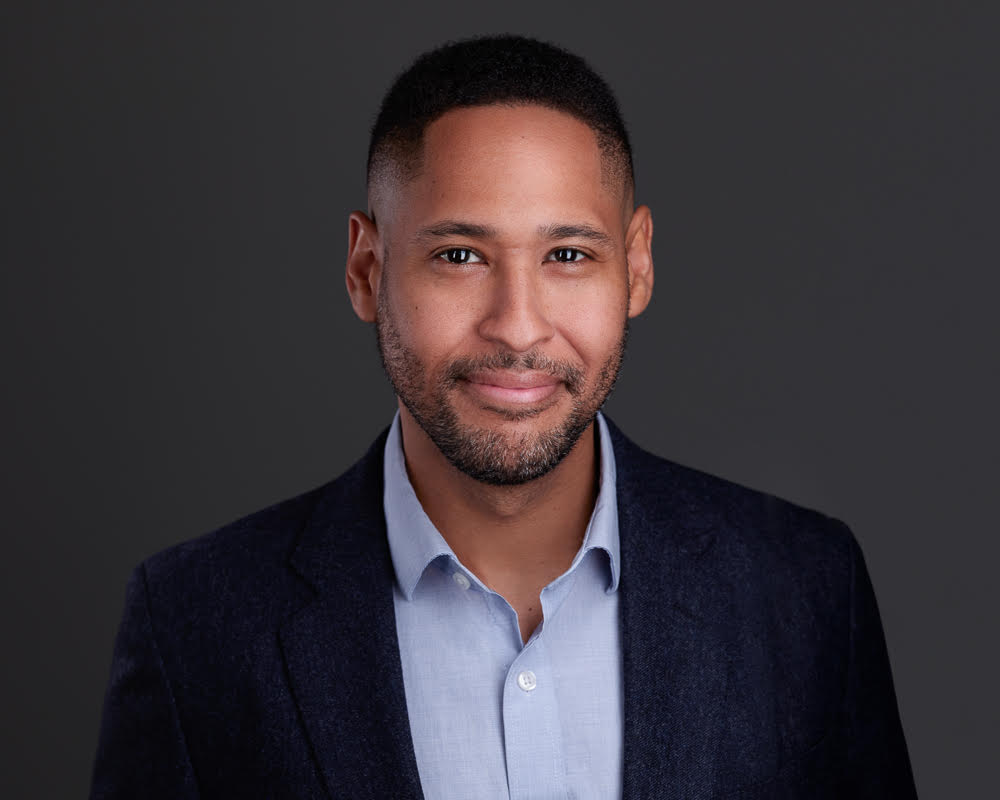
U.S. Rep. Lois Frankel is joining a widening tent of supporters backing Democrat Robin Peguero’s campaign for Florida’s 27th Congressional District.
Frankel, a two-time Congresswoman representing parts of Palm Beach County, said Peguero has what it takes to “flip this seat and change the trajectory of South Florida.”
“As a prosecutor and educator, Robin has a proven record of fighting for affordability and public safety. And as a first-generation Latino leader, he is uniquely positioned to connect with voters,” she said in a statement.
“I am proud to endorse Robin and to get to work on his behalf.”
Frankel, who previously served as West Palm Beach Mayor and the Florida House Democratic Leader, is the first member of Florida’s Democratic congressional delegation to endorse Peguero in the CD 27 race.
Her nod adds to others from Miami-Dade School Board member and former state Rep. Joe Geller, Key Biscayne Council member Franklin Caplan, Coral Gables Commissioner Melissa Castro, Cutler Bay Council member B.J. Duncan, former Congresswoman and Cabinet Secretary Donna Shalala, former state Reps. Annie Betancourt and J.C. Planas, former Miami-Dade Commissioner Katy Sorenson and former South Miami Mayor Philip Stoddard.
The political arms of the Congressional Black Caucus and Congressional Hispanic Caucus have also endorsed Peguero.
He faces two other Democrats, accountant Alexander Fornino and entrepreneur Richard Lamondin, in an August 2026 Primary. A fourth Democratic registrant for the contest, former Key Biscayne Mayor Mike Davey, dropped out of the race and endorsed Peguero in August.
The winner of the Democratic Primary is likely to face CD 27’s incumbent, Republican U.S. Rep. María Elvira Salazar, who has one Primary challenger, Vincent Arias.
CD 27, one of three Florida districts that the Democratic Congressional Campaign Committee has highlighted as “in play,” covers Miami, Coral Gables, Cutler Bay, Key Biscayne, Pinecrest, North Bay Village, South Miami, West Miami and several unincorporated areas.



Sephora announces strategic partnership with Korea’s CJ Olive Young

Ola Hawatmeh’s CD 19 campaign notches endorsement from ‘MAGA Meg’ Weinberger

Fortune Article | Fortune
-

 Politics8 years ago
Congress rolls out ‘Better Deal,’ new economic agenda
-
Entertainment9 years ago
New Season 8 Walking Dead trailer flashes forward in time
-
Politics9 years ago
Poll: Virginia governor’s race in dead heat
-
Politics8 years ago
Illinois’ financial crisis could bring the state to a halt
-
Entertainment8 years ago
The final 6 ‘Game of Thrones’ episodes might feel like a full season
-
Entertainment9 years ago
Meet Superman’s grandfather in new trailer for Krypton
-
Business9 years ago
6 Stunning new co-working spaces around the globe
-
Tech8 years ago
Hulu hires Google marketing veteran Kelly Campbell as CMO