Connect with us

Business

How Akamai’s CIO balances enthusiasm and concerns about AI technology

Published

on


Kate Prouty, the chief information officer at Akamai Technologies, says workers at the cybersecurity and cloud computing company have developed a voracious appetite for artificial intelligence. They firmly believe that those with sharper AI skills will have an advantage.

“The demand for AI is out of control,” says Prouty. “It feels like a tsunami. Everyone feels like they need AI.”

While such enthusiasm may make it easier for Akamai to see strong adoption rates when new AI tools are deployed, it can also come with organizational challenges for leaders like Prouty, who oversees the company’s global IT organization and is responsible for assessing, testing, and deploying new AI tools to be used by over 9,000 employees globally.

Following the beginning of the generative AI boom in late 2022, Akamai initially embraced a “thousand flowers bloom” strategy for AI. The company quickly set up internal infrastructure that would give employees a safe “sandbox” to test use cases. While none of these AI applications were intended for full production, Akamai saw the value in encouraging experimentation. But only up to a point. 

“It didn’t make sense to me as a CIO that I would have people out in the Akamai ecosystem just developing AI and developing copilots,” explains Prouty, a 26-year veteran at Akamai. 

Now, Prouty prefers a more centralized approach and has adopted the thesis that most generative AI use cases that Akamai will adopt will come from the company’s vendors, including Cisco, Salesforce, and Google. Her team spends a lot of time with vendors, including a wide variety of AI startups that pitch Akamai, to better understand what their technologies can deliver, their future innovation roadmaps, and the changes that Akamai may need to make internally so it can best tap into these AI tools and generate meaningful productivity gains. 

When Akamai does opt to move forward with an AI feature, it does so in a highly measured rollout. “We’re sort of looking at as many of our vendors as we can in a very small pilot way, to understand what it is they’re offering and how it’s going to benefit us,” says Prouty, noting that she still has concerns about the maturity of AI technology and about the “murky” cost structures she’s seen from some vendors.

Each time an AI pilot is launched, Akamai creates a team chat channel in Webex so that people can share what’s working—or not working—when trying new AI capabilities.

Github Copilot has been rolled out under a “controlled release” for software engineers and in some cases, projects that would take weeks can be achieved in hours. But in other cases, the code written by the AI assistant doesn’t make sense and more work is needed to fix the errors. “There’s a learning curve,” says Prouty.

There is also some internal appetite to test offerings from other AI coding assistants, including Cursor and Anthropic’s Claude. But before Prouty signs off on that, she wants to really home in on measurable productivity benefits.

“I am still seeing that the technology is not quite there,” says Prouty. Workers still hit a lot of roadblocks when adopting these new AI tools and when that’s conveyed to vendors, they’re quick to say, “‘Oh yeah, that’s coming in the next release,’” she adds.

For some limited cases, Akamai sees a competitive advantage in building in-house AI tools. For example, the company partnered with French AI startup Dataiku to build a chatbot for the sales team, which taps into a blend of OpenAI’s LLMs and internal data from Akamai. The sales team is able to use this tool to pull a mix of private and public information about customers before making a pitch.

And while 2025 was christened as “the year of agents,” Akamai remains firmly on the sidelines when it comes to testing agentic AI. “I just don’t know if the technology is there yet,” says Prouty.

But even with the IT department exerting greater control of Akamai’s AI strategy, Prouty says she encourages an open-door policy when it comes to fielding new AI ideas.

“Let’s encourage, not discourage,” says Prouty. “Bring us your use cases. Let’s help you do that in a way that’s secure. But we’re going to put some cost controls around it.”

John Kell

Send thoughts or suggestions to CIO Intelligence here.

NEWS PACKETS

Salesforce debuts a new way to make it easier to build AI agents. Ahead of Salesforce’s annual Dreamforce customer conference this week, the software giant unveiled a new platform called Agentforce 360, which is intended to make it easier for businesses to build, control, and deploy AI agents. Rivals including Google and Amazon Web Services have also recently unveiled more centralized AI agent platforms as adoption of this technology is frequently stuck in the pilot phase. “Companies have invested a lot in AI, but they’re not getting the value,” Srini Tallapragada, president and chief engineering and customer success officer at Salesforce, said during a press briefing last week, according to CIO Dive.

Meta scoops up Thinking Machines Lab co-founder. Andrew Tulloch, an AI researcher and co-founder of Mira Murati’s Thinking Machines Lab, has left to rejoin Meta Platforms. Tulloch previously worked at Meta for 11 years and left in 2023 to join OpenAI before co-founding Thinking Machines Lab alongside Murati, who previously served as CTO at OpenAI, at the beginning of 2025. The Wall Street Journal reports that it is unclear which team Tulloch will be on at Meta. But the hire further highlights Meta CEO Mark Zuckerberg’s particularly aggressive push to poach top AI talent from competitors, hiring more than 50 top AI researchers from OpenAI, Google DeepMind, Apple, and others.

Broadcom hooks up with OpenAI. OpenAI is proving to have the “Midas Touch” on a large number of tech stocks and the latest to enjoy the glisten from the ChatGPT maker is Broadcom, which stands to generate billions in new revenue from a newly announced multi-year deal to sell the company’s custom chips and networking equipment to support the AI startup’s infrastructure needs. Under the terms of the deal, OpenAI will design the hardware and work with Broadcom to develop it. OpenAI’s recent long-term partnership with AMD (the sponsor of this newsletter) also sent shares of that chip supplier earlier in October, while Bloomberg reports that at OpenAI’s annual developers event, mere mentions of other companies like Figma, HubSpot, and Salesforce led to stock gains for those public companies.

ADOPTION CURVE

Executives say AI is now essential to their operations. Nearly three-quarters of executives say that their company would struggle to function without AI, a figure that rises to 77% of smaller companies with fewer than 10,000 employees, according to a survey of 1,500 IT business executives conducted by PagerDuty, which helps incident management for IT departments. A vast majority of the companies (84%) also reported that they are using AI in software development to write, review, or suggest code.

Additionally, the survey uncovered that three out of four companies have deployed at least one AI agent, with 25% saying they’ve deployed five or more. 81% of executives said they would also trust AI agents to take actions on a company’s behalf during a crisis, which could include a service outage or security event. But less optimistically, 85% say they need better procedures to detect errors or failures in AI tools and 84% of companies report experiencing at least one AI-related outage.

Courtesy of PagerDuty

JOBS RADAR

Hiring:

The state of Wisconsin is seeking a CIO, based in Dane, Wisconsin. Posted salary: $148.5K/year.

Amalgamated Bank is seeking a chief information security officer, based in New York City. Posted salary range: $240K-$260K/year.

Mascoma Bank is seeking a SVP of IT, based in White River Junction, Vermont. Posted salary range: $142.1K-$191.9K/year.

Instrumental is seeking a VP of engineering, based in Palo Alto, California. Posted salary range: $330K-$360K/year.

Hired:

The Knot Worldwide appointed John James as CTO, reporting to CEO Raina Moskowitz. James joins the wedding-planning website from financial services company Ouro, where he served as SVP of engineering. He also previously worked as VP of technology at travel technology company Expedia Group.

ASML Holding NV promoted Marco Pieters to the roles of EVP and CTO, reporting to CEO Christophe Fouquet. Pieters has had over 25 years at the Dutch semiconductor company, most recently as EVP for the product area of applications. He initially joined ASML in 1999 as a software designer.

Ibex announced the appointment of Michael Ringman, joining the outsourcing company from industry peer Telus International, where he most recently served as CIO/CTO. Prior to that, Ringman worked at another outsourcing firm, TeleTech Holdings, where he served as VP of global technology infrastructure.

JWP Connatix named Pat DeAngelis as CTO, joining the video technology company to advance its product roadmap. DeAngelis has  more than 20 years of leadership experience in the ad tech space, including serving as co-CTO at Innovid and CTO of Flashtalking.

Sovos appointed Peter Gaffney as CIO, joining the compliance and tax reporting software provider after most recently serving as SVP and CISO for workforce management software provider Magnit. He has also held technology leadership roles at Oracle, Blue Cross Blue Shield, Condé Nast, and Ann Taylor.

ConstructConnect appointed Gaurav Singal as CTO, where he will steer product development, IT, and security for the construction software provider. Singal joins ConstructConnect from payments firm Cantaloupe, where he served as CTO. He also previously served as CIO of the Georgia Lottery, chief product officer for the last mile division at XPO Logistics, and VP of technology at Goldman Sachs.




Source link

Continue Reading

Business

Borrowing by AI companies represents a ‘mounting potential threat to the financial system’: Zandi

Published

on


Tech companies are issuing more debt now than before the dot-com crash as a rapid infrastructure buildout unfolds in the AI boom, Moody’s Analytics Chief Economist Mark Zandi said in a LinkedInpost on Sunday.

Even after adjusting for inflation, big tech companies are issuing more bonds than during the late 1990s. And the companies aren’t just refinancing existing debt—they’re taking on additional debt.

“While the increasingly aggressive (and creative) borrowing by AI companies won’t be their downfall, if they do fall short of investors’ expectations and their stock prices suffer, their debts could quickly become a problem,” Zandi wrote. 

“Borrowing by AI companies should be on the radar screen as a mounting potential threat to the financial system and broader economy.”

The 10 largest AI companies, including Meta, Amazon, Nvidia and Alphabet, will issue more than $120 billion this year, Zandi said in a LinkedIn analysis last week.

And this time is different from dot-com era debt issuance, as internet companies back then didn’t have a lot of debt, he pointed out. Instead, they were funded by stocks and venture capital.

“That’s not the case with the AI boom,” Zandi added.

Even though hyperscalers like Amazon, Google, Meta, and Microsoft could pay for the AI buildout with their profits, bond issuance is the “cheapest and cleanest” way to finance an infrastructure buildout of this scale, which will likely last more than a decade and be worth trillions of dollars, Shay Boloor, chief market strategist at Futurum Equities, told Fortune.

“These companies are a lot more comfortable issuing 10- to 40-year papers, for example, at very low spreads, because the market now views them as quasi-utility names—because they’re building all this infrastructure—not just a pure tech company anymore,” Boloor said.

He added that in the previous six months, tech companies have shown “proof in the pudding” that future demand for AI is booming.

Despite AI bubble concerns, Nvidia delivered a strong earnings report for its third quarter last month, saying its AI data center revenue increased by 66% from last year. 

Still, critics warn that the buildout may not keep up with how rapidly AI is developing.

Computer hardware, which makes up most AI data centers’ cost, may be more susceptible to becoming obsolete and replaced by more advanced technology during the AI boom as opposed to wireless and internet buildouts, much of which still runs today, George Calhoun, professor and director of the Hanlon Financial Systems Center at Stevens Institute of Technology, told Fortune.

“The cycle of innovation in the chip industry is much faster than for wireless technology or fiber optics,” he said explained. “There is a real risk that much of that hardware may become competitively disadvantaged by newer technologies in a much shorter timeframe,” before being fully paid off.

At the same time, big players in the AI boom—namely OpenAI—do not have the profits currently to cushion their massive investments at the moment, increasing their risk, Calhoun said.

“If OpenAI fails, the snowball effect of that is gonna be substantial,” Futuruum Equities’ Boloor said. Though larger tech companies won’t likely be impacted much by a potential OpenAI bust, companies that largely rely on its business like Oracle could, he added.

Still, Boloor is optimistic about the AI buildout, saying the main bottleneck for its success is U.S. energy capacity.

“I think that the risk is that trillions of dollars of AI capacity gets built faster than the North American grid can support it, which could slow realization,” he warned. 


Source link

Continue Reading

Business

International deals race forward to end China’s hold on critical minerals since US can’t do it alone

Published

on


Pini Althaus saw the signs. In 2023, he left the company he founded, USA Rare Earth, to develop critical minerals mining and processing projects in central Asia, after realizing that the U.S. will need all the international help it can get to end China’s supply chain dominance.

“I realized we only have a handful of large critical minerals projects that were going into production between now and 2030,” Althaus, chairman and CEO of Cove Capital, told Fortune. “I understood that we’re going to have to supplement the United States critical minerals supply chain with materials coming in from our allied and friendly countries.”

Over a series of decades, China built up its stranglehold on much of the world’s critical minerals supply chains, including the 17 rare earths, used to make virtually all kinds of high-performance magnets and parts for vehicles, computers, power generation, military defense, and more. The rest of the world deferred to Beijing in exchange for cheap prices.

Amid an ongoing tariff war with the U.S.—and a temporary truce—the Trump administration is racing to build up domestic mining and processing capabilities, while also developing the global partnerships necessary to eventually undermine China, which controls 90% of the world’s rare earths refining.

In October, Trump inked a deal with Australia for both countries to invest $3 billion in critical minerals projects by mid-2026. Australia is home to the largest publicly traded critical minerals miner in the world, Lynas Rare Earths. Trump then signed a series of bilateral critical minerals deals in eastern and southeastern Asia, including Japan, Malaysia, Thailand, Indonesia, and Cambodia. The U.S. also has new deals with Ukraine, Argentina, the Democratic Republic of Congo, Rwanda, Kazakhstan, and more.

Althaus is specifically developing mining and processing facilities for tungsten—a heat-resistant metal used in electronics and military equipment—and rare earths in Kazakhstan and Uzbekistan. He sees the most potential in former Soviet Union nations in central Asia.

“The Soviets spent many decades exploring and developing mines. Many of their databases have been left and are quite meticulous,” Althaus said. “This gives companies looking to develop projects in central Asia a jumpstart compared to what would be here in the United States, where most of the opportunities are greenfield—very early stages, very high risk, and very little appetite for investment.”

In November, the Ex-Im Bank offered Cove Capital a $900 million financing letter of interest for the $1.1 billion Kazakh tungsten projects. A separate letter of interest was received from the U.S. International Development Finance Corporation.

Jeff Dickerson, principal advisor for Rystad Energy research firm, said only a long-term, coordinated effort—essentially a “wartime” approach—both domestically and with international partnerships can lead to success. But it cannot be done without new projects with foreign allies. “The challenge is that the U.S. doesn’t have a strong pipeline of mature mineral projects that are shovel ready,” he said. 

“The cycle of China extracting concessions on the back of mineral geopolitics and weakening the U.S. strategic negotiating position will likely continue without a coordinated, long-term response during the current moment of heightened attention to critical minerals,” Dickerson said, questioning whether the U.S. will maintain a concerted focus for years to come.

New emphasis

The Trump administration is increasingly making financial partnerships with critical minerals developers—even becoming a majority shareholder of U.S. rare earths miner MP Materials—and offering deals for floor-pricing mechanisms to offset China’s recurring dumping practices that aim to eliminate competition.

A native Australian turned New Yorker, Althaus is, naturally, a big fan of this approach. Chinese price dumping has crippled global competition and scared away potential investors, he said.

“By providing a price floor, it removes the question marks; it removes the instability; it removes the most significant risk in funding a project that’s about to go into production,” Althaus said. “It creates a predictability where you can take geology all the way through to profitability. I think there should be a global effort to create transparent markets and prices for the key critical minerals.”

Critical minerals are increasingly included in U.S. negotiations for all foreign deals. In the tariff agreement with Indonesia, for instance, the Asian nation agreed to lift export bans on nickel. The White House leveraged its military support for Ukraine by demanding the rights to its critical minerals in return. And the recent U.S. bailout of Argentina included a partnership on critical minerals mining.

In addition to its strategic defense location, rare earths are even a reason Trump continues to show interest in annexing Greenland from Denmark.

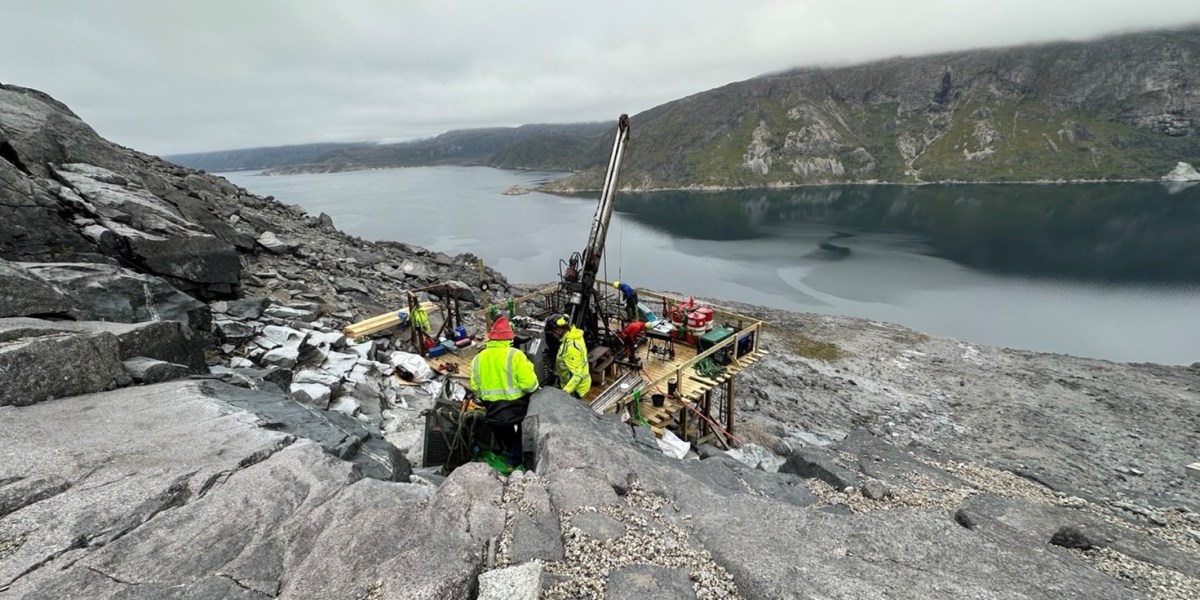
Veteran geologist Greg Barnes, who founded the massive Tanbreez mining project, which remains in development, briefed Trump at the White House during his first presidential term. This year, Critical Metals acquired 92.5% ownership of the Tanbreez project.

Critical Metals CEO Tony Sage is keen to supply the U.S. with desired rare earths, and the company recently received a letter of intent for a $120 million Ex-Im Bank loan. The goal is to start construction by the end of 2026.

“There’s an absolute need to make sure that more than 50% of the supply of these heavy rare earths come from outside of China—mined and processed outside of China,” Sage told Fortune.

Regardless of any long-shot annexation bids, Sage said Greenland can and should be a key ally to the U.S. for critical minerals. “They definitely don’t want to be part of the U.S., but I think they’ll be pro-U.S.,” he said.

For his part, Althaus said he sees all the international deals as progress, and not as competition for his Cove Capital.

“I think it’s a positive, and I think we’ll start to see a lot more happen in the coming months in terms of the U.S. and collaboration with other countries.”


Source link

Continue Reading

Business

Amazon’s new Alexa aims to detangle chaos in the household, like whether someone fed the dog

Published

on


It’s 10 p.m. after a long day when you walk in the door and wonder aloud: “Did anyone feed the dog? Who fed the dog,” Panos Panay says he calls out to his family of six.

Turns out, nobody fed the dog and so all the kids “scatter to their corners,” he told Fortune’s Brainstorm AI audience in San Francisco on Monday. 

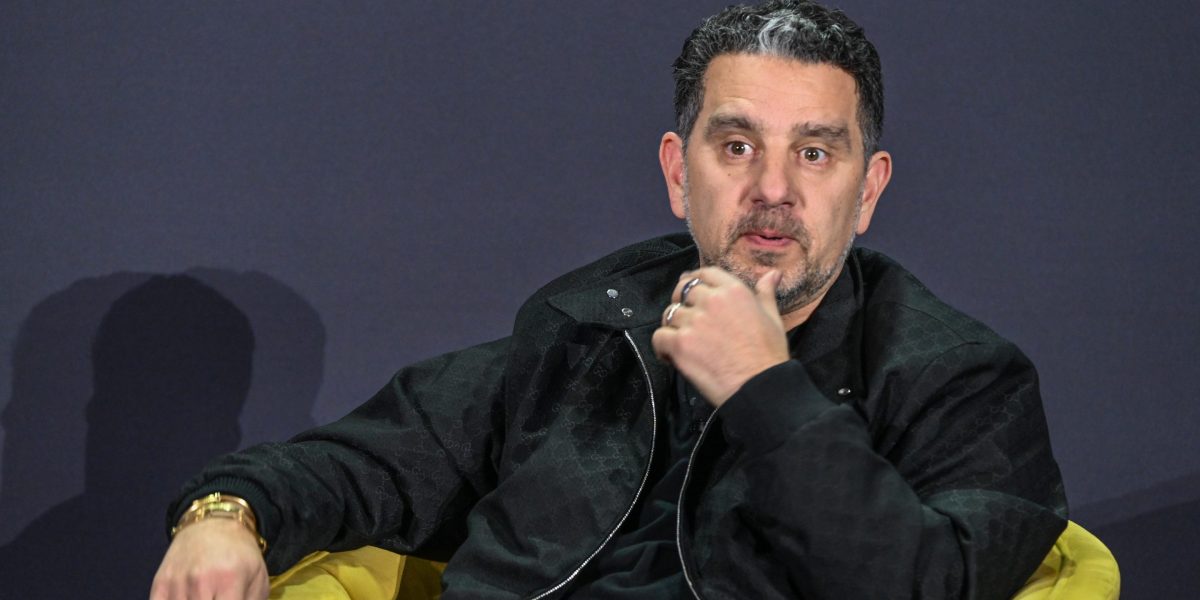
The senior vice president of devices and services at Amazon says the new generative AI-powered Alexa+, which runs on Echo hardware and can integrate with other devices like Amazon’s Ring security cameras, aims to ease the constant mental load in a household: remembering whether the pets ate, restaurants each family member pitched and saw vetoed, and regular grocery orders. The idea is to have “ambient” artificial intelligence around your house so that devices can assist in tasks, chores, and other household command center issues, said Panay.

The new Alexa+ is much more conversational, Panay said, and you no longer have to pronounce everything perfectly and discretely in order for it (or her, as Panay refers to the virtual assistant) to understand you.

“She’s the best DJ on the planet, in my opinion,” said Panay. “You have a personal shopper, you have a butler, you have a personal assistant, you have your home manager. Different people use Alexa for different things, and now she’s pretty much supercharged,” Panay said.

In addition to confirming that the dogs have not been fed, Panay said he used Alexa+ on Sunday night to head off another age-old debate: where the family should go for dinner. Both dinner decisions and pet chores are “classic fight[s] in my house,” Panay told the Brainstorm AI audience.

His youngest had previously suggested a few restaurants she wanted to visit for a quick bite and hadn’t yet been to, and Panay asked Alexa to remind them which ones his daughter suggested specifically. It was a sushi joint and she enjoyed it, Panay said. That type of ambient listening and assistance with debate is the point, he said, and stops people needing to pull out their phones and start typing and scrolling for information.   

From there, Panay said Alexa can also take more concrete actions like making a reservation on dining platform OpenTable, ordering delivery on nights in, getting an Uber, and handling home issues such as telling you how many packages were delivered or the number of guests who stopped by. Panay said Amazon has more than 150 partners to aid in these integrations, although there is work ahead to get more partners on board, he added.  

Thus far, Alexa+ has been rolled out to early-access users and this week the product is available to those on a lengthy waitlist, said Panay, and it’s been boosted by Amazon’s advertising. This week, the product is being released to anyone with an Echo device. The business monetization model involves “flywheels” from Amazon’s $2.4 trillion retail ecosystem, particularly around shopping for clothes, groceries, and other consumer items. “If you’re shopping on the grocery list and order groceries often enough, Alexa knows what you’re doing, and ultimately, can just order ahead of time for you moving forward,” he said.

Ultimately, Panay envisions users wanting “your assistant everywhere you go” because “the more it understands about you, the more informed it is, the better it can serve your needs.” And while Panay said there will be continued innovation from Amazon in this space, he refused to reveal any specific products. He said Amazon has a “lab full of ideas,” but most won’t make it out of that lab. 


Source link

Continue Reading

Trending

Copyright © Miami Select.