
Business
How AI is redefining finance leadership: ‘There has never been a more exciting time to be a CFO’


Business
Millennial designer spent months building ‘The Holiday’ cottage replica. It’s renting at $499/night
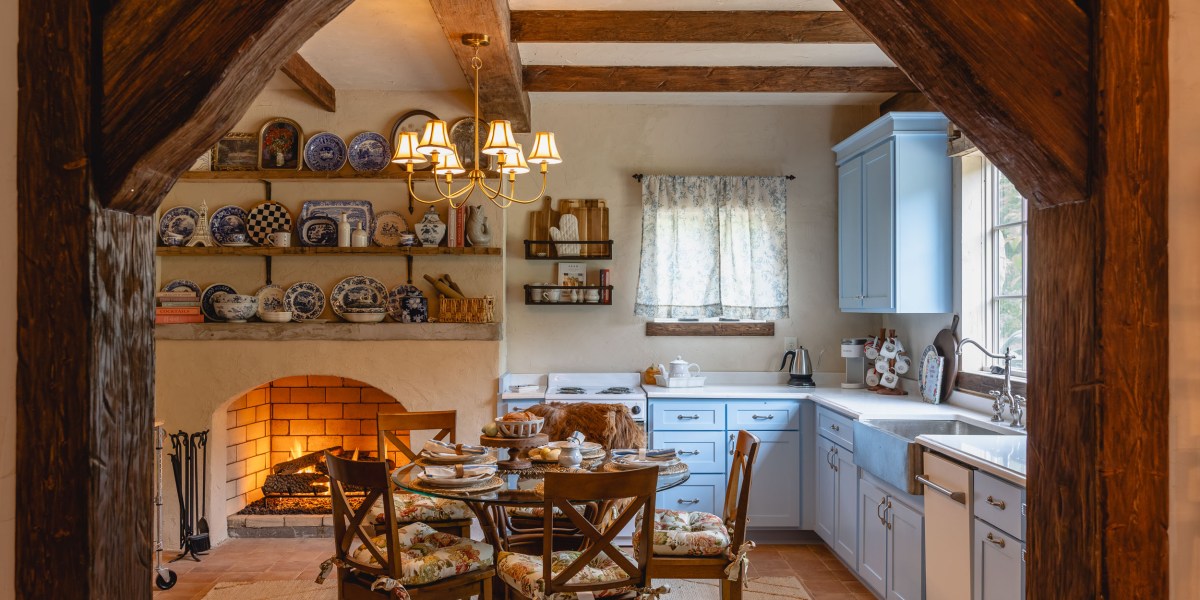
Everyone has must-watch holiday movies that they binge during the festive season, from Love Actually to Home Alone. But few actually get the chance to step inside the world of their favorite comfort flicks—that is, until now. Superfans of The Holiday can now rent out a replica of the quaint English cottage where fictional Hollywood bigwig Amanda Woods (played by Cameron Diaz) was charmed by heartthrob British book editor Graham (played by Jude Law). They’ll have to wait four months, and make the trek to Georgia instead of the Cotswolds.
Home designer Lucy Small put The Holiday Cottage up for short-term rentals this October after a nine-month build—and a fan frenzy quickly ensued. The 37-year-old has spent the past six years designing homes in the Blue Ridge Mountains; she’s worked on three dozen houses, from bathroom and kitchen rebuilds to hardcore construction projects. But nothing could have prepared her for the rush of attention that came with her latest project: replicating the cozy Rosehill Cottage featured in The Holiday, from the ground up. After all, nearly two decades after the movie’s release, it continues to be a top-watched festive flick—in 2023, The Holiday was streamed 2.3 million times, according to an analysis from Samba TV.
As it turned out, the house featured in the 2006 film—owned by Kate Winslet’s character Iris, who home-swapped with Amanda’s L.A. mansion for the Christmas season—never actually existed in real life. It was a big undertaking, but Small saw a potential hit on her hands.
“The Holiday Cottage was really a fun thing. I was like, ‘Hey, why don’t I do this? I have everything at my disposal to be able to do it, I know how to build, and I can find land,’” Small tells Fortune, adding she’s a fan of the iconic movie. “Honestly, it was just one of those situations where I had this wacky idea, and everyone got excited about it, and no one stopped me.”
David Cannon Photography/Courtesy of Lucy Small
Before the foundation of the two-bedroom, two-and-a-half bath home was even built, Small had attracted attention from thousands of customers. She first announced her plan to build the cottage in 2022, and fan fervor started pouring in. The entrepreneur says they only had digital renders of the cottage at the time, but people were already sending her handwritten letters about how they couldn’t wait to stay there. Around 4,000 people left their emails on a website Small threw together to update the public on its availability. Now, just two months after going live on the market, the short-term stay is fully booked out until March 2026.
“People have really loved it, and every time I get one of those letters of, ‘This means so much to me, thank you so much for making it possible,’ that’s just way more worthwhile to me than anything else,” Small continues. “Anyone can build a house, have it be a good investment, and sell it to an investor. But this seems to really have meaning to people, and that makes it important.”
The nine-month process to bring The Holiday cottage to life
It’s no easy feat bringing a piece of cinema into the real world—especially when you’re up against a home that’s impossible to replicate. In truth, the Rosehill Cottage featured in The Holiday was just a bit of movie magic; the home’s weathered facade was built in an open field, while the interior was filmed on sets. Home-makers might hesitate at the idea of building an unbuildable home—but Small was actually excited by the premise.
“I found out that the house never actually existed in real life, which, for me, is a big deal. Because if you can actually go visit the Brady Bunch house, or the Home Alone house, me building another one is less interesting,” she explains. “But if it never existed, if it’s a set that was torn down 20 years ago, that’s a lot more interesting, because there is literally nothing else in the world like it.”
Small put the project into motion several years ago, but quickly ran into some time-consuming roadblocks. Georgia, a popular tourist getaway and filming location, was slow to issue more short-term rental licenses as temporary stays flooded the market. Heavy taxes and fees also had to be factored into the price, as counties wanted in on the industry’s growing success. Finding the right land to build on was a struggle—but once they settled on a plot in North Georgia, it was off to the races.
David Cannon Photography/Courtesy of Lucy Small
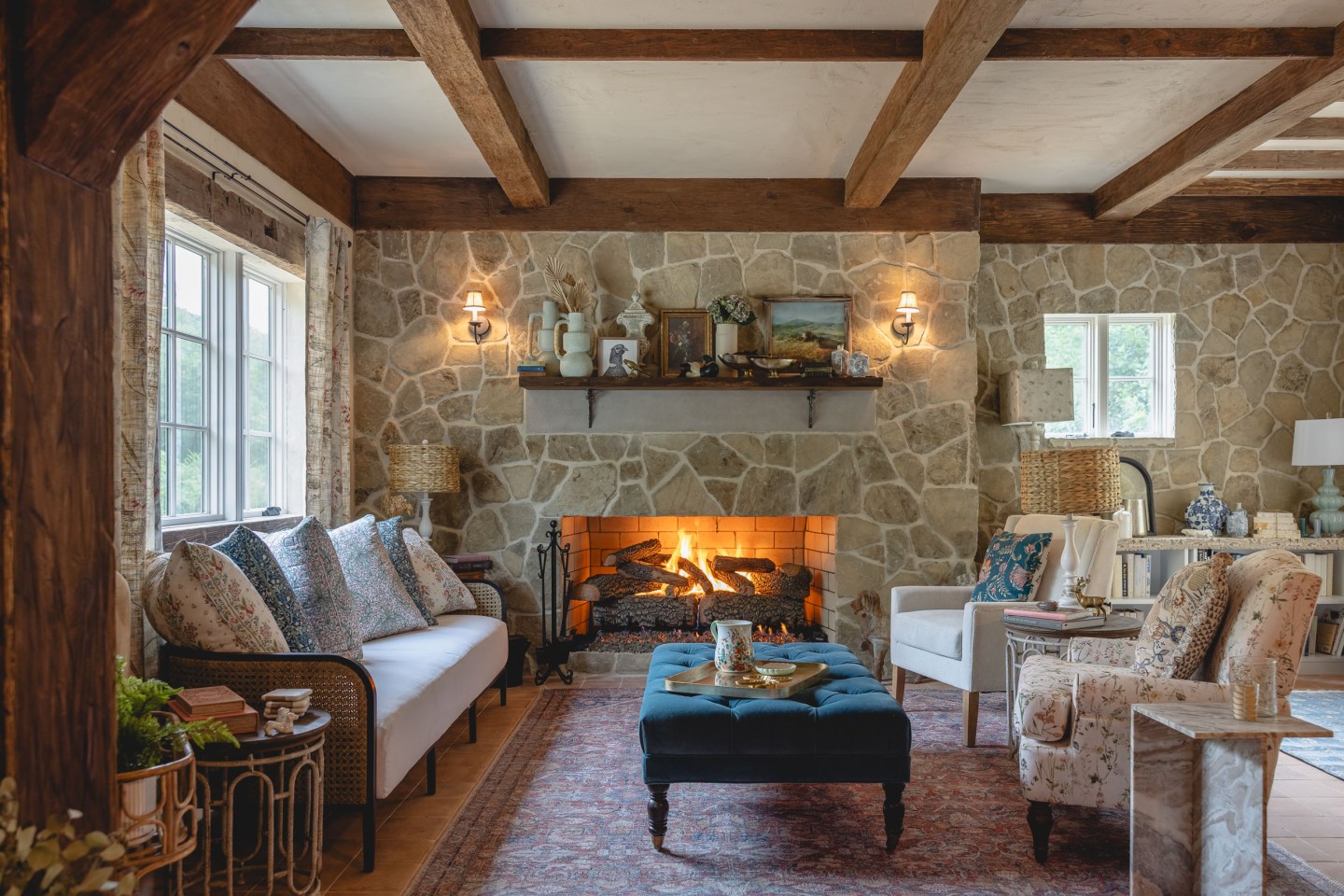
In total, it took nine months to build The Holiday Cottage, from breaking ground to putting in the final flourishes. Small worked with an architectural designer, watching the romcom together “1,000 times” to try and get it right. The first hurdle: They realized the house would never meet code. When trying to build at scale, they discovered the ceilings would be too low, standing at only seven feet tall, based on where the windows were positioned in the movie. The film version of the cottage had only two chimneys but featured three fireplaces; the bathroom floor was sloped; and, in reality, one window would cut halfway through the kitchen cabinet. Small and her team did everything to match the same aesthetic, even setting up fake walls and slopes.
Replicating the home’s furnishings proved to be a bit pricey, too. Despite the quaint movie cottage, seemingly adorned with humble, second-hand furniture, the kitsch decor was beyond Small’s budget. Using Google image reverse search, she tracked down antiques identical to the ones in the set, which ran upwards of $30,000 each. The bamboo umbrella tree shown in the cottage entryway, for example, was priced at over $15,000. Eventually, Small was able to parallel the same warm, charming atmosphere with similar decor. She declines to share how much the entire build set her back, or even when she’ll recoup on costs. Small says she rents out the home at a modest price—$399 per night during the low season, and $499 during high season—and is adamant The Holiday Cottage has been a worthwhile investment.
“It’s not like we were totally surprised and totally blew the budget. We knew what it would be—we don’t charge a stupid amount,” Small says. “And so it’s still been a good investment, given that we did not like cheap out on the build at all.”
Having 4,000 eager fans lined up—and why Small is fine being a ‘one-hit-wonder’
With 4,000 eager renters already waiting for the pin to drop, The Holiday Cottage’s instant success wasn’t a huge surprise. However, Small wasn’t used to her projects getting so much attention.
“As someone who, frankly, does not know how to use social media at all, who doesn’t have it, who’s pretty private, I’m usually unable to get eyeballs on any of my projects,” she continues. “For this one, [attention has] just been pouring in completely, even though I haven’t gone out to seek it, which has been a very new position for me as a designer.”
Once The Holiday Cottage booking site went live on Oct. 4, Small says dates started filling up “immediately.” And media attention only riled up more interest; the millennial home designer says she “can’t think of a magazine” that hasn’t covered her new build. And just in time for the holidays, it’s proved to be the perfect place to get into the festive spirit. Currently, there is only one open day in March, a few available slots in April, and just one in May. The Holiday Cottage isn’t available for a multi-day booking until June 2026—the house is nearly booked out for six straight months.
David Cannon Photography/Courtesy of Lucy Small
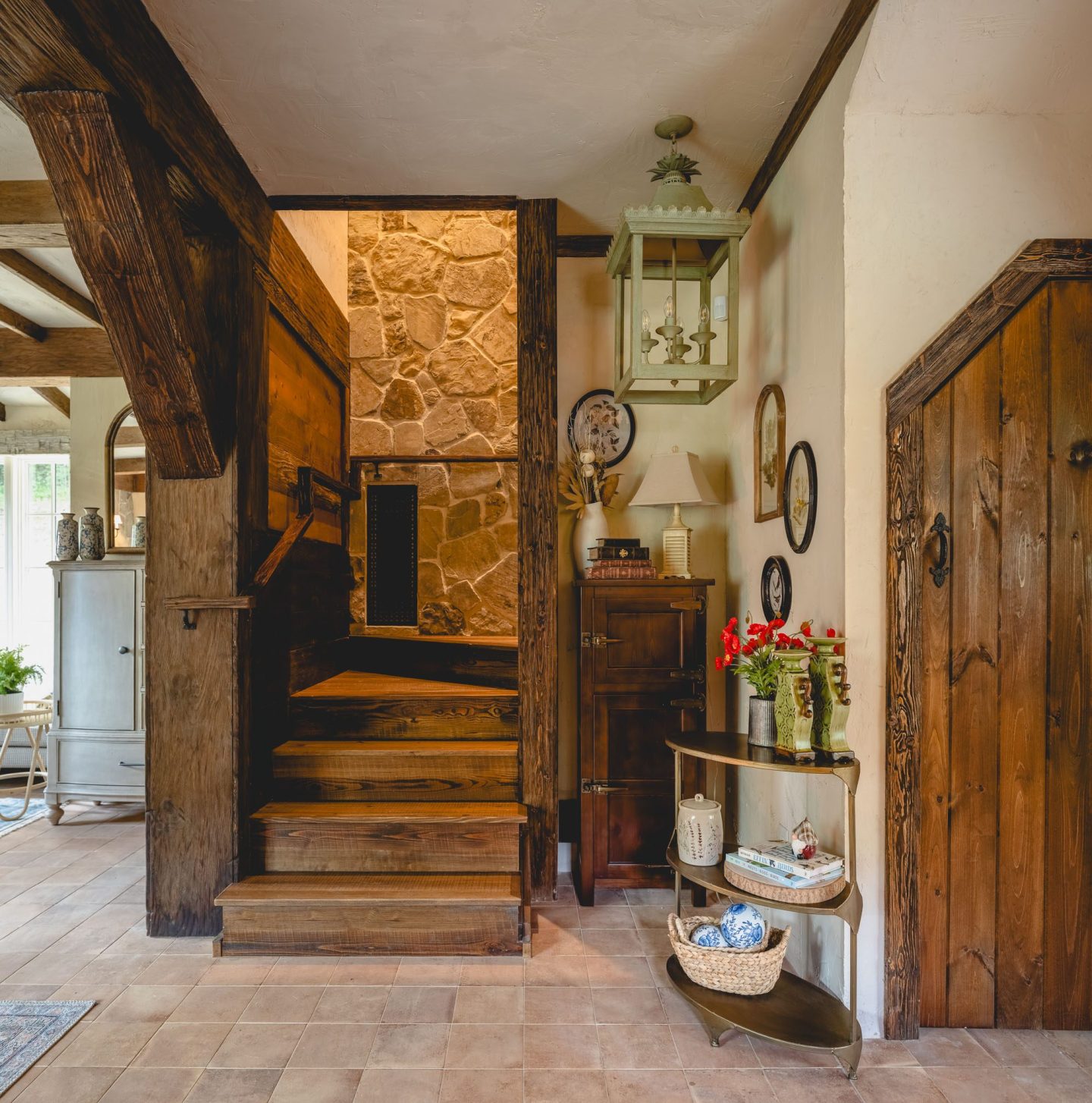
Small’s latest project has proved a huge success, and she says renters have so far been loving it. Travelers leave their stories in the home’s guest book; a trio of sisters brought their mother, a big fan of The Holiday, along for the ultimate dream stay; another visitor used to watch the movie with her mom every Christmas, and after her passing, rented the place with her dad. For the people who stay there, the short-term rental is more than a place to crash. It’s the chance to be immersed in romcom nostalgia and reconnect with loved ones.
When asked if she is planning another movie-related build, Small says she’s perfectly happy being the homeowner of this one viral sensation. Right now, she has no other ideas—all she knows is she will only take projects like this, where people are excited about the result. Plus, Small believes there’s no other home built that can replicate the same magic as The Holiday Cottage.
“Honestly, I’m fine being a one-hit-wonder,” Small says. “I don’t need it to be a big money-maker or big success, because a lot of the things that make this house—The Holiday Cottage—so special, I don’t think can be replicated.”
A version of this story originally published on Fortune.com on November 28, 2025.

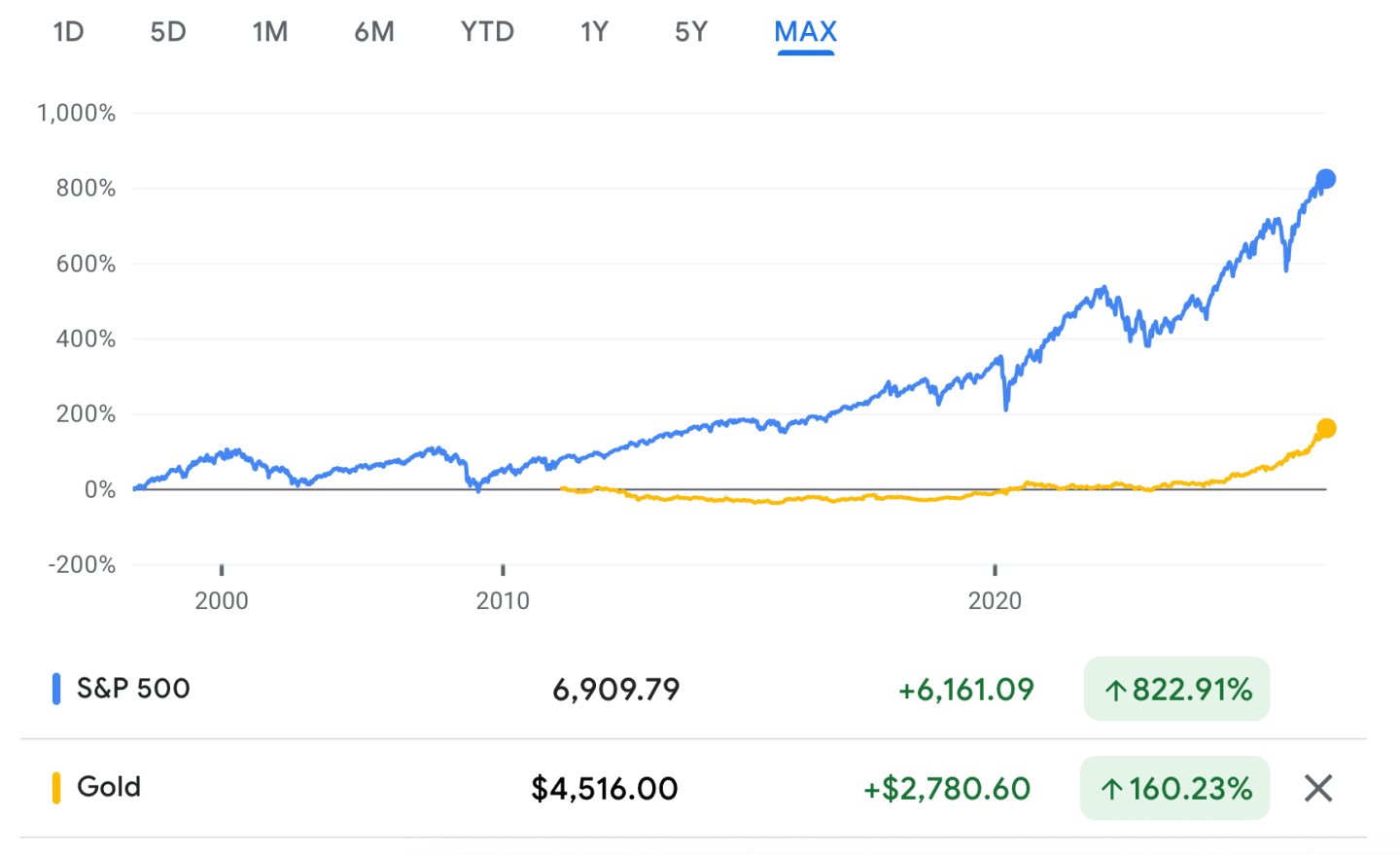
The S&P 500 closed up 0.46% yesterday to hit a new record of 6,909.79. The index is now up 17.48% for the year. With only the quiet Christmas week left before the end of the year it’s likely that investors will mark this down in their spreadsheets as a very good year.
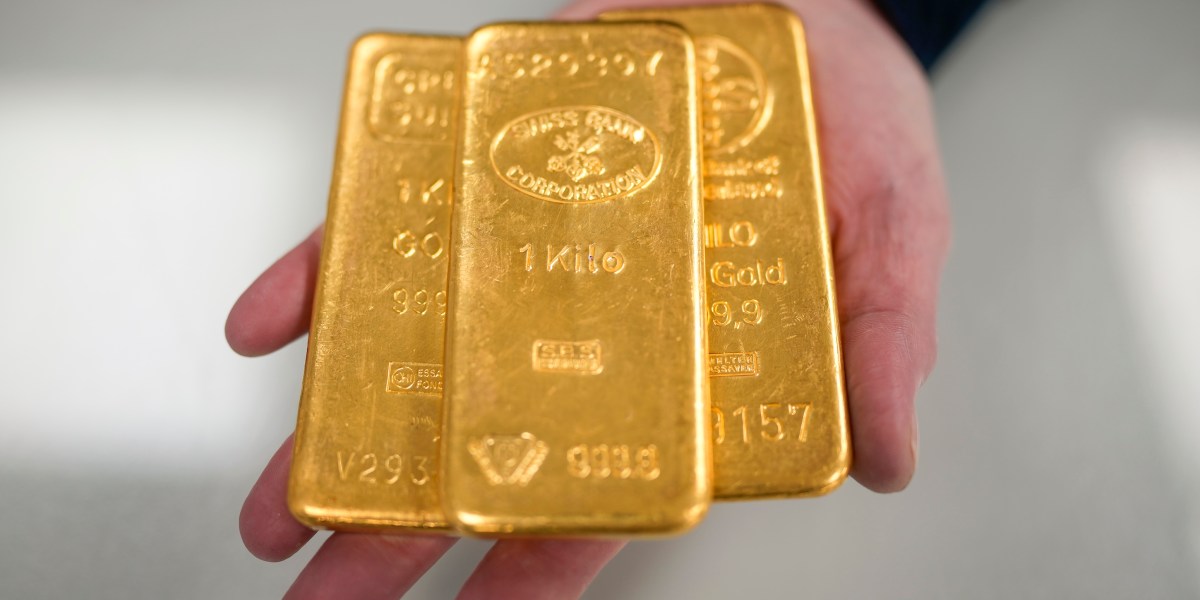
Unless, of course, they have a friend who bought gold at or before the beginning of 2025. The price of gold is up an astonishing 71% year-to-date, and is currently hovering around $4,514 per troy ounce. That friend is now laughing at you, the foolish stock investor, for wasting your money on trivia like the Magnificent Seven.
There’s a hackneyed narrative explaining why gold went up: We had a volatile year with President Trump’s tariffs disrupting global trade; Russia’s ongoing invasion of Ukraine; there’s a bubble in AI-related tech stocks; Bitcoin went nowhere this year (it’s down 7%); inflation is trending up; and gold is the safe-haven investment for nervous investors who want a hedge against pretty much all of that.
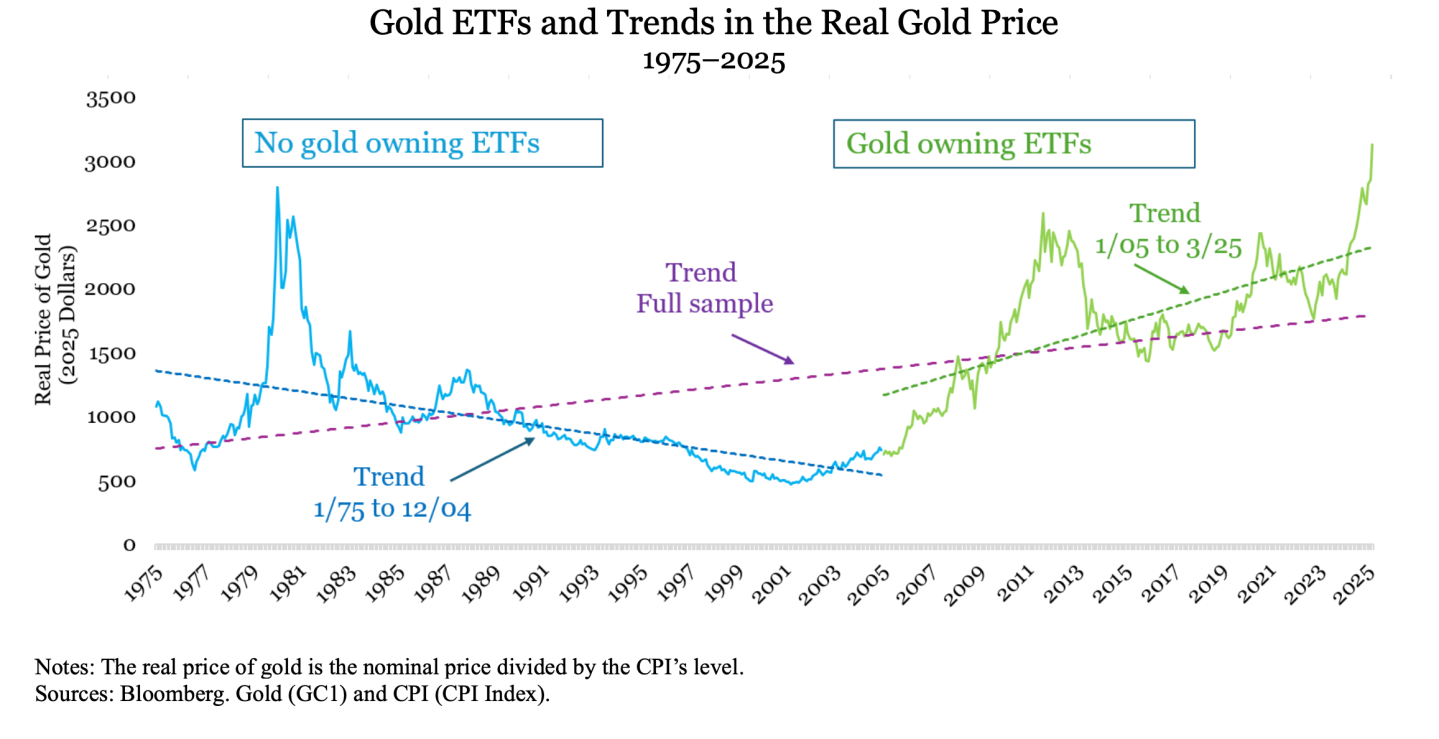
In fact, that is only partially true, according to newish research from Claude Erb and Campbell Harvey of the Fuqua School of Business at Duke University. The reality, they say, is that the introduction in 2004 of gold exchange-traded funds—which make buying gold as easy as buying stocks—has permanently pushed up the price of gold.
“Total North American gold ETFs have almost $200 billion, and ETFs outside the U.S. account for another $175 billion in gold,” they said in an October 2025 research paper.
This chart shows the apparent effect on the price of gold following the introduction of gold ETFs. The chart shows the “real” price of gold, which discounts inflation from its price:
The more recent introduction of tokenized gold stablecoins—crypto tokens backed by gold reserves and thus pegged to the price of gold, which can be “staked” or locked up as investments in other risk assets like bonds—is likely to push the price up further, they say.
But don’t get too excited.
Gold isn’t actually a great hedge against inflation over the long run, Erb and Harvey argue. The price of gold has high volatility, whereas inflation is a low-vol phenomenon. Gold investors can thus spend years losing money if they are trying to beat inflation:

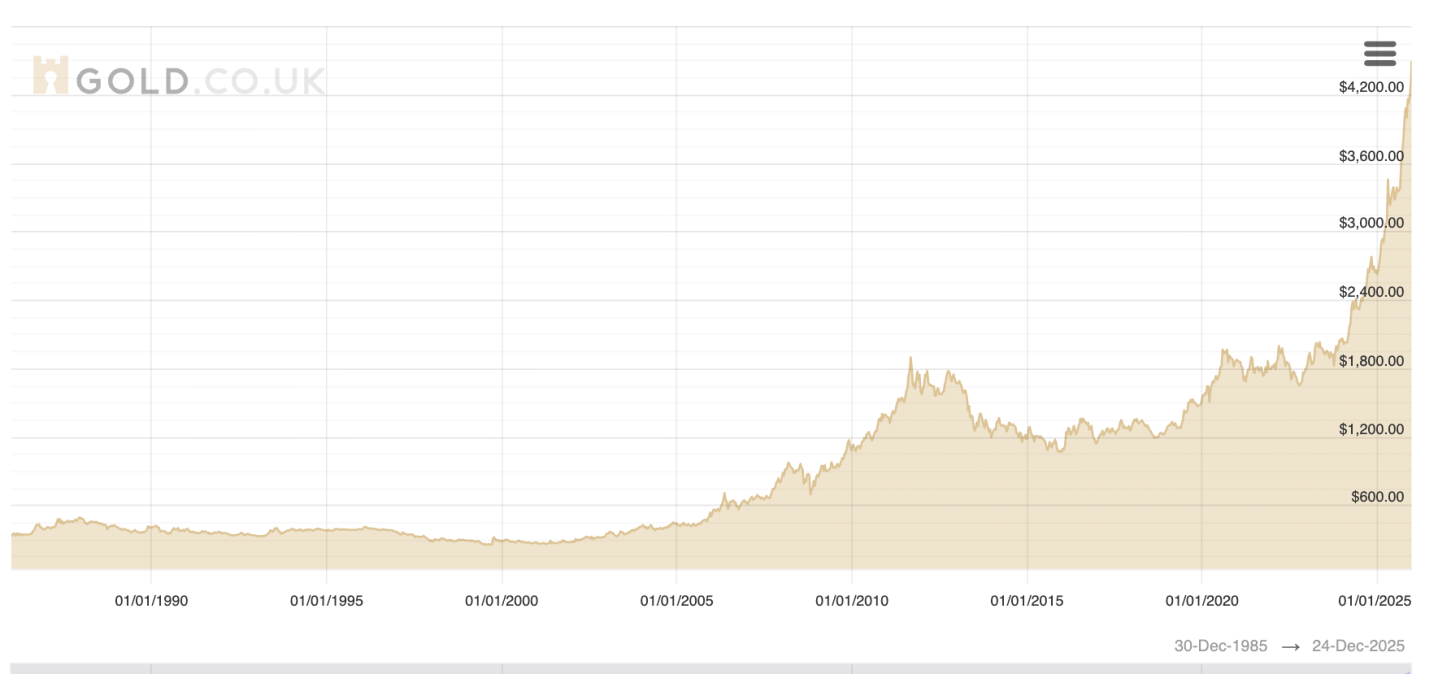
And then there is the performance of gold generally, in nominal dollars, versus stocks. This chart shows the price of gold over the last 40 years. Note that gold can spend years and years in long-term price declines:
And here is the Comex continuous contract for gold versus the S&P 500 index over the last 20 years. Clearly, the winner ain’t gold:
So has gold peaked? No one knows, obviously. But it is interesting that investment banks like Société Générale, Morgan Stanley, and Mitsui have all expanded their precious metal trading teams this year, and other banks are exploring getting back into the “vault” business of storing gold reserves, the Financial Times reports.
Here’s a snapshot of the markets ahead of the opening bell in New York this morning:
- S&P 500 futures were flat this morning. The last session closed up 0.46% to hit a new record of 6,909.79.
- STOXX Europe 600 was up 0.39% in early trading.
- The U.K.’s FTSE 100 was down 0.12% in early trading.
- Japan’s Nikkei 225 was down 0.14%.
- China’s CSI 300 was up 0.29%.
- The South Korea KOSPI was down 0.21%.
- India’s NIFTY 50 was down 0.14%.
- Bitcoin was at $87K.


Millennial designer spent months building ‘The Holiday’ cottage replica. It’s renting at $499/night

How a fast-moving $50 cash relief program buoyed needy families when SNAP payments were paused

Down Arrow Button Icon
-

 Politics8 years ago
Congress rolls out ‘Better Deal,’ new economic agenda
-
Entertainment8 years ago
New Season 8 Walking Dead trailer flashes forward in time
-
Politics8 years ago
Poll: Virginia governor’s race in dead heat
-
Entertainment8 years ago
The final 6 ‘Game of Thrones’ episodes might feel like a full season
-
Politics8 years ago
Illinois’ financial crisis could bring the state to a halt
-
Entertainment8 years ago
Meet Superman’s grandfather in new trailer for Krypton
-
Business8 years ago
6 Stunning new co-working spaces around the globe
-
Tech8 years ago
Hulu hires Google marketing veteran Kelly Campbell as CMO