The alarm jolted Jeff Yan awake at around 5:00 a.m. It was a ringtone designed to—among other scenarios—blare out when something abnormal occurs on Hyperliquid, the decentralized crypto exchange he had cofounded. And on this morning in early October, things were very abnormal indeed.
That day, crypto traders saw more than $19 billion in leveraged positions—or bets where investors wager more capital than they have on hand—evaporate after President Donald Trump threatened China with another round of tariffs, according to data from the crypto analytics site CoinGlass. “I’m just looking at it and praying that it’s good,” Yan said, referring to his exchange’s systems. Within one hour, using his “every brain cell” to analyze the data, he was confident that the platform had worked as intended—surviving a stress test where thousands of traders lost money and others who were shorting the market cashed in.
In coming weeks, the crypto industry would come to refer to the wipe-out of Oct. 10 as a flash crash, one that was the largest liquidation event ever tracked by CoinGlass and an episode whose fallout still reverberates throughout the industry two months later. It was also one of the clearest signs yet that Hyperliquid had grown to become a crypto juggernaut.
According to CoinGlass, the platform liquidated more than $10 billion worth of positions that day, a figure that far outstripped the $4.6 billion and $2.4 billion liquidations that took place on longtime crypto exchanges Bybit and Binance, respectively. (The $10 billion figure refers to the total amount of the leveraged positions liquidated; the actual funds traders lost on their bets was lower).
Big exchanges like Binance and Coinbase have thousands of employees. By contrast, Hyperliquid Labs—the company that supports the associated crypto exchange and blockchain of the same name—had just 11. Yet, in just over two years, Hyperliquid is competing with the industry’s very biggest names, posting about $140 billion in derivatives volume in the past month, according to data from the analytics site DefiLlama. This has translated into more than $616 million in annualized revenue, while the cryptocurrency linked to its blockchain (known as HYPE) has grown to one of the largest in the industry with a market capitalization of almost $5.9 billion, according to data from the crypto analytics site DefiLlama.
But Yan wants Hyperliquid to become even bigger. “It’s something that no one else is really trying to build exactly at this point in time,” he said, “which is something that can really upgrade the financial system.”
Crypto whiz kids
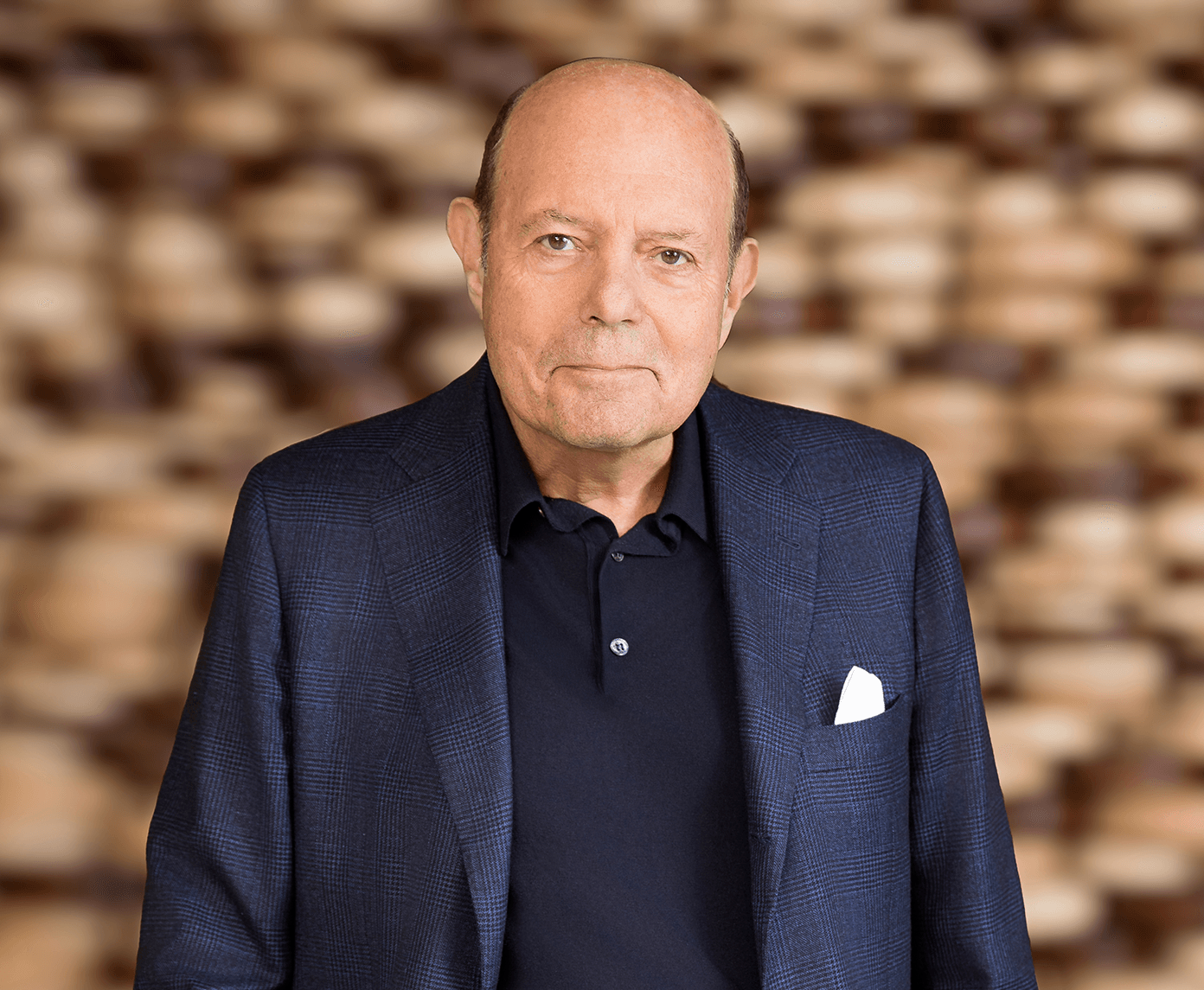
The crypto world has long been defined by flamboyant and outspoken figures. Yan doesn’t fit that mold. Sporting black-rimmed glasses, trim black hair, and usually wearing crisp shorts, he said he is uneasy in the limelight. “This sort of celebrity is foreign to me,” he said, referring to how it felt to be mobbed at a recent crypto conference in South Korea. While willing to chat about his background, he stressed repeatedly that Hyperliquid is an ecosystem, not a one-man operation.
Despite his professed modesty, it’s clear Yan has been integral to the crypto protocol’s rise. Born in the Bay Area, he’s your prototypical whiz kid. In high school, he won gold and silver medals at the International Physics Olympiad and then attended Harvard University, where he studied mathematics and computer science.
“He was always just very calm and very thoughtful,” said Vladimir Novakovski, a fellow Harvard graduate who interviewed Yan for an internship at Addepar, a wealth management software company. (Novakovski would later go on to create a competing exchange to Hyperliquid. Yan doesn’t recall interviewing with Novakovski, a Hyperliquid Labs spokesperson told Fortune.)
Around the time Yan graduated from Harvard, the notorious crypto conman Sam Bankman-Fried was making a name for himself. Bankman-Fried had spun up his own crypto trading firm Alameda Research and was simultaneously growing FTX, his own crypto exchange that specialized in perpetuals, or derivatives that let traders bet on the future price of assets without holding the assets themselves. These contracts allow for leverage, which lets traders magnify gains and losses.
Even as Bankman-Fried was captivating the crypto industry with spiels about his alleged genius, Yan and his team stayed away, preferring to trade on platforms like Coinbase. “Alameda and FTX, their relationship was not clear to me,” he said. “And it felt like it wasn’t worth the risk of exposing any part of our funds or strategies to that kind of unclear relationship.”
FTX aftermath
FTX was a black box. Bankman-Fried plowed billions of dollars in customer funds into ostentatious real estate purchases, risky venture investments, and political lobbying campaigns. Only after FTX declared bankruptcy did customers see how much of their capital Bankman-Fried had gambled away.
Yan wanted to create a more transparent trading platform for crypto perpetuals, or “perps.” He and his team had thought about building their own decentralized exchange prior to the collapse of FTX, but the “FTX thing solidified my conviction that it was the right time to build this thing,” he said.
He was far from the first founder to dream up a decentralized crypto trading platform. There are a handful of of others, like dYdX, that offer crypto derivatives to risk-hungry traders who don’t want to venture onto centralized exchanges like Coinbase. But these decentralized platforms were often clunky, hard to use, and slow. “Centralized exchanges had a really great UX [user experience], and almost all the volume was happening on centralized exchanges, but no one in DeFi was, I think, really trying to match that,” said Yan, referring to the term decentralized finance.
Yan, though, was a trader, and he and his team decided to build a platform they would want to use. “I think it is good when the people building the product are very familiar with who the customer is,” said Novakovski, the crypto founder who interviewed Yan for an internship.
Unlike Bankman-Fried, Yan cut an image that was more polished, professional, and sincere, according to a longtime crypto executive who’s met both founders. “Jeff has cut his hair. SBF did not,” they said, asking for anonymity to speak more candidly. “SBF’s shorts were too long and didn’t fit. Jeff’s look crisp and together.”
And, as opposed to Bankman-Fried and countless other crypto founders, Yan and his team decided to eschew raising money from venture capitalists. They were already making a sizable amount from their crypto trading operation, and Yan decided to front the cost himself. “If we’re going to build something that’s really going to be a credibly neutral platform on which everyone else can build, then a really important principle is to sort of not have insiders,” he said.
In 2023, Yan and his team launched Hyperliquid and the blockchain on which the decentralized exchange is built. For months, volume grew steadily, but interest in the exchange exploded in early 2025, according to data from DefiLlama.
Hyperliquid is optimized for speed. For many traders, seconds mean the difference between profit or loss. “I’m the one user who keeps bugging the team to add more features, and they keep rejecting every feature that I ask for because they want to keep it extremely fast and extremely nimble,” said Thanos Alpha, a pseudonymous Hyperliquid user who said he’s a power user on the platform.
This speed, combined with engineering solutions that allowed Hyperliquid to accommodate larger trades than competitors, set it up for success, added the pseudonymous trader, who said he’s an avid DeFi user but declined to give his real name—a common request from crypto diehards.
Now, the ecosystem is attracting interest beyond anonymous crypto traders. Large venture capital firms like Paradigm and Andreessen Horowitz have taken positions in Hyperliquid’s HYPE cryptocurrency, reported The Information. And even Wall Street and large companies are taking notice. The fintech giant PayPal posted about Hyperliquid on social media as a crop of companies vied to launch a Hyperliquid-branded stablecoin on the blockchain. And David Schamis, founding partner at the private equity firm Atlas Merchant Capital, is steering a public company that is stockpiling HYPE. “It’s not only about trading crypto,” Schamis said, referring to blockchain technology.
AWS of finance
Yan, himself, views Hyperliquid as the Amazon Web Services of financial infrastructure, referring to the cloud computing giant that powers much of the internet. Developers are independently deploying different assets other than cryptocurrencies to trade on the blockchain, including listings tied to the prices of stocks of major corporations like NVIDIA and Google. And some validators, or the people who own the servers that actually process the transactions, earn revenue through supporting the ecosystem.
Still, there’s no guarantee that Hyperliquid will continue to expand, especially as competitors look to challenge Hyperliquid’s newfound dominance. That includes Novakovski, who has since launched Lighter, his own competing crypto derivatives platform backed by Founders Fund, Ribbit Capital, and David Sacks’ Craft Ventures. And then there’s Aster, a Hyperliquid copycat that’s closely aligned with the crypto exchange Binance.
Moreover, Hyperliquid—like many crypto projects in the world of DeFi—operates in ambiguous legal territory. Its users are all anonymous, and no one has to submit documentation to verify their identity, as opposed to traders who access more traditional financial products like Robinhood. In fact, users linked to North Korea, which has an infamous crypto hacking operation, have traded on Hyperliquid, alleges Taylor Monahan, lead security researcher at the crypto wallet MetaMask. DeFi protocols are part of North Korea’s money laundering operation, according to the crypto analytics firm Chainalysis.
A spokesperson for Hyperliquid Labs said that the website for Hyperliquid screens traders for risky behavior and enforces sanctions compliance, adding that ”any confirmed high risk activity on the application is immediately flagged and the addresses blocked.”
And, if Hyperliquid continues to grow, the ecosystem may attract more regulatory scrutiny. “It’s a big question about how long they [Hyperliquid] will be allowed to operate in this non-KYC way,” said a crypto market maker, referring to know-your-customer laws, which require financial institutions to collect user identification. The market maker asked for anonymity to talk more candidly.
“The bigger they are, the bigger the question usually becomes,” added the market maker.
“We are proactively engaging with regulators and policy stakeholders to support greater clarity for decentralized finance,” a Hyperliquid spokesperson said in response.
As Hyperliquid wrestles with the evolving competitive landscape, regulatory environment, and making good on Yan’s ambitions to reinvent the foundations of finance, the DeFi founder will likely continue to build out his team. That’s why he announced in late October he was hiring to expand the staff at Hyperliquid Labs by almost 30%—from 11 to 14 employees.







 13 hours ago
 1 day ago
 1 day ago
 6 days ago
 3 days ago
 12 hours ago




 Politics8 years ago