Connect with us

Politics

How a fast-moving $50 cash relief program buoyed needy families when SNAP payments were paused
Published

on


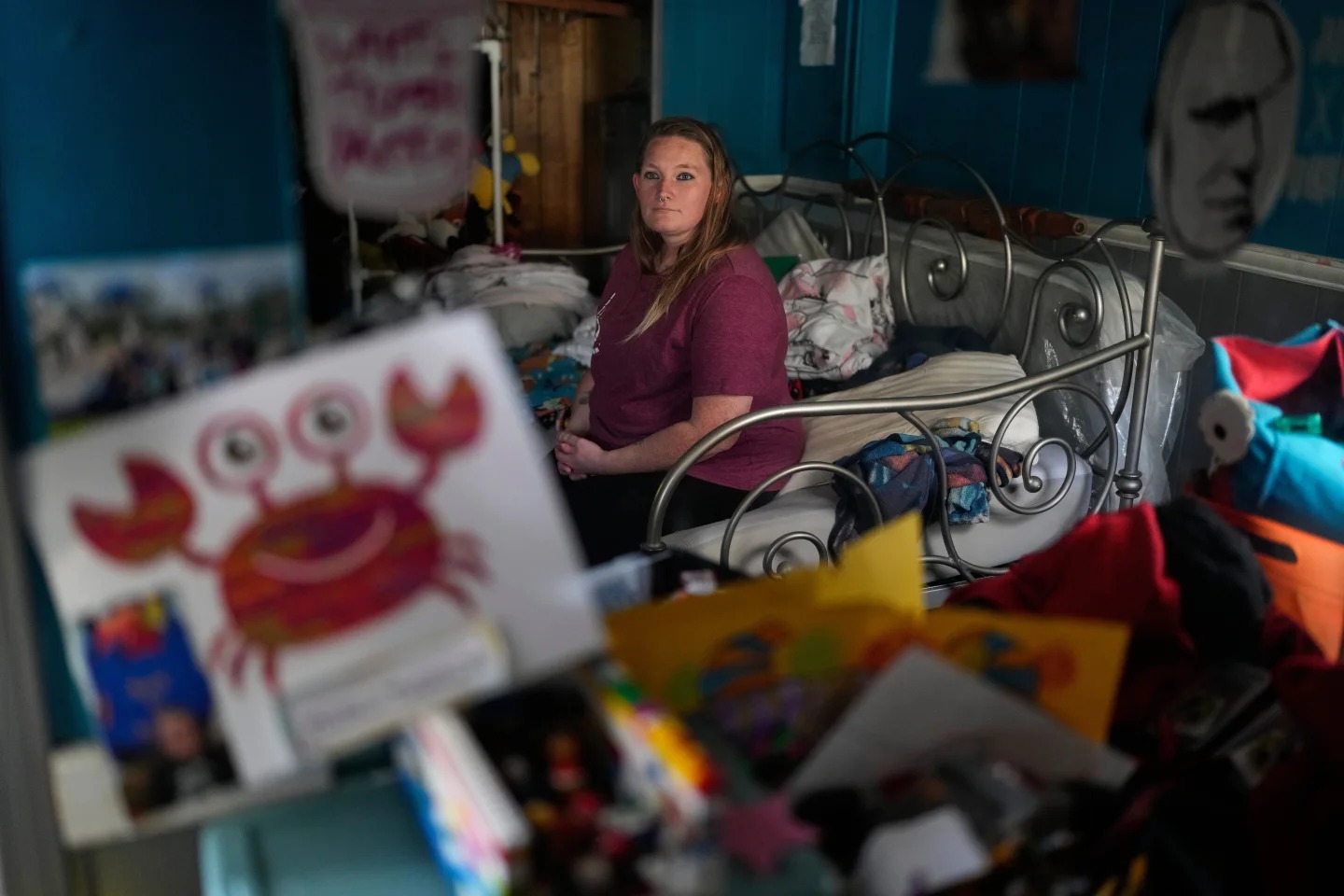
Finances already looked tight for Jade Grant and her three children as she entered the year’s final months.

“Everyone’s birthday is back-to-back,” the 32-year-old certified nursing assistant said. “You have holidays coming up. You have Thanksgiving. Everything is right there. And then, boom. No (food) stamps.”

Grant is among the nearly 42 million lower-income Americans who get help buying groceries from the Supplemental Nutrition Assistance Program, or SNAP. When the federal shutdown began in October, she wasn’t worried about losing her benefits — she said she is used to government “foolishness.”

But circumstances got dicey when the budget impasse entered its second month and President Donald Trump took the unprecedented step of freezing November SNAP payments. With one child who eats gluten free and another with many allergies, specialty items already drove up her grocery bill. Now Grant wondered how she’d put food on the table — especially with her youngest’s 6th birthday approaching.

Then Grant logged into Propel, an app used by 5 million people to manage their electronic benefits transfers, where she saw a pop-up banner inviting her to apply for a relief program. Within a minute she’d completed a survey and about two days later she got a virtual $50 gift card.

The total didn’t come close to her monthly SNAP allotment. But the Palm Bay resident said it was enough to buy a customized “Bluey” birthday cake for her son.

Nearly a quarter of a million families got that same cash injection from the nonprofit GiveDirectly as they missed SNAP deposits many need to feed their households. The collaboration with Propel proved to be the largest disaster response in the international cash assistance group’s history outside of COVID; non-pandemic records were set with the $12 million raised, more than 246,000 beneficiaries enrolled and 5,000 individual donors reached.

Recipients are still recovering from the uncertainty of last month’s SNAP delays. Company surveys suggest many are dealing with the long-term consequences of borrowing money in early November when their benefits didn’t arrive on time, according to Propel CEO Jimmy Chen. At a time when users felt the existing safety net had fallen through, they credit the rapid payments for buoying them — both financially and emotionally.

“It’s not a lot. But at the same time, it is a lot,” Grant said. “Because $50 can do a lot when you don’t have anything.”

A ‘man-made disaster’ forces partners to try something new

It’s not the first partnership for the antipoverty nonprofit and for-profit software company. They have previously combined GiveDirectly’s fast cash model with Propel’s verified user base to get money out to natural disaster survivors — including $1,000 last year to some households impacted by Hurricanes Milton and Helene.

“This particular incident with the shutdown we saw as akin to a natural disaster,” Chen said, “in the sense that it created a really sudden and really acute form of hardship for many Americans across the country.”

The scope differed this time. The “man-made disaster,” as GiveDirectly U.S. Country Director Dustin Palmer put it, was not geographically isolated. The benefits freeze impacted more people than they usually serve. SNAP costs almost $10 billion a month, Palmer said, so they never expected to raise enough money to replace the delayed benefits altogether.

But 5,000 individual donors — plus $1 million gifts from Propel and New York nonprofit Robin Hood, as well as other major foundations’ support — provided a sizable pot. Palmer found that the issue resonated more than he expected.

GiveDirectly reports that the median donation was $100. Palmer took that response as a sign the issue hit close for many Americans.

“You and I know SNAP recipients. Maybe we’ve been SNAP recipients,” Palmer said. “So that was not a disaster in Central Texas where I’ve never been, but something in our communities.”

The greatest question revolved around the total sum of each cash transfer. Should they reach more people with fewer dollars or vice versa? Los Angeles wildfire survivors, for example, got $3,500 each from a similar GiveDirectly campaign. But that’s because they wanted to provide enough to cover a month’s worth of lodging and transit to those who lost their houses.

They settled on $50 because Palmer said they wanted a “stopgap” that represented “a meaningful trip to the grocery store.” To equitably focus their limited resources on the that would be missing the most support, Palmer said they targeted families with children that receive the maximum SNAP allotment. Propel’s software allowed them to send money as soon as the app detected that a family’s benefits hadn’t arrived at the usual time of the month.

Recipients decided whether their prepaid debit cards arrived physically, which might allow them to take cash out of an ATM, or virtually, which could be used almost immediately. The split is usually pretty even, according to Palmer, but this time more than 90% of recipients went with the virtual option.

“To me, that speaks to the speed and need for people,” Palmer said. “Just saying, ‘Oh yeah, I just need food today. I don’t want to wait to get it mailed.’”

Recipients lost trust when closely watched benefits were disrupted

Dianna Tompkins relies on her SNAP balance to feed her toddler and 8-year-old child.

“I watch it like a hawk, honestly,” she said.

But she said she entered “panic mode” when she missed what is usually a $976 deposit last month. She’s a gig worker, completing DoorDash and Uber Eats orders when she finds the time.

Her pantry is always stocked with non-perishables — canned goods, pastas, sauces — in case her unreliable van stops working and she can’t get to the store. But she couldn’t risk running out as uncertainty continued over the shutdown’s length and future SNAP payments.

GiveDirectly’s $50 bought her milk and bread — not much but a “big help,” she said. Her local food pantries in Demotte, Indiana, had proven inconsistent. One week they gave far more than expected, she said, but the following week they were “so overwhelmed” that it almost wasn’t worth visiting.

She said it’s “scary” the government “can just decide to not feed so many people.”

“At least I have my safety net but not everybody’s lucky,” she said. “I’ve never trusted the government and that’s just a new solid reason why I don’t trust them.”

Chen, the Propel CEO, said his company’s research suggests that November’s freeze damaged many recipients’ confidence in the government. Even with SNAP funded through the next fiscal year, Chen said, many respondents are concerned about another shutdown.

“Now it’s introduced this seed of doubt for people that this really fundamental thing that they use to pay for food may not be there when they need it,” Chen said.

The gap persists for many. Propel estimates that just over half of SNAP recipients got their benefits late last month. GiveDirectly launched an additional “mop-up” campaign to distribute cash retroactively for more than 8,000 people still reeling.

The delay disrupted the financial balancing act that Grant had going. She put off payments for her electricity bill and car insurance.

“Government shuts down and that just throws everything completely off,” she said.

___

Republished with permission of The Associated Press.


Source link

Continue Reading

Politics

Fast shipping is increasing emissions. Here’s why delivery has become more polluting

Published

on


It feels simple: You shop, find something you want and click to buy. It shows up today, overnight or tomorrow. We’ve gotten used to that speed. But that convenience comes with a climate cost.

Multiple factors shape the environmental toll of a delivery. These include the distance from a fulfillment center, whether the shipment rides in a half-empty truck, how many trips a driver makes in the same area and the type of transportation used to move the package.

When customers choose faster shipping and earlier delivery dates, the system shifts from optimized routing to whatever gets the package out fastest, and that means higher emissions, said Sreedevi Rajagopalan, a research scientist at MIT’s Center for Transportation and Logistics. For example, trucks may leave warehouses before they’re full and drivers might loop the same neighborhood multiple times a day, she said.

“For the same demand, fast shipping definitely increases emissions 10 to 12%,” she said.

To meet tight delivery windows, retailers may rely on air freight, which produces far more emissions than other options such as trains, making it the most carbon-intensive.

“Given that companies want to be competitive in terms of speed, it comes at the cost of your efficiency,” Sreedevi said. “Vans are half full, and you make multiple rounds, multiple trips to the same location … your fuel consumption goes up, and you’re not able to consolidate.”

One way companies like Amazon try to minimize that is by placing their supply chain closer to customers to reduce mileage and improve speed for the customer. Their goal is to make the journey fast and effective, but reduce its emissions at the same time.

“By really leveraging our supply chain efficiencies that we have at scale, we’re able to both offer better speed and sustainability outcomes at the same time,” said Chris Atkins, director of Worldwide Operations Sustainability at Amazon.

The last mile

Getting items to customers’ doors from a fulfillment center — referred to as the “last mile” or “last kilometer” of shipping — is one of the hardest stages to make less polluting, Sreedevi said.

Emissions rise even more when customers place multiple small orders throughout the week.

“If I place an order this morning and then I place an order this evening and choose fast shipping, the company might have already processed my morning order and wouldn’t wait for my evening order to consolidate,” she said.

And sending more half-full trucks out on the road means more trips overall.

“Imagine you’re not only sending a half-full truck, you’re also bringing back that truck empty. … Emissions are going to go up,” Sreedevi said.

Reducing emissions

Consumers can lower emissions if they’re willing to wait even a tiny bit, and they’ll save money at the same time, said Christopher Faires, assistant professor of logistics and supply chain management at Georgia Southern University.

Delaying delivery by one to two days can result in a 36% reduction in carbon dioxide emissions, and three to four days pushes that reduction to 56%, so opting for standard or delayed shipping instead of next-day or two-day shipping helps, according to Sreedevi.

Amazon’s Atkins said changes to their network are cutting emissions linked to fast delivery. The company has expanded the use of electric delivery vans and shifted more packages to rail and to delivering by foot or bicycle in dense cities.

“Aviation is very carbon-intensive relative to ground shipping,” Atkins said. “One of the other things that Amazon and other logistics companies are looking at doing is: How do we mode-shift to less carbon intensive forms of transportation?”

Amazon says providing shipping options that encourage customers to consolidate orders have also helped. Data for the first nine months of 2025 shows that when customers chose a single delivery day for all items, it reduced more than 300 million delivery stops and avoided 100,000 tons (90,718 metric tons) of carbon emissions, according to Atkins.

Consumers change behavior when they know the impact

People are more likely to delay or consolidate orders once they understand the environmental impact of fast shipping, according to Sreedevi, who co-authored a 2024 study of delivery customers in Mexico.

“A significant number of consumers decided to wait for longer delivery or delayed their shipping when we showed them the environmental impact information in the form of trees,” Sreedevi said. “So it’s important that they are educated.”

While fast shipping isn’t likely to go away, experts say its climate impacts can be meaningfully reduced through small behavior shifts, both from shoppers and companies. Bundling orders, skipping the overnight option and choosing a single weekly delivery can all make a difference.

___

Republished with permission of The Associated Press.


Source link

Continue Reading

Politics

What Americans think about giving cash as holiday gifts

Published

on


Welcome to exhausted America 2025: Most adults are more than a little fine with doling out cash as gifts, and many plan to be asleep before midnight on New Year’s Eve, according to a new AP-NORC poll.

About 6 in 10 Americans say cash or gift cards are “very” acceptable as holiday presents, but they’re much less likely to say that about a gift that was purchased secondhand or re-gifted, according to a new poll from The Associated Press-NORC Center for Public Affairs Research.

“Cash is OK for the grandkids I guess,” said Nancy Wyant, 73, in rural central Iowa. “But I’m a gift giver.”

Come New Year’s Eve, she’ll be fast asleep before 2026 rolls around. “At our age, we don’t do anything,” the retired bus driver said with a laugh of herself and her live-in partner. “He’s set in his ways.”

They’ll be joined by the 44% of Americans who say they won’t stay up to greet 2026, according to the poll. About half of U.S. adults age 45 or older won’t make it to midnight, compared with around one-third of adults under age 45.

Consider 23-year-old Otis Phillips in Seattle, an outlier for his age. He, too, will turn in early. “It’s one of the holidays that doesn’t really feel special to me,” said the master’s student.

Most say cash makes an acceptable holiday gift

Cash is a safer gift for younger adults. The poll found about two-thirds of Americans under 45 say cash is a “very” acceptable holiday gift, compared with 55% of adults age 45 or older.

“Everything’s too expensive nowadays. And I don’t want to go buy a gift for somebody and then it turns out they don’t like it. So cash,” said Gabriel Antonucci, 26, a ski resort cook in Alaska, about an hour outside of Anchorage.

Most people at least grudgingly accept various gift types, with about 9 in 10 saying cash or gift cards are at least “somewhat” acceptable and about 6 in 10 saying the same for secondhand gifts and re-gifted items.

Teresa Pedroza, a 55-year-old mom of two adult sons in Central Florida, is mostly not on board.

“I don’t like it when kids say they want cash, or I should get teenagers gift cards,” she said. “It kind of takes some of the charm away from gift giving.” But she acknowledged reaching for cards a time or two out of convenience.

About three-quarters of adults under age 45 say secondhand gifts are at least “somewhat” acceptable, compared with about 6 in 10 adults age 45 or older. About 4 in 10 adults age 45 or older say secondhand gifts are “somewhat” or “very” unacceptable.

Many keep holiday decor up beyond the new year

It’s not just your pesky neighbors who leave their holiday decorations up into January. About one-third of U.S. adults say they’ll leave them up after New Year’s Day.

It’s more common for people to leave their decorations up after the holiday season than to put them up early, according to the poll. About 2 in 10 Americans say they put up holiday decorations before Thanksgiving.

“I just had my husband bring down the bins. If we weren’t expecting company, I wouldn’t even bother to decorate, honestly. I’m tired of doing that,” said Pedroza, the Florida mom of two.

Many will celebrate Christmas Day with sports

About one-quarter of U.S. adults say they’re planning to watch sports on Christmas Day, while only 5% will head for a movie theater.

Men are much likelier than women to say they’ll watch sports on Christmas, and older Americans are much more likely than younger Americans to tune in. About 2 in 10 adults under age 45 say they plan to watch sports on Christmas, compared with about 3 in 10 adults age 45 or older.

Phillips does plan to break out his red sweater with the green Christmas tree that one of his grandmothers knitted for him a couple of years ago.

“She made all kinds of things for me growing up,” he said. “This is by far my favorite.” Phillips has it in rotation for his part-time job as a grocery checkout clerk.

He’s the outlier once again. Women are much likelier than men to say they’ll wear a holiday sweater or accessories.

Gifts for pets and Elf on the Shelf

About 3 in 10 U.S. adults say they will give a gift to their pet this year.

In Iowa, Wyant’s nearly 3-year-old boxer-Great Dane mix named Indy is among them.

“She’s a very spoiled dog,” Wyant said. “She’s got too many toys, so she’s getting treats this year. She loves her treats.”

And the red felt elf that parents move around the house every night as a Santa spy to see which kids have been naughty or nice? Only about 1 in 10 U.S. adults say they’ll do Elf on the Shelf.

“Noooo,” Pedroza said when asked if she’d ever done the elf for her kids. “My younger son was very well-behaved. I didn’t have to use any kind of tactics.”


Source link

Continue Reading

Politics

man accused of human trafficking in Florida arrested in Virginia

Published

on


Uthmeier says man was on the run for prostitution and other charges that were investigated in 2024 in Bay County.

A multi-state investigation has ended in the arrest of a suspected human trafficker who was detained in Virginia and will be extradited to Florida.

The arrest followed an investigation that lasted more than a year.

Attorney General James Uthmeier said Tuesday that 40-year-old Kevin Tilcock was apprehended after a 16-month investigation involving both the Office of Statewide Prosecution and the Leon County Sheriff’s Office. Uthmeier said in a news release that the U.S. Marshals Service apprehended Tilcock in Roanoke, Virginia, on Monday.

Uthmeier said Tilcock is accused of abusing a woman and her child.

“Drugging a woman and using her young child as a way to keep her captive is a disgusting level of abuse,” Uthmeier said. “This arrest was only possible because our Statewide Prosecutors and law enforcement partners were not content with having this trafficker on the streets. They followed the evidence to bring serious charges that will keep him locked up for a long time.”

Uthmeier said Tilcock was initially arrested in August 2024 by the Bay County Sheriff’s Office on prostitution-related charges. Prosecutors later found evidence leading to charges of human trafficking.

Investigators said Tilcock lured a woman he knew and coerced her into engaging in sexual activity for pay. They said Tilcock transported the woman across Florida and Mississippi. Uthmeier’s news release said Tilcock kept the woman drugged to maintain her compliance. Investigators said he threatened that she would not be allowed to see her young son if she did not follow his directions.

Tilcock faces charges of human trafficking for commercial sexual activity, deriving support from proceeds of prostitution and unlawful use of a two-way device.

Uthmeier said Tilcock is being returned to Florida to face those charges. Uthmeier’s Office of Statewide Prosecution will handle the case.


Source link

Continue Reading

Trending

Copyright © Miami Select.