
Politics
House passes sweeping land-use bill to curb local control over development, study nixing Miami-Dade’s UDB
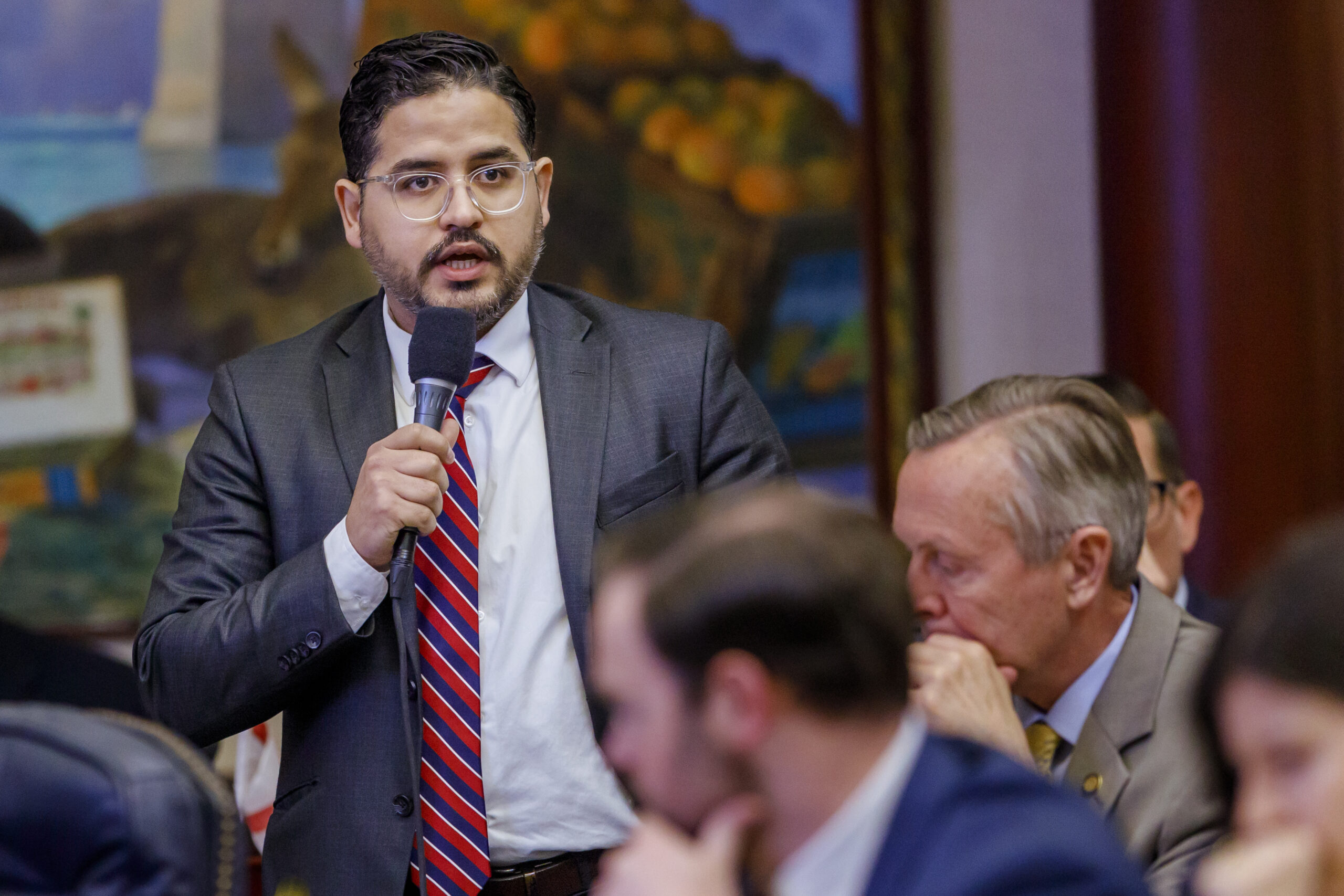
A wide-ranging bill to limit local authority over zoning decisions, housing regulations and development fees just cleared the Legislature’s lower chamber, marking a significant advancement this Session in further preempting county and municipal control.
The House voted 71-38 for the measure (HB 399) after admonitions from Democrats representing large counties like Miami-Dade and Orange that the measure would erode safeguards against overdevelopment and encroachment on environmentally vulnerable areas.
All Democrats voted against the bill, sponsored by Hialeah Republican Rep. David Borrero, who framed the legislation as a capitalistic way to improve housing affordability in Florida while costing taxpayers nothing.
Six Republicans joined them: Reps. Fabián Basabe of Miami Beach, Erika Booth of St. Cloud, Linda Chaney of St. Pete Beach, Jim Mooney of Islamorada, Rachel Plakon of Lake Mary and David Smith of Winter Springs.
Borrero argued HB 399 addresses the root supply-and-demand imbalance, which he blamed on obstructive local strictures.
“If you let the free market work, you’re going to substantially reduce the cost of housing, and that’s the problem,” he said.
“You have local government regulations that are preventing people from supplying inventory to a much-needed market. You don’t have enough land, and you don’t have enough housing to meet the demand. And that’s why the cost of housing has skyrocketed.”
Under HB 399, counties and municipalities beginning in 2027 would have to ensure development application fees “reasonably relate” to actual review costs, publish those fees and stop basing them on construction value or project valuation — meaning fees must reflect processing costs, not a project’s price tag.
The bill would also require administrative approval of minor special exceptions or variances for qualifying large destination resorts — defined as public lodging establishments of at least five contiguous acres under common ownership, with 500 or more guest rooms and a three-year average occupancy rate of at least 70% — without further quasi-judicial review.

HB 399 would require local comprehensive plans and land development regulations to adopt objective compatibility standards for residential uses, bar denials based solely on vague concepts like “community character,” and mandate detailed written findings explaining any incompatibilities and why proposed mitigation is insufficient.

For amendments to future land use elements of comprehensive plans, the bill would cap the voting threshold at a simple majority of the governing board, overriding stricter local supermajority requirements.
That change is needed, Borrero said, “because that’s what official governments do.”
“Can you imagine if every action by a local government required a supermajority or a unanimous vote?” he said. “You wouldn’t be able to get anything done.”
Borrero argued that supermajority requirements tied to environmental protections have worsened the housing affordability crisis. He said there is effectively no land left to build on in Miami-Dade, despite visible construction activity and news stories galore about a continued development boom in the county.
HB 399 wouldn’t eliminate all supermajority thresholds, which generally apply to decisions with significant environmental or topographic impacts.
The measure would also expand placement rights for certain manufactured and off-site constructed homes, requiring they be allowed as of right in single-family zoning districts, and direct a state study on the effects of removing urban development boundaries (UDB).
That includes a long-contested UDB protecting the Everglades and other sensitive lands in Borrero’s home county of Miami-Dade, where Mayor Daniella Levine Cava and preservationists have worked in recent years to stop multiple efforts to erode the barrier.
Notably, the version Borrero brought to the floor is far broader than the one he filed in November, which largely addressed compatibility definitions, residential fees, infill housing protections and the UDB study.
It also differs from a Senate version of the legislation (SB 208) by Ocala Republican Sen. Stan McClain, which lacks provisions applying to large destination resort variances and votes for land-use plan amendments.
SB 208, which received just one “no” vote in three committee stops, now awaits a floor vote. McClain can table SB 208 in favor of HB 399, amend his bill to match the House bill’s language or amend HB 399’s language to match that of SB 208, which would require another House floor vote.

Prior to the House floor vote Tuesday, Borrero amended HB 399 with technical language clarifying that manufactured homes can be placed in recreational vehicle lots and trailer parks. The chamber also rejected two amendments by Orlando Democratic Rep. Anna Eskamani, one of which would have eliminated the bill’s language on land-use plan vote thresholds.
Eskamani explained that, as written, HB 399 would undo the wishes expressed by 73% of Orange County voters in 2024, who approved a charter amendment requiring a majority-plus-one vote to remove property from its rural boundary or increase density and intensity in that area.
Borrero called that proposal and another aimed at swapping his bill’s language with that from an unrelated bill (SB 840, HB 1465) focused on local governance of hurricane-impacted areas “unfriendly.”
Miami Gardens Democratic Rep. Felicia Robinson pushed back against Borrero’s description of HB 399 being a tool to improve affordability. The bill, she said, is instead a gift to developers intent on building in areas now prohibited under local rules.
“If communities actually vote to secure a certain area, we should not at the state level preempt it,” she said, adding that if Borrero and others in the House want to change local rules for local land use, “then maybe you should run for local government and correct it there. They do have standards.”
Democratic Rep. Ashley Gantt of Miami said state lawmakers previously upended local controls that would have helped affordability in 2023, when the GOP-controlled Legislature pushed through a bill barring counties and cities from imposing tenants’ rights ordinances, including rent increase caps.
She also noted how passionately residents and preservationist groups have engaged with the Miami-Dade Commission to protect the UDB, which can still be altered with enough community and dais support.
“When did local governments become the enemy of the people or the enemy of the House, of Tallahassee? There are so many people here who served on a local level,” she said. “I beg to ask, were you incompetent when you were a local and then you became competent when you came to Tallahassee? Or does that incompetence remain? Because we continue to think that we can think better than them.”
Borrero fired back in his closing statement that HB 399’s preemption component upholds the rights of property owners, who are local stakeholders and — by building new residential units — can drive down housing costs.
“Let people do what they want with their own property,” he said. “When you open up the supply, when you allow the developers to build and to provide homes for people who need it, the cost of housing will go down. And you can do it without a single penny (coming from taxpayers).”