
Politics
House passes DCF-focused bill allowing second medical opinions in child abuse cases
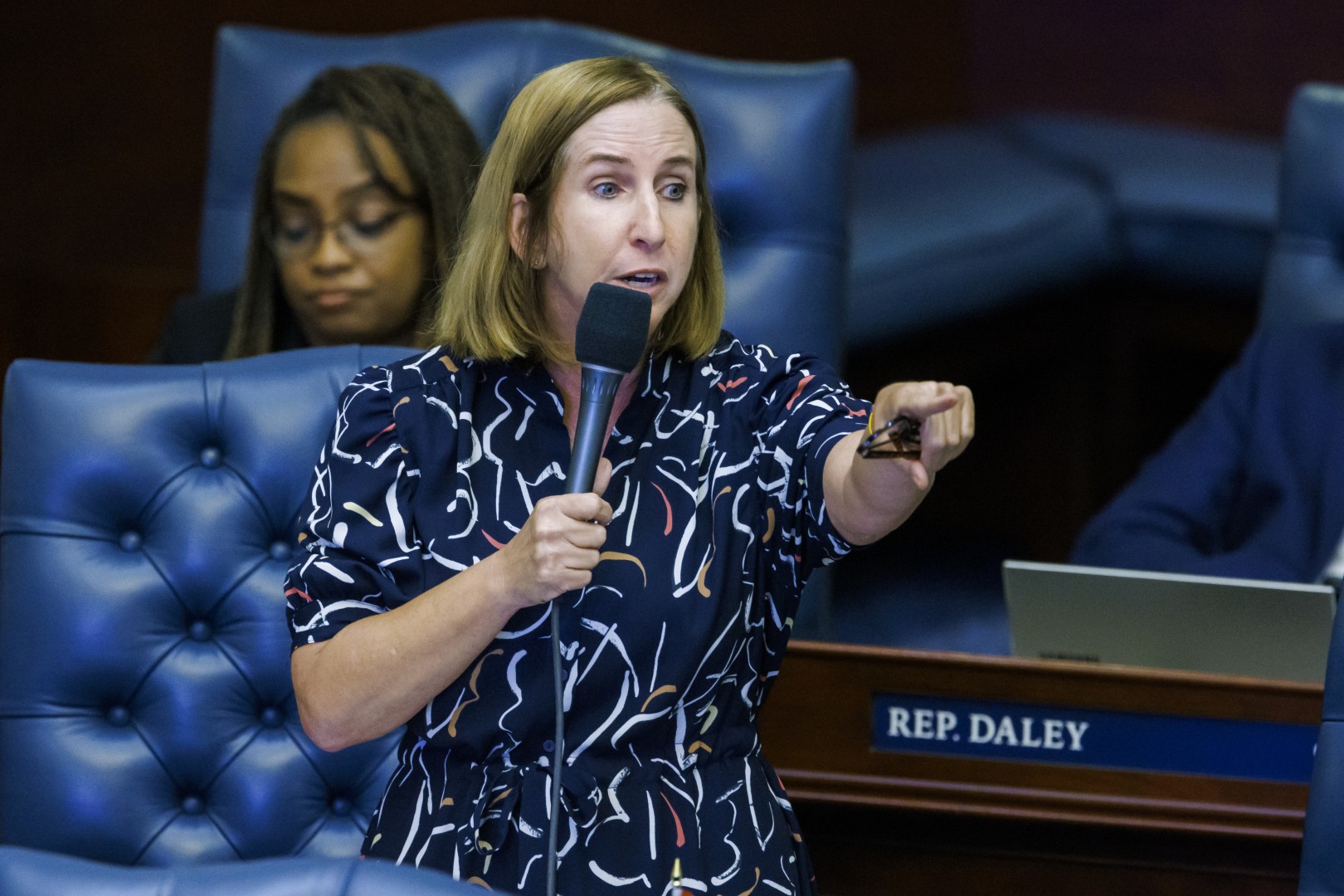
Legislation to change how child abuse investigations are handled when certain medical conditions may be involved just cleared the Legislature’s lower chamber with unanimous support.
House members voted 109-0 for the bill (HB 47), which would require added medical review, allow limited delays in law enforcement referrals and give parents a formal path to seek second medical opinions.
It’s a much-needed change, according to the measure’s co-prime sponsor, Weston Democratic Rep. Robin Bartleman, who detailed cases where shortcomings in Florida law today have led to heartbreaking circumstances.
“Under current procedures, when a child is found with unexplained injuries, they do not have the right to get a second opinion,” she said. “Parents deserve that right.”
Bartleman spoke of parent Diana Sullivan, who took her 11-week-old daughter to an emergency room for a swollen thigh and had the newborn and other children taken by child protection services within the Department of Children and Families (DCF).
After 19 months of separation and more than $300,000 in expenses, Sullivan finally got a second opinion that confirmed her child had Ehlers-Danlos syndrome, a rare genetic disorder that causes fragile bones and easy bruising.
Notably, Ehlers-Danlos was included in DCF notes as a potential cause for the infant’s injuries, but the agency conducted no further investigations.
There was also the case of Sarah Mischler, whose child DCF removed from her custody based on a misdiagnosis of shaken baby syndrome by a doctor who never physically examined the boy.
Mischler, who attended the House floor vote Tuesday, and her partner fought for 11 months to keep their son, spending more than $100,000 in the process.
Florida’s child protection teams play an important role “and they absolutely keep Florida’s children safe,” Bartleman said. “This bill is not about weakening protections for abused children. It’s about strengthening our system to make sure we get it right.”

HB 47 and its upper-chamber analogue (SB 42) are a legislative priority of Broward County Democratic Sen. Barbara Sharief, who made a 2025 version of the proposal her first bill filed after winning election.
That bill, originally dubbed “Patterson’s Law” after parents Michael and Tasha Patterson, who lost custody in 2022 of their twin sons due to previously undiagnosed Ehlers-Danlos, passed in the Senate last year but failed to fully advance in the House.
HB 47 is now poised for a Senate floor vote alongside SB 42, which cleared all three Committees to which it was referred without a single “no” vote.
The measure, if passed, would revise protective investigation procedures when a child has certain preexisting medical diagnoses, including Ehlers-Danlos, rickets, osteogenesis imperfecta and vitamin D deficiency.
It would allow DCF to delay immediately referring certain criminal allegations to law enforcement if a parent reports one of those diagnoses or requests a qualifying medical exam, but requires referral after the investigation if criminal conduct is still alleged.
The bill requires child protection teams to consult with qualified physicians or advanced practice registered nurses and mandates that DCF request relevant medical records in such cases. It also gives parents the right to seek a second medical opinion within a set time frame, requires written reports of those exams, mandates case staffings when medical opinions differ, and requires health care providers to furnish requested records to DCF within 14 days.
Tampa Democratic Rep. Dianne Hart-Lowman said that during the bill’s stop in the House Health and Human Services Committee last month, she’d met parents who had been separated from their children for nearly a year and a half.
They’re still calling her for help, she said, adding that according to the parents, the children are being kept separately. “They’re giving them to different individuals, and that makes things very difficult.”
Shalimar Republican Rep. Patt Maney, a former Okaloosa County Judge and the bill’s co-prime sponsor, described cases to terminate parental rights as among the most emotionally difficult that he had presided over.
Florida law puts an obligation on DCF to protect children, he said, but testimony he and other lawmakers heard this year and last year strongly suggest that the system has become imbalanced, as once an abuse allegation is made, parents are never off the proverbial back foot, trying to play catch-up.
“This bill does nothing other than try to rebalance that burden, give parents the right to do what all of us would do if we were told that we had a serious medical condition, or our spouse had a medical condition, or our children had a medical condition,” he said. “You get a second opinion. That really … shouldn’t be controversial.”