
Politics
House passes bill to recognize ‘Judea and Samaria’ instead of ‘West Bank’ in school textbooks
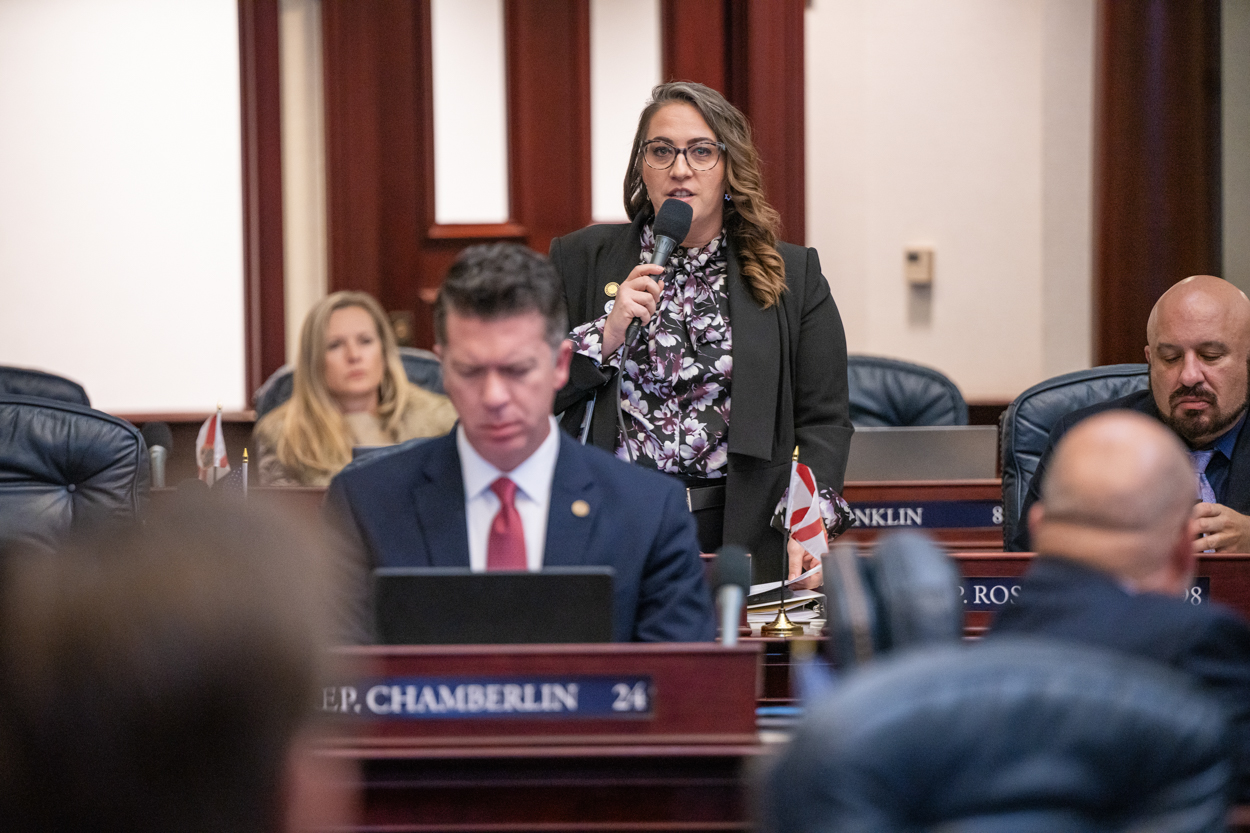
Bipartisan legislation to replace state and public school references to the West Bank with “Judea and Samaria” has passed in the House, following a relatively short discussion on the change’s merits.
Supporters of the measure (HB 31), including its sponsors — Port Orange Republican Rep. Chase Tramont and Lake Worth Beach Democratic Rep. Debra Tendrich — maintained it reverses an erasure of Jewish history by reviving biblical terms thousands of years old.
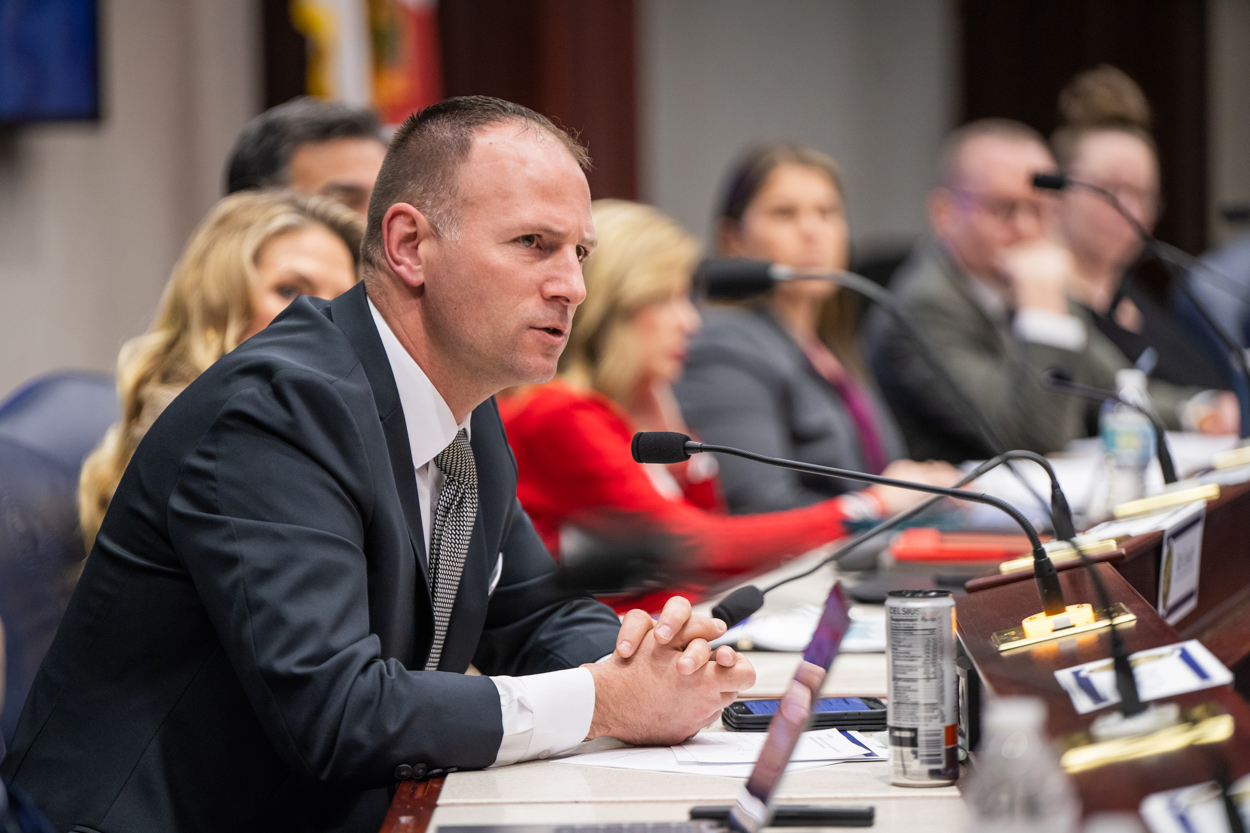
Opponents of the bill, including about two-thirds of House Democrats, voiced concerns about disregarding Muslims’ claims to the land and questioned whether it is Florida’s place, rather than the federal government’s, to rebrand a foreign territory.
Tramont argued, as he did during the bill’s Committee stops, that truth and historical accuracy should supersede political sensitivity.
“I’m not interested in waiting on the federal government or the international community to give me the permission to teach the truth,” he said.
“This bill doesn’t draw borders. It doesn’t deny or recognize statehood. It doesn’t dictate foreign policy. It doesn’t erase anyone’s identity. In fact, it prevents the Jewish identity from being erased here in Florida, because words matter, and this bill simply fixes the words.”
HB 31, which passed on a 92-14 vote, would require Florida government agencies to stop using the term West Bank in official materials and instead refer to the territory Israel captured from Jordan in the 1967 Six-Day War as “Judea and Samaria.”
The bill would also apply to public K–12 education going forward. Instructional materials and school library media collections adopted or acquired by a School District or charter school governing Board on or after July 1 would have to use “Judea and Samaria.” They could not use “West Bank.”
Disagreement over what to call the land known broadly today as the West Bank, and who has a claim to it, has persisted for decades. But debate of the issue exploded across the world after Hamas terrorists murdered more than 1,200 Israelis and kidnapped hundreds of others on Oct. 7, 2023, leading to a conflict that has since resulted in more than 70,000 reported deaths in Gaza, which sits on the opposite side of Israel from the territory.
Little of that debate seeped into the respectful discourse on the House floor Wednesday.

Jacksonville Democratic Rep. Angie Nixon, who filed a failed ceasefire resolution one month after the Oct. 7 attack, said the bill would “further censor public educators and libraries” while creating “more division as it relates to members of the Muslim community.”
She also suggested that the bill would unnecessarily burden taxpayers and strain already cash-strapped teachers by requiring a change in nomenclature. The legislation, in fact, provides that textbooks and educational materials adopted or acquired after July 1 must include “Judea and Samaria,” while existing materials referencing the West Bank will be phased out at the regular rate of replacement.
Orlando Democratic Rep. Anna Eskamani pointed out that Florida lawmakers are considering legislation to allow the state to craft its own textbooks — a proposal, she said, that makes her uneasy.
She said West Bank is an internationally recognized geographic designation and that decisions about terminology tied to foreign policy and international disputes shouldn’t be mandated by Tallahassee.
“The more Florida tries to separate itself from the rest of the world, whether it’s the Gulf of America bill or this one, it does open the door for more and more state-endorsed messaging that is not conducive to other states and other national partners,” she said, referring to legislation Gov. Ron DeSantis signed last year adopting the Trump administration’s rebranding of the Gulf of Mexico.
Davie Democratic Rep. Mike Gottlieb rejected that comparison as inapt, noting that while the “Gulf of America” term had no prior historical standing, references to “Judea and Samaria” predate the modern West Bank term by millennia.
“Judea and Samaria,” he continued, have thousands of years of historical, archeological and Judeo-Christian significance that are disregarded when the region is called the West Bank.
“It’s a ban on Jewish heritage,” he said. “Let’s right a wrong. Let’s restore the history and dignity of the people who are indigenous to the region by calling it Judea and Samaria, something that it has been named for 3,000 years, not from 1950 by the Jordanians.”

Gottlieb argued that using “Judea and Samaria” is more unifying, reminding his House peers that Samaria is the root of the biblical tale of the Good Samaritan.
“A Samaritan was a group of individuals who were traditionally at odds with Jews,” he said. “A Samaritan on the road helped a Jewish journeyman when no one else would. It’s the story of the necessity of showing love to everyone, especially those who are considered enemies.”
Tendrich provided more recent context. Jordan coined the term, West Bank, in the immediate aftermath of the Holocaust while working to expel Jews from the territory it controlled at the time.
What troubled her most during talks with her Democratic colleagues about HB 31, she said, was that those opposing it seemed to find the Jewish experience irrelevant to the conversation.
“Jewish people have been systematically erased throughout history. Our identities have been erased. Our populations have been erased. And just like with the term West Bank, our connection to land has also been erased,” she said. “And not once has anyone asked me how I feel about my history and identity being deliberately stripped away by political renaming.”
Tramont said the term, West Bank, is only the most recent attempt to delegitimize the claim Jews have to the land and that Jordan, in its retitling, essentially “took a play out of the Romans’ playbook.”
When they conquered the area, he said, the Romans renamed it “Syria Palestina” as an insult to the Jews, since the group referenced in that title, the Philistines, were enemies of the Jewish people but “lived nowhere near that land.”
“So, Jordan just did the same thing. They just weren’t as creative with the name. They just said the West Bank because it’s west of the Jordan River,” he said. “And I would say this: The West Bank literally has zero historical connection to Palestinians. Zero. None. That’s why no argument could be made as to the history of it, because history’s not on that side.”
Eskamani and Nixon voted “no” on HB 31 alongside House Democratic Leader Fentrice Driskell and Democratic Reps. Robin Bartleman, Daryl Campbell, Ashley Gantt, Rita Harris, Dianne Hart-Lowman, Yvonne Hinson, Christine Hunschofsky, Michele Rayner, Felicia Robinson, Kelly Skidmore and Marie Woodson.
Bartleman clarified that she voted against the bill not because she disagrees with arguments for it, but because she doesn’t believe it is an individual state’s place to rename a foreign country or territory.
Campbell shared a similar rationale in a written explanation.
Gottlieb and Tendrich voted for the bill alongside Democratic Reps. Wallace Aristide, Kevin Chambliss, Lisa Dunkley, Tae Edmonds, Johanna López and Mitch Rosenwald.
All Republicans in the chamber who were present for the vote supported the measure.
HB 31 will now be sent across the Capitol Rotunda, where its companion (SB 1106) by Inverness Republican Ralph Massullo awaits a hearing before the Senate Rules Committee, its last stop in the chamber before a floor vote.