
Politics
House panel to probe AI use in insurance after reform push stalled last Session

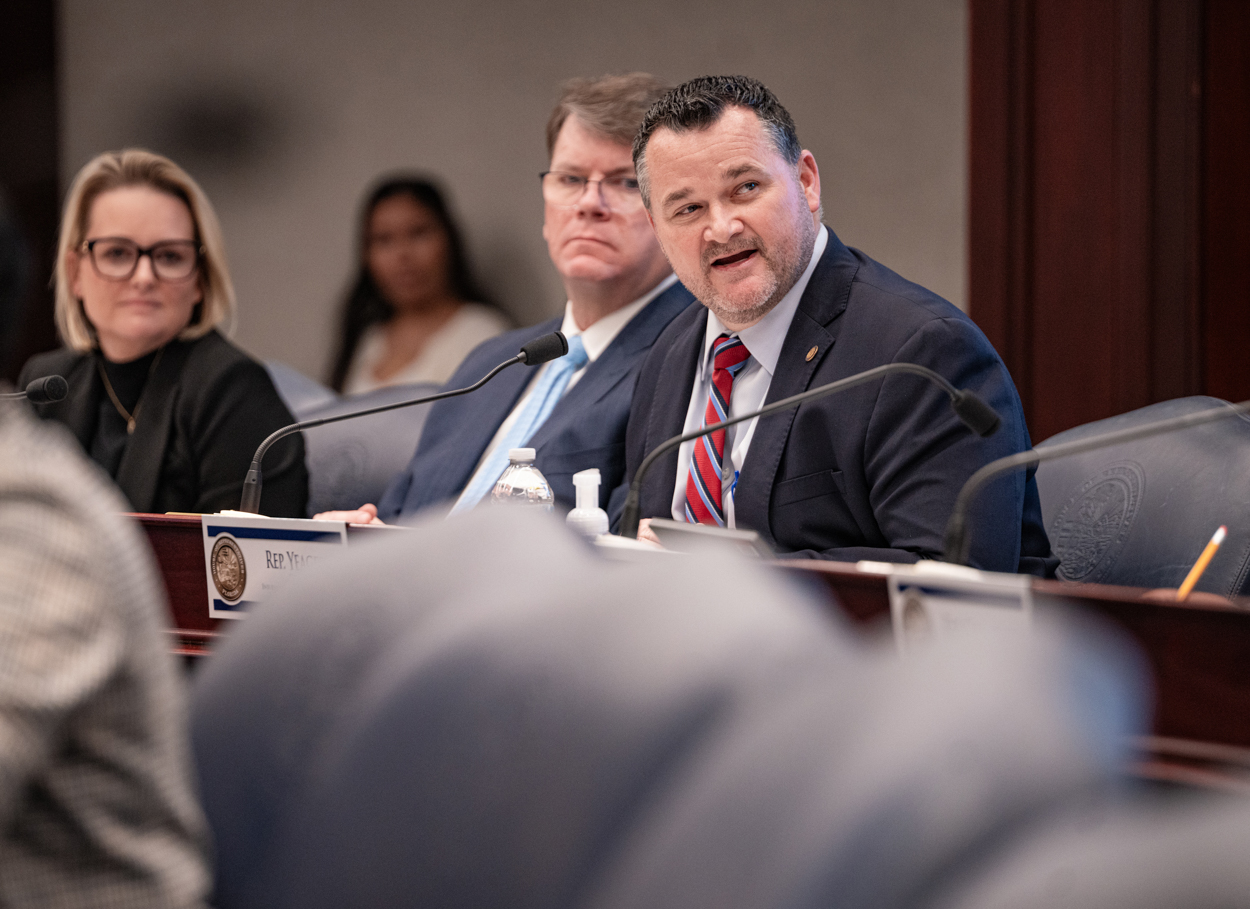
State lawmakers will begin a fact-finding mission next week to determine how insurers use artificial intelligence, potentially renewing efforts that stalled last Session amid scrutiny of algorithms in claim decisions, pricing and consumer services.
The House Insurance and Banking Subcommittee, chaired by New Port Richey Republican Rep. Brad Yeager, has scheduled a Tuesday panel on the industry’s current and future AI uses.
No bills are listed on the 12:30 p.m. meeting’s agenda.
Yeager told Florida Politics the purpose of the meeting is to gather testimony ahead of the 2026 Session.
“It’s just education. We know AI is here. It’s on the rise in all facets of business and life, and we need to learn more about it,” he said.
“Some people hear ‘AI’ and it scares them to death. Others are early adopters and probably use it before it’s really ready to be used for something. We want to get more information about it, give the committee a time to ask and answer questions and dive into what AI is and what it really means in this application.”
The hearing follows proposals that failed this Spring that would have curbed automated claim denials. A pair of Senate bills (SB 1740, SB 794) would have required a “qualified human professional” to make or sign off on any denial decision and bar AI, machine-learning or automated systems from serving as the sole basis to deny a claim.
Those measures, sponsored respectively by former Sen. Blaise Ingoglia — now the state’s CFO — and Fleming Island Republican Sen. Jennifer Bradley, cleared their initial committee stops but died in appropriations.
House companions (HB 1433, HB 1555) by Republican Reps. Yvette Bennaroch of Marco Island and Hillary Cassel of Dania Beach fared no better. Cassel is Vice Chair of the Insurance and Banking Subcommittee.
National regulators have been laying groundwork for some restrictions. The National Association of Insurance Commissioners (NAIC) adopted broad AI principles in 2020 — prioritizing fairness, accountability, compliance and transparency — and followed with a detailed “model bulletin” in 2023, which states can adopt, urging carriers to document and govern their AI systems, monitor data quality and bias, and maintain human oversight throughout policy lifecycles.

Florida’s review comes as consumer unease persists over opaque automation. In a press release this week, former House candidate Jay Shooster, a Democratic lawyer with ample ties to the tech industry, backed mandatory call center disclosures so consumers know when they’re interacting with AI. He cited a survey by live answering service company Answering Service Care, which found that 8 in 10 respondents want to know if they’re speaking to AI and 37% would lose trust in a company that hides it.
“If AI becomes advanced enough to be indistinguishable from humans and is used without disclosure, consumers can be misled and manipulated,” Shooster said in a statement. “That’s a dangerous path, whether in consumer service, healthcare, finance, or political communication.”
On the telephone front, the Federal Communications Commission last year ruled that AI-generated voices in robocalls are covered by the Telephone Consumer Protection Act, making such calls illegal without consent and giving enforcers another tool against deceptive voice cloning.
Other states have forged ahead on the issue. California’s Physicians Make Decisions Act, which went into effect in January, requires that any denial, delay or modification of care based on medical necessity be decided by a licensed clinician with relevant expertise, not solely by AI tools used by insurers.
Utah enacted an AI disclosure statute for consumer interactions last year, and Colorado’s AI Act, effective next year, will mandate that companies use care in using high-stakes AI and guarantee access to a human following an adverse decision, like denying a job or loan.
Health insurers have faced particular scrutiny over their AI use after investigations into algorithmic claim handling and prior authorization denials. But the reach of states is uneven; they have clearer authority over fully insured plans than over large employers’ self-funded coverage, while Medicaid is shaped by federal rules and contracts.
That complex, asymmetrical tapestry is among the reasons some Legislatures, including Florida’s, have focused on universal “humans in the loop” requirements, documentation and notice standards that can apply across product lines overseen by state regulators.
For Florida’s property insurance market, still struggling with storm losses and carrier exits, lawmakers and regulators are watching how AI is used in claims, underwriting, fraud detection, catastrophe modeling and customer service.
The NAIC bulletin’s emphasis on data governance and bias testing could feature heavily into Tuesday’s discussion, as could whether lawmakers should copy earlier AI-focused legislation or craft a separate disclosure-and-appeals framework that preserves the speed advantages of automation without allowing so-called “black box” denials.
Florida’s 2026 Legislative Session begins its regular schedule Jan. 13.

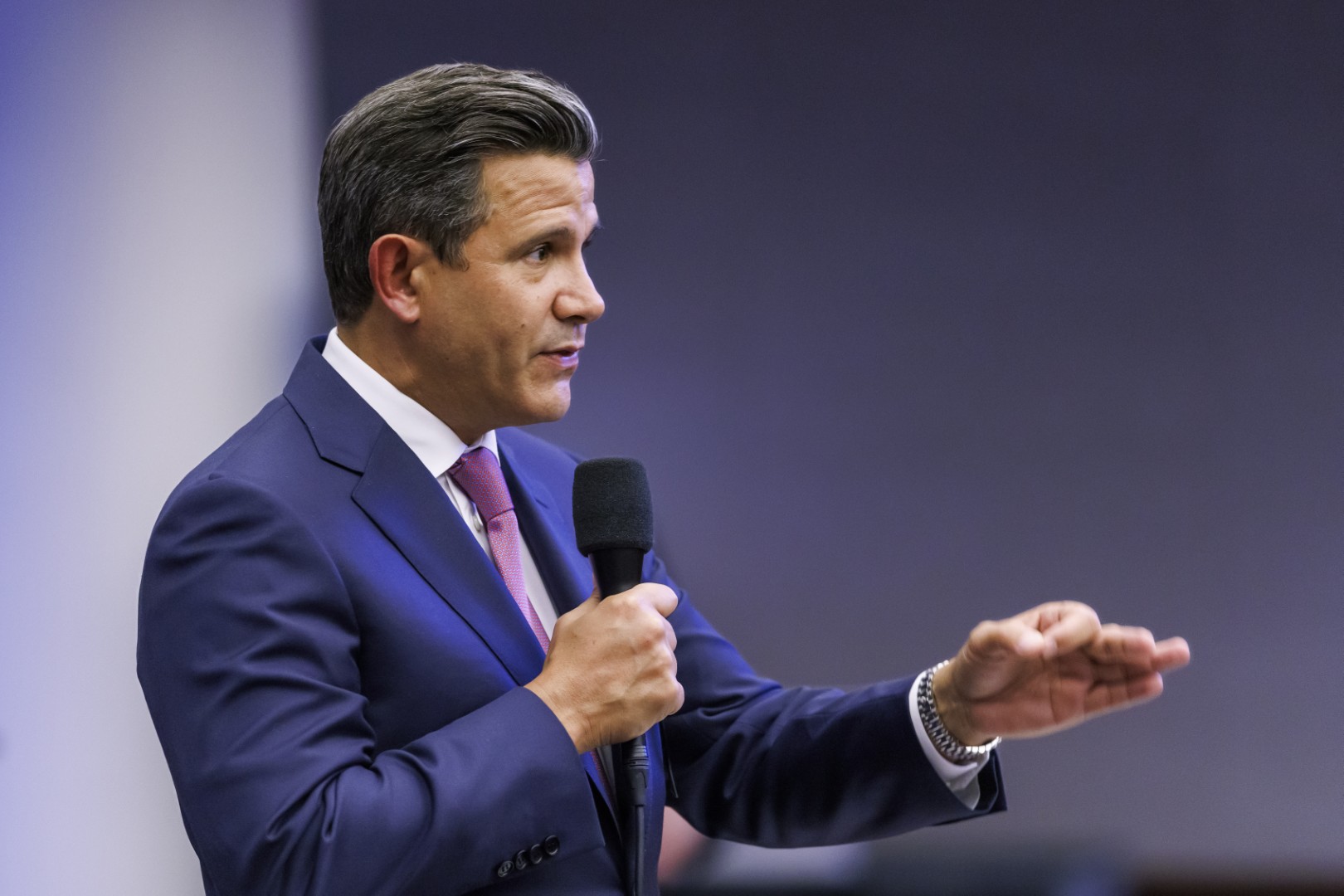
Legislation that would narrowly recategorize 911 dispatchers as first responders so they can receive workers’ compensation for work-related psychological injuries is one step closer to passing in the Legislature’s upper chamber.
Members of the Government Oversight and Accountability Committee voted unanimously to advance the bill (SB 774), which would eliminate a barrier that today denies aid to people who are often the first to respond to a crime.
The measure’s sponsor, Hollywood Sen. Jason Pizzo, noted that during his time as a prosecutor, playing a 911 call would often be the most effective thing to do to sway a jury.
“911, what’s your emergency? He’s going to kill me! He’s going to kill me! Now, imagine hearing that 12 times a day, 15 times a day,” he said.
“Two years ago, you all voted to require these 911 operators to be proficient in CPR so they could administer (it) over the phone. And they’re not considered first responders? They are first responders, and they’ve been grossly overlooked and screwed, and this brings some remedy.”
SB 774 would add 911 dispatchers to the group of “first responders” covered by Florida’s special workers’-compensation rules for employment-related mental or nervous injuries. It would apply the same framework to them as other first responders for mental health claims.
Essentially, if you’re a 911 dispatcher and develop post-traumatic stress disorder, anxiety or similar mental health injuries from traumatic calls, SB 774 would make it so you can get workers’ comp-covered treatment and that your claim is handled under the same special rules lawmakers already set for other first responders — without certain time-limit restrictions that typically apply to mental injury benefits.
Several dispatchers signaled or spoke in favor of the bill, as did representatives from the Florida Police Chiefs Association, Florida Sheriffs Association and Consolidated Dispatch Agency.
Jennifer Dana, a dispatcher with the Palm Beach Sheriff’s Office, noted that in a Senate analysis of SB 774, there’s a list of disturbing things first responders see and do on the job, from seeing dead children and witnessing murders to helping severely injured people, including those who commit suicide.
What it doesn’t include, she said, is that 911 dispatchers also witness those things.

“We’re seeing and hearing it,” she said. “We have the technology for people to livestream it now, so it’s a double-whammy for us, and we want to make sure we have the protections.”
Kim Powell, a licensed and clinical mental health counselor who oversees an employee behavioral health program at a 911 communications center in Leon County, detailed several examples of what dispatchers experience: a woman struggling to breathe while dying from a gunshot wound inflicted by her child’s father; an officer’s final words moments before his murder; the sound of a mother discovering her deceased infant; the 800 or so calls received in the wake of the Florida State University shooting last April.
“These are not isolated events; they are part of the job,” she said. “The trauma compounds over time with repeat exposure.”
St. Petersburg Republican Sen. Nick DiCeglie thanked Pizzo for carrying the bill and expressed gratitude to the “3,500 dispatchers” across Florida for their work.
“For me personally, (this) could be one of the most important bills that we have this Session because of the importance there is for your well-being and your quality of life,” he said.
Melbourne Republican Sen. Debbie Mayfield, who chairs the committee, echoed DiCeglie’s remarks.
Pizzo reminded the panel that four years ago, during COVID, a $280 million set-aside for payments to first responders and front-line workers did not extend to 911 dispatchers.
“They never stopped working,” he said, adding that Mayfield at the time acknowledged the oversight and pledged that the Legislature would get it right in the future. “So, it’s serendipitous that you were kind and gracious enough to put us on the agenda.”
SB 774 will next go to the Senate Appropriations Committee on Agriculture, Environment and General Government, after which it has one more stop before reaching a floor vote.
An identical bill (HB 451) by Republican Rep. Jeff Holcomb of Spring Hill awaits its first hearing in the House.
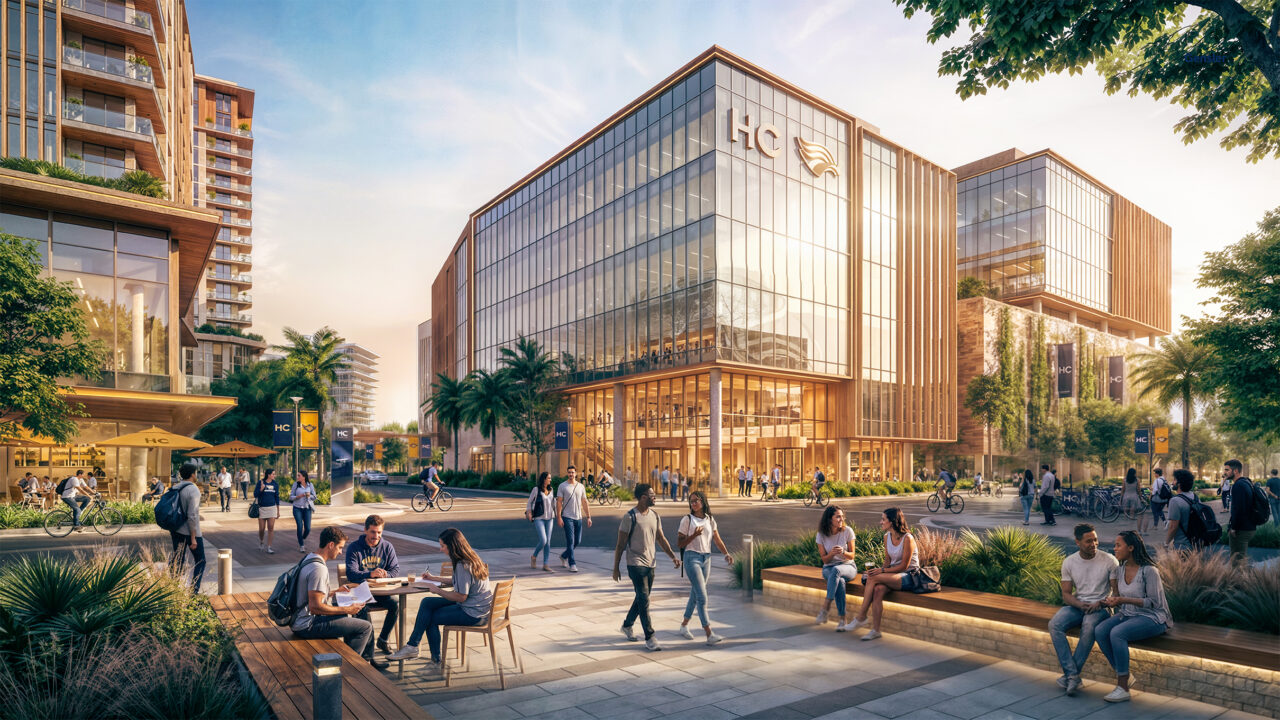
The Tampa Bay Rays’ search for a new home took a tangible step forward as the Hillsborough College Board of Trustees approved a nonbinding agreement that could ultimately shift the franchise away from St. Petersburg under its new ownership.
The Board voted to approve a memorandum of understanding (MOU) authorizing staff to negotiate with the Tampa Bay Rays over a potential stadium and mixed-use redevelopment at the college’s Dale Mabry Campus.
The agreement does not commit the college to the project and can be terminated by the Board at any time. Instead, it outlines key terms the parties would like to see in any future binding agreements, which would require separate Board approval at a later public meeting.
College officials characterized the MOU as the beginning of negotiations. Under the document, staff would begin drafting potential project agreements for Trustees to consider in the future, with an anticipated negotiation timeline of up to 180 days.
Rays CEO Ken Babby addressed Trustees during the meeting, calling the proposal an early milestone. He emphasized that the effort involves the college, the team, the state and local governments. Babby said the Rays are exploring a roughly 130-acre redevelopment anchored by a new stadium and an integrated college campus, alongside residential, commercial and entertainment uses.
“As we envision this development, together in cooperation and partnership with the community and the college, we’ve been calling the campus portion of this work ‘Innovation Edge’ featuring Hillsborough College,” Babby said.
“It’ll be neighbored by, of course, what we envision to be ‘Champions Corridor,’ which we hope will be the mentioned home of the Tampa Bay Rays. Of course, this will be a mixed-use with residential, with commercial, and, as we’ve said, billions of dollars of economic impact to the region. … This is an incredible moment for our community.”
Public input was split. Supporters recognized the economic impact the project could have, while critics worried about the effect on housing affordability, in particular for college students.
Following the vote, Trustees acknowledged uncertainty among students, faculty and staff, particularly those based at the Dale Mabry campus, but stressed that the approval did not determine final outcomes.
“This is a major decision, and I truly hope that it leads Hillsborough College towards growth and advancement,” Student Trustee Nicolas Castellanos said.

Trustee Michael Garcia echoed the sentiment.
“It’s a tremendous day for the future of Hillsborough College and for the future of Major League Baseball in the area and also for the future of the city of Tampa,” Garcia said.
Gov. Ron DeSantis publicly expressed support for the concept ahead of Tuesday’s meeting, saying it could benefit both the college and the region, while cautioning that details still need to be resolved.
“It could be very good for HCC, and I’ve met with the President about it. I think he’s excited about the possibility,” DeSantis said in Pinellas Park.
“Obviously, they’ve got to iron out details. But basically, we’re supportive of them pursuing that partnership because I think it could be good for them. I think it could be good for the state. But I definitely think it could be really good for this region.”
Also ahead of Tuesday’s meeting, Tampa Mayor Jane Castor told Florida Politics the city and Hillsborough County have been in ongoing discussions with the Tampa Bay Rays as the team explores long-term stadium options — including the potential Hillsborough College site. She emphasized that any future stadium proposal would require coordination among multiple governments and would be evaluated alongside existing contractual obligations related to other major sports facilities.
No timeline for construction, campus relocation or final land disposition was discussed Tuesday. College officials emphasized that any binding agreements would return to the Board of Trustees for approval at a future public meeting.
___
A.G. Gancarski and Janelle Irwin Taylor of Florida Politics contributed to this report.


L’Oreal to invest $383 million in Indian beauty tech hub

Gates Foundation, OpenAI unveil $50 million ‘Horizon1000’ initiative to boost healthcare in Africa through AI

Djimon Hounsou’s Baby Mama Arrested For Allegedly Assaulting Him
-

 Politics8 years ago
Congress rolls out ‘Better Deal,’ new economic agenda
-
Entertainment9 years ago
New Season 8 Walking Dead trailer flashes forward in time
-
Politics9 years ago
Poll: Virginia governor’s race in dead heat
-
Politics8 years ago
Illinois’ financial crisis could bring the state to a halt
-
Entertainment9 years ago
The final 6 ‘Game of Thrones’ episodes might feel like a full season
-
Entertainment9 years ago
Meet Superman’s grandfather in new trailer for Krypton
-
Business9 years ago
6 Stunning new co-working spaces around the globe
-
Tech8 years ago
Hulu hires Google marketing veteran Kelly Campbell as CMO