
Politics
House floor vote prepped for autism ‘blue envelope’ proposal, but another Senate vote is needed
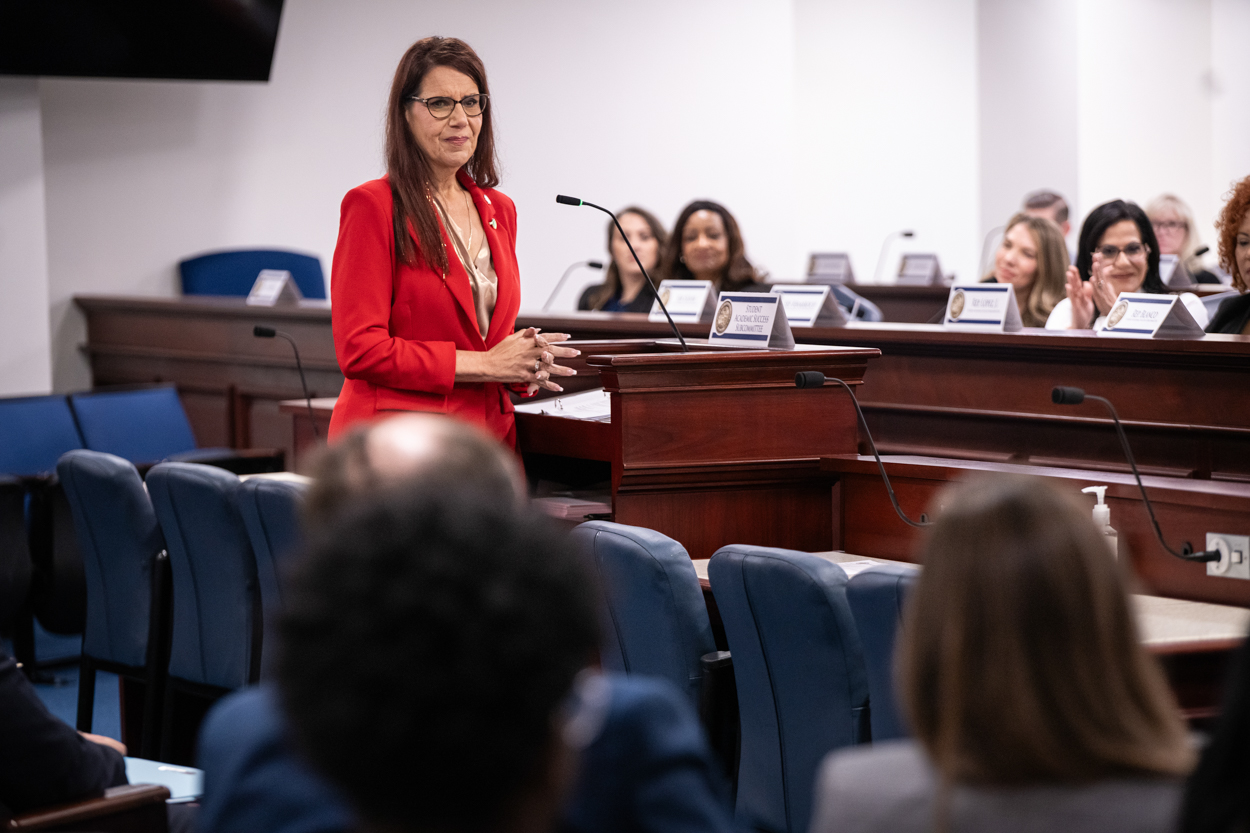
A bill to improve police interactions with motorists on the autism spectrum is one vote from passing in the House after clearing its final Committee hurdle this week, though it’ll need to bounce back to the Senate for a final OK.
The measure (HB 365), which would establish a statewide “blue envelope” program and require additional law enforcement training, advanced through the House Judiciary Committee with uniform support.
But it also was amended to include new language extending the program to all willing Florida residents with autism spectrum disorder (ASD), not just those behind the wheel of a vehicle.
That change means that even with approval on the House floor, the measure would have to return to the Senate, where its upper-chamber companion (SB 418) by Miami Gardens Democratic Sen. Shevrin Jones passed 38-0 last week.
Under HB 365, the Department of Highway Safety and Motor Vehicles would develop and provide a blue envelope that holds a driver’s license, registration, proof of insurance, emergency contact information and identifies the person as having autism, along with communication guidelines for officers.
People with autism would be able to request the envelope through the Department or a Tax Collector’s Office. The program would not be mandatory.
HB 365 would also require the Criminal Justice Standards and Training Commission to develop mandatory instruction for police officers on interacting with individuals with ASD. That training would be incorporated into basic recruit training and continuing education, covering topics such as de-escalation techniques, interviewing methods, recognizing autism-related behaviors and safely locating missing individuals with autism.
The cost of the legislation going into Thursday’s Committee meeting was estimated to be $64,000 over four months, followed by general upkeep and updating costs, according to Senate staff.
“(With) this bill, we can … create training for law enforcement officers and (help) people with autism spectrum disorder here in this state and those that visit so that future interactions are positive and very peaceful,” said Tampa Republican Rep. Susan Valdés, HB 365’s primary sponsor.
Ahead of Thursday’s unanimous approval, Davie Democratic Rep. Mike Gottlieb amended HB 365 to add a “blue card” program that Florida residents and visitors can opt into carrying so they can identify themselves as being on the autism spectrum.

Gottlieb, who has a niece with autism, said the reasoning behind the change is simple: Many interactions officers have with people with ASD don’t necessarily happen while they’re operating a motor vehicle. They can be inside a mall, crossing the street on foot or riding in a car’s passenger seat.
Valdés called Gottlieb’s amendment “very friendly.”
Representatives from the Autism Society of Florida, Florida Smart Justice Alliance and Charter School Leaders of Florida signaled support for the bill.
Lawyer John Reynolds, the nephew of Autism Society President Annette Lizardo, spoke of how his cousin Samuel has assisted in police training that has helped to increase their rate of positive interactions with people with ASD.
“This bill would make those trainings mandatory,” he said, adding that in his own interactions with law enforcement, he has seen them get nervous, presumably due to his being bigger than them.
“I can’t imagine interacting with law enforcement without the ability to convey my thoughts and my actions.”
Reynolds pointed to the case of a Manatee County man with ASD who was tased, arrested and confined for weeks in jail, where he was sexually assaulted. His case was later dismissed.
“Those who are on the spectrum are 2 to 3 times more likely to have encounters with law enforcement than those who are not,” he said. “It is imperative to have in-person officer training to prevent another tragedy like (that).”
According to the Centers for Disease Control and Prevention, there are an estimated 5.4 million adults with ASD in the United States, which translates to roughly 2.2% of the overall population.
Dade City Republican Rep. Kevin Steele recommended that rather than having a blue envelope or card, lawmakers should instead consider just adding a word or symbol onto a person’s ID, similar to those identifying organ donors.
“That way, they always have it with them and it’s not an additional cost to anybody,” he said. “It’d just be part of the questionnaire on those documents.”