
Politics
House committee gives thumbs up to changes in swim-lesson voucher program

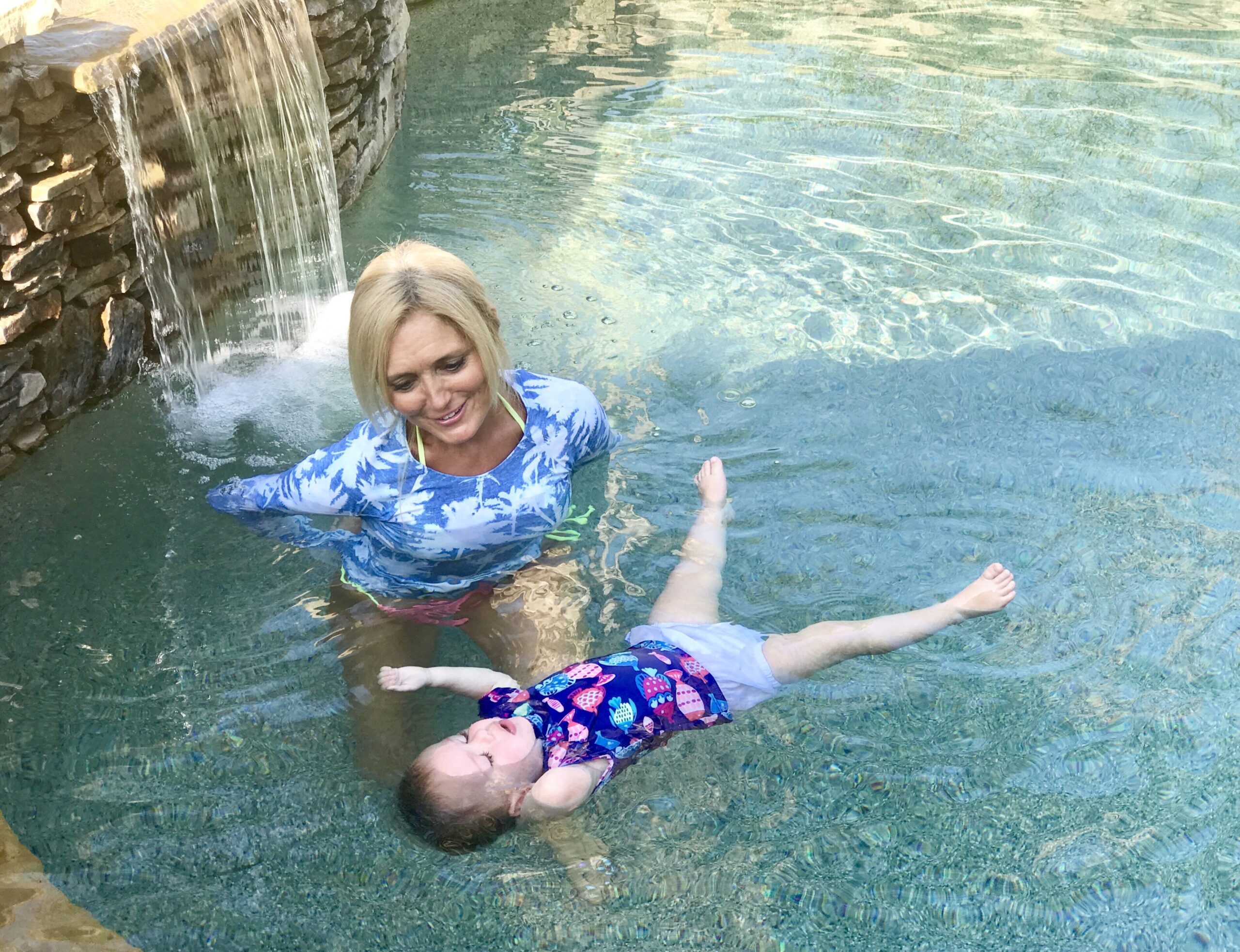
A House panel is on board with allowing older children to qualify for the state’s swimming lessons voucher program.
The House Health Care Budget Subcommittee held a hearing on the measure (HB 85) that calls for revising the popular swimming lessons voucher program to cover the cost of lessons. The program went into effect after Gov. Ron DeSantis signed legislation in 2024.
But Rep. Kim Kendall, a St. Augustine Republican and co-sponsor of the new bill, said the original age limit on the vouchers, for children 0 to 4 years old, is too restrictive. Her proposal would allow children 1 to 7 years old to qualify.
She told the panel that many stakeholders, including swim instructors, say the original program, though appreciated, isn’t practical.
“Ages 0 to 1, the babies show reflexes that look like swimming,” Kendell said. “But they’re too young to actually lift their head up enough in order to breathe out of the water.”
In that first year, she added, children simply aren’t actually learning to swim. She said the majority of infant deaths due to drowning don’t happen in pools or open water. They are most likely to occur in a bath tub in the home.
“It’s giving a false sense of security to the parents,” Kendell said.
She said that for many children under the age of 4, they’re not using the full amount of the voucher program. Kendall said swimming classes could have more participants by expanding the financial relief to families with kids a few years older.
Kendell noted that the number of children drowning in Florida over the past decade has about doubled.
“We simply want to take a great program and simply make it more efficient,” she said.

The subcommittee unanimously approved the bill. There is a companion bill (SB 428) moving through the Senate co-sponsored by Sen. Clay Yarborough, a Jacksonville Republican, and Sen. Carlos Guillermo Smith, an Orlando Democrat.
Politics
María Elvira Salazar believes Donald Trump could still warm up to Dignity Act, path to legal residency

U.S. Rep. María Elvira Salazar believes President Donald Trump may yet come around to allowing legal residency for longtime immigrants.
At a press conference in Washington promoting her new book, “Dignity Not Citizenship,” Salazar acknowledged the uphill path for her bipartisan Dignity Act (HR 4393) in the current political climate. But she suggested that one person could change that.
“I have no doubt that Trump will be for immigration what (Abraham) Lincoln was for slavery and (Ronald) Reagan was for communism,” Salazar said. “He’s going to fix it.”
Many are skeptical. Trump has made mass deportations a central tenet of his agenda since the start of his second term.
But Trump in a New York Times interview made clear, while saying he has problems with groups like Somali immigrants, that he doesn’t want to stop all immigration.
“I just want people that love our country. It’s very simple. I want people that love our country,” Trump said. “I want people that respect our country, respect the laws of our country, and I want people that can embrace our country.”
Salazar saw hope in those remarks. She has also welcomed the support of lawmakers on both sides of the aisle who sponsored the Dignity Act, which currently has 16 Democratic co-sponsors and 15 Republican backers besides herself. Two of those — Republican U.S. Reps. Dan Newhouse of Washington and Democratic U.S. Rep. Dave Evans of Colorado — spoke in favor of the bill at her press conference.
Evans said his grandparents were Mexican immigrants, and he knows most are coming to the country for opportunity. “I know how important it is for hardworking folks to be able to have the same path that may abuelo had, to be able to earn that American dream,” Evans said.
Newhouse said immigrants contribute to the U.S. economy, and need a path to do so legally. “We all know that we depend on immigration in this country, but we also know that we want legal immigration,” he said.
But there are no more Democratic sponsors than Republican ones, in part because the bill has no pathway to citizenship. Salazar defended that approach.
“Do not talk to me about this path to citizenship anymore, because that has been on the Democratic side for 30 years, promising something that they never do,” she said. “So let’s be real. Let’s give something that can be given, which is dignity, dignified life, with no shame or fear.”
Her proposed Dignity Program would allow undocumented immigrants who have lived in the U.S. for at least five years to obtain legal status by agreeing to pay $7,000 over seven years, repay back taxes and pay 1% of their salary to the U.S. Treasury. The program would only be open to those with a clean criminal record.
But her proposal comes as many call for limits even on existing legal visas. Gov. Ron DeSantis has called for state universities to stop giving H-1B visas to international employees and crack down on the program overall. Every major Republican candidate to succeed DeSantis has pushed to crack down on issuing any new H-1B visas.
Salazar said that’s unsurprising because the current immigration system is broken. She said her bill could help address that.
“We need to fix the H-1Bs, and we need to fix the catch and release, and we need to fix the asylum system,” she said.
“We need to fix everything. So when we sit at the table, we’re going to be able to then have that conversation and fix everything at the same time. We just need to get it going. It’s been 40 years since this issue has not been touched.”

Florida’s high school graduation rates continue to show real progress.
According to the Florida Department of Education’s most recent cohort data released on January 13, 2026, the statewide four-year graduation rate, including both charter schools and traditional district public schools, stands at approximately 92%. That is a meaningful achievement and one worth acknowledging, particularly as schools confront staffing shortages, rising student needs, and sustained budget pressures.
But headline averages can obscure important differences policymakers should examine closely as the Florida Legislature debates education funding, accountability, and continued charter expansion.
When the data is disaggregated, the contrast is clear.
In the 2024–25 cohort, traditional district public high schools graduated 93.8% of students within four years, while charter high schools graduated 78.4%, a gap of more than 15 percentage points.
Both figures are derived from the same state accountability system and employ the same graduation definition. The difference is not technical. It is systemic.
Florida’s strong statewide graduation rate is driven primarily by traditional district public schools, which educate the vast majority of students. When charter and traditional schools are combined, the average remains high, but it is lower than the graduation rate achieved by traditional district schools alone.
Supporters of charter expansion often cite statewide graduation rates as evidence that Florida’s parallel education systems perform equally well or that charter schools drive overall success. Florida’s own data does not support that conclusion.
While nearly 94% of students in traditional district public schools graduate on time, more than one in five charter students do not. Graduation rate alone understates the disparity.
In 2024–25, 13% of charter students remained enrolled beyond four years, compared with 2.6% of students in traditional district public schools. Charter dropout rates were nearly three times higher, 4.4% versus 1.5%. These outcomes reflect thousands of students whose path to graduation is delayed or disrupted.

Florida’s graduation gains are real, but they are being driven overwhelmingly by traditional district public schools.
This distinction matters because Florida policy continues to emphasize expansion — approving new charter schools, providing facility access, and creating parallel funding streams often without applying the same level of scrutiny to outcomes. Expansion is frequently treated as a proxy for success, even when performance data tells a more nuanced story.
None of this diminishes the commitment of charter educators or students. But sound policymaking requires more than good intentions. It requires an honest evaluation of results.
Florida’s traditional district public schools deliver the strongest and most consistent graduation outcomes on time, with fewer dropouts and far fewer students pushed beyond the four-year window while serving diverse populations and absorbing enrollment volatility.
That is not an argument against innovation or parental choice. It is an argument for aligning public investment with evidence.
As lawmakers consider education priorities this Session, the central question is not whether Florida’s graduation rates are improving. They are.
The question is whether state policy will follow the data and invest accordingly in the schools that are producing the strongest outcomes for Florida’s students.
Progress should be celebrated. But progress should also be understood. Florida doesn’t need competing narratives; it needs education policy grounded in facts.
___
Crystal Etienne serves as president of the EDUVOTER Action Network.
Politics
Jacksonville official warns Instagram followers about ICE arrests, advises on how to avoid ‘targeting’


Rural America is getting a bailout, but not from Trump—billionaires are riding to the rescue

‘Diff’rent Strokes’ Actor Todd Bridges Splits From Wife, Headed for Divorce

María Elvira Salazar believes Donald Trump could still warm up to Dignity Act, path to legal residency
-

 Politics8 years ago
Congress rolls out ‘Better Deal,’ new economic agenda
-
Entertainment8 years ago
New Season 8 Walking Dead trailer flashes forward in time
-
Politics9 years ago
Poll: Virginia governor’s race in dead heat
-
Politics8 years ago
Illinois’ financial crisis could bring the state to a halt
-
Entertainment8 years ago
The final 6 ‘Game of Thrones’ episodes might feel like a full season
-
Entertainment8 years ago
Meet Superman’s grandfather in new trailer for Krypton
-
Business8 years ago
6 Stunning new co-working spaces around the globe
-
Tech8 years ago
Hulu hires Google marketing veteran Kelly Campbell as CMO