
Politics
House budget panel eyes SNAP changes and their effect on state budget
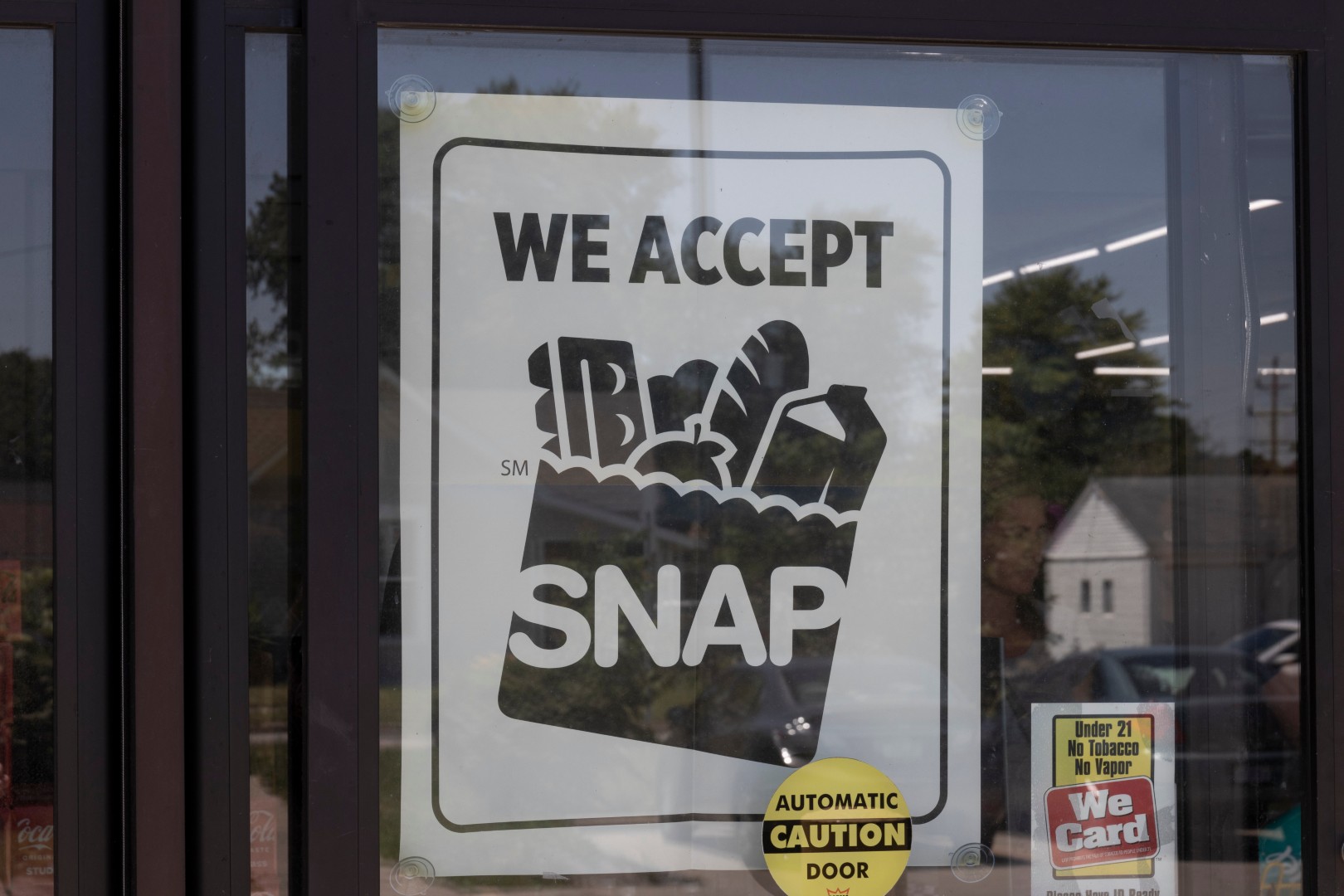
Florida will have to pay more to participate in the federal Supplemental Nutrition Assistance Program, often referred to as SNAP, due to changes in law enshrined in the One Big Beautiful Bill Act.
The administration of Gov. Ron DeSantis already has acknowledged the program will require an additional $50 million because Congress increased by 25% the state’s share of administrative costs to run the program that last year helped 1.5 million Florida households and 2.6 million people purchase food.
The cost shift takes effect Oct. 1 and will have to be accounted for in the state operating budget the Legislature will pass this Session.
The Department of Children and Families (DCF), though, is being tight-lipped about how much more it will be required to contribute in 2028. That’s when the provision in the federal law that requires states with SNAP payment error rates of 6% or more to begin paying for a portion of the food costs. The higher the error rate, the more the state is required to contribute.
Florida’s error rate was 15.1% in 2024, a figure that would have required the state to contribute $1 billion to help cover the costs of the food had the mandates been in effect.
“Members, the department understands the seriousness of the SNAP payment error rate and the implications for the state. We have taken decisive data-driven action to strengthen quality control, improve oversight, modernize systems, and reinforce accountability while continuing to ensure eligible Floridians receive timely access to benefits,” DCF Deputy Assistant Secretary Jamie Dattoli told members of the House Health Care Budget Subcommittee this week. “You have my assurance and the Department’s commitment that this work remains our top priority.”
Dattoli said DCF won’t know its 2025 SNAP error rate until June. She discussed at length the steps the state is taking to lower its error rate, a number that includes both overpayments and underpayments, and accounts for mistakes made by the state as well as the person applying for the food assistance program.
Pensacola Republican Rep. Alex Andrade pressed for an 2025 error rate estimate, though, and Dattoli predicted it would be about 13%.
Florida doesn’t plan on using its 2026 SNAP error for cost sharing calculations, Dattoli said, adding that the agency hopes to keep it below 6% in 2027.
Inside the error numbers
Again, to avoid any new federal cost sharing requirements a state’s SNAP error rate must be below 6%. States with error rates between 6% and 8% will be required to contribute 5% of the costs, and states with between 8% and 10% error rates would be required to cover 10% of the costs.

States with error rates above 10% have to contribute between 15% and 25% of the costs of the food.
As Dattoli’s testimony came to an end, Andrade asked whether it would be “reasonable to assume” that in 2028, when the cost sharing requirements kick in, Florida would be on the hook for at least 5% of the benefit (or $300 million). The question assumed Florida’s SNAP error rate could be lowered this year to somewhere between 6% and 8%.
Dattoli replied: “I don’t want to give you a number or a time frame. But just know we truly understand the importance of — and our staff, our team, are working tirelessly to improve — that payment error rate and not have to owe any payment towards the benefit amount.”
Inside SNAP numbers
The Food Research and Action Center (FRAC) reports that in fiscal year 2024, SNAP brought more than $6.6 billion to the state.
While the program helps feed children, it also provided benefits to more than 97,675 veterans in Florida in 2024, FRAC says. And 44% of SNAP households in Florida in 2024 included a person with a developmental or intellectual disability.
Sophie Collyer, research director for the Center on Poverty and Social Policy Research at Columbia University, tracks SNAP’s role in reducing poverty rates.
Her research shows that 203,000 Florida residents were lifted out of poverty because of SNAP in 2024, of whom 81,000 were children under age 18.
Appearing during a Kairos Center for Religions, Rights, and Social Justice press conference Thursday, Collyer said long-term research shows SNAP benefits help improve people’s health, increase children’s test scores, reduce criminal justice system involvement, and increase children’s long-term education attainment and subsequent earnings in adulthood.
“Our team at Columbia decided to calculate all the long-term benefits associated with SNAP and compare those to the costs of the program. And we found for every $1 spent on SNAP, the benefits to society amount to $14 in these long-term aggregate benefits,” she said.
New Disabled South co-founder, CEO, and President Dom Kelly said people with disabilities living in the South, particularly children, disproportionately rely on SNAP for food assistance. When they lose access to it, he said, they are more likely to develop co-morbidities and are significantly more likely to die at younger ages.
When SNAP benefits were temporarily terminated in November due to the federal shutdown, the organization set up a fund to give cash payments to people with disabilities living in the states it serves.
“So, we received $4.1 million in applications for more than 18,500 disabled people across our region. We were able to send out $200,000 worth of those payments, which means that we barely scratched the surface of the need,” said Kelly, who also participated in the Kairos press conference.
Kelly said New Disabled South received 887 applications from SNAP beneficiaries in Florida with intellectual and developmental disabilities and sent out $10,050 in payments to people located in Florida.
___
Reporting by Christine Sexton. Florida Phoenix is part of States Newsroom, a nonprofit news network supported by grants and a coalition of donors as a 501c(3) public charity. Florida Phoenix maintains editorial independence. Contact Editor Michael Moline for questions: [email protected].