
Politics
House again passes repeal of Florida’s ‘free kill’ law, but bill’s path in Senate questionable

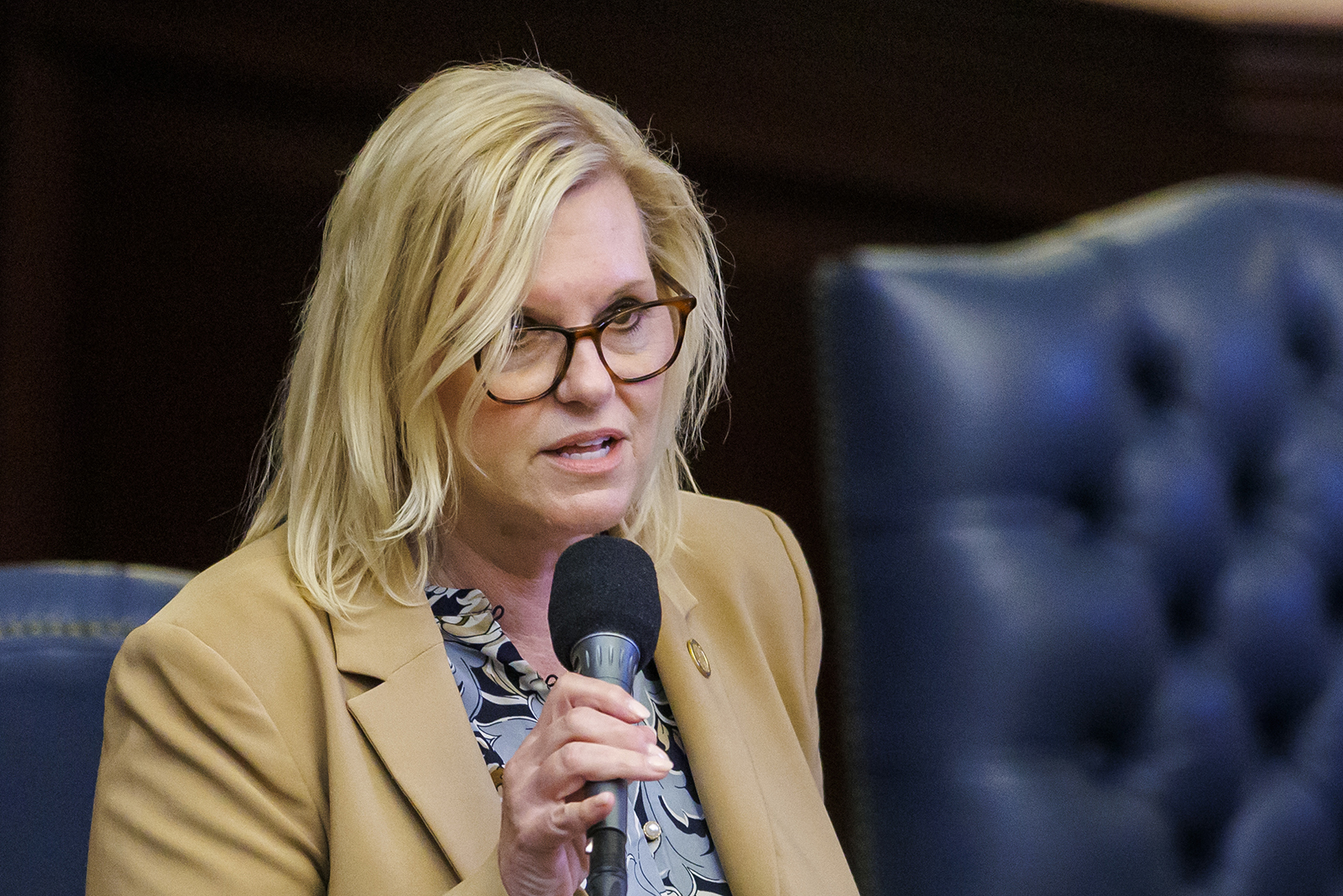
For the second consecutive Session, House lawmakers have approved legislation to repeal a unique Florida law that today denies some families legal recourse in medical malpractice cases.
It’s the same measure the Legislature passed last year with overwhelming support before Gov. Ron DeSantis vetoed it, warning the bill’s lack of caps on damages would cause malpractice insurance premiums to skyrocket.
This time, however, the bill (HB 6003) does not have a Senate companion, making its path through the upper chamber more arduous.
And because it passed without any changes, making it essentially the same as last year’s measure, the bill’s survival is unlikely if it again reaches the Governor’s desk.
The House passed HB 6003 by an 88-17 margin, with nearly three times as many “nay” votes Thursday as there were in the chamber last March for the bill’s 2025 incarnation.
HB 6003, if it becomes law, would delete a restriction in Florida Statutes blocking the award of noneconomic damages — grief, loss of companionship, pain and suffering, and the like — in cases of lethal medical negligence if the victim is 25 or older, unmarried and without children under 25.
Critics of the 35-year-old restriction have dubbed it “free kill,” as it shields careless providers while leaving surviving loved ones without the same court-based remedies available to others.
That restriction is “un-American,” said Fort Pierce Republican Rep. Dana Trabulsy, the co-prime sponsor of HB 6003 with Orlando Democratic Rep. Johanna López.
“Constitutionally in America, we deserve access to the courts. There should be no exceptions to that,” she said. “This is an unjust law. This is our opportunity to make it right.”
Trabulsy dismissed DeSantis’ explanation for vetoing the bill last year and his assertion that opportunistic lawyers and families would pursue “jackpot justice” if the existing law was repealed.

“This has gone through the courts, and caps have been deemed unconstitutional. That’s why there are no caps on this bill,” she said, referencing Florida cases like Estate of McCall v. United States, North Broward Hospital District v. Kalitan and the 1991 Alabama case Moore v. Mobile Infirmary Association.
Trabulsy also stressed, as she did as HB 6003 advanced through committees, that she believes Florida offers “world-class health care” and is home to exceptionally capable medical professionals and service providers.
“But there is medical malpractice, and when there is, we should be able to hold someone accountable,” she said. “And we can in every other section of law except this one, unless you have a loved one that is over the age of 25, unmarried and (with) no dependents. And in that scenario, your family members just don’t count in the state of Florida. And that’s just wrong.”
López said HB 6003 is about “real people” and named more than a dozen medical malpractice victims whose families had limited ability to seek recompense.
“Their stories remind us that the language in our legal code has real consequences,” she said.
Two other Democratic Representatives — Kevin Chambliss of Homestead and Yvonne Hinson of Gainesville — commended Trabulsy for her work and implored their colleagues in the chamber to support the bill.
Chambliss spoke of Ed Salazar, a Miami-Dade County resident and member of the Florida Medical Rights Association whose 28-year-old son Christopher died of cardiopulmonary arrest while recovering from an auto accident in an intensive care unit. Salazar later penned “A Free Kill” documenting the family’s difficulties dealing with Florida’s “little known law.”
“With this vote,” Chambliss said, “we will be taking an important step in righting the wrong that has happened to this family.”
Hinson briefly discussed an earlier bill she filed to repeal “free kill” that her House peers ignored and a similar proposal former North Fort Myers Republican Rep. Spencer Roach carried in 2022, which the House passed, but the Senate ignored.
She praised Trabulsy for “building a system of support” for HB 6003 and urged support for the change.
“This is a good move,” she said.
“Free kill” was added to Florida’s books in 1990, when lawmakers added the carve-out to the state’s Wrongful Death Act in what at the time was presented as an effort to keep medical insurance premiums down.
The opposite occurred, despite the concession.
As HB 6003 moved forward this year, representatives from medical companies and insurance associations spoke against the proposal, cautioning against passing it without caps on damages like the $1 million limit Senators narrowly rejected before passing its predecessor bill last year.
The Florida Hospital Association’s General Counsel, Kristen Dobson, said in November that Florida is losing doctors at a rate double the national average as obstetricians, surgeons, internists and other specialists face some of the highest medical liability insurance rates in the country.
One major hospital in South Florida saw a 73% year-over-year increase in reinsurance and had to buy insurance through a “below ‘A’-rated carrier” for the first time, she said, attributing the strain felt across the state to liability issues.
Dobson pointed to so-called “nuclear verdicts” — jury-directed lawsuit awards of $10 million or more — she said have become “increasingly common and significantly destabilize the insurance market.” Just two months ago, a jury awarded nearly $71 million in a single case.
“The increasing threat of nuclear verdicts holds hospitals and health care providers hostage, forcing them to settle out of court regardless of the merits of the case, which drags up insurance rates and exacerbates the cost of health care, jeopardizing access to critical health care services in Florida,” she said.
“The cost of this bill will be paid by Floridians, particularly those living in rural communities. Fewer doctors means longer wait times, worsening medical conditions, increased (emergency department use) and higher overall health care costs.”
Trabulsy said Thursday that admonishments of so-called “nuclear verdicts” are scare tactics and such awards won’t happen in Florida if HB 6003 becomes law.
“It was said that we will have family members coming out of the woodwork to sue — we will have multiple family members and there will be nuclear verdicts multiple times for one victim. That’s just not true,” she said. “An estate has to be formed. An estate … brings forth the case, not individual family members. So it’s just not true.”
HB 6003 does not need a sponsor or companion bill in the Senate to pass. The Senate can take it up directly, assign it to appropriate committees — or waive reference — and vote on it, amended or as-is, and return it to the House for concurrence.
The Senate could also replace the text of a Senate bill with the House language via a strike-all amendment.
Jacksonville Republican Sen. Clay Yarborough, who carried the bill’s Senate companion during the 2025 Session, told Florida Politics in September that he did not plan to refile the bill, since he expected DeSantis would veto it again.
No other Senator stepped up to take it in Yarborough’s stead.
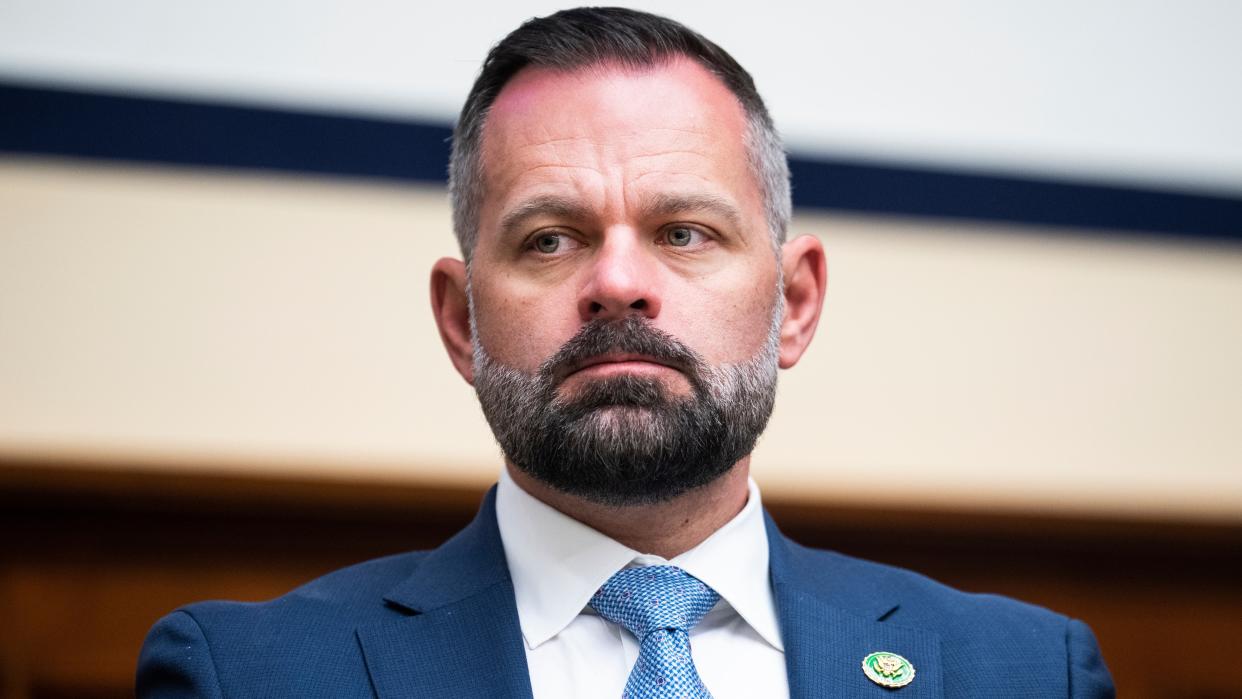
A top political prognosticator just offered a fresh assessment on Democrats’ chances of unseating U.S. Rep. Cory Mills.
Cook Political Report has moved Florida’s 7th Congressional District from its “Solid Republican” to “Likely Republican” column.
The shift came as the high-profile election predictions site moved 18 House races nationwide in a direction favorable to Democrats. That suggests a hostile climate for Republicans overall, two years after President Donald Trump’s return to the White House.
But Mills’ particular situation has also been impacted by a series of scandals, something the Democratic Congressional Committee (DCCC) was quick to point out.
“Voters in Florida’s 7th Congressional District deserve a representative that is focused on them and their priorities, not someone distracted by the need to litigate personal scandals on multiple fronts,” said DCCC Spokesperson Madison Andrus. “This November, Floridians are going to elect a fighter that’s actually in their corner.”
Three Democrats remain in the running to challenge Mills: Jennifer Adams, Bale Dalton and Marialana Kinter. Noah Widmann, the top fundraiser through the third quarter of 2025, recently dropped out and endorsed Dalton.
Mills, meanwhile, has faced criticism even from Republican colleagues, especially women, who have encouraged him not to seek another term.
The New Smyrna beach Republican remains under investigation by the House Ethics Committee for a number of issues, including allegations about him profiting from Defense Department contracts while serving in Congress, assaulting a girlfriend in their shared Washington apartment, threatening to publicly distribute intimate photos of an ex-girlfriend who lived with him in New Smyrna Beach, and exaggerating his military service.
Mills in 2024 won re-election to a second term, receiving 56.5% of the vote over Adams. In the same election, 55.6% of voters supported Trump for President compared to 43.1% support for Democrat Kamala Harris, according to MCI Maps. More than 54.7% of voters in the district supported U.S. Sen. Rick Scott’s re-election.
Notably, the lines for CD 7 could soon shift, with GOP leaders in Florida promising redistricting ahead of the Midterms.

Politics
3 Democrats already challenging Neal Dunn see opportunity in CD 2 following retirement news
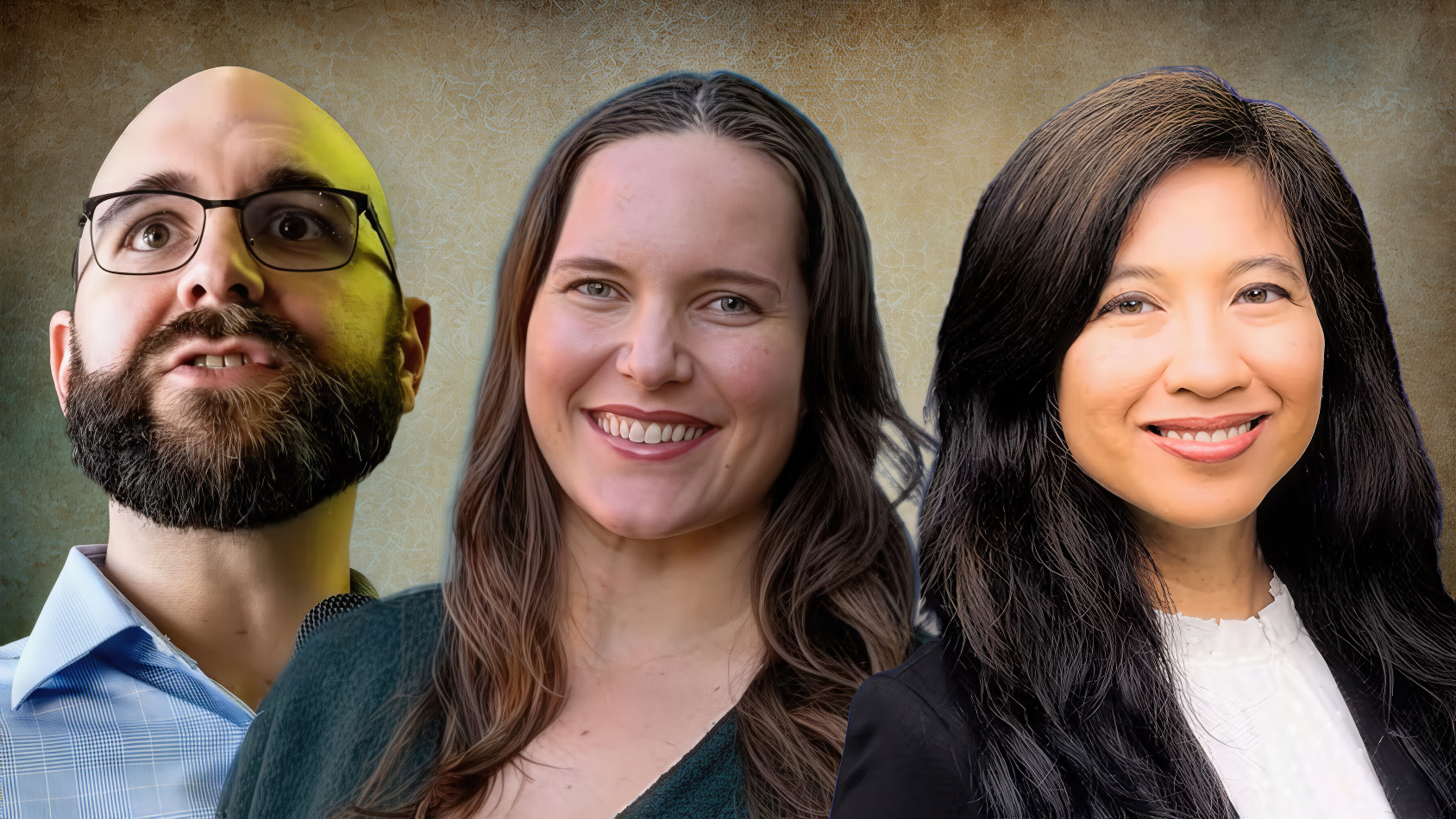
News that U.S. Rep. Neal Dunn will retire after this year has fueled speculation about who may enter the race. But three Democrats have been running for months, collectively raising more than a quarter million dollars to take on the incumbent.
Yen Bailey, who challenged Dunn in 2024, was preparing for a rematch. But the race also drew in foreign aid professional Amanda Maria Green and tech entrepreneur Nic Zateslo. All suggested in online posts that Dunn’s motivation for retirement may have been a sense that the 2026 Midterms will prove especially hostile to Republicans.
Of course, the prospect of an open seat has drawn new interest in the race. Former U.S. Rep. Gwen Graham, a Tallahassee Democrat, confirmed to Florida Politics she is thinking about a run. And many expect interest from former U.S. Rep. Al Lawson, a Tallahassee Democrat who lost to Dunn in 2022, and former state Sen. Loranne Ausley, a Tallahassee Democrat unseated the same year.
But the candidates already in the running have a jump on organizing and fundraising, even if they don’t have as much experience on the trail.
Bailey, a Tallahassee lawyer, won just 38.3% of the vote against Dunn in the last election cycle. That election proved to be a good year for Republicans, with 58.5% of voters in the district voting for Donald Trump for President and 60% backing U.S. Sen. Rick Scott’s re-election.
But she welcomed the retirement news, declaring “Dunn is done” in a post on X.
“This district has a genuine chance at real representation that shows up, listens and actually works for the people,” she said in a video message. “We also know that the Republican Party is a well-oiled machine. The rumors are already swirling about who they’re going to run next, and whoever it is, they are going to be loyal to Trump and do exactly what he tells them to.”
Through the end of September, Bailey raised more than $102,000, including more than $88,000 in individual contributions. The total also includes a $13,000 candidate loan.
But Zateslo reported more than $120,000 in fundraising, including about $18,000 in self-funding. He has worked at a number of political tech companies, including working as chief operating officer for Votivate, a technology project launched by the Working Families Party and now used by Democrats and progressive groups.
After Dunn announced he would not seek re-election, Zateslo issued a statement saying Democrats need to mobilize immediately.

“For those of us who call North Florida home, this is an important moment to take stock of what has worked, what has not, and what kind of leadership we need going forward,” he said.
“l am an Eagle Scout, an entrepreneur, a husband and a father of two young boys who grew up right here in North Florida. I believe we need leadership grounded in integrity, real-world experience, and a willingness to do the work, not in career ambition or the same old political playbook.”
Green filed for the office in August and has since raised about $42,000 for a run, all through outside donations. She worked nine years for Chemonics International, a top contractor for the U.S. Agency for International Development before its dismantling under Trump.
She has been campaigning while pregnant for months, and had a child days before Dunn’s announcement. But she jumped online at the news to post a statement on the development.
“Thank you, Neal Dunn, for finally recognizing that another run for this seat would be a disservice to our community. After five terms of absentee leadership, we finally have an open seat and a real chance to move forward,” she said.
“Florida’s District 2 has been asking for more, and for better, for a long time: better communication, more presence, real accountability, and true representation. Today is proof that persistence and pressure work. To my neighbors in North Florida — our work is far from over. We deserve better, and I will demand better as your representative. With your support, we can fight for a better and stronger future for our families, together.”


Oracle struggles to attract workers to Nashville ‘world HQ’—even with a 2-million-square-foot office

Jude Law and Andrew Garfield First Look in Siegfried & Roy Costumes

Mustang seeks to cement French relaunch at the Who’s Next trade fair
-

 Politics8 years ago
Congress rolls out ‘Better Deal,’ new economic agenda
-
Entertainment8 years ago
New Season 8 Walking Dead trailer flashes forward in time
-
Politics9 years ago
Poll: Virginia governor’s race in dead heat
-
Politics8 years ago
Illinois’ financial crisis could bring the state to a halt
-
Entertainment8 years ago
The final 6 ‘Game of Thrones’ episodes might feel like a full season
-
Entertainment8 years ago
Meet Superman’s grandfather in new trailer for Krypton
-
Business8 years ago
6 Stunning new co-working spaces around the globe
-
Tech8 years ago
Hulu hires Google marketing veteran Kelly Campbell as CMO