
Politics
House again nears full vote on raising payout caps for lawsuits over government negligence
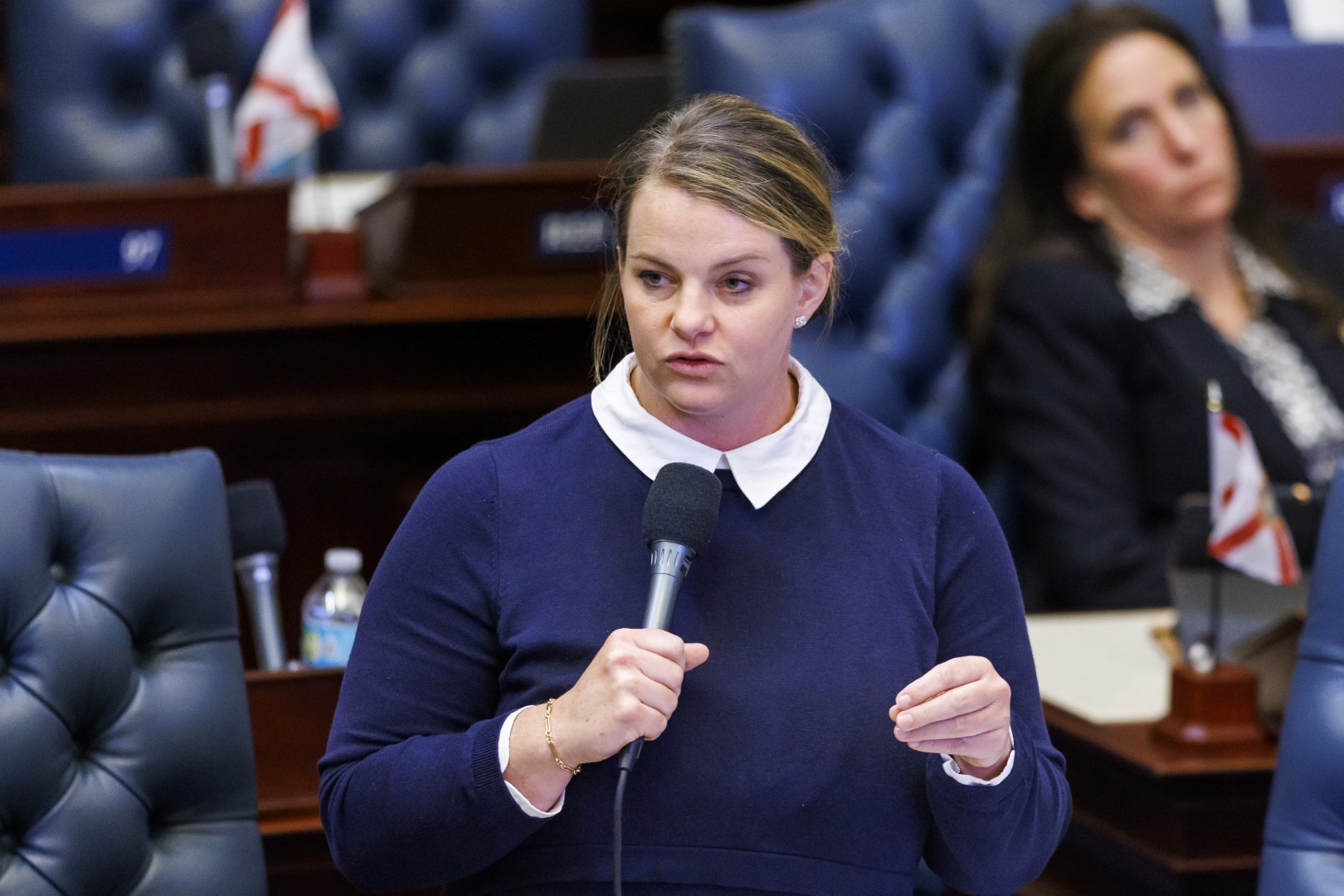
It looks like legislation to revise Florida’s rules for payouts in government negligence lawsuits will reach the House floor for the second consecutive year.
Members of the House Budget Committee voted 22-2 for a bill (HB 145), which would raise the state’s existing payout caps on awards against government entities to $500,000 for one person and $1 million per incident, up from $200,000 and $300,000, respectively.
Those elevated caps would raise again in five years to $600,000 and $1.2 million.
HB 145, which still pends a Senate companion, would adjust the statute of limitations so victims would have the same amount of time to bring claims against governments as they would private entities. It would also provide governments the option to settle claims above the caps without action from Legislature, which isn’t possible now, and prevent insurers from withholding payment.
The current caps were last adjusted in 2010 and hinge on Florida’s sovereign immunity statutes, which shield state and local governments from having to settle pricey lawsuits. In all but 11 states, victims seeking payments above state-set caps must secure the help of a state lawmaker, who must then pass a special measure called a claims bill.
It’s far easier said than done, Sarasota Republican Rep. Fiona McFarland, the bill’s sponsor, said Wednesday.
“The process, we all know, is very long, costly and rather uncertain. The families have to hire attorneys, lobbyists, a bill sponsor, wait for a special master’s report and, after all that, only about a quarter of claims bills filed each year end up passing,” she said.
“This is not a huge financial windfall that families are looking for. By law, damages can only be compensatory, not punitive. And over half of the claims bills passed in the last decade have been for under $1 million.”
Sovereign immunity is a centuries-old legal doctrine that, in essence, provides that the government of the people — historically a king, supreme ruler or sovereign — cannot be sued in its own courts without its consent.
It’s an outdated standard, according to Eric Tinsman of the Florida Justice Alliance, who argued that if every person who understood the concept and the hardship victims face, “99% would say $200,000 is too low” and agree the process to deliver them that insufficient sum is broken.

He pointed to the case of Marcus Button, a Pasco County man who suffered life-altering injuries as a teen in a 2006 school bus crash. Button and his parents later won a roughly $1.6 million settlement with the school district. But they only saw $163,000 of it due to the caps in place until earlier this year, when the Legislature finally approved a $1 million payout for him — 15 years after a claims bill was first filed on his behalf.
Besides principle and the prospect of providing relief to those wrongly injured by government negligence, Tinsman said, the system today does little to spur corrective actions after preventable tragedies.
“The current system does not incentivize the (government to better) train that bus driver after he’s had an accident,” he said. “There is no incentive to fix these things.”
He said the most frequent argument government entities recite against the updates HB 145 contemplates, that the change could devastate them financially, is disingenuous considering localities’ ballooning budgets. As an example, he pointed to Miami-Dade County, whose budget grew nearly 50% from the 2019-20 fiscal year to $2.52 billion in the last fiscal year.
“The budgets keep going up, over and over,” he said. “That’s fine. God bless ’em. But there’s enough money for the caps to go up too.”
Miami-Dade County, the Martin County School District, Safety Net Hospital Alliance of Florida, Preferred Governmental Insurance Trust, Florida League of Cities and Florida Association of Counties signaled opposition to the measure.
Bob Harris of the Panhandle Area Education Consortium said Tinsman’s argument about affordability works for larger, more well-to-do government entities, but it would devastate the 14 small school districts his organization represents.
It would also attract more lawsuits, he added.
“If these increase in caps go in, we’ll see an increase in the number of cases,” he said. “It’s the pot-of-gold-at-the-end-of-the-rainbow syndrome.”
McFarlane acknowledged government costs will rise, but that “it’s worth it.”
“I know this will make more lawsuits,” she said. “But I’m telling you, more of them will be with merit.”
She spoke of campaigning last year, knocking on doors and speaking with constituents. The No. 1 request she heard was for speed bumps, which are rather expensive and can slow emergency services, among other things. So, she proposed to local officials that they forgo filling potholes instead, reasoning that leaving them could serve the same purpose as the speed bumps at no additional cost.
The officials told her they had to fill every pothole they heard about, she said, because not doing so would expose them to lawsuits.
“If there are governments who are only making these changes, whether it’s a pothole or fixing a light on a crosswalk or fixing an uneven sidewalk because their fear of accountability is financial, then that’s a good incentive that our governments are feeling in order to be responsible to us,” she said.
“Maybe it’s healthy. I’m sure there will be frivolous lawsuits. I can’t control people. But I think it’s time that we give our residents a little bit more recourse when a government has committed negligence.”
The 2025 Session version of SB 145 passed in the House on a 103-11 vote in April. It marked the first time a bill to raise Florida’s sovereign immunity caps had cleared the chamber. But it went on to stall out in the Senate, where its upper-chamber companion, sponsored by St. Petersburg Republican Sen. Nick DiCeglie, died without a hearing.
DiCeglie told Florida Politics he isn’t refiling the bill for the 2026 Session and doesn’t know if another Senator will.
HB 145 will next go to the House Judiciary Committee, its last stop before reaching the floor.
The Senate’s filing deadline is Jan. 9, four days before the start of regular Session.