
Fashion
Home collaborations: where décor meets fashion

Published
October 15, 2025
As the festive season approaches, brands are vying to dream up collaborations that blend style, craftsmanship and the art of living. From fashion and design to home décor, these worlds converge to give rise to unique, inspiring capsule collections.
Paul & Joe x Bonsoirs: couture comes to the bedroom
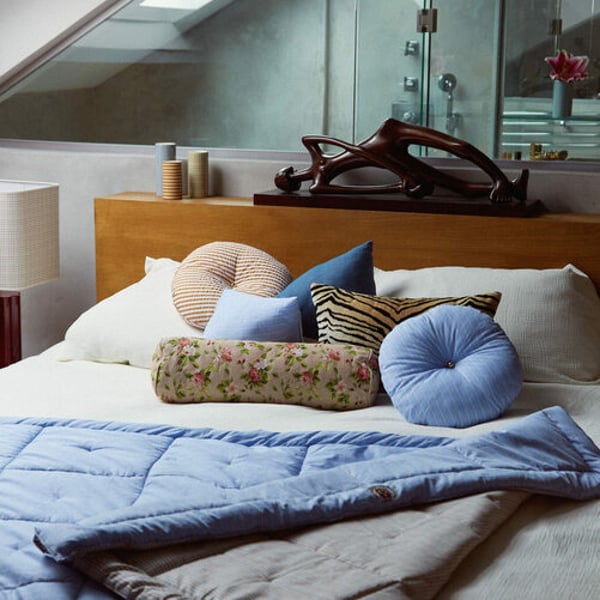
Together, Bonsoirs and Paul & Joe are reimagining the home. For the festive season, the two brands have teamed up on a line of household linen with couture detailing. This collaboration offers linen crafted like fashion pieces, with delicate embroidery and exclusive finishes.
Founded in 1995 by Sophie Mechaly, Paul & Joe is a French maison known for its joyful style, floral prints and retro-chic spirit. Bonsoirs, meanwhile, is a bedlinen brand founded in 2019 that champions hotel-quality pieces at accessible prices, with production in France and Portugal.
Inspired by the Paul & Joe archives, the collection revisits the house codes in a fresh décor guise. Embroidery, exclusive motifs and meticulous finishing define each piece, designed to make a precious gift.
Prices start at €55 and go up to €310 for a bedspread. The collection will be available from November 18.
Moynat x Kasing Lung: luxury at play

In the world of luxury, Moynat has teamed up with artist Kasing Lung, creator of the famous Monsters characters. These emblematic figures—Labubu, Zimomo and King Mon—appear on the Parisian maison’s iconic bags, from the Cabas to the Mini 48h, including the highly exclusive Mignon.
Moynat is one of France’s oldest leather goods houses, founded in Paris in 1849 and renowned for its craftsmanship and made-to-measure trunks.
Photographed by Xiangyu Liu, the campaign features Michelle Yeoh, Tony Leung, Carine Roitfeld and Guillaume Diop.
The first chapter of this collaboration was launched in Shanghai on October 11, marking the 10th anniversary of the Monsters. The collection will be rolled out from late 2025 to early 2026, exclusively at Moynat boutiques in the cities hosting the exhibition, offering enthusiasts and collectors a singular, ephemeral experience of this creative dialogue.
Sessùn x Table: responsible creativity

Marseille-based brand Sessùn joins forces with Table for a collaboration that blends tableware and textile know-how. Together, they have created a capsule of table accessories—tablecloths, tea towels, aprons and napkins—made in Marseille using end-of-line Sessùn stock.
Founded in 1996 by Emma François, Sessùn offers subtle, considered womenswear that balances craftsmanship, quality and ethics. Table, created by Alice Moireau and Caroline Perdrix, celebrates the pleasure of sharing through colourful, responsibly produced objects and table linen.
A bright, sustainable and local collection, available since October 8 2025 exclusively at Sessùn Alma in Marseille. Prices start at €36 for napkins and rise to €315 for the XL tablecloth.
Figaret x The Socialite Family: La Notte Prima

Conceived by Constance Gennari, founder of The Socialite Family, this collaboration with Figaret is an ode to ‘the night before’—those evenings that precede big occasions.
Founded in 1968, Figaret embodies a style rooted in French shirtmaking, balancing tradition and modernity. The Socialite Family, launched in 2013, is both a media platform and a 100% European furniture brand, renowned for its Franco-Italian aesthetic.
The La Notte Prima collection combines shirts, jackets and decorative objects in flannel, chambray and poplin, finished with gold buttons and embroidered crests.
The collaboration will be available from November 8 at Figaret and The Socialite Family, online and in selected boutiques.
This article is an automatic translation.
Click here to read the original article.
Copyright © 2025 FashionNetwork.com All rights reserved.
Published
December 17, 2025
In 2025, South Korean fashion takes another step up on the global stage. In a sector where technological innovations are redefining production processes, South Korea stands out for its ability to turn these developments into drivers of growth and global appeal, according to a Spherical Insights study published in November.
According to the South Korean Ministry of Trade, Industry and Energy (MOTIE), almost $27 million is set to be invested in 2025 to strengthen the national textile value chain.
This policy forms part of a broader strategy that provides more than $19 billion in support for firms operating in industrial textiles, the creation of an Industrial Textile Alliance, and a certification centre for technical products. The aim is to lift digital transformation across the sector from 35% to 60% and increase South Korea’s share of the global markets for industrial and sustainable textiles from 2-3% to 10% by 2030.
A dynamic domestic market
These ambitions are underpinned by an already robust industry. In 2024, South Korea imported $12.37 billion worth of clothing, including $5.08 billion in menswear. Exports totalled almost $2 billion, of which $1.7 billion comprised synthetic textiles and crocheted fabrics. This momentum reinforces a domestic market characterised by diverse demand, rapid trend adoption and strong cultural influence.

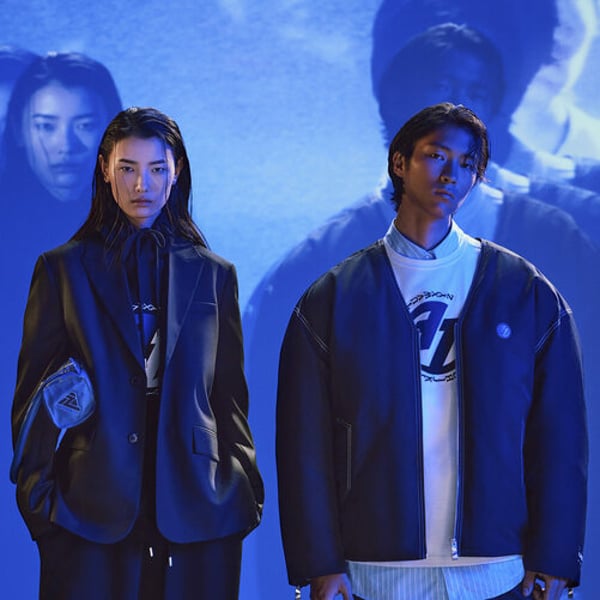
At the heart of this evolution lies the global rise of Korean menswear. Korean brands stand out for their attention to detail, mastery of cut and tailoring, and a strong appetite for exploring experimental materials, bold silhouettes and assertive colours. This stylistic approach, oscillating between minimalism and exuberance, meets a growing demand for pieces capable of expressing individual identity, according to the study.
Exports to be developed
The trends for 2025 confirm this direction: oversized cuts, unique patterns, bright colours, sustainable materials, a fusion of traditional and contemporary styles, as well as layering, athleisure and gender-fluid fashion, are at the forefront. From oversized kimono-polos to two-tone pink shirts, the Korean aesthetic offers a balance of comfort, experimentation and sophistication.

This creative ecosystem is supported by a myriad of ‘flagship’ brands. Names already recognised worldwide such as Gentle Monster, Andersson Bell, Kusikohc, Hyein Seo and We11done fuel the country’s international aura through their distinct worlds, blending art, streetwear, craftsmanship and conceptual design. In 2025, other labels are taking centre stage: Ader Error and its deconstructivist streetwear, Wooyoungmi and its modern tailoring, ThisIsNeverThat and its distinctly Korean take on streetwear, as well as 87MM, Recto, Amomento, PushButton and Minjukim, whose gender-fluid offerings are gaining visibility.
By combining massive public investment, a capacity for innovation, cultural richness and creative power, South Korea is putting its fashion industry on an upward trajectory in 2025. It can be seen not only as an exporter of aesthetics, but also as a key player in technical and sustainable textiles, with the ambition of playing a central role in contemporary global fashion.
This article is an automatic translation.
Copyright © 2025 FashionNetwork.com All rights reserved.


Brown University Person of Interest Captured in New Enhanced Video

Flourishing South Korean menswear aims to strengthen international standing

ACA — spendthrift — badge bounties — 404 — moon mining
-

 Politics8 years ago
Congress rolls out ‘Better Deal,’ new economic agenda
-
Entertainment8 years ago
New Season 8 Walking Dead trailer flashes forward in time
-
Politics8 years ago
Poll: Virginia governor’s race in dead heat
-
Entertainment8 years ago
The final 6 ‘Game of Thrones’ episodes might feel like a full season
-
Entertainment8 years ago
Meet Superman’s grandfather in new trailer for Krypton
-
Politics8 years ago
Illinois’ financial crisis could bring the state to a halt
-
Business8 years ago
6 Stunning new co-working spaces around the globe
-
Tech8 years ago
Hulu hires Google marketing veteran Kelly Campbell as CMO