A surge in luxury stocks has piled pressure on fashion houses including LVMH and Gucci owner Kering to show that signs of recovery in the third quarter can translate into a sustained turnaround in the key holiday season.
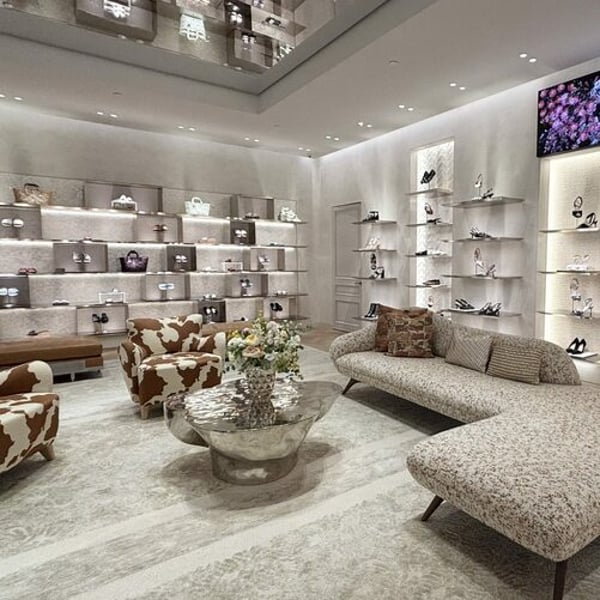
Inside House of Dior in Beverly Hills, US – FashionNetwork.com
Kering’s shares have soared around 49% from three months ago, while Louis Vuitton owner LVMH is up 42%, Moncler up 28%, and Cartier owner Richemont up 27%.
Although some of that is linked to a broader equity market rally, there are also growing hopes among investors that the $400 billion sector is emerging from two years of sliding sales. Third-quarter results showed some improvement in China – once the key engine of growth – and buzzy design debuts from newly-appointed creative directors have buoyed sentiment too.
But new styles will not hit the shops until next year and the jury remains out on China’s economic recovery. Spending in another key market – the US – also remains closely linked to a volatile stock market.
All of that raises the stakes for the December holiday season which accounts for as much as 30% of annual sales for some brands, according to Vincent Redrado, founder of luxury industry consultancy Digital Native Group.
“I think there’s a risk for the fourth quarter,” said Olivier Abtan, a partner specialised in consumer and retail at consulting firm AlixPartners. “China remains pretty quiet, without a positive evolution – while the United States had a post-election bump last year,” making comparisons tougher.
The prolonged downturn in China has hurt brands with high exposure there, such as Burberry and Gucci, prompting broad overhauls and CEO replacements. Although Louis Vuitton’s Chinese sales turned positive in the third quarter, economic conditions remain challenged, LVMH finance chief Cecile Cabanis told investors in October.
With brands more confident about future US growth, many are expanding there. Hermes recently opened stores in Scottsdale, Arizona, and Nashville, Tennessee, and is planning more.
LVMH’s Dior inaugurated its first US spa on New York’s Madison Avenue this summer, while Louis Vuitton’s Fifth Avenue flagship has been closed for an extensive refurbishment, with a lavish temporary store opened nearby. Luxury Parisian department store Printemps, which this year expanded to the US with an upscale outpost in New York, has seen brisk business in Paris, thanks in part to US tourists.
“We’ve had double-digit growth rates since the summer” with some international shoppers, notably from the US and Gulf countries, said Laetitia Henry, chief executive officer of Printemps Haussmann. “The American clientele has strong buying power.”
But the latest US credit card data from Citi shows that spending on luxury brands fell 3% year-on-year in October, marking a retreat after three months of improvement, as a government shutdown contributed to consumer jitters. Among industry heavyweights, LVMH, Zegna, Kering, and Richemont are most reliant on the US market, while Burberry, Hermes, Moncler and Prada are less exposed, analysts say.
Luxury houses are also banking on new creative direction to bring back shoppers turned off by high prices. Gucci, which has underperformed rivals in recent years, has tested styles from new creative director Demna at some stores even ahead of the designer’s first runway show expected in February.
The strategy seems to be helping, with year-on-year spending at Gucci in the three months to early October showing its best performance versus peers since early 2022, according to Consumer Edge, which analyses US consumer credit and debit card data. “There was a pretty meaningful sequential improvement,” said the consultancy’s Michael Gunther.
Louis Vuitton, meanwhile, created a buzz at the end of August by launching new refillable makeup products including lipstick priced at $160 – much higher than Hermes or Chanel, which charge just over $80 and $50, respectively.
“It doesn’t really matter that it’s the most expensive lipstick on the planet,” said HSBC analyst Erwan Rambourg. “What matters is it will bring people in. If you get sticker shock, then it’ll be the sales associate’s job to tell you, ‘okay, you don’t have any interest in the lipstick. Why don’t you look at these sneakers or small leather goods?’ or whatever.”
The demerger of Unilever‘s ice cream division, to be named ‘The Magnum Ice Cream Company,’ which had been delayed in recent months by the US government shutdown, will finally go ahead on Saturday, the British group announced.
Reuters
Unilever said in a statement on Friday that the admission of the new entity’s shares to listing and trading in Amsterdam, London, and New York, as well as the commencement of trading… is expected to take place on Monday, December 8.
The longest federal government shutdown in US history, from October 1 to November 12, fully or partially affected many parts of the federal government, including the securities regulator, after weeks without an agreement between Donald Trump‘s Republicans and the Democratic opposition.
Unilever, which had previously aimed to complete the demerger by mid-November, warned in October that the US securities regulator (SEC) was “not in a position to declare effective” the registration of the new company’s shares. However, the group said it was “determined to implement in 2025” the separation of a division that also includes the Ben & Jerry’s and Cornetto brands, and which will have its primary listing in Amsterdam.
“The registration statement” for the shares in the US “became effective on Thursday, December 4,” Unilever said in its statement. Known for Dove soaps, Axe deodorants and Knorr soups, the group reported a slight decline in third-quarter sales at the end of October, but beat market expectations.
Under pressure from investors, including the activist fund Trian of US billionaire Nelson Peltz, to improve performance, the group last year unveiled a strategic plan to focus on 30 power brands. It then announced the demerger of its ice cream division and, to boost margins, launched a cost-saving plan involving 7,500 job cuts, nearly 6% of the workforce. Unilever’s shares on the London Stock Exchange were steady on Friday shortly after the market opened, at 4,429 pence.
This article is an automatic translation. Click here to read the original article.
Burberry has named a new chief operating and supply chain officer as well as a new chief customer officer. They’re both key roles at the recovering luxury giant and both are being promoted from within.
Matteo Calonaci becomes chief operating and supply chain officer, moving from his role as senior vice-president of strategy and transformation at the firm.
In his new role, he’ll be oversee supply chain and planning, strategy and transformation, and data and analytics. He succeeds Klaus Bierbrauer, who’s currently Burberry supply chain and industrial officer. Bierbrauer will be leaving the company following its winter show and a transition period.
Matteo Calonaci – Burberry
Meanwhile, Johnattan Leon steps up as chief customer officer. He’s currently currently Burberry’s senior vice-president of commercial and chief of staff. In his new role he’ll be leading Burberry’s customer, client engagement, customer service and retail excellence teams, while also overseeing its digital, outlet and commercial operations.
Both Calonaci and Leon will join the executive committee, reporting to Company CEO Joshua Schulman.
JohnattanLeon – Burberry
Schulman said of the two execs that the appointments “reflect the exceptional talent and leadership we have at Burberry. Both Matteo and Johnattan have been instrumental in strengthening our focus on executional excellence and elevating our customer experience. Their deep understanding of our business, our people, and our customers gives me full confidence that their leadership will help drive [our strategy] Burberry Forward”.
Traditional and occasion wear designer Puneet Gupta has stepped into the world of fine jewellery with the launch of ‘Deco Luméaura,’ a collection designed to blend heritage and contemporary aesthetics while taking inspiration from the dramatic landscapes of Ladakh.
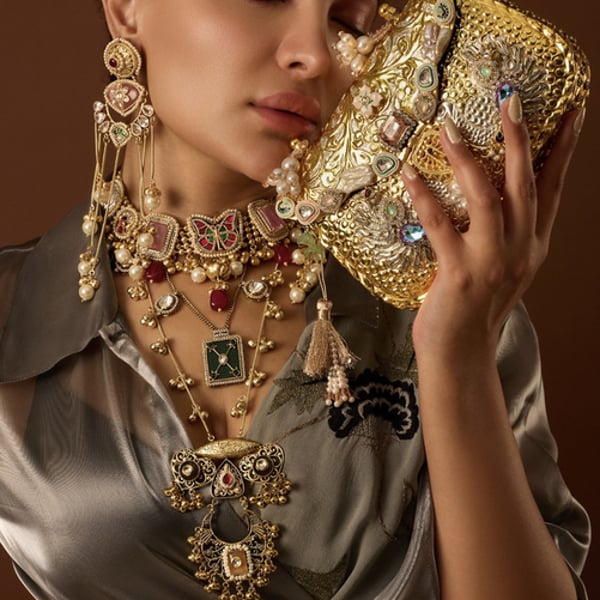
Hints of Ladakh’s heritage can be seen in this sculptural evening bag – Puneet Gupta
“For me, Deco Luméaura is an exploration of transformation- of material, of story, of self,” said Puneet Gupta in a press release. “True luxury isn’t perfect; it is intentional. Every piece is crafted to be lived with and passed on.”
The jewellery collection features cocktail rings, bangles, chokers, necklaces, and statement evening bags made in recycled brass and finished with 24 carat gold. The stones used have been kept natural to highlight their imperfect and unique forms and each piece in the collection has been hammered, polished, and engraved by hand.
An eclectic mix of jewels from the collection – Puneet Gupta
Designed to function as wearable art pieces, the colourful jewellery echoes the geometry of Art Deco while incorporating distinctly South Asian imagery such as camels, butterflies, and tassels. Gupta divides his time between his stores in Hyderabad and Delhi and aims to bring Indian artistry to a global audience while crafting a dialogue between designer and artisan.