Connect with us

Business

Hitachi Rail Group CEO Giuseppe Marino is trying to build high-speed rail in the U.S. 

Published

on


​​Good morning. Many CEOs are stepping up to visibly invest in the U.S. right now. Tech leaders were eager to pledge investments at President Trump’s White House dinner last week and I’ve met with a number of global CEOs announcing new commitments to create U.S. jobs.

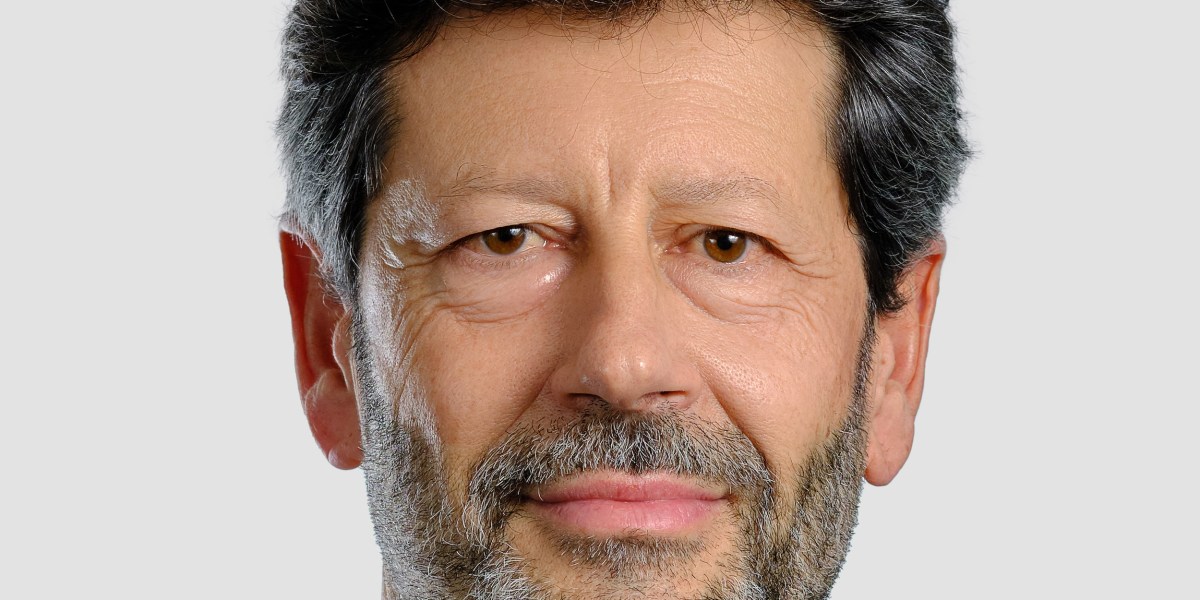
Of course, it’s more interesting to see actual projects than promises that might not come to pass. Last week, I spoke to Giuseppe Marino, Group CEO of Hitachi Rail, who is in Hagerstown, Maryland, today for the official opening of the London-based manufacturer’s $100 million “lighthouse” digital factory and customer experience center.

It’s a smart bet for a company that’s been shifting its focus from building trains to building systems like advanced signaling and a “digital twin” platform, which railway customers can use to optimize their networks. Hitachi Rail accounted for about 12% of Japanese parent Hitachi’s $66.4 billion in revenue last year and almost 8.5% of its $7.8 billion in adjusted EBITDA. It’s a small but growing player in the U.S. rail industry, relative to competitors like Wabtec, Siemens and Alstom, with a particular strength in urban passenger rail, which is facing pressure on the political front even as freight transport is booming. (The Trump Administration has pulled funding for high-speed rail and mass transit, and of course, made it tough for rail manufacturers to import the components they need to build products.)

Still, Marino is optimistic, saying his company sits at the “intersection of energy transition and digital transition” in a period where the value proposition of rail transcends politics.

“The U.S. historically invested more in highway innovation than passenger rail … but I think that’s changing,” says Marino. Among other things, he argues that “rail is essential for sustainable efficiency” and high-speed rail is “revolutionizing Europe.” Adds Marino: “We’re convinced we can bring this technology here.” And, of course, “create American jobs.” As for me, I’m in Park City, Utah, with many of my Fortune colleagues and top tech leaders for Fortune Brainstorm Tech, which you can stream here. I’ll be sharing more from our conversations—on stage and off—later this week.

Contact CEO Daily via Diane Brady at diane.brady@fortune.com

Top news

Trump warns companies after Hyundai raid

Following the immigration raid that detained 475 workers from a Hyundai electric car battery plant in Georgia, President Trump called on “all Foreign Companies investing in the United States to please respect our Nation’s Immigration Laws. Your Investments are welcome, and we encourage you to LEGALLY bring your very smart people, with great technical talent, to build World Class products, and we will make it quickly and legally possible for you to do so.” South Korea reached a deal to fly its workers home. 

Trump threatens Chicago with federal troops

Next up: Trump threatened to unleash troops from the newly named Department of War on Chicago, saying “I love the smell of deportations in the morning.” Illinois Governor JB Pritzker responded on X: “The President of the United States is threatening to go to war with an American city. This is not a joke. This is not normal.” 

China trade with U.S. collapses

Exports from China to the U.S. declined 33% in August and imports from the U.S. to China declined 16%, year on year, as Trump’s tariff regime begins to bite, CNBC reports

Analysts: A few key industries are keeping job numbers above water

Apollo Global Management’s Torsten Sløk wrote over the weekend that, according to the latest jobs report, tariff-impacted industries actually experienced negative job growth in August. Mark Zandi, chief economist at Moody’s Analytics, says job growth in total would be zero without a few industries pulling the weight.

Trump sends Hamas a new peace proposal

White House envoy Steve Witkoff has communicated to Hamas the president’s latest attempt to end the war in Gaza. The proposal involves bringing all Israeli hostages home in exchange for the release of up to 3,000 Palestinian prisoners, a ceasefire, and the withdrawal of Israel’s troops from Gaza. “I have warned Hamas about the consequences of not accepting. This is my last warning, there will not be another one!” Trump said on Truth Social. 

The new $1 trillion pay package for Tesla CEO

Tesla’s board unveiled a new pay package for CEO Elon Musk last week that could be worth up to $1 trillion if he hits all of a series of targets. But the goalposts are so hard to achieve that even the lowest targets will be hard for Musk to reach.

The markets

S&P 500 futures were up 0.21% this morning. The index closed down 0.32% in its last trading session. STOXX Europe 600 was up 0.19% in early trading. The U.K.’s FTSE 100 was up 0.17% in early trading. Japan’s Nikkei 225 was up 1.45%. China’s CSI 300 was up 0.16%. The South Korea KOSPI was up 0.45%. India’s Nifty 50 was up 0.49% before the end of the session. Bitcoin declined to $111.6K.

Around the watercooler

What the ousting of Nestlé’s CEO shows about office romance today by Lila MacLellan

Dow futures rise as recession fears grow while Wall Street awaits the one thing that could derail Fed rate cuts by Jason Ma

Silicon Valley’s graying workforce: Gen Z staff cut in half at tech companies as the average age goes up by 5 years by Emma Burleigh

Millennial investor behind Deliveroo, Scale AI and Figma made millions in his 20s—he shares how Gen Z can spot a startup that’ll make them rich too by Orianna Rosa Royle

CEO Daily is compiled and edited by Joey Abrams and Jim Edwards.

This is the web version of CEO Daily, a newsletter of must-read global insights from CEOs and industry leaders. Sign up to get it delivered free to your inbox.


Source link

Continue Reading

Business

Hegseth likens strikes on alleged drug boats to post-9/11 war on terror

Published

on


Defense Secretary Pete Hegseth defended strikes on alleged drug cartel boats during remarks Saturday at the Ronald Reagan Presidential Library, saying President Donald Trump has the power to take military action “as he sees fit” to defend the nation.

Hegseth dismissed criticism of the strikes, which have killed more than 80 people and now face intense scrutiny over concerns that they violated international law. Saying the strikes are justified to protect Americans, Hegseth likened the fight to the war on terror following the Sept. 11, 2001 attacks.

“If you’re working for a designated terrorist organization and you bring drugs to this country in a boat, we will find you and we will sink you. Let there be no doubt about it,” Hegseth said during his keynote address at the Reagan National Defense Forum. “President Trump can and will take decisive military action as he sees fit to defend our nation’s interests. Let no country on earth doubt that for a moment.”

The most recent strike brings the death toll of the campaign to at least 87 people. Lawmakers have sought more answers about the attacks and their legal justification, and whether U.S. forces were ordered to launch a follow-up strike following a September attack even after the Pentagon knew of survivors.

Though Hegseth compared the alleged drug smugglers to Al-Qaida terrorists, experts have noted significant differences between the two foes and the efforts to combat them.

Hegseth’s remarks came after the Trump administration released its new national security strategy, one that paints European allies as weak and aims to reassert America’s dominance in the Western Hemisphere.

During the speech, Hegseth also discussed the need to check China’s rise through strength instead of conflict. He repeated Trump’s vow to resume nuclear testing on an equal basis as China and Russia — a goal that has alarmed many nuclear arms experts. China and Russia haven’t conducted explosive tests in decades, though the Kremlin said it would follow the U.S. if Trump restarted tests.

The speech was delivered at the Reagan National Defense Forum at the Ronald Reagan Presidential Foundation and Institute in California, an event which brings together top national security experts from around the country. Hegseth used the visit to argue that Trump is Reagan’s “true and rightful heir” when it comes to muscular foreign policy.

By contrast, Hegseth criticized Republican leaders in the years since Reagan for supporting wars in the Middle East and democracy-building efforts that didn’t work. He also blasted those who have argued that climate change poses serious challenges to military readiness.

“The war department will not be distracted by democracy building, interventionism, undefined wars, regime change, climate change, woke moralizing and feckless nation building,” he said.


Source link

Continue Reading

Business

US debt crisis: Most likely fix is severe austerity triggered by a fiscal calamity

Published

on


One way or another, U.S. debt will stop expanding unsustainably, but the most likely outcome is also among the most painful, according to Jeffrey Frankel, a Harvard professor and former member of President Bill Clinton’s Council of Economic Advisers.

Publicly held debt is already at 99% of GDP and is on track to hit 107% by 2029, breaking the record set after the end of World War II. Debt service alone is more than $11 billion a week, or 15% of federal spending in the current fiscal year.

In a Project Syndicate op-ed last week, Frankel went down the list of possible debt solutions: faster economic growth, lower interest rates, default, inflation, financial repression, and fiscal austerity. 

While faster growth is the most appealing option, it’s not coming to the rescue due to the shrinking labor force, he said. AI will boost productivity, but not as much as would be needed to rein in U.S. debt.

Frankel also said the previous era of low rates was a historic anomaly that’s not coming back, and default isn’t plausible given already-growing doubts about Treasury bonds as a safe asset, especially after President Donald Trump’s “Liberation Day” tariff shocker.

Relying on inflation to shrink the real value of U.S. debt would be just as bad as a default, and financial repression would require the federal government to essentially force banks to buy bonds with artificially low yields, he explained.

“There is one possibility left: severe fiscal austerity,” Frankel added.

How severe? A sustainable U.S. debt trajectory would entail elimination of nearly all defense spending or almost all non-defense discretionary outlays, he estimated.

For the foreseeable future, Democrats are unlikely to slash top programs, while Republicans are likely to use any fiscal breathing room to push for more tax cuts, Frankel said.

“Eventually, in the unforeseeable future, austerity may be the most likely of the six possible outcomes,” he warned. “Unfortunately, it will probably come only after a severe fiscal crisis. The longer it takes for that reckoning to arrive, the more radical the adjustment will need to be.”

The austerity forecast echoes an earlier note from Oxford Economics, which said the expected insolvency of the Social Security and Medicare trust funds by 2034 will serve as a catalyst for fiscal reform.

In Oxford’s view, lawmakers will seek to prevent a fiscal crisis in the form of a precipitous drop in demand for Treasury bonds, sending rates soaring.

But that’s only after lawmakers try to take the more politically expedient path by allowing Social Security and Medicare to tap general revenue that funds other parts of the federal government.

“However, unfavorable fiscal news of this sort could trigger a negative reaction in the US bond market, which would view this as a capitulation on one of the last major political openings for reforms,” Bernard Yaros, lead U.S. economist at Oxford Economics, wrote. “A sharp upward repricing of the term premium for longer-dated bonds could force Congress back into a reform mindset.”


Source link

Continue Reading

Business

The $124 trillion Great Wealth Transfer is intensifying as inheritance jumps to a new record

Published

on


Nearly $300 billion was inherited this year as the Great Wealth Transfer picks up speed, showering family members with immense windfalls.

According to the latest UBS Billionaire Ambitions Report, 91 heirs inherited a record-high $297.8 billion in 2025, up 36% from a year ago despite fewer inheritors.

“These heirs are proof of a multi-year wealth transfer that’s intensifying,” Benjamin Cavalli, head of Strategic Clients & Global Connectivity at UBS Global Wealth Management, said in the report.

Western Europe led the way with 48 individuals inheriting $149.5 billion. That includes 15 members of two “German pharmaceutical families,” with the youngest just 19 years old and the oldest at 94.

Meanwhile, 18 heirs in North America got $86.5 billion, and 11 in South East Asia received $24.7 billion, UBS said.

This year’s wealth transfer lifted the number of multi-generational billionaires to 860, who have total assets of $4.7 trillion, up from 805 with $4.2 trillion in 2024.

Wealth management firm Cerulli Associates estimated last year that $124 trillion worldwide will be handed over through 2048, dubbing it the Great Wealth Transfer. More than half of that amount will come from high-net-worth and ultra-high-net-worth people.

Among billionaires, UBS expects they will likely transfer about $6.9 trillion by 2040, with at least $5.9 trillion of that being passed to children, either directly or indirectly.

While the Great Wealth Transfer appears to be accelerating, it may not turn into a sudden flood. Tim Gerend, CEO of financial planning giant Northwestern Mutual, told Fortune’s Amanda Gerut recently that it will unfold more gradually and with greater complexity

“I think the wealth transfer isn’t going to be just a big bang,” he said. “It’s not like, we just passed peak age 65 and now all the money is going to move.”

Of course, millennials and Gen Zers with rich relatives aren’t the only ones who sat to reap billions. More entrepreneurs also joined the ranks of the super rich.

In 2025, 196 self-made billionaires were newly minted with total wealth of $386.5 billion. That trails only the record year of 2021 and is up from last year, which saw 161 self-made individuals with assets of $305.6 billion.

But despite the hype over the AI boom and startups with astronomical valuations, some of the new U.S. billionaires come from a range of industries.

UBS highlighted Ben Lamm, cofounder of genetics and bioscience company Colossal; Michael Dorrell, cofounder and CEO of infrastructure investment firm Stonepeak; as well as Bob Pender and Mike Sabel, cofounders of LNG exporter Venture Global.

“A fresh generation of billionaires is steadily emerging,” UBS said. “In a highly uncertain time for geopolitics and economics, entrepreneurs are innovating at scale across a range of sectors and markets.”


Source link

Continue Reading

Trending

Copyright © Miami Select.