
Politics
Highland Towers’ $600,000 lesson in Tallahassee politics
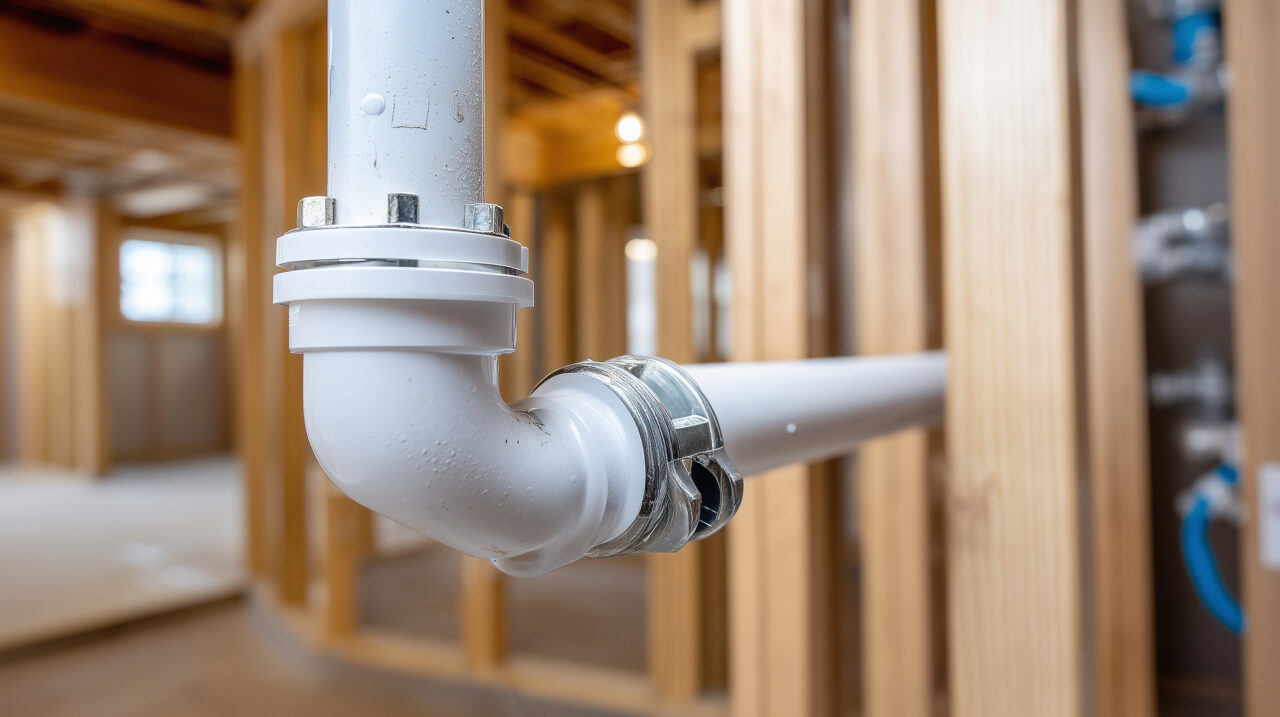
In Highland Beach — in the districts of Sen. Lori Berman and Rep. Peggy Gossett-Seidman — retirees at Highland Towers believed they were approving a complete vertical-drainage-stack rehabilitation.
It cost about $100,000.
Today, they are confronted with a potential $600,000 expense to reverse and remedy the contractor’s non-compliant work.
For seniors living on fixed incomes, this is not just a line item; it represents their life savings.
The installation at Highland Towers was carried out by Blue Works, a PermLiner Industry-certified contractor, using what was represented as cured-in-place pipe (CIPP). The work was not permitted, as required by the Building Code. In their contract, the work was described as compliant with the Building Code and the manufacturer’s specifications. The board relied on the processes and the professionals involved.
Then the system began to fail.
According to correspondence from the manufacturer’s counsel, the warranty claim was denied because the liner was allegedly installed using a “non-code-compliant GAP method,” leading to deterioration and failures at branch connections.
The manufacturer’s position is clear: the installation did not meet the required standards, and the warranty does not apply.
Now Highland Towers residents — not the installer, not the manufacturer — are left with the bill.
“We trusted that if something is called code-compliant, it actually meets the code,” said the Highland Towers Board members. “Our residents are seniors. They cannot absorb an additional $600,000 assessment. We feel like the system protected industry interests instead of homeowners.”

He is not wrong.
ASTM defines CIPP material installation as the placement of a single, continuous liner inside an existing pipe. If the liner is not continuous, ASTM does not consider it a compliant CIPP installation.
A clarification to make that requirement explicit in Florida’s plumbing code — Modification P11834 — came before the Florida Building Commission in December 2025.
It had support from:
— The Florida Plumbing Technical Advisory Committee
— Building officials from Palm Beach County
— Miami-Dade County representatives
— BOAF, Building Officials Association of Florida
— Representatives from multiple Condominium Associations
— Plumbing contractors who testified that continuity is fundamental to ASTM-compliant CIPP
Every plumbing contractor on the Commission supported clarifying the requirement.
And yet the clarification was denied.
Who opposed it?
Representatives of:
— The Florida Home Builders Association (FHBA)
— The Florida Concrete Coalition (FCC)
— The Florida Apartment Association (FAA)
—NuFlow Technologies
— Pipe Restoration Solutions
— Joanne Carroll, representing Subtegic Group, Inc.
— Kari Hebrank, Senior Government Consultant at Carlton Fields
— Other industry advocates
They urged the Commission to deny the modification.
The result? The ambiguity remains in Florida law.
And Highland Towers residents are paying for that ambiguity.
This is not an attack on innovation. Contractors are free to use compliant and approved alternative repair methods. But if a CIPP installation method is segmented or gapped, it should not be marketed as an ASTM-compliant CIPP installation.
The Florida Plumbing TAC supported that clarification. Building officials supported it. Local governments supported it.
It was blocked.
Now the Legislature is moving major construction and permitting reform bills — including SB 1234 and HB 803 — that address contractor oversight and building standards.
Those bills are broad enough to include a simple statutory sentence: If you call it a compliant CIPP, it must be continuous.
If FHBA and its lobbyists had allowed that clarification to stand, Highland Towers might not be in this position.
If NuFlow had not opposed the clarification, the standard might already be clear in Florida law.
Instead, retirees in Palm Beach County are facing six-figure special assessments.
“We’re asking Sen. Berman, Rep. Gossett-Seidman, and legislative leadership to step up,” the Highland Towers owners said. “Industry lobbyists had their say. Now it’s time for homeowners to be protected.”
This Session, the Legislature has the power to close the loophole.
If it fails to act, Highland Towers will not be the last condominium to discover that “code-compliant” depends on who has the stronger lobbyist in the room.
Highland Towers paid $100,000.
They now face an ADDITIONAL $600,000 cost.
And the difference is not engineering.
It’s politics.