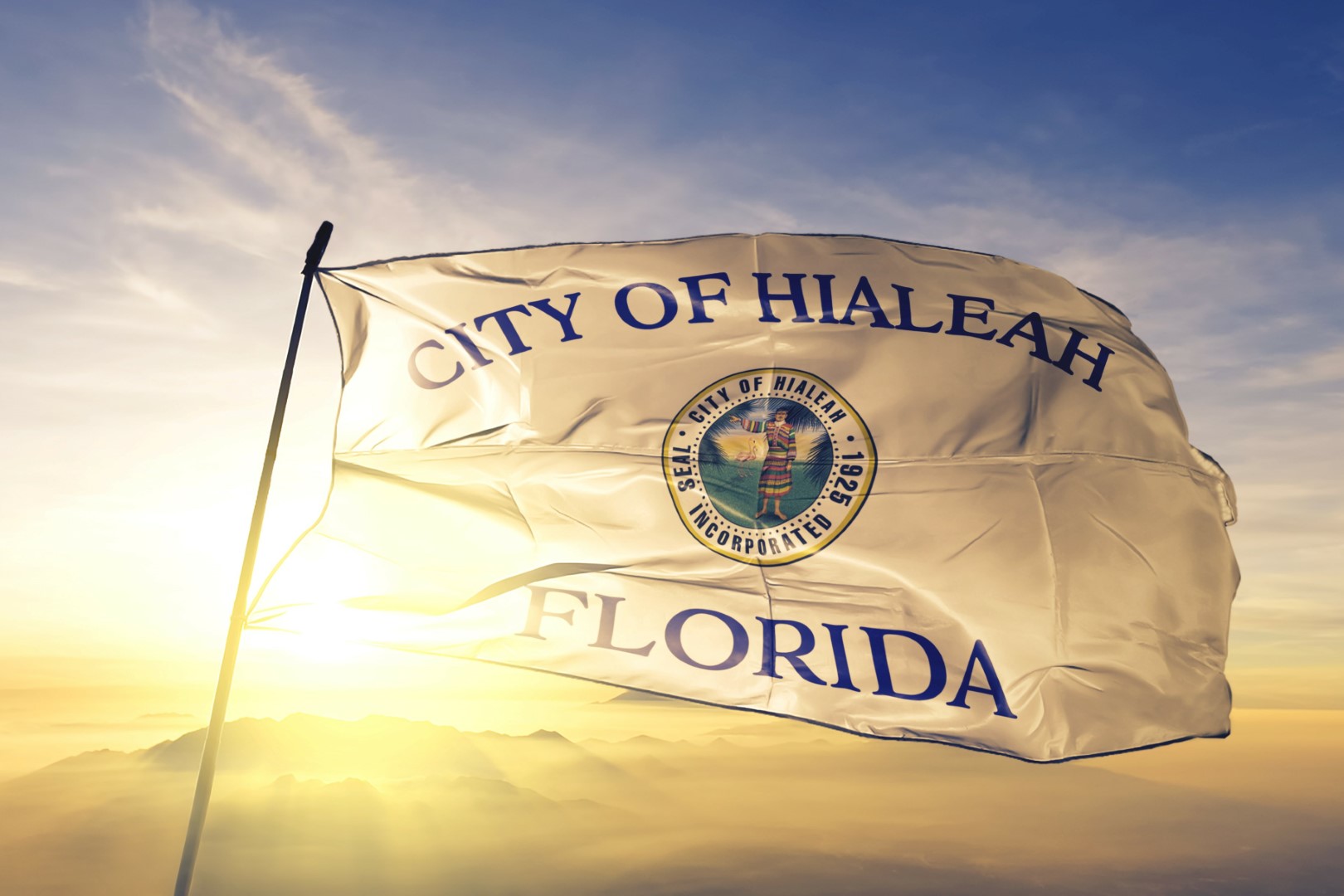
Hialeah has become the first municipality in Florida to effectively eliminate property taxes for qualifying seniors, sending rebate checks to thousands of households under a newly approved city program.
City leaders say the initiative — approved by the Hialeah Council last week — will remove the city’s portion of property taxes for seniors who meet income and homestead requirements. The program will send rebate checks averaging about $539 to eligible residents, offsetting what they paid in municipal property taxes.
Mayor Bryan Calvo called the move a local solution to an issue many officials previously said could only be addressed by the state.
“For years, seniors were told it couldn’t be done. They were told the only solution was to go to Tallahassee, to wait on legislation, to accept that relief was out of reach. But we didn’t accept that answer. We found a way,” said Calvo, who made history in November by becoming the youngest person ever elected Hialeah Mayor.
Now, he’s celebrating a taxation overhaul to help the city’s oldest residents.
“This is proof that local government can find solutions when others say it can’t be done,” he said.
The program is expected to provide relief to about 6,635 families — roughly 1 in 5 households in the city — according to the Mayor’s Office.
Eligible residents must be 65 or older, earn no more than $37,694 annually and qualify for Florida’s Homestead Exemption.
Qualified homeowners will automatically receive checks by the end of March, city officials said.
City leaders say the $1.2 million initiative is funded through internal savings rather than tax increases or service cuts.
By making pension payments early, Hialeah reduced projected interest costs by roughly $1.2 million, which the city redirected to the rebate program.
The Mayor’s Office said other municipalities could follow Hialeah’s example, arguing it demonstrates how local governments can deliver targeted tax relief without relying on state mandates.
Some legal observers say programs like Hialeah’s could face challenges if opponents argue they amount to using property tax revenues — known as ad valorem taxes — to benefit a narrow group of residents. Former municipal lawyer Jose Smith told the Miami Herald after the proposal cleared a first reading last month that Florida law generally bars local governments from directing ad valorem funds to specific individuals unless the spending clearly serves a broader public purpose.
Supporters of the program countered that the rebates come from the city’s general fund, which pools revenue from multiple sources, and therefore constitute a permissible budgetary appropriation rather than a new property tax exemption.
Hialeah’s move comes as Gov. Ron DeSantis and lawmakers in Tallahassee weigh sweeping changes to Florida’s property tax system.
Last month, the House Republicans pushed through a proposal (HJR 203) that would ask voters whether to eliminate most taxes on homesteaded properties over 10 years, beginning in 2027, exempting them from nearly all ad valorem levies except those for school districts, while prohibiting local governments from cutting funding for police, firefighters and other first responders below current levels.
Supporters have described the measure — which, if passed by the Legislature and not vetoed by the Governor, would require 60% voter approval on this year’s Midterm ballot — as one of the most aggressive property tax reform proposals in the country.
Critics warn it could destabilize local government budgets.
Another proposed constitutional amendment (HJR 205) by Miami Republican Rep. Juan Porras contemplates changes similar to those enacted in Hialeah, seeking to exempt homes owned and occupied by seniors from all state property levies except School District taxes.
The measure, which Porras described as a more targeted approach with less fiscal impact than seven other proposals House lawmakers proffered this Session, cleared two of the three Committees to which it was referred on party-line votes, but ultimately did not make it to the House floor.