French luxury brand Hermes has convinced a U.S. judge to dismiss for a second time a lawsuit alleging it violates antitrust law by forcing buyers to spend thousands of dollars on its products before they can purchase one of the fashion company’s famed Birkin handbags.
U.S. District Judge James Donato in San Francisco on Wednesday rejected claims by three Hermes shoppers in California that the company was suppressing competition.
“It may be, as plaintiffs suggest, that Hermes reserves the Birkin bag for its highest-paying customers, but that in itself is not an antitrust violation,” Donato wrote in his order.
The judge dismissed the proposed class action with prejudice, which means it cannot be refiled.
Hermes, its lawyers and attorneys for the plaintiffs did not immediately respond to requests for comment.
The lawsuit, filed last year, claimed Hermes violated U.S. antitrust law by “tying” or restricting purchases of its Birkin bags to customers with a sufficient sales history with the company.
The consumers called the retail price of a Birkin bag an illusion that “masked a hidden lottery system that forces consumers to purchase substantial amounts of Hermes ancillary products to ‘qualify’ for the mere opportunity to buy a Birkin.”
Hermes and its sales staff “know that many of the people they induce to buy ancillary products will not in fact get a Birkin bag,” the lawsuit said.
In seeking dismissal, Hermes told Donato that sales of Birkin bags, which are handmade and can cost thousands of dollars, take place in a competitive market.
Donato at a hearing last year cast doubt on the claims made by the plaintiffs before he dismissed an earlier version of the lawsuit. The judge told the lawyers for the plaintiffs that if Hermes “chooses to make five Birkin bags a year and charge a million to them, it can do that.”
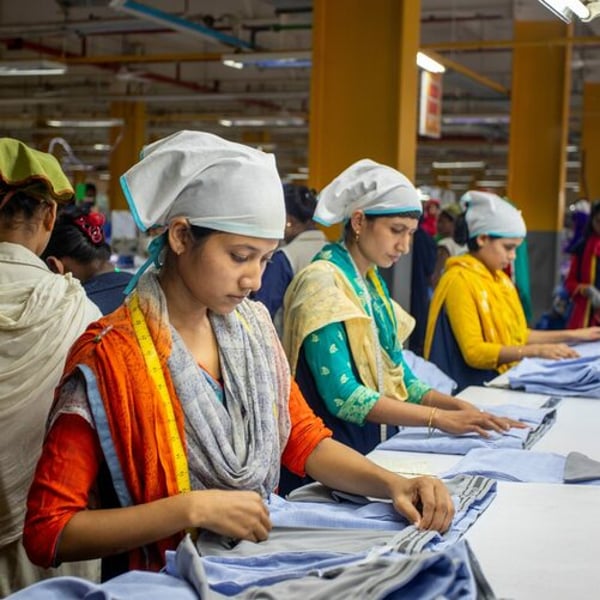
Clothes destined for Europe could soon require digital passports to prove their green credentials, opening a new era of transparency for the world’s $1.7-trillion fashion industry.
Digital product passports could transform the textile industry in Bangladesh – Shutterstock
Consumers will be able to scan QR codes or electronic tags to see the garments’ digital product passports (DPPs) and check if a fashion brand’s green claims are true. The passports will tell consumers what the clothes are made of, how much energy, water and chemicals were used to make them, and who took part in each stage of their production.
Textile suppliers from Bangladesh, the world’s second largest apparel exporter, may need to implement an initial version of the passport as early as 2027, according to analysis by the European Parliamentary Research Service.
“As consumers place a higher premium on sustainability and transparency, the digital product passport could be a key tool to provide granular records about the environmental footprint of each piece of cloth- starting from the cotton field to finished garment,” said Asif Ibrahim, vice chairman of the Dhaka-based apparel manufacturing company Newage Group of Industries. But Ibrahim said smaller manufacturers were far from ready to fulfil the stringent, new European Union (EU) needs, which aim to stop manufacturers overclaiming their green credentials.
From payroll information to material certifications, fashion makers already provide reams of data about labour and environmental standards to meet buyers’ requirements and audits. Yet a 2023 report by the British-based NGO Greenpeace said some brands and suppliers had misled consumers- for instance highlighting their recycling record, even if most of the ‘recycled’ fibre came from plastic bottles not textile scraps.
“Providing authentic and traceable data from across the supply chain is key to stop the problem of greenwashing,” said Rezwan Ahmed, CEO of Aus Bangla Jutex Ltd, a company producing bags, caps and aprons from recycled and organic cotton.
Bangladeshi suppliers have already started working with technology companies to get ready for the changes. Ahmed has partnered with Aware, a Dutch firm working with several fashion suppliers, using decentralised blockchain to record relevant data as fabric becomes a finished garment.
A manufacturer inputs key pieces of data- perhaps yarn count, water consumption or colour- and Aware’s blockchain-based platform then generates a QR code for consumers. “The manufacturers will have control over what they disclose to their brands and consumers- as we want to give the manufacturers ownership of data,” said Md. Muyeed Hasan, Bangladesh country manager at Aware.
Cotton ginners, washers and dye factories, as well as the makers of finished garments, will all upload any relevant data and certificates to their digital profiles, then must add details about each batch of production in real time. Claims about energy and water usage will be verified by third parties, he told the Thomson Reuters Foundation.
The passport may require Bangladesh’s smaller garment makers to upgrade their hardware and software capacity as well as how they manage their data, said Ibrahim from the Newage Group. Smaller manufacturers make up a large share of Bangladesh’s roughly 3,320 export-oriented apparel factories, according to Mapped in Bangladesh, a project developed by BRAC University in the Bangladeshi capital.
British-based DigiProdPass has partnered with Bangladesh’s garment manufacturers’ association BGMEA to help smaller producers meet the new passport requirements. Salauddin Sohag, managing director of DigiProdPass, said his company is rolling out pilot studies and plans to train smaller businesses to help them adapt.
“Suppliers will need support from global fashion brands and development organisations to upgrade their capacity- while the government should incentivise the early adopters,” said Ibrahim.
Fine jewellery brand Senco Gold & Diamonds has expanded its men’s offering and launched new brand ‘Aham,’ designed to cater to modern Indian grooms with a range of gold, diamond, and platinum options.
A look from Senco Gold & Diamonds’ new brand Aham – Senco Gold & Diamonds – Facebook
“Aham draws inspiration from the evolving equal relationships of modern Indian couples where the groom’s style is now as significant as the bride’s,” said Senco Gold & Diamonds’ director and head of marketing and designs Joita Sen in a press release. “What we’ve seen in most Indian weddings so far is the groom looking on indulgently as his better half glitters in her wedding jewellery. With Aham, we wanted to change that narrative and have the couple dazzle equally in their Senco adornments! Each piece of this collection allows the groom the freedom to express his personal style, most naturally and effortlessly.”
Now available in Senco Gold & Diamonds’ pan-India brick-and-mortar stores, online, and on the Senco shopping app, Aham’s ‘Wedding Season Collection’ presents a contemporary take on traditional wedding jewellery. The label’s maiden collection features over 800 designs including kadas, platinum wristwear, diamond-set rings, and more minimalist cufflinks, along with a selection of fusion pieces in two-tone styles.
Senco Gold & Diamonds’ parent company Senco Gold Limited was incorporated in Kolkata in 1994, according to its website. The business counts over 175 stores in India.
Gucci owner Kering and private equity firm Ardian said on Tuesday they had completed a joint venture agreement for a New York property deal valued at $900 million.
Kering’s brands include Saint Laurent, Gucci, and Balenciaga – Reuters
Under the deal concluded earlier this year, Kering is contributing the property at 715-717 Fifth Avenue in New York to a newly created joint venture with Ardian, the companies said in a joint statement. Ardian will hold a 60% stake in this, with Kering retaining 40% and receiving $690 million in net proceeds.
The transaction is part of Kering’s broader strategy to secure control of high-profile retail locations while also raising cash. In January, Kering said it had transferred three of its Paris real estate assets to a new joint venture with Ardian, freeing up 837 million euros in proceeds.
“Like the investment agreement already signed in Paris, this transaction allows us to secure another long term highly prominent retail location for our houses while enhancing our financial flexibility,” said Kering chief operating officer Jean-Marc Duplaix, commenting on the New York Ardian deal.







 Politics8 years ago