Politics
Here are the Top 10 federal stories impacting Florida in 2025
Published
2 hours agoon
By
May Greene
There’s an old saying in Sunshine State newsrooms when it comes to covering national stories: “There’s always a Florida angle.” This past year showed that, at least for the moment, that angle is from the top.
Political historians may well remember 2025 as the year Florida took over American politics. That’s most clearly illustrated with the return of a certain Mar-a-Lago resident (and all his Florida consultants) to the White House.
Many of the nation’s most important political issues centered around the Sunshine State. From health care issues to sex scandals, Florida was featured in headlines generated by the Oval Office, the Hill and the campaign trail.
Here are the top 10 federal stories in 2025 that impacted Florida:
— No. 1: Trump returns a Florida man

Florida history doesn’t typically occur at below freezing temperatures. But the 20-degree weather served as a fitting backdrop to President Donald Trump’s return to power. The indoor event capped off what Campaign Manager Susie Wiles called the “greatest political comeback in history.” It also marked the first time the oath of office for President was ever administered to a Florida man.
While Trump arrived in Washington in 2017 as an unquestionable Manhattanite, his entire political operation worked from Mar-a-Lago leading into the 2024 election. Not only that, but Sunshine Staters would fill the ranks of his administration, from high-profile posts like Attorney General and Secretary of State to Ambassador positions around the globe.
“Floridians overpopulate the West Wing in a really big way,” said Wiles, whom Trump named as White House Chief of Staff.
The new Trump era would eventually usher a Floridian into power to lead the Republican National Committee, while a Florida area code turned into political capital on K Street.
The arrival of Trump back in the Oval Office arguably served as the biggest political event in the world in 2025. In Florida, it served to elevate and remake the entire political landscape. Elections would be decided by Truth Social posts. Mar-a-Lago memberships would become vital parts of administration résumés. Florida constituencies reshaped international relations.

Florida served as Trump’s Winter White House in his first term. This time, it’s the heartbeat of his presidency.
— No. 2: Looming war with Venezuela

Will World War III have a Caribbean front? Even as Trump and Secretary of State Marco Rubio cast this administration as negotiators of world peace, the most notable foreign policy choices in the last months of 2025 involved the sinking of dozens of boats allegedly running drugs from Venezuela.
The actions, including Defense Secretary Pete Hegseth’s alleged “kill them all” directive regarding vessel occupants, capitalized the attention of Florida’s congressional delegation. That’s little shock, as 49% of Venezuelans in the U.S. call Florida home. That’s part of why Rubio, for years as Florida’s Senator, urged regime change from Venezuelan President Nicolás Maduro and labeled the communist leader a “narcoterrorist.”
Rubio has continued to defend the attacks in his new role as the nation’s top diplomat. “This has been a highly successful mission that’s ongoing and continued,” Rubio told press in December.
Meanwhile, South Florida Republicans served as the most emphatic defenders of the administration’s unilateral actions. House Foreign Affairs Chair Brian Mast, a Stuart Republican, fought against Democratic efforts to limit strikes, saying the cartels manning boats deserved no protection.
“They are kidnapping Americans, extorting families, trafficking women and children, and flooding our towns with fentanyl to maximize death and addiction on American soil,” he said from the floor.
But Democrats from Florida also pushed back on legally questionable actions even as they called for other solutions to Maduro. Florida’s eight congressional Democrats issued a joint release criticizing the end of protections for Venezuelans in the U.S. even amid the saber-rattling. “It is hypocritical to claim Venezuela is safe enough to send back innocent people, while also declaring it dangerous enough that we need to send in troops,” the statement read.
— No. 3: Epstein files explosion and fallout

It’s been five years since Palm Beach billionaire Jeffrey Epstein died by suicide in federal custody. But thanks to his onetime friendly relationship with Trump, the long-delayed release of files pertaining to a sex trafficking investigation became one of the most politically damaging the sitting President ever faced.
Trouble within the administration stirred after Attorney General Pam Bondi in February claimed the “Epstein list” was on her desk and would be released soon. But the supposed release of a first batch of files to right-wing influencers turned out to largely be a retread of old material already in the public domain. Soon, Trump went from campaigning on transparency to deriding the Epstein scandal as a Democratic hoax.
Along the way, Justice Department lawyers would conduct a fresh interview with Epstein girlfriend/accomplice Ghislaine Maxwell in a Tallahassee prison and quickly relocate her to a new facility.
Fast forward through a government shutdown that some blamed on Speaker Mike Johnson’s desire to delay the release of files, the issue became an explosive dividing line between a largely compliant GOP-controlled Congress and the restored-to-power Republican President. Through a bipartisan discharge petition, Congress ultimately voted to demand a full release of all court discovery with minimal redactions.
The complete fallout for Trump may continue to unfold. But heading into the Christmas holiday, newly published materials caused further headaches for Trump even in the final days of 2025. Among the latest tranche of documents were records Trump had reportedly flown on Epstein’s private jet multiple times in the 1990s, at least once on a flight with only Epstein and a 20-year-old whose name was redacted.
— No. 4: Ashley Moody appointed to Senate

Rubio’s elevation to Secretary of State created a rare political opportunity for Gov. Ron DeSantis to hand-pick a U.S. Senator. He did so in January, when he appointed then-Florida Attorney General Ashley Moody to represent the state in Washington.
At an Orlando press conference announcing the Senate pick, DeSantis said he vetted contenders for months to replace Rubio when the seat opened and promised to name a replacement that could hit the ground running from the start of Trump’s second term. He chose a close political ally, one who first won statewide office in 2018 at the same time DeSantis won his first term as Governor. Moody notably proved to be Florida’s top vote-getter both in that election and when she won re-election in 2022.
The Plant City Republican quickly made clear she intends to stay in the Senate, opening a re-election account for 2026 and quickly aligning herself with U.S. Sen. Rick Scott, now Florida’s senior Senator, and with the Trump agenda.
By March, Trump endorsed Moody’s re-election campaign, largely squelching the opportunity for a Republican Primary challenge. While Democrats have lined up to wage a challenge from the left, Moody over the course of 2025 established herself as a front-runner for next year’s campaign, which will decide who serves the final two years of Rubio’s term.
“I’ll continue to hold the line and NEVER stop fighting to Make America Great Again,” Moody said.
— No. 5: Cory Mills goes from contender to pariah
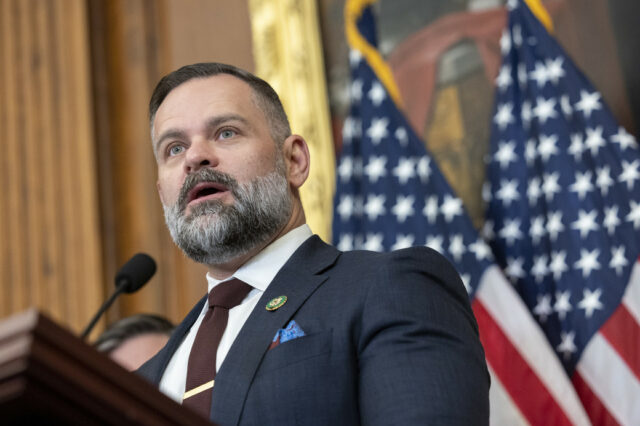
But before Trump backed Moody, chatter persisted that Trump may endorse an alternative for Senate. U.S. Rep. Cory Mills made known early that he would like a move to the upper chamber. “You can probably guarantee my hat is going to be thrown in the ring,” he told press at a Republican meeting in January.
Those ambitions, however, predated a series of personal scandals that put his electability to his own House seat in jeopardy. While a House Ethics investigation from last year lingers, the future for Mills seemed immediately hazy after a live-in girlfriend of the married Congressman reported a domestic assault to police. Ultimately, Sarah Raviani dropped her accusation and that investigation quietly died.
The reports prompted another live-in girlfriend in Florida to dump him. Months later, Lindsey Langston, a reigning Miss United States and Columbia County Republican Committeewoman, obtained a restraining order after turning over texts to law enforcement showing threats from Mills to release intimate images to her future romantic interests.
Soon, U.S. Reps. Kat Cammack and Anna Paulina Luna, among other Trump-aligned Republican Congresswomen, were calling for Mills’ censure and asserting he shouldn’t seek re-election.
Indeed, more Republicans openly fret that in an already challenging Midterm cycle for Republicans, Democrats may successfully unseat Mills, if GOP opponents can’t beat them to it.
— No. 6: Sheila Cherfilus-McCormick indicted
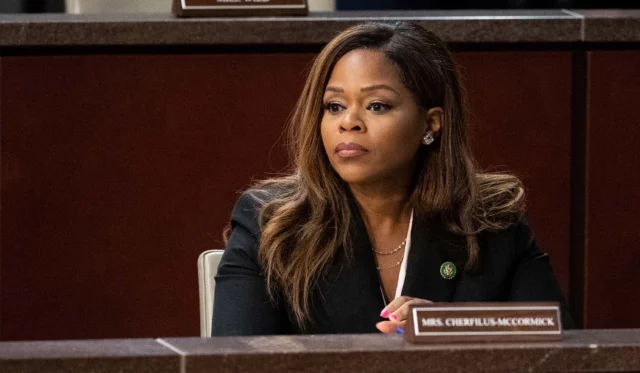
Questions surrounded U.S. Rep. Sheila Cherfilus-McCormick’s rapid accumulation of personal wealth almost immediately after her 2022 Special Election win for a seat in Congress. Years of scrutiny and revelations resulted in November in a federal indictment of the Miramar Democrat, with the Justice Department alleging she stole some $5 million in pandemic emergency funding to support her campaign.
The indictment alleges that Cherfilus-McCormick and her brother, Edwin Cherfilus, secured funding intended for a COVID vaccine distribution program. But when overpayments were made, she routed the spending through several accounts that later donated the funds as campaign contributions.
Should Cherfilus-McCormick be found guilty of all counts in the indictment, the 46-year-old could face up to 53 years in prison, according to the Justice Department. The nature of the allegations prompted U.S. Rep. Greg Steube, a Sarasota Republican, to prepare a resolution to expel his colleague from Congress, though he has set the measure aside for a period to give her time to simply resign.
But to date, Cherfilus-McCormick has publicly maintained her innocence, even as Democratic leaders in her caucus strip her of subcommittee Chair posts and Democrats at home increasingly clamor for her to step down.
— No. 7: Redistricting reaches Florida

Red states and blue states alike heated up a redistricting cold war to redraw lines ahead of the 2026 Midterms. In August, Florida House Speaker Daniel Perez said Florida will join the arms race as well.
The Miami Republican pointed to the Florida Supreme Court’s July ruling upholding Florida’s current congressional map. That decision not only left in place lines designed and signed by DeSantis in 2022, but opened questions about whether any districts drawn with race as a motivating factor should remain.
Perez in September appointed members of a select committee, being chaired by Rep. Mike Redondo, a Miami Republican in line for Speaker himself in 2030.
But while the committee met multiple times since then, no cartography has emerged to date. Moreover, there remain questions about timing and tension, considering the frayed relationship between the Speaker and Governor, not to mention lower-profile conflict with Senate President Ben Albritton.
In December, Albritton, a Wauchula Republican, issued a memo making clear he’s in no rush to work on a mid-decade redraw. Both he and DeSantis point to a still undecided redistricting case in front of the U.S. Supreme Court, suggesting lines may well wait until a Special Session in Spring. But forces in Washington, most notably Trump, seem eager for action sooner.
California, Missouri, North Carolina, Ohio, Texas and Utah all implemented new maps in 2025, and Virginia remains in process. How long will the nation’s third-largest state take? Federal qualifying remains in April — for now.
— No. 8: Trump endorses Donalds

Even before U.S. Rep. Byron Donalds formally launched a campaign for Governor, he secured what may be the most important endorsement in Florida politics right now.
Trump in a Truth Social post all but endorsed the Naples Republican to run as the state’s next chief executive in 2026. A formal endorsement would follow Donalds’ official launch in March, where the Congressman made clear he will make a statewide run instead of running for re-election to the U.S. House.
“My plan for Florida is bold and clear,” Donalds said at a rally in Bonita Springs, in the heart of Florida’s 19th Congressional District. He has since raised upward of $40 million, with the campaign declaring itself “the most dominant gubernatorial candidate in Florida history.”
To date, Donalds faces former Florida House Speaker Paul Renner and Azoria CEO James Fishback in a GOP Primary, while Orange County Mayor Jerry Demings and former U.S. Rep. David Jolly compete for the Democratic nomination.
But in federal politics, Donalds’ entry into the state race means at least one vacancy in Florida’s congressional slate. A dozen candidates already filed in 2025 with the Federal Election Commission to succeed Donalds, with others rumored to enter the field. As 2026 begins, the contest remains the only federal office in Florida with no incumbent, once again turning the Southwest Florida district into a hotbed of political activity and spending.
— No. 9: Special Elections in CD 1 and 6
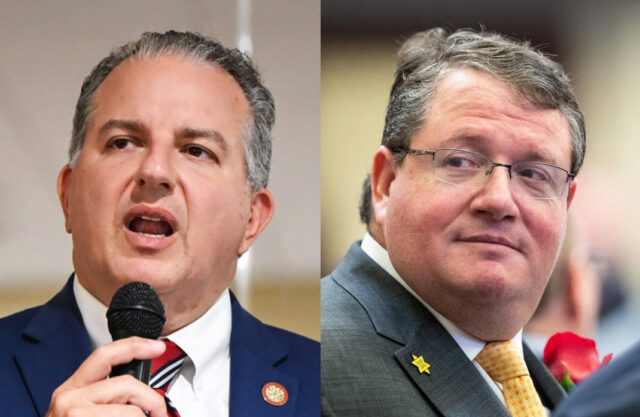
When a new Congress took over at the start of 2025, Florida’s delegation initially saw little turnover from past elections. Only U.S. Rep. Mike Haridopolos, who won an open and safe Republican seat in 2024, joined the incoming freshman class of House members.
But further change was already in the air.
Trump’s various political appointments created openings in Florida’s 1st and 6th Congressional Districts. That prompted Special Elections on the Atlantic Coast and in the Panhandle, contests ultimately won by now-U.S. Reps. Randy Fine and Jimmy Patronis. Both were Republican holds, but the margins would rock the political landscape nationwide.
After some polling had shown Fine at risk of losing a district Trump carried in 2024 by 30 percentage points, the former state Senator beat Democrat Josh Weil by 14 points. Patronis took the same share of the vote over Democrat Gay Valimont in a seat Trump took by 38 points.
By traditional measures, these outcomes were blowouts. But Democrats chopping Trump’s margin in half signaled political risk for Republicans looking toward 2026.
The races also prompted millions in spending by both parties in areas of the state with little exposure to competitive congressional elections. Fine and Patronis individually rode Trump endorsements through Republican Primaries and ultimately to Washington. Both have that political trump card in hand already for 2026.
But the Special Elections also offered Florida Democrats a glimpse at something rarely seen in the post-pandemic area: hope. The results also spurred House Democrats to announce aggressive plans to target four Florida GOP incumbents heading into 2026: U.S. Reps. Laurel Lee, Luna, Mills and María Elvira Salazar.
— No. 10: Florida central in health care debate
Stalled budget talks led this Fall to a record 43-day federal government shutdown. But Democrats ultimately failed to secure their top priority: an extension of pandemic-era tax credits for users of the Affordable Care Act (ACA) health insurance marketplace.
As 2026 begins, no state will feel the impact of that more than Florida.
That became vividly clear in October with the release of Kaiser Family Foundation statistics verifying Florida boasts more ACA users than any other state in the union — about 4.7 million. Moreover, Florida serves as home to the top 10 congressional districts in the nation with the highest enrollment levels. Miami-Dade County’s four congressional districts make up most of the top 5.
“We don’t know how to even approach this in Miami-Dade County,” said U.S. Rep. Frederica Wilson, a Miami-Dade Democrat representing 258,000 individuals on “Obamacare” plans. While most of the high concentration districts are represented by Democrats, U.S. Rep. Mario Díaz-Balart represents the highest number of constituents relying on subsidies. But to date, he remains opposed to the three-year extension of tax credits that Democrats in Congress want.
While a discharge petition from Minority Leader Hakeem Jeffries secured enough signatures to force a vote on such an extension when lawmakers return to Washington in 2026, no Florida Republicans signed on. But U.S. Reps. Carlos Giménez and Salazar, both Miami-Dade Republicans, did jump onto other discharge petitions supporting extensions, signaling potential interest in bringing back subsidies for some period.
You may like
Politics
John Guard says he’s willing to withdraw from consideration as federal Judge to serve on Florida Supreme Court
Published
1 hour agoon
December 29, 2025By
May Greene
Former acting Attorney General John Guard’s bid to serve on the Florida Supreme Court is moving ahead without questions about his role in money moving from a Medicaid settlement to the Hope Florida Foundation.
But that doesn’t mean the issue isn’t affecting his path forward.
Guard interviewed with the Florida Supreme Court Judicial Nominating Commission as one of several candidates to potentially replace Justice Charles T. Canady.
Guard, who is the chief deputy AG for the state, had faced questions over the optics of the unorthodox $10 million appropriation that ultimately was used for political advertising in 2024 before being selected for a U.S. District Court judgeship by President Donald Trump.
The White House reportedly didn’t want a “nasty confirmation fight” while the issue was in suspense, sources said in October while explaining a pause in the nomination moving forward since June.
While Guard said he doesn’t know why his bid has been slow-walked, he is willing to walk away if that helps assure the Florida Supreme Court Judicial Nominating Commission that he wants this job.
“I don’t know why it has not gone through confirmation. It’s not something other than to tell me that they still fully support me and await my confirmation. I don’t have any details of when that will occur,” Guard said.
“My understanding is that the Governor’s Office is going to consider whatever list this Commission produces first, and then proceed to the 2nd DCA (Second District Court of Appeals) list. And so, I have presumed from the beginning that if I’m selected for any of these spots where if my confirmation all of a sudden goes warp speed, whichever occurs first is where I’m going to end up and likely be. If that means that I need to call the White House Counsel’s Office and tell them that I would request the President to withdraw my nomination, that’s what I will do.”
Guard was among those subpoenaed over his role in the Hope Florida scandal. He signed the controversial settlement with Medicaid insurer Centene, but not before privately raising concerns, according to the Miami Herald/Tampa Bay Times, which obtained emails documenting the conversations.
The emails show Guard removed references to his office in drafts of the settlement in a series of back-and-forth conversations over the course of 22 days.
Guard said there was nothing in his background that could embarrass the Gov. Ron DeSantis administration should he ultimately be appointed to replace Canady, who left the court to become a director and a tenured professor at the University of Florida’s Hamilton School for Classical and Civic Education.
Guard also said his first choice was the one he interviewed for Monday.
“I think the best legal job is probably to serve on the Florida Supreme Court. And I say that because you’re the head of the judicial branch. You’re kind of responsible for helping with the legitimacy of our core system and maintaining the rule of law,” Guard said.
“If I were to rank them … I would say Supreme Court Justice, District Court Judge, and District Court of Appeals Judge. But I think between the District Court and the District Court of Appeals, there’s not that much difference,” he added.
Guard also said irate citizens were the biggest problem the judiciary faces, though he said the Florida Supreme Court itself does a “pretty good job” of mitigating the threat.
“I’ve heard from the Chief Justice that threats are up at the Florida Supreme Court. I’ve heard that there are threats at courthouses around the state, and so I think that is probably the biggest kind of threat, which is a threat to the legitimacy and the role of courts,” he said.
Much of the interview focused on Guard’s admiration for the late SCOTUS Justice Antonin Scalia, though Guard did break with the conservative icon on certain First Amendment cases, in which Scalia sided with “more liberal” colleagues.
___
Janelle Irwin Taylor of Florida Politics contributed to this report.
Politics
Donald Trump, Benjamin Netanyahu to meet in Florida at crucial moment for U.S.-backed Gaza ceasefire
Published
5 hours agoon
December 29, 2025By
May Greene
President Donald Trump is scheduled to meet with Israeli Prime Minister Benjamin Netanyahu on Monday, as Washington looks to create fresh momentum for a U.S.-brokered ceasefire in Gaza that could be in danger of stalling out before a complicated second phase.
Trump could use the face-to-face at his Mar-a-Lago estate to try to leverage his strong relationship with Netanyahu and look for ways to speed up the peace process, especially as Israel’s leader has been accused of not pushing his side to move fast enough.
The ceasefire between Israel and Hamas that Trump has championed has mostly held, but progress has slowed recently. Both sides accuse one another of violations, and divisions have emerged among the U.S., Israel and Arab countries about the path forward.
The truce’s first phase began in October, days after the two-year anniversary of the initial Hamas-led attack on Israel that killed around 1,200 people. All but one of the 251 hostages taken then have been released, alive or dead.
Now comes the next, far more complicated part. Trump’s 20-point plan — which was approved by the U.N. Security Council — lays out an ambitious vision for ending Hamas’ rule of Gaza.
The two leaders also could discuss non-Gaza topics, including Iran, whose nuclear capabilities Trump continues to insist were “completely and fully obliterated” following U.S. strikes on its nuclear sites in June.
There are many key facets of the ceasefire’s second phase that Israel’s leader doesn’t support or has even openly opposed, said Mona Yacoubian, director and senior adviser of the Middle East Program at the Center for Strategic and International Studies.
“This is going to be a really tall order, I think, for President Trump to get Netanyahu to agree,” she said.
“How he does that, what kind of pressure he puts on Netanyahu, I think, is going to be important to watch for,” said Yacoubian, who also said the two could exhibit ”a broader clash of approaches to the region.”
Next phase remains complex
If successful, the second phase would see the rebuilding of a demilitarized Gaza under international supervision by a group chaired by Trump and known as the Board of Peace. The Palestinians would form a “technocratic, apolitical” committee to run daily affairs in Gaza, under Board of Peace supervision.
It further calls for normalized relations between Israel and the Arab world, and a possible pathway to Palestinian independence. Then there are thorny logistical and humanitarian questions, including rebuilding war-ravaged Gaza, disarming Hamas and creating a security apparatus called the International Stabilization Force.
The Board of Peace would oversee Gaza’s reconstruction under a two-year, renewable U.N. mandate. Its members had been expected to be named by the end of the year and might even be revealed following Monday’s meeting, but the announcement could be pushed into next month.
Netanyahu was the first foreign leader to meet Trump at the White House in his second term, but this will be their first in-person meeting since Trump went to Israel in October to mark the start of the ceasefire’s initial phase. Netanyahu has been to Mar-a-Lago before, including in July 2024 when Trump was still seeking reelection.
Much remains unsettled
Their latest meeting comes after U.S. Mideast envoy Steve Witkoff and the President’s son in law, Jared Kushner, recently huddled in Florida with officials from Egypt, Qatar and Turkey, which have been mediating the ceasefire.
Two main challenges have complicated moving to the second phase, according to an official who was briefed on those meetings. Israeli officials have been taking a lot of time to vet and approve members of the Palestinian technocratic committee from a list given to them by the mediators, and Israel continues its military strikes.
Trump’s plan also calls for the International Stabilization Force, proposed as a multinational body, to maintain security. But it, too, has yet to be formed. Whether details will be forthcoming after Monday’s meeting is unclear.
A Western diplomat said there is a “huge gulf” between the U.S.-Israeli understanding of the International Stabilization Force’s mandate and that of other major countries in the region, as well as European governments.
All spoke on the condition of anonymity to provide details that haven’t been made public.
The U.S. and Israel want the force to have a “commanding role” in security duties, including disarming Hamas and other militant groups. But countries being courted to contribute troops fear that mandate will make it an “occupation force,” the diplomat said.
Hamas has said it is ready to discuss “freezing or storing” its arsenal of weapons, but insists it has a right to armed resistance as long as Israel occupies Palestinian territory. One U.S. official said a potential plan might be to offer cash incentives in exchange for weapons, echoing a “buy-back” program Witkoff has previously floated.
Questions about Gaza reconstruction
Israeli bombardment and ground operations have transformed neighborhoods in several Gaza cities into rubble-strewn wastelands, with blackened shells of buildings and mounds of debris stretching in all directions.
Egypt, Qatar, Saudi Arabia and Turkey are pressing for a negotiated deal on disarming Hamas, and on an additional Israeli withdrawal from Gaza before moving to next elements of the plan. Those include deployment of the international security force and reconstruction, three Arab officials told The Associated Press.
That appears to run against ideas floated by U.S. officials to quickly start building temporary housing for Palestinians in parts of southern Gaza still controlled by Israeli troops. Three officials said the United Arab Emirates has agreed to fund reconstruction in Gaza, including new communities, although they said discussions are ongoing and plans remain unsettled.
A proposed map created by the U.S. and obtained by the AP shows an area labelled “UAE Temporary Emirates housing complex” inside an Israeli-controlled area of Gaza. The map shows a “U.S. planned community area” surrounding the UAE area.
An Arab official said he was aware of the map, but said it was a suggestion from the U.S. and Israel that was put to the Emiratis and other countries.
The UAE did not respond to multiple requests for comment about whether it has agreed to the plans or to fund the communities. It is not known if the money would be contingent on gestures from Israel and Hamas, such as a commitment to Palestinian statehood or disarmament.
___
Republished with permission of The Associated Press
Politics
10 stories that shaped Jacksonville politics in 2025 … and possibly beyond
Published
6 hours agoon
December 29, 2025By
May Greene
For yet another year, it was hard to nail down what the biggest stories locally were.
In one sense, the scene was static. Jacksonville’s City Council and Mayor continued to spar, but it’s called a strong Mayor government for a reason.
In another sense, we’re in what stock traders call a consolidation period, as plans are laid for 2026’s state elections and 2027’s local vote.
We now have plenty of sample size to deduce that Jacksonville’s current Democratic Mayor likely isn’t politically vulnerable in the way Alvin Brown might have been during equivalent points in his first and only term in City Hall … though there’s still time to change that.
Here are the Top 10 Jacksonville stories of 2025:
— Deegan holds on (No. 1): It’s almost time for prospective 2027 opponents to get in the race to replace Jacksonville Mayor Donna Deegan. Otherwise, they had better reconcile themselves to a full eight years and the reality that they will never be elected to replace her. Deegan weathered a series of storms that were seen as potentially difficult, such as the back-and-forth about General Counsel Michael Fackler and the handgun registry that seemed like such a big deal last Spring but hasn’t led to much. But in the end, who has stood up ahead of 2027? Elections Supervisor Jerry Holland is telling people he’s running, but whether he gets meaningful donor class support remains to be seen. Other Republicans are dipping their toes in the water. But anyone who gets in right now is doing so as a serious underdog, and at a time when indications are that there is little momentum for them.
— Curry complications (No. 2): Former Jacksonville Mayor Lenny Curry didn’t go away after leaving City Hall … and it’s to Deegan’s detriment. Curry, a former Republican Party of Florida Chair, wasn’t thrilled when Ballard Partners lost lobbying contracts when Deegan was elected, and he has stepped up his critiques since. He says he doesn’t want to run for Mayor. But also says he would win if he did run. Deegan and Curry have squabbled over policy issues for more than two years now. Curry took a leading role in advocating for a 1/8 mill property tax cut that the current administration supported. Deegan modified pension reform that Curry pushed through by creating a path for police and fire to enter the Florida Retirement System. If a serious opponent emerges for Deegan, Curry could be a problem. But as of right now, that’s a big if.
— Stadium vindication (No. 3): The Jacksonville Jaguars at this writing have a path to the top seed in the playoffs. While Denver still has pole position despite the Jags going into Mile High and scoring a statement win, the Jaguars won the biggest game of the season on the road and left the Broncos looking as bad as they have all year. In terms of sports, this is the ultimate feel-good story for a city that derives more of its identity from its NFL team than anywhere else south of Green Bay. But its political punch is even bigger. Those who were skeptical about spending money on a stadium renovation and pushing back pension payments to do so look to have lost the argument to those who prioritize the NFL over everything else.
— Wiles’ world (No. 4): The Most Powerful Woman in the World? That’s what President Donald Trump calls her and we close out 2025 not looking to argue with him. There may have been bumps in the road courtesy of Vanity Fair, but the fact is that a local still holds one of the most important political positions anywhere. This would have been the top story perhaps if Jacksonville’s local government had managed to get anything out of this unique, and necessarily temporary, dynamic. But it’s hard to imagine a Democratic Mayor being able to, given the partisan pique that characterizes the entire political process these days.
— School daze (No. 5): The Duval County School Board has become more assertive in recent months. On issues ranging from decisions to close underused schools to asserting the need for its own legal representation, the right-of-center Board has forced locals to think about education in a different way … even those who don’t have students in schools. Individual Board members like Chair Charlotte Joyce have stepped up to defend prerogatives of the panel despite resistance from the City Council. What does this ultimately lead to? At this point, that’s an open question. But it’s one this current permutation of the Board will force.
— Renner’s run (No. 6): He’s not the front-runner in the Governor’s race, but former House Speaker Paul Renner may prove to have staying power. The one-time candidate for the House from Jacksonville’s Westside drew his share of scoffing when he announced his candidacy this year. But his quiet, socially conservative leadership is keeping him in the game without endorsements from Gov. Ron DeSantis (who, when Renner announced his campaign, asked “Governor of what?”) and President Donald Trump, who backs Byron Donalds.
— Go Gators (No. 7): By this time next year, operations should be humming at Jacksonville’s downtown graduate campus for the University of Florida, transforming Lavilla as we know it. Business, health care and engineering degrees will emerge, along with the Florida Semiconductor Institute. A total of $300 million of public and private money has already been committed to the build, and by the end of the decade, we won’t be able to remember what Jacksonville was like without it.
— Nixon’s next move (No. 8): Arguably the most left-wing politician to get elected in Jacksonville history, state Rep. Angie Nixon of House District 13 has not been especially effective in Tallahassee. So she’s exploring going to Washington as a candidate for U.S. Senate, or to the Jacksonville City Council in 2027. She’s been doing a listening tour around the state to figure it out or road test her message. Nature abhors a vacuum, however, and two political vets — former state Sen. Audrey Gibson and former Councilman Reggie Gaffney — are vying for her seat.
— Bowling over (No. 9): Was it a power struggle in the Mayor’s Office? Chief Administrative Officer Karen Bowling was the biggest name to leave the Deegan administration in 2025, and for a time there was a lot of talk. Republicans who hadn’t praised anything in the Mayor’s Office suddenly had plenty of compliments. People closer to the Mayor’s Office said her departure essentially was addition by subtraction, questioning her work ethic. It’s Mike Weinstein’s job now … but aren’t they all in the end?
— Budget compromise (No. 10): Divided government often leads to paralysis, then compromise. A good example of that this year was when the Jacksonville City Council passed its Fiscal Year 2025-26 budget. While conservatives got a 1/4 mill cut on property taxes, the main event of the evening ultimately went against them. Republican Rory Diamond carried through on his proposal to stop city funding for abortions and related services, so-called diversity, equity and inclusion initiatives, and undocumented immigrants, but Democrats and a few Republican members held firm. Ultimately, the spending plan passed without the culture war language.
Former Russian tycoon says Instagram post cost him $9 billion: His bank was sold for 3% of its value
Rob Gronkowski Offers Travis Kelce Retirement Advice
Don’t fixate so much on Fed rates, but the loss of its independence will be punished, BofA CEO says
Trending
-
Politics8 years agoCongress rolls out ‘Better Deal,’ new economic agenda
-
Entertainment8 years agoNew Season 8 Walking Dead trailer flashes forward in time
-
Politics8 years agoPoll: Virginia governor’s race in dead heat
-
Entertainment8 years agoThe final 6 ‘Game of Thrones’ episodes might feel like a full season
-
Politics8 years agoIllinois’ financial crisis could bring the state to a halt
-
Entertainment8 years agoMeet Superman’s grandfather in new trailer for Krypton
-
Business8 years ago6 Stunning new co-working spaces around the globe
-
Tech8 years agoHulu hires Google marketing veteran Kelly Campbell as CMO


