
Politics
Head count — homeward bound — big beautiful — juicing — ivory tower
Charting the future
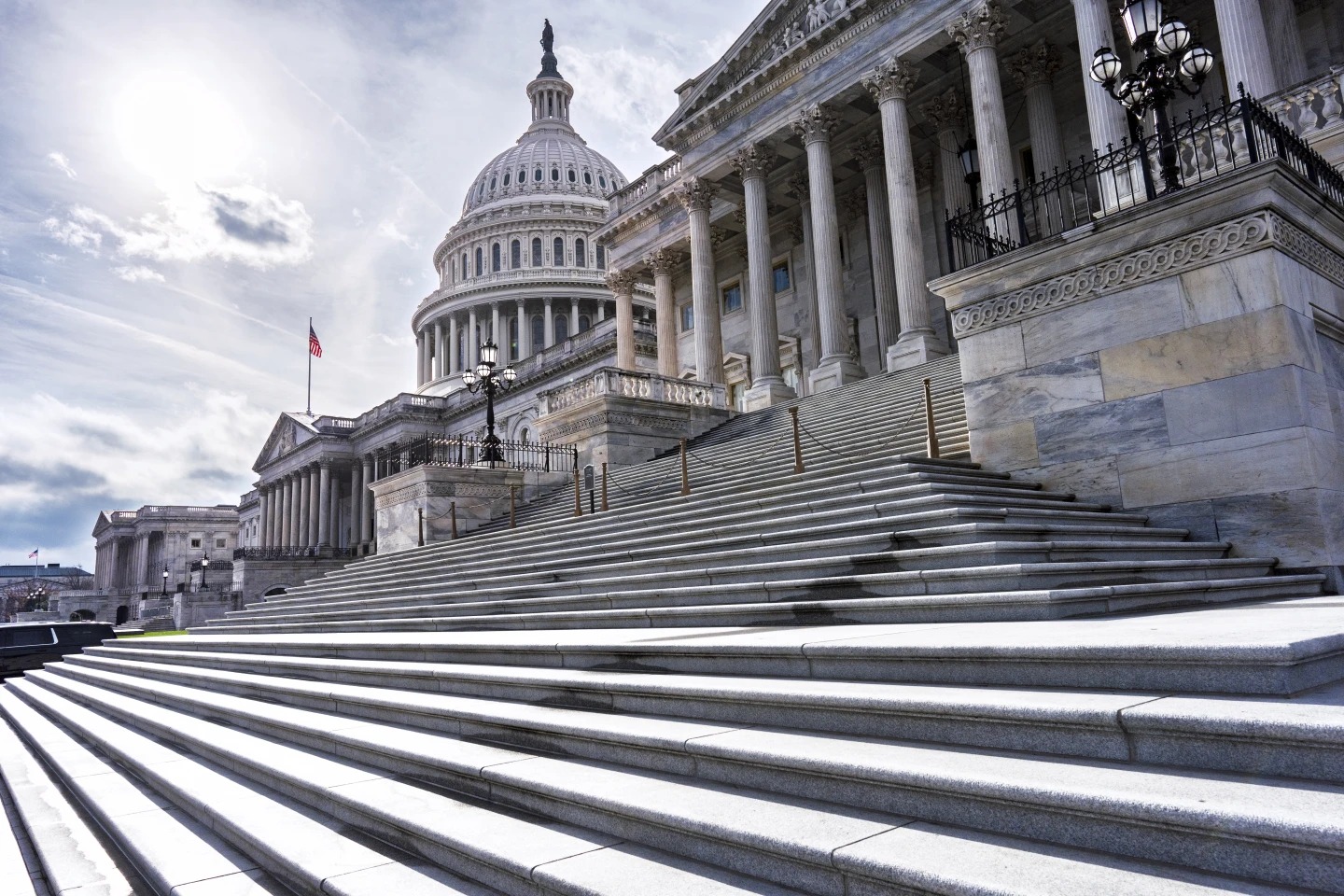
A change in Florida’s district lines may yet be in store for Florida’s congressional delegation this year.
Leadership for the Florida House on Thursday announced the formation of a Select Committee on Congressional Redistricting, which follows weeks of Gov. Ron DeSantis raising the prospect of redrawing Florida’s lines — or even making a play for more U.S. House seats in a new Census.
Florida House Speaker Daniel Perez, in a memo to state lawmakers, said the July ruling by the Florida Supreme Court upholding the current congressional map and calling protections of minority access seats into question warranted a review of the cartography.
“Exploring these questions now, at the mid-decade point, would potentially allow us to seek legal guidance from our Supreme Court without the uncertainty associated with deferring those questions until after the next decennial census and reapportionment,” Perez wrote.
The memo notably came out hours after President Donald Trump said he had ordered the Commerce Department to start a new census. That’s important, as DeSantis for weeks advocated for a new population count that doesn’t include undocumented migrants. The Governor has long argued Florida should have been awarded more House seats after the last census, and growth in the state since the previous census is reason for a review, anyhow.
So, what does this mean for Florida’s congressional delegation? Of note, the Florida high court ruling challenged past decisions that said Florida’s Fair Districts amendment forbade the elimination of a court-drawn seat in north Florida where Black voters controlled the election.
That backed up an argument waged by DeSantis when he pressured the Florida Legislature to approve a map that effectively drove out Black Democratic Rep. Al Lawson from Congress. Lawson lost a subsequent election to Rep. Neal Dunn, a Panama City Republican, in a Republican-leaning and majority-White seat. This also resulted in Republicans picking up four Florida U.S. House seats overall.
Legal challenges, though, left a significant amount of uncertainty hanging over every member of the Florida House delegation about whether the map would change during the decade. That happened in 2015, when a prior makeup of the Florida Supreme Court approved a new map after determining the Florida Legislature had wrongly been influenced by political partisans when it drew lines put in effect in 2012.
Importantly, state justices in the recent ruling never called into question the ban on drawing lines based on partisan motivation. That’s what has clearly motivated mid-decade redistricting efforts already underway in red states like Texas and blue ones like California. In Florida, the Republican Party of Florida welcomed a chance to redraw Florida lines as the Florida Democratic Party savaged the move.
Home again
August recess means lawmakers are back in Florida, meeting with constituents.
In many cases, it means meeting with local leaders and hosting town halls, though fewer than in other years, thanks to cantankerous Midterm Elections on the horizon.
Sen. Rick Scott made multiple stops around the state, including a visit to Jacksonville to encourage hurricane preparation in the Atlantic coast community.

“Families across our beautiful Sunshine State know too well that you cannot be complacent during Hurricane Season. We have seen firsthand how powerful and unpredictable severe weather can be, causing devastation, flooding, high winds and severe storm surge, especially here in the Jacksonville area,” the Naples Republican said in a statement.
“That is why being prepared, and staying prepared throughout the entire season, can make the difference between life or death.”
Rep. Aaron Bean, a Fernandina Beach Republican, joined the Senator for the Northeast Florida visit. With a backdrop of choppy waves behind them at the JAXPORT Cruise Terminal, the federal lawmakers stressed the nonpartisan message of safety.
“Hurricane season isn’t just a date on the calendar — it’s a call to action,” Bean said. “As a state, we know all too well the devastating impact hurricanes can have on our communities. That’s why preparation isn’t optional — it’s essential. By taking proactive steps now, we can help protect lives and reduce the damage these storms may bring.”

Boosting ‘Big Beautiful’
Scott also held a roundtable in Maitland that more pointedly promoted the tax benefits of the recently signed One Big Beautiful Bill, a more partisan priority of President Donald Trump. He stressed the elimination of income tax on tips and overtime.
“As Governor and Senator, my goal has been to keep the American Dream alive so every family can have the same opportunities I did. But after four years of Democrats’ tax-and-spend policies in Washington, that American Dream was pushed further from reach as inflation and interest payments soared, making homeownership and basics like groceries harder to afford. Home ownership is a part of the American Dream and a sign of stability for many families, and I have heard from too many Floridians who want to live that dream that the cost of owning a home is taking a toll on their budgets,” Scott said.
“I have been working closely with President Donald Trump to secure massive tax cuts that help families succeed and keep more of their hard-earned dollars, including No Tax on Tips, No Tax on Overtime and continuing the Trump Tax Cuts, while growing the economy and driving down inflation.”
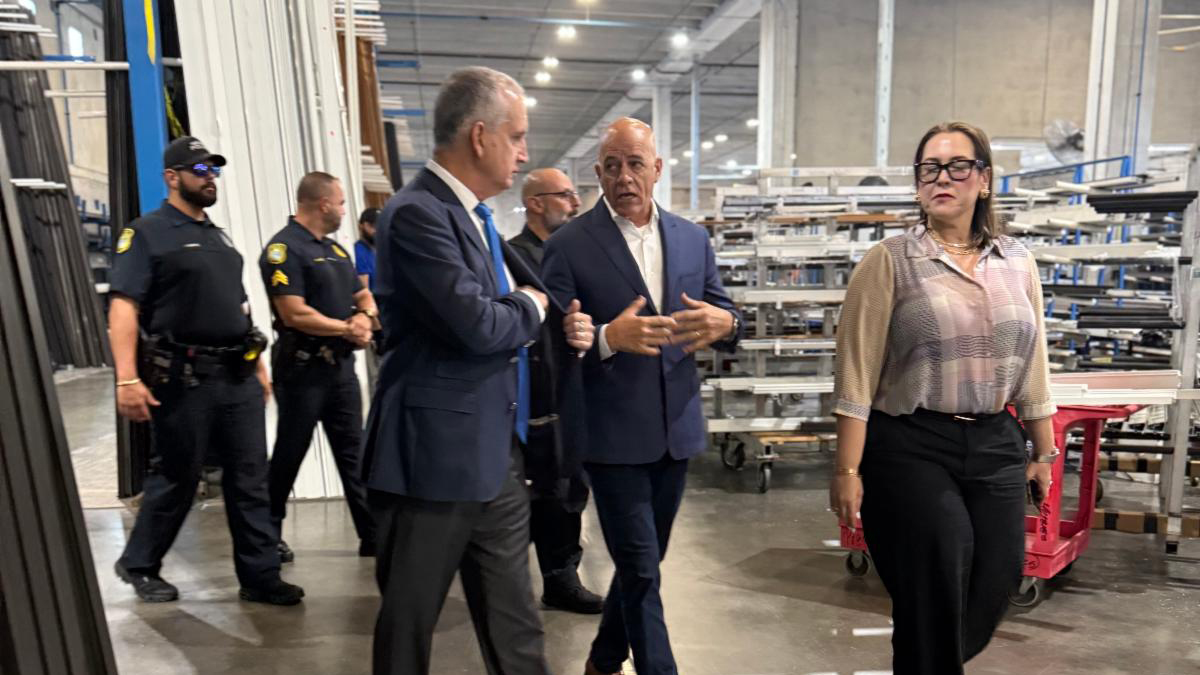
Elsewhere, Rep. Mario Díaz-Balart spent his time in the district touring Mr. Glass Doors & Windows Manufacturing, a local company based in Medley with another factory in Miami Lakes.
“Its top-tier residential and commercial products are featured in landmarks such as Aventura Mall and InterMiami FC’s soccer stadium,” Díaz-Balart said. “CEO Ulises Senaris’ journey from Cuba to building a successful American business is the definition of the American Dream and a testament to American excellence. Every single one of its products bears the label: ‘PROUD TO BE A U.S. MANUFACTURER,’ reflecting its commitment to American-made quality.
The Hialeah Republican touted the benefits for business of the One Big Beautiful Bill as well.
“I was pleased to share how I voted for H.R.1, known as the One Big Beautiful Bill Act, which boosts Made-in-America Manufacturing and supports businesses like Mr. Glass & Windows Manufacturers through provisions like full expensing for research and development, capital investments, such as machinery and equipment, as well as new factories. The United States remains the best place in the world to do business,” Díaz-Balart said.
Brix-it
The Food and Drug Administration (FDA) issued a proposed rule to change what qualifies as “orange juice,” a shift that could significantly impact one of Florida’s most famous industries. Members of the Florida delegation drank up the news.
The proposal centers on the sugar content in orange juice, or what is known as “Brix levels.” Modern citrus has not produced as much sugar as citrus in years past. The FDA wants the measure of sugar content used to identify orange juice to go from 10.5% sugar to 10% “to better align with today’s orange crop,” according to Florida Citrus Mutual.

Sens. Ashley Moody and Scott filed legislation to force such a change.
“Our growers have faced many hardships over the past several years, from devastating storms to citrus greening, and could no longer endure the unnecessary and burdensome regulations that favored foreign growers. I have fought hard to ensure we can provide much-needed relief to Florida growers, and I am thrilled that under President Donald Trump’s administration, we are finally putting American growers first,” said Moody, a Plant City Republican.
“The FDA has proposed a revised rule that will make a HUGE difference for Florida’s citrus growers. Thank you to President Donald Trump, FDA Commissioner Makary, HHS Secretary Kennedy and Secretary of Agriculture Rollins for acting quickly to save an industry in peril and implementing the critical objectives of my Defending Domestic Orange Juice Production Act. That is what real leadership looks like.”
Reps. Scott Franklin, a Lakeland Republican, and Debbie Wasserman Schultz, a Weston Democrat, had pursued the change in the House. Franklin also welcomed the news.
“I’m thrilled to see the FDA support Florida citrus growers by revising the outdated Brix standard,” he said.
“This is a major win for Florida’s iconic industry and a direct result of bipartisan efforts to cut red tape. Updating this long‑standing regulation will give growers needed flexibility to survive and thrive in the face of devastating storms, citrus greening and unfair foreign competition.”

Hacking out bias
Will artificial intelligence go woke at the federal level? Rep. Jimmy Patronis wants to decode the possibility early.
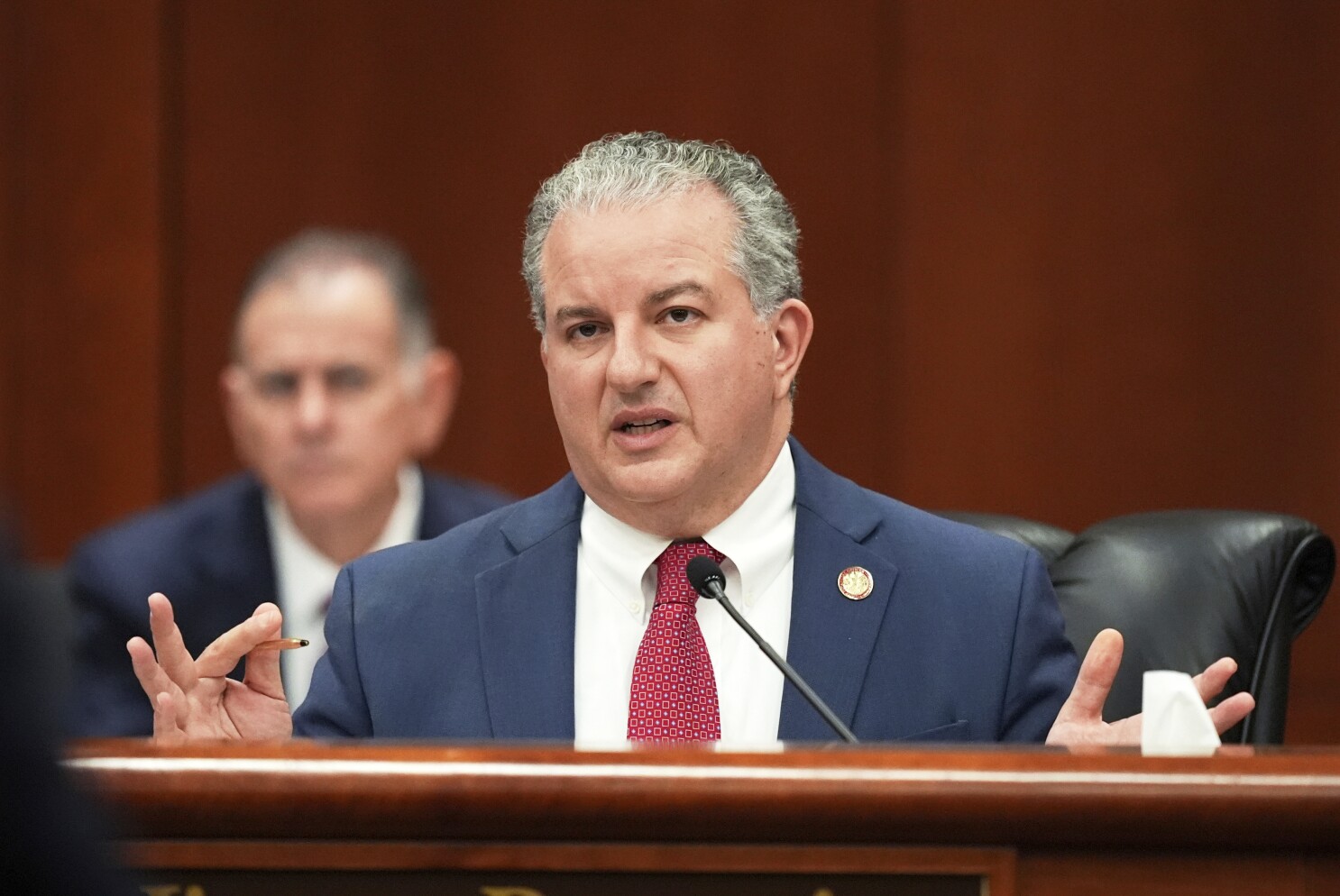
The Fort Walton Beach Republican filed legislation (HR 4873) following up on a Trump executive order insisting that any AI systems employed by federal agencies be ideologically neutral.
“The President and his team have delivered a smart executive order that instructs federal agencies to only leverage AI tools that speak the truth. Surprising to no one, there are examples after examples of AI tools going off the rails because the foundational programming tilts politically left,” Patronis said.
“If the federal government is going to use and promote these tools, then AI designers either need to align their programs to remove left-wing biases from their algorithms, or they need to get out of the business of federal contracting. This EO is going to both strengthen American AI technology and protect taxpayer dollars.”
There have also recently been examples of AI, directed to focus on “truth seeking,” resulting in far-right actions as well.
But for Patronis’ part, his most significant concern is ensuring the federal government only works with AI vendors that don’t want the systems to “promote progressive ideology like DEI, critical race theory, or transgenderism.”
American standards
Many of the metrics used in logistics around the globe, from railroad sizes to shipping containers, were developed based on American standards. Rep. Daniel Webster said it’s crucial in this global economy for that to continue.
The Clermont Republican just introduced the Utilize Standards for All (USA) Act, which would direct the National Institute of Standards and Technology to promote voluntary consensus-based standards. The bill envisions a private-sector-led process partnered with the government.
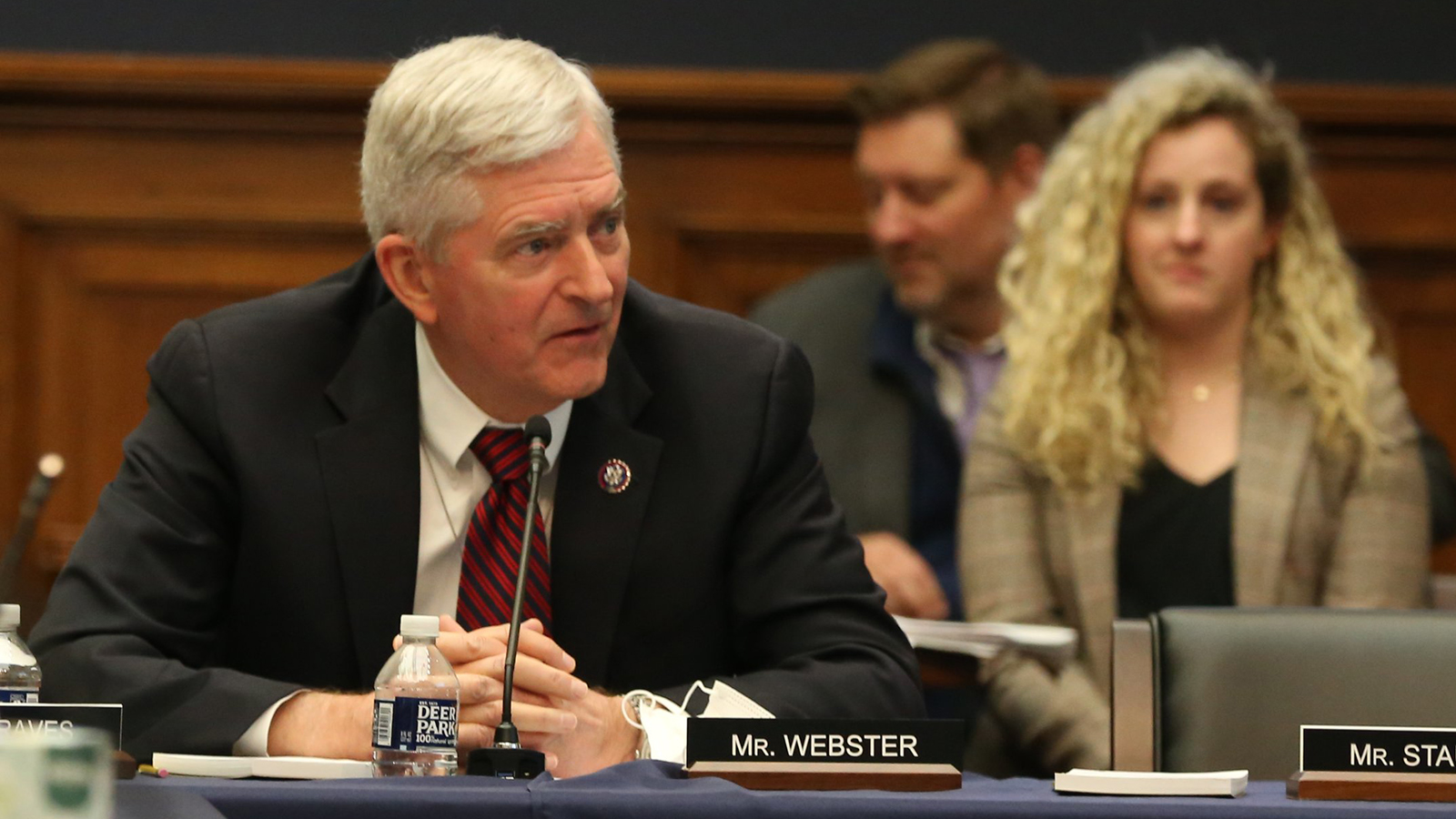
“Standards are the blueprint for how the world builds, trades, and connects,” Webster said. “When the United States writes that blueprint, it reflects our values of private sector innovation, safeguards our technology, and keeps our workers and industries competitive. The USA Act ensures that the United States, not Beijing, remains the global leader by advancing private-sector-led consensus-based standards that allow American innovation to thrive and put our country first.”
Some business groups and Florida companies spoke up immediately for the bill.
“The Utilize Standards for All Act is a smart step toward strengthening U.S. leadership in global standards. By promoting American-led, consensus-based standards, this little, three-page bill provides big support for our industries, workers, and economy,” said Bryon Kroger, founder of Tampa-based software development firm Rise8.
“I appreciate Congressman Webster’s leadership and look forward to working with him and others as this important legislation moves through the process.”
What smog?
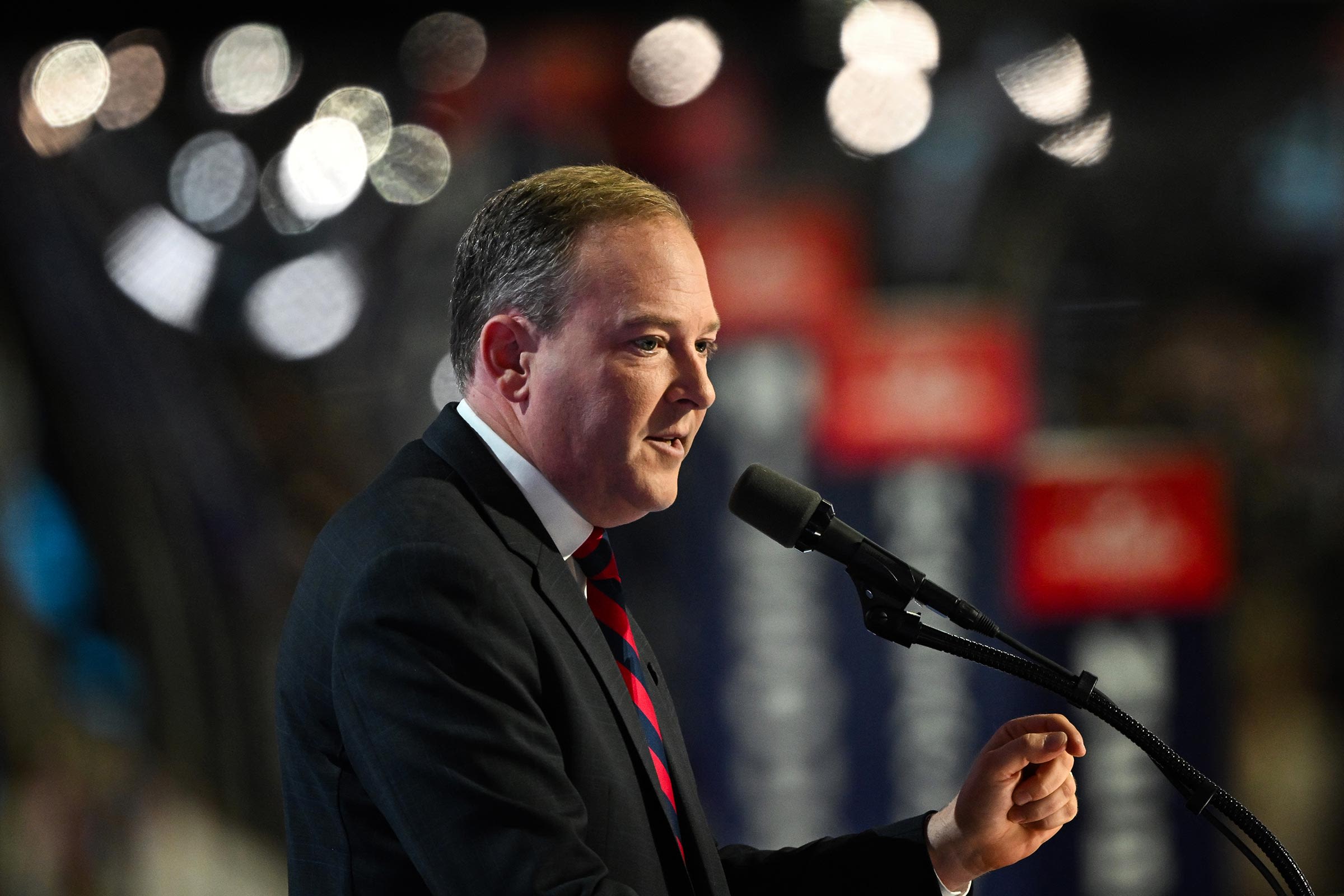
Once again, Rep. Kathy Castor voiced anger at Environmental Protection Agency Administrator Lee Zeldin for his disinterest in protecting the environment.
The Tampa Democrat led a letter to Zeldin with House Sustainable Energy and Environment Coalition Co-Chair Paul Tonko, a New York Democrat. The message urged Zeldin not to repeal greenhouse gas emissions standards for fossil fuel-fired power plants.
“Congress has repeatedly affirmed EPA’s authority and obligation under Section 111 of the Clean Air Act to protect Americans from air pollution that endangers public health or welfare,” the letter reads.
“Congress reaffirmed this authority in the Inflation Reduction Act (IRA) by explicitly providing funding and direction for the EPA to regulate power plants’ carbon pollution using existing authorities, which include those in Section 135. Congress was clear: EPA can and must use its Clean Air Act authority to establish carbon pollution standards for power plants, protecting Americans from pollution sources that cause air pollution that endangers public health or welfare.”
Co-signatories to the Democratic letter included Reps. Sheila Cherfilus-McCormick, Maxwell Frost, Darren Soto and Frederica Wilson.
The message came days after Castor blasted an announcement by Zeldin that the EPA would no longer try to determine if carbon dioxide and other greenhouse gases endanger public health and welfare in communities.

Pricing prescriptions
Rep. Vern Buchanan said it’s time for Congress to take action to stop foreign price controls from setting costs on medicine for Americans.
The Longboat Key Republican, who chairs the House Ways and Means Health Subcommittee, reintroduced the USTRx Act, which would create a Chief Pharmaceutical Trade Negotiator within the Office of the U.S. Trade Representative. He filed the legislation with Rep. Jodey Arrington, a Texas Republican who chairs the House Budget Committee.
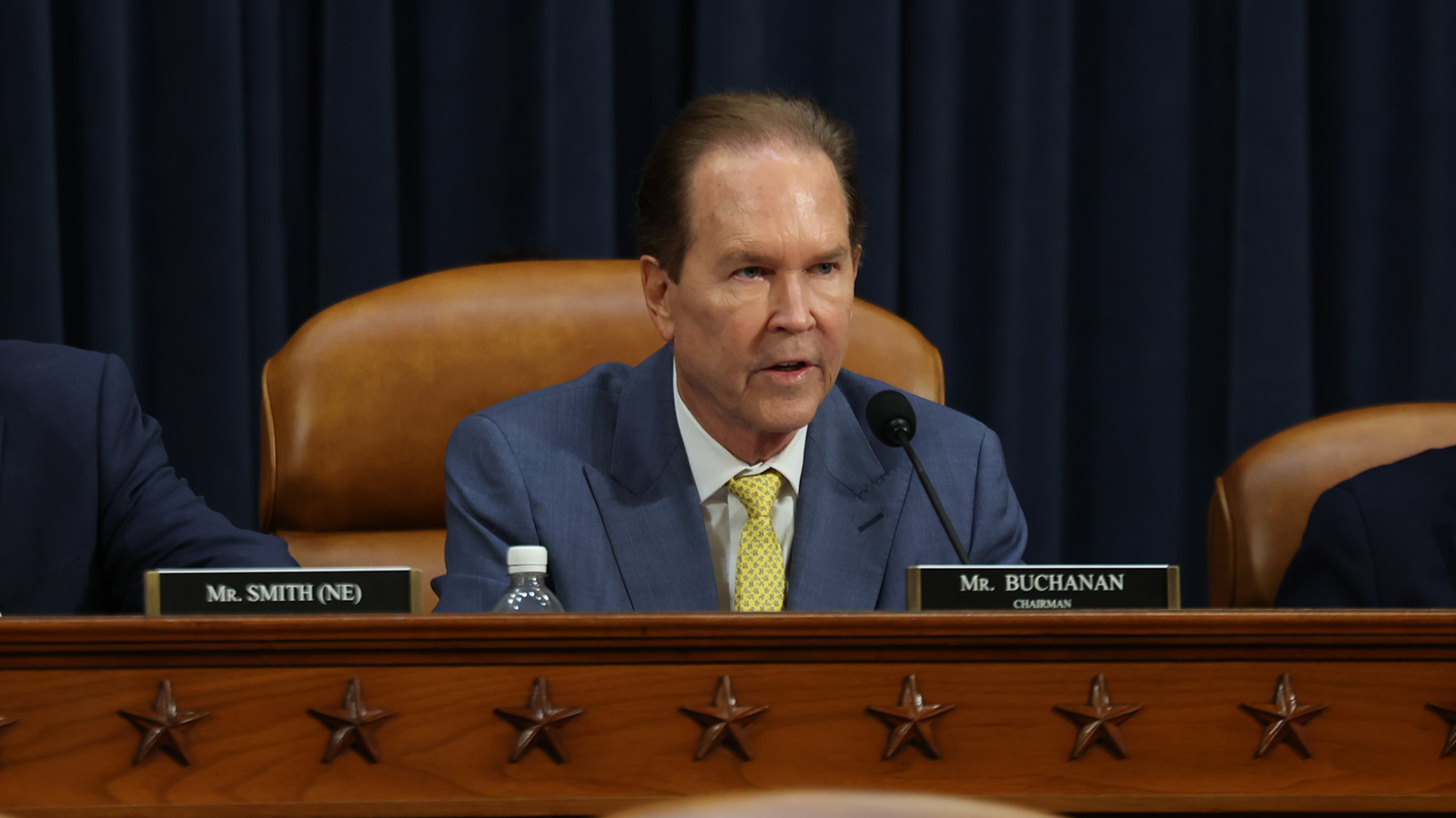
“American patients are paying more for lifesaving medicines because foreign countries are free riding on U.S. investment and innovation,” Buchanan said.
“This is not only unfair, it’s unsustainable. I’m proud to join Chairman Arrington in introducing the USTRx Act to hold foreign governments accountable, stop price-setting practices that hurt American families and ensure those in need continue to have access to affordable, lifesaving medicines. The United States must remain a global leader in medical innovation, but not at the expense of hardworking Americans.”
Buchanan’s office said that Americans fund 75% of global pharmaceutical profits worldwide, despite making up only around 5% of the global population. Of the $96 billion in research and development funded by U.S. pharmaceutical companies, about $71 billion comes from U.S. money.

Circling the ivory tower
Despite concerns of disinformation from foreign countries, institutions connected to China and other foreign powers have invested heavily in U.S. education. Rep. Greg Steube wants to put a stop to that.
The Sarasota Republican filed the Securing Academia from Foreign Entanglements (SAFE) Act, which would prohibit institutions of higher education in America from accepting gifts or entering into agreements with nations listed as foreign countries of concern.
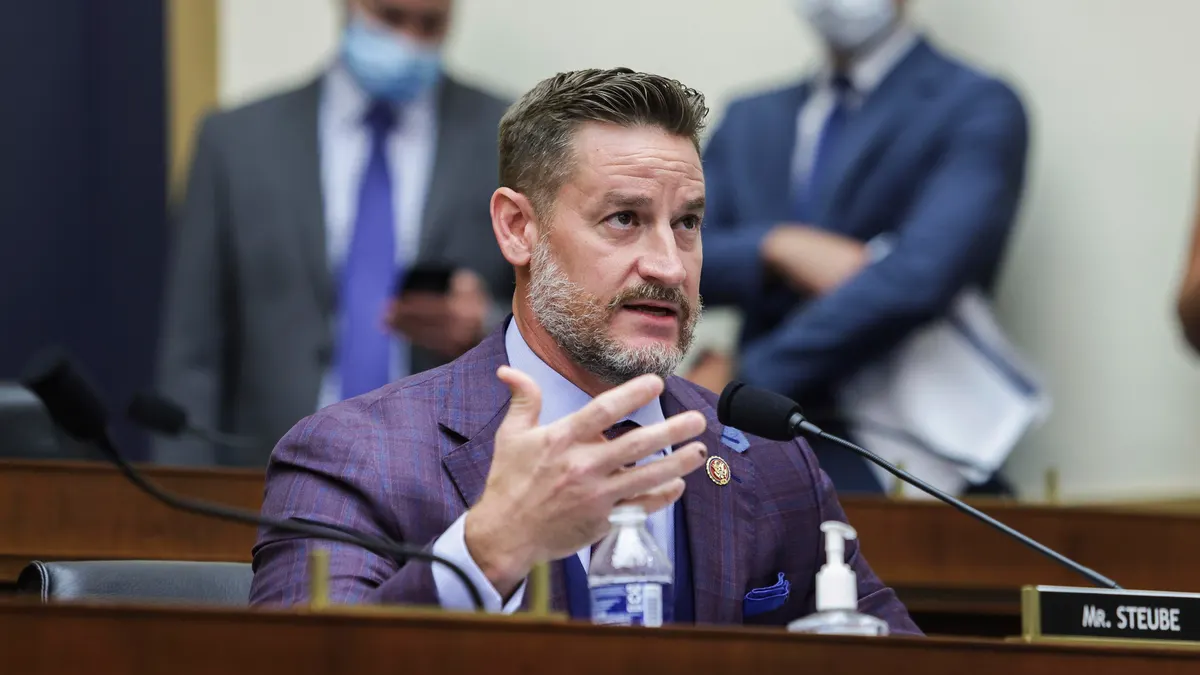
“Students and faculty deserve full confidence that their university’s finances are transparent and aboveboard. Allowing foreign adversaries to gain a foothold in our education system is a direct threat to both our national security and the integrity of American higher education,” Steube said.
“My bill will address this threat by banning universities from accepting gifts or entering contractual agreements with suspect foreign nations and restoring transparency to university financing.”
Sen. Dan Sullivan, an Alaska Republican, will carry a companion bill in the Senate.

Wanted poster
Attorney General Pam Bondi announced the U.S. will double its reward for any information leading to the arrest of Venezuelan President Nicolás Maduro on drug charges.
“Under President Donald Trump’s leadership, Maduro will not escape justice, and he will be held accountable for his despicable crimes,” Bondi said in a video posted online.
The decision to boost the bounty to double what the U.S. offered regarding the capture of Osama bin Laden after the Sept. 11 terrorist attacks demonstrated the increasing isolation of Maduro. That comes after the South American leader held on to power despite most international observers saying he lost an election last year.

But it is also a signal of the sway of Florida political influence on international policy. Bondi, a former Florida Attorney General, announced the new reward as Secretary of State Marco Rubio, a former three-term Senator for the state, amplified it.
“Maduro is the head of the vicious Cartel de Los Soles, a narco-terror organization which has taken over Venezuela,” Rubio posted. “Maduro MUST be brought to justice.”
Florida serves as home to 49% of Venezuelan immigrants in the U.S., according to the Migration Policy Institute. South Florida officials, who represent the largest concentrations of Venezuelans in the state, cheered on the announcement.
Rep. Díaz-Balart noted the U.S. has wanted Maduro for helping facilitate drug trafficking for years.
“This decision demonstrates our firm commitment to justice and the rule of law by holding narco-dictator henchmen like Nicolás Maduro accountable for his heinous crimes as the ringleader of the criminal and terrorist organization known as the Cartel de los Soles (the cartel of the Suns) as well as for his ties to savage gangs like the Tren de Aragua, which pose a direct threat to the peace and security of the United States,” the Hialeah Republican posted.
Rep. María Elvira Salazar said Maduro should not be off limits, as he leads an illegitimate government.
“Maduro is not a President, he is a dangerous national security threat to the United States,” the Coral Gables Republican posted. “He is the ringleader of the narco-terrorist Cartel de los Soles, and the boss of Tren de Aragua, which flooded our streets with fentanyl, trafficked women and children, and exported violence across the hemisphere.”

On this day
Aug. 8, 1968 — “Richard Nixon accepts the Republican nomination in Miami Beach” via Public Broadcasting Service — The nominee appealed to the “silent majority” to elect a Republican President who can unite the American people. “Eight years ago, I had the highest honor of accepting your nomination for President of the United States,” Nixon said. “Tonight, I again proudly accept that nomination for President of the United States. But I have news for you. This time there’s a difference — this time we’re going to win. We’re going to win for a number of reasons.”
Aug. 8, 1974 — “Nixon announces he will resign” via History.com — In an evening televised address, Nixon announces his intention to become the first President in American history to resign. With impeachment proceedings underway against him for his involvement in the Watergate affair, Nixon was finally bowing to pressure from the public and Congress to leave the White House. “By taking this action,” he said in a solemn address from the Oval Office, “I hope that I will have hastened the start of the process of healing which is so desperately needed in America.”
___
Peter Schorsch publishes Delegation, compiled by Jacob Ogles, edited and assembled by Phil Ammann and Ryan Nicol.
Post Views: 0