Connect with us

Business

‘He was very proud, but never said it’: One of the greatest soccer managers alive on how his dad motivated him to work harder

Published

on


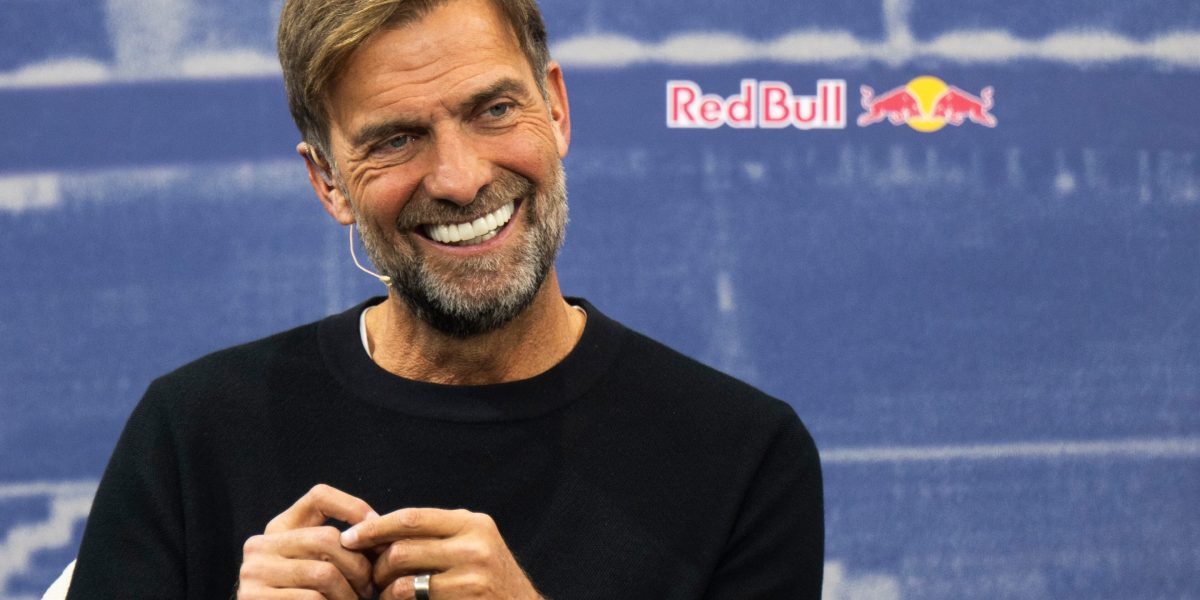
The extraordinary success achieved by some of the world’s greatest leaders often traces back to formative, and sometimes complicated, childhood environments. For Jurgen Klopp, one of the most celebrated soccer managers of the modern era, the drive that fueled his relentless career was rooted in the silent pride and unwavering expectations of his father.

The former Borussia Dortmund and Liverpool manager announced his retirement from coaching in January 2024, taking up a new role working for the sports drink-turned soccer empire Red Bull GmbH as its Head of Global Soccer. Widely regarded as one of the greatest managers alive, his credentials include league titles in both Germany and England with the aforementioned clubs as well as a Champions League title — something like European soccer’s Super Bowl — with Liverpool. This was extra significant because Klopp helped restore Liverpool to the summit of the English game, a status the formerly dominant club had lost since the late 1980s, when Manchester United’s legendary manager Alex Ferguson swore to knock them off their “perch.” His 10-year rivalry with another modern managerial great, Manchester City’s Pep Guardiola, saw the flowering of a new Golden Age for the English Premier League.

Klopp appeared on the Diary of a CEO podcast to talk about his coaching style, why he ended up at Liverpool instead of Manchester United, and if he was really done coaching. But much of the discussion centered on the influences that made him the way he is. Reflecting on his upbringing, Klopp said his father “loved me to bits and he loved me, he was very proud but never, never said it.” This dynamic created an intense pressure that shaped the manager’s famed competitive spirit.

‘Afraid that I might not be ambitious enough’

Klopp is something of a folk hero in both England and Germany for his coaching exploits, as he has a history of dragon-slaying — he led Borussia Dortmund to an unlikely league title in 2010-11, unseating the dominant Bayern Munich, before replicating the trick later with Liverpool. In 2020, Klopp’s childhood coach Ulrich Rath told the BBC that Klopp’s father, Norbert, “had a big influence on him, he shaped him.” Nodding to Klopp’s exuberant, competitive spirit, Rath added: “When Jurgen is jumping up and down, I can see Norbert in him. But when he closes the door behind him at home, he finds peace and quiet and collects his strength. That’s his mother.”

Klopp told a similar story to Bartlett, saying his childhood home was defined by a critical mix of influences. He said he had a “very confident dad,” paired with a “very caring mom, who was “just happy that I was there.” Klopp also described his mother as “very caring” and “loved people.” His father, who was a travelling salesman and former amateur goalkeeper, carried definite expectations, Klopp added. He was “a bit afraid that I might be not ambitious enough” and wanted his son to be a sportsman, excelling in everything from football and tennis to skiing.

Klopp described being constantly challenged by his father, who was tough because “he wanted to bring the best out of me,” he said. Klopp told Bartlett his father would race him on ski slopes and in sprints, “never letting you win.” The manager admitted it “was not nice in a way” to experience this relentless competition.

The power of sheer will

This relentless pursuit of excellence, instilled by his father’s high standards, forged a foundational belief that sheer will could overcome natural talent. The manager admitted that initially he was “absolutely useless in most of the things,” and even his “teammates were better than me” at football. He realized he could only compete by being a “warrior on the pitch” from the first minute until the last — alluding to his favorite phrase for how he liked his teams to play, “like a heavy metal band.” This compensatory effort, spurred by the need to meet expectations, made him the competitive person he is today. He explained that his aggressive nature during his playing days stemmed from knowing “I’m not good enough” and trying to “squeeze everything out on from an aggressive point of view.”

The resulting character became a blend of both parental influences: the confidence and ambition from his father, and the empathy and love for people from his mother. This combination became central to his leadership philosophy. He noted that his ability to speak publicly and confidently, necessary for a leader, is “probably from him,” while his “love for people unintentionally, that’s from my mom.”

As a manager, this combination translated into a bespoke leadership style where he treated players “50% of the time completely the same, and 50% what he needs.” He stressed that effective leadership is not about what the coach wants to shout, but understanding “what they need to hear to deal with their situation.” By combining high expectations — telling his players, for example, “if you would believe as much in yourself as I do that will be a start” — with patience and support, he created an environment where players felt seen as individuals.

Sometimes, though, the two sides of Klopp’s coaching personality left hurt feelings, even broken hearts behind. Numerous beloved members of Klopp’s great Liverpool team, including Roberto Firmino, Jordan Henderson and Alex Oxlade-Chamberlain have described sudden ruptures in communications with Klopp as he ruthlessly moved them out of the club after previously showering them with support, belief and affection. In 2023, Firmino described how things changed that year as he was given no explanation as to why a new contract wasn’t forthcoming, and his playing time was shrinking. “The boss was avoiding me,” Firmino wrote in his 2023 autobiography. Still, Firmino insisted that Klopp was the best manager he ever played under.

These dynamics took a toll on Klopp as well. His departure from Liverpool shocked the soccer world at the time, as he was in the prime of his career at 56 years old, and Klopp spoke openly of the burnout that prompted his decision. Several years later, he’s loving life. He told CBS News earlier this month while visiting Red Bull’s operations in New Jersey that after a 25-year stint in coaching he was relishing stepping away from his own self-imposed standards. “We go on holiday when we want and not when we are allowed to,” he told CBS.

Klopp also described how his body gave out as soon as he wasn’t coaching full-time, almost as if the psychic toll of his heavy-metal football was manifesting physically. “I was not ill for 24 years or whatever,” he said, but after just two weeks out of the Liverpool job, he described catching a cold “like I’ve never been ill before in my life. Two weeks, couldn’t lift my head … my body needed two weeks or whatever.” Still, when pushed by Diary of a CEO host Steven Bartlett, Klopp admitted it was “theoretically possible” that he could return to coaching one day, surely setting Liverpool hearts astir.


Source link

Continue Reading

Business

Shopify president says some of the greatest workers he knows only clock in 40-hour weeks

Published

on


There’s no question that the explosion of ChatGPT and other AI-powered technology has ushered in a new era of productivity, with some leaders even predicting that a four-day work week is closer than ever before. At the same time, the pressure is only intensifying on workers to maximize every advantage

And some business leaders have set extreme examples. Take Nvidia’s CEO, Jensen Huang. Just last week, he admitted that both he and his two children, who also work for the semiconductor manufacturer, work every day of the week—including holidays.

But not everyone believes the future belongs to the workaholics. In fact, some of the best workers Shopify President Harley Finkelstein knows stick to traditional work schedules.

“You don’t have to work 80 hours a week to perform well, to be a high performer,” he said on the Aspirewith Emma Grede podcast. “I know people that work 40 hours a week that are some of the greatest performers ever. They’re just incredibly efficient with their time.”

While most people will still face the occasional late night or weekend email, Finkelstein said real balance comes from tailoring your work rhythm to your life.

“I think this idea of work-life balance is a little bit of a misnomer. I think actually what we’re all searching for is like some sort of harmony,” he added. “There are some Saturdays where I have to work, and there are some Thursday afternoons that I go for a walk with my wife. That’s my version of harmony.”

Be a ‘Swiss army knife’—and work hard when the moment calls

For Finkelstein, hard work has long been part of his DNA. As a teenager with dreams of becoming a DJ, he couldn’t land gigs without experience, so he created his own opportunities.

Later, as a student at the University of Ottawa, he launched a side-gig selling T-shirts to cover rent and support his family. That venture brought him into contact with Tobias Lütke, who was then selling snowboards online using software he had built—software that would eventually become Shopify.

With a law degree, Finkelstein didn’t fit the stereotypical startup mold. But when Lütke invited him to join the fledgling company, he embraced what he later called a “Swiss army knife” role.

“Anything that needed to get done on the legal or business side? I would do it. I made my skills from law school extremely transferable,” he wrote on LinkedIn in 2022.

Even for Finkelstein, 80-hour workweeks weren’t uncommon in those early years. But once his family started to grow, he made adjustments to establish balance in what feels like “one big, meaningful pursuit.”

“Someone asked me how I know I’ve found mine. My answer? Because Monday mornings feel like Saturday mornings,” Finkelstein wrote. “Whatever your mission is, I hope you find the thing that makes Monday feel like Saturday. Because that’s when you know you’re building something that really matters.”

Fortune reached out to Finkelstein for further comment.

Work-life balance isn’t constant

Finkelstein’s view of work-life balance isn’t far from what many other high-performing leaders have argued: harmony isn’t fixed—it shifts with circumstance.

Cisco’s chief product officer Jeetu Patel, for instance, works 18-hour days, seven days a week. But even he insists that balance is possible as long as it is designed intentionally. For Patel, that means making sure his daughter can reach him anytime and never compromising his physical health.

“You have to figure out a way to make sure that it works for you, and you have to make sure that the people around you think that that’s okay,” Patel previously told Fortune. “You have to create that system for yourself. I don’t think anyone else can create it for you.”

Even former President Barack Obama echoed a similar idea earlier this year on The Pivot Podcast, noting that balance often comes in phases and that temporary imbalance can be a necessary part of achieving goals.

“If you want to be excellent at anything—sports, music, business, politics—there’s going to be times of your life when you’re out of balance, where you’re just working and you’re single-minded.”


Source link

Continue Reading

Business

Borrowing by AI companies represents a ‘mounting potential threat to the financial system’: Zandi

Published

on


Tech companies are issuing more debt now than before the dot-com crash as a rapid infrastructure buildout unfolds in the AI boom, Moody’s Analytics Chief Economist Mark Zandi said in a LinkedInpost on Sunday.

Even after adjusting for inflation, big tech companies are issuing more bonds than during the late 1990s. And the companies aren’t just refinancing existing debt—they’re taking on additional debt.

“While the increasingly aggressive (and creative) borrowing by AI companies won’t be their downfall, if they do fall short of investors’ expectations and their stock prices suffer, their debts could quickly become a problem,” Zandi wrote. 

“Borrowing by AI companies should be on the radar screen as a mounting potential threat to the financial system and broader economy.”

The 10 largest AI companies, including Meta, Amazon, Nvidia and Alphabet, will issue more than $120 billion this year, Zandi said in a LinkedIn analysis last week.

And this time is different from dot-com era debt issuance, as internet companies back then didn’t have a lot of debt, he pointed out. Instead, they were funded by stocks and venture capital.

“That’s not the case with the AI boom,” Zandi added.

Even though hyperscalers like Amazon, Google, Meta, and Microsoft could pay for the AI buildout with their profits, bond issuance is the “cheapest and cleanest” way to finance an infrastructure buildout of this scale, which will likely last more than a decade and be worth trillions of dollars, Shay Boloor, chief market strategist at Futurum Equities, told Fortune.

“These companies are a lot more comfortable issuing 10- to 40-year papers, for example, at very low spreads, because the market now views them as quasi-utility names—because they’re building all this infrastructure—not just a pure tech company anymore,” Boloor said.

He added that in the previous six months, tech companies have shown “proof in the pudding” that future demand for AI is booming.

Despite AI bubble concerns, Nvidia delivered a strong earnings report for its third quarter last month, saying its AI data center revenue increased by 66% from last year. 

Still, critics warn that the buildout may not keep up with how rapidly AI is developing.

Computer hardware, which makes up most AI data centers’ cost, may be more susceptible to becoming obsolete and replaced by more advanced technology during the AI boom as opposed to wireless and internet buildouts, much of which still runs today, George Calhoun, professor and director of the Hanlon Financial Systems Center at Stevens Institute of Technology, told Fortune.

“The cycle of innovation in the chip industry is much faster than for wireless technology or fiber optics,” he said explained. “There is a real risk that much of that hardware may become competitively disadvantaged by newer technologies in a much shorter timeframe,” before being fully paid off.

At the same time, big players in the AI boom—namely OpenAI—do not have the profits currently to cushion their massive investments at the moment, increasing their risk, Calhoun said.

“If OpenAI fails, the snowball effect of that is gonna be substantial,” Futuruum Equities’ Boloor said. Though larger tech companies won’t likely be impacted much by a potential OpenAI bust, companies that largely rely on its business like Oracle could, he added.

Still, Boloor is optimistic about the AI buildout, saying the main bottleneck for its success is U.S. energy capacity.

“I think that the risk is that trillions of dollars of AI capacity gets built faster than the North American grid can support it, which could slow realization,” he warned. 


Source link

Continue Reading

Business

International deals race forward to end China’s hold on critical minerals since US can’t do it alone

Published

on


Pini Althaus saw the signs. In 2023, he left the company he founded, USA Rare Earth, to develop critical minerals mining and processing projects in central Asia, after realizing that the U.S. will need all the international help it can get to end China’s supply chain dominance.

“I realized we only have a handful of large critical minerals projects that were going into production between now and 2030,” Althaus, chairman and CEO of Cove Capital, told Fortune. “I understood that we’re going to have to supplement the United States critical minerals supply chain with materials coming in from our allied and friendly countries.”

Over a series of decades, China built up its stranglehold on much of the world’s critical minerals supply chains, including the 17 rare earths, used to make virtually all kinds of high-performance magnets and parts for vehicles, computers, power generation, military defense, and more. The rest of the world deferred to Beijing in exchange for cheap prices.

Amid an ongoing tariff war with the U.S.—and a temporary truce—the Trump administration is racing to build up domestic mining and processing capabilities, while also developing the global partnerships necessary to eventually undermine China, which controls 90% of the world’s rare earths refining.

In October, Trump inked a deal with Australia for both countries to invest $3 billion in critical minerals projects by mid-2026. Australia is home to the largest publicly traded critical minerals miner in the world, Lynas Rare Earths. Trump then signed a series of bilateral critical minerals deals in eastern and southeastern Asia, including Japan, Malaysia, Thailand, Indonesia, and Cambodia. The U.S. also has new deals with Ukraine, Argentina, the Democratic Republic of Congo, Rwanda, Kazakhstan, and more.

Althaus is specifically developing mining and processing facilities for tungsten—a heat-resistant metal used in electronics and military equipment—and rare earths in Kazakhstan and Uzbekistan. He sees the most potential in former Soviet Union nations in central Asia.

“The Soviets spent many decades exploring and developing mines. Many of their databases have been left and are quite meticulous,” Althaus said. “This gives companies looking to develop projects in central Asia a jumpstart compared to what would be here in the United States, where most of the opportunities are greenfield—very early stages, very high risk, and very little appetite for investment.”

In November, the Ex-Im Bank offered Cove Capital a $900 million financing letter of interest for the $1.1 billion Kazakh tungsten projects. A separate letter of interest was received from the U.S. International Development Finance Corporation.

Jeff Dickerson, principal advisor for Rystad Energy research firm, said only a long-term, coordinated effort—essentially a “wartime” approach—both domestically and with international partnerships can lead to success. But it cannot be done without new projects with foreign allies. “The challenge is that the U.S. doesn’t have a strong pipeline of mature mineral projects that are shovel ready,” he said. 

“The cycle of China extracting concessions on the back of mineral geopolitics and weakening the U.S. strategic negotiating position will likely continue without a coordinated, long-term response during the current moment of heightened attention to critical minerals,” Dickerson said, questioning whether the U.S. will maintain a concerted focus for years to come.

New emphasis

The Trump administration is increasingly making financial partnerships with critical minerals developers—even becoming a majority shareholder of U.S. rare earths miner MP Materials—and offering deals for floor-pricing mechanisms to offset China’s recurring dumping practices that aim to eliminate competition.

A native Australian turned New Yorker, Althaus is, naturally, a big fan of this approach. Chinese price dumping has crippled global competition and scared away potential investors, he said.

“By providing a price floor, it removes the question marks; it removes the instability; it removes the most significant risk in funding a project that’s about to go into production,” Althaus said. “It creates a predictability where you can take geology all the way through to profitability. I think there should be a global effort to create transparent markets and prices for the key critical minerals.”

Critical minerals are increasingly included in U.S. negotiations for all foreign deals. In the tariff agreement with Indonesia, for instance, the Asian nation agreed to lift export bans on nickel. The White House leveraged its military support for Ukraine by demanding the rights to its critical minerals in return. And the recent U.S. bailout of Argentina included a partnership on critical minerals mining.

In addition to its strategic defense location, rare earths are even a reason Trump continues to show interest in annexing Greenland from Denmark.

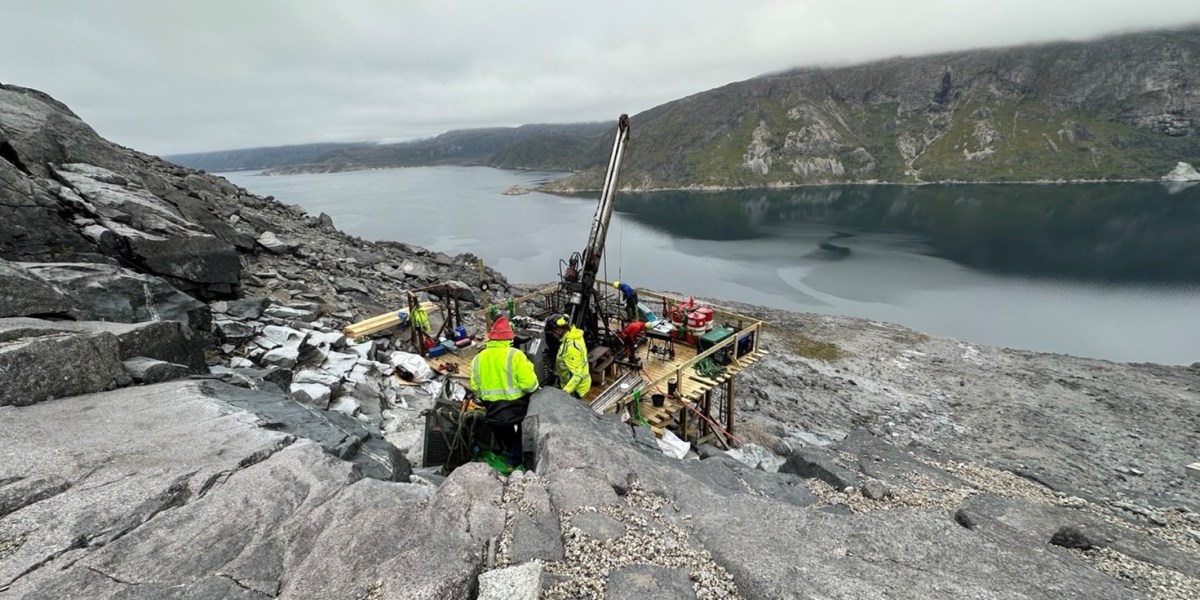
Veteran geologist Greg Barnes, who founded the massive Tanbreez mining project, which remains in development, briefed Trump at the White House during his first presidential term. This year, Critical Metals acquired 92.5% ownership of the Tanbreez project.

Critical Metals CEO Tony Sage is keen to supply the U.S. with desired rare earths, and the company recently received a letter of intent for a $120 million Ex-Im Bank loan. The goal is to start construction by the end of 2026.

“There’s an absolute need to make sure that more than 50% of the supply of these heavy rare earths come from outside of China—mined and processed outside of China,” Sage told Fortune.

Regardless of any long-shot annexation bids, Sage said Greenland can and should be a key ally to the U.S. for critical minerals. “They definitely don’t want to be part of the U.S., but I think they’ll be pro-U.S.,” he said.

For his part, Althaus said he sees all the international deals as progress, and not as competition for his Cove Capital.

“I think it’s a positive, and I think we’ll start to see a lot more happen in the coming months in terms of the U.S. and collaboration with other countries.”


Source link

Continue Reading

Trending

Copyright © Miami Select.