Connect with us

Business

Hawaii’s Big Island cat lovers are furious about a feeding ban to protect an endangered goose species: ‘They’re both living creatures’

Published

on


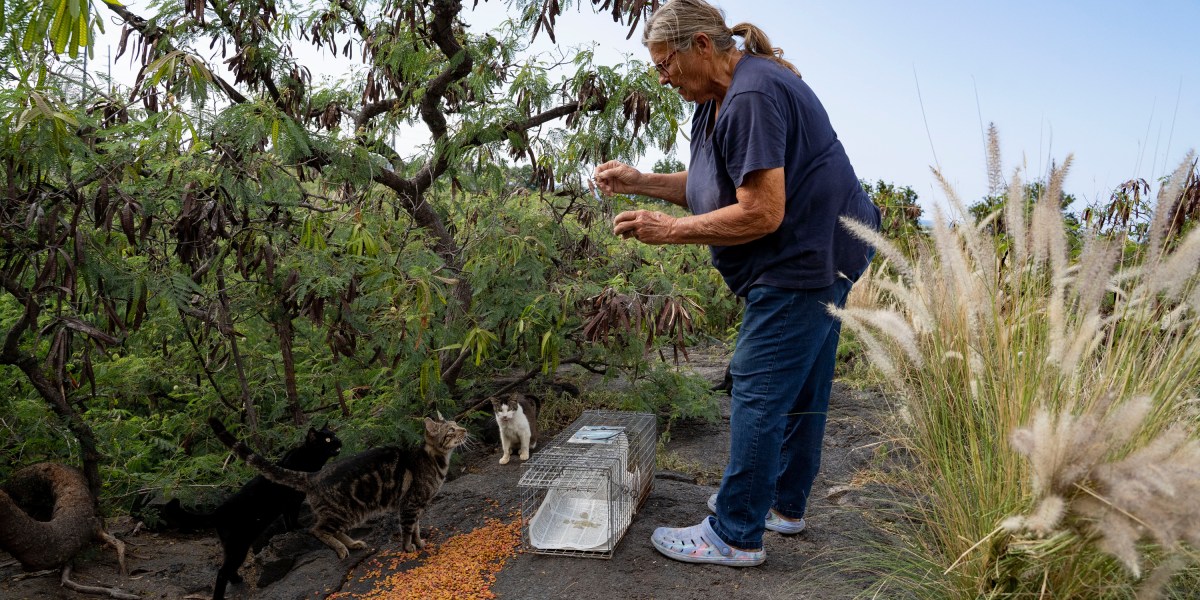
Throngs of feral cats emerge from the shade of parked trucks and bushes as soon as the familiar Subaru Forester pulls into a dump on Hawaii’s Big Island. They run after the vehicle to a certain meal — a gravy train that might not be around much longer.

A Hawaii County law set to take effect at the start of the new year bans feeding feral animals on county property. It’s an effort to protect native species, such as an endangered goose called the nene, from a super predator introduced to the islands by Europeans in the 18th century.

But the measure doesn’t sit well with many cat lovers, including the driver of the Subaru, Liz Swan, who has been feeding feral felines on the Big Island for 33 years.

“I don’t believe the cats should be exterminated at the expense of the nene,” Swan said. “They’re both living creatures.”

It’s unclear how many feral cats — abandoned pets and their descendants — live on the Big Island. Estimates range well into the tens of thousands, with pockets of dense colonies supported by people. Opponents of the ban say it will hamper their efforts to contain the population by trapping and neutering the animals — and that hungry cats will then have to hunt for food.

A variety of threats

About 200 cats live at the Kealakehe Transfer Station and Recycling Center, not far from the bustling tourist district of Kona. Swan shows up every late afternoon with water and kibble, and says she’s never seen a nene anywhere near the dump. Despite living amid trash, the cats there generally appear robust, most of them missing the tip of an ear, indicating they’ve been spayed or neutered.

The cats threaten the native species directly — by killing them — and indirectly, biologists say. Food left out for the cats can attract native animals, bringing them into closer contact with humans. Cat feces can also spread a parasite that causes toxoplasmosis, a disease that has killed endangered Hawaiian monk seals and native birds.

Last year, a male nene — pronounced “neh-neh” — was struck and killed by a car as it crossed a road in Hilo, on the eastern side of the island, to reach a cat feeding station. The goose’s surviving mate, which also had a gosling die of toxoplasmosis in 2024, has recently taken on another partner and is nesting in a Hilo park, the state Department of Land and Natural Resources announced this month.

The county’s feeding ban will help protect them, the department said.

A Hawaiian biologist’s view

State wildlife biologist Raymond McGuire recently checked for nene nesting sites among the barren black-rock fields near a shopping center at the Waikoloa resort. It’s not their traditional habitat, but he has seen the geese fly in to grab food — risking getting hit by cars — and last year some nested there.

As he approached, a pair of feline eyes peered out of a crack in the lava rock. Cats emerged from their nooks, perhaps mistaking him for someone who might offer food.

McGuire was relieved to see there were no nene nearby — but frustrated with evidence the cats are being fed: empty water bowls and aluminum pans.

He’s a cat owner — “my favorite animal is a cat” — but as a Hawaiian whose love of nature inspired him to pursue conservation work, he believes there is no room for them where native species are struggling to survive.

“There’s so many birds that my kids will never see, that I got to see,” he said, referring to native forest birds. “I think about my ancestors and I do wonder: Are we honoring them well in what we do? Because they did take steps to protect them.”

Feral cats are a problem in many places, but Hawaii’s sensitive ecosystem is full of species that evolved without mammalian predators, making them especially vulnerable, McGuire said.

‘I felt bad for the cats’

Hawaiian culture is closely tied to Hawaii’s animals; aumakua, or ancestral spirit guides, can take animal form, noted Big Island Mayor Kimo Alameda. His family’s aumakua is the shark, he said.

After the county council passed the measure with a veto-proof 6-2 vote, Alameda decided to let it take effect without his signature. Opponents persuaded him it would harm the cats.

“I had a soft spot for that,” he said. “I felt bad for the cats.”

The debate was so contentious that some opponents sent him hate messages, Alameda said.

The mayor said he hopes police consider enforcement a low priority. Violations carry fines of up to $50 for a first offense and up to $500 for subsequent offenses.

Will the ban prompt feeders to work in secret?

The answer is simple to Makaʻala Kaʻaumoana, a cultural practitioner — someone who works to preserve Hawaiian cultural traditions — on the island of Kauai.

Trapping, neutering and releasing cats makes no difference because they can still hunt, she said.

“The cats have to be removed,” she said.

Debbie Cravatta, who feeds cats in her West Hawaii neighborhood, questioned why.

“It’s a native species — why does that reign over a domestic cat that somebody dumped out pregnant and that had six kittens out in the wild?” Cravatta said. “Why is that life more valuable than this life?”

Opponents also argue the ban might only push feeding efforts underground.

“I’m not going to let them starve,” Swan said.

___

Kelleher reported from Honolulu.


Source link

Continue Reading

Business

Winter storm cancels more than 1,000 flights in the Northeast and Great Lakes regions as state of emergency declared in N.Y., N.J.

Published

on


More than a thousand flights were canceled or delayed across the Northeast and Great Lakes regions due to snow as thousands took to U.S. roads and airports during the busy travel period between Christmas and New Year’s.

As of Saturday morning, New York City had received just under three inches of snow — roughly half of what some forecasts had predicted. At least 1,500 flights were canceled from Friday night into Saturday, according to flight-tracking service FlightAware.

Newark Liberty International Airport, John F. Kennedy International Airport and LaGuardia Airport posted snow warnings on the social media platform X on Friday, cautioning that weather conditions could cause flight disruptions.

The National Weather Service warned of hazardous travel conditions from the Great Lakes through the northern mid-Atlantic and southern New England, with the potential for tree damage and power outages. Forecasters said the storm was expected to weaken by Saturday morning.

Ahead of the storm, New York Gov. Kathy Hochul declared a state of emergency for more than half of the state. Acting New Jersey Gov. Tahesha Way declared a state of emergency for all of New Jersey, “due to a severe winter storm causing dangerous weather conditions, including heavy snow, sleet, and freezing rain.”

“This storm will cause dangerous road conditions and impact holiday travel,” Way said in a statement. “We are urging travelers to avoid travel during the storm and allow crews to tend to the roads. Drivers should plan their travel accordingly, monitor conditions and road closures, and follow all safety protocols.”

This story was originally featured on Fortune.com


Source link

Continue Reading

Business

California drops lawsuit to reinstate federal bullet train funding as high-speed rail authority seeks private investors

Published

on


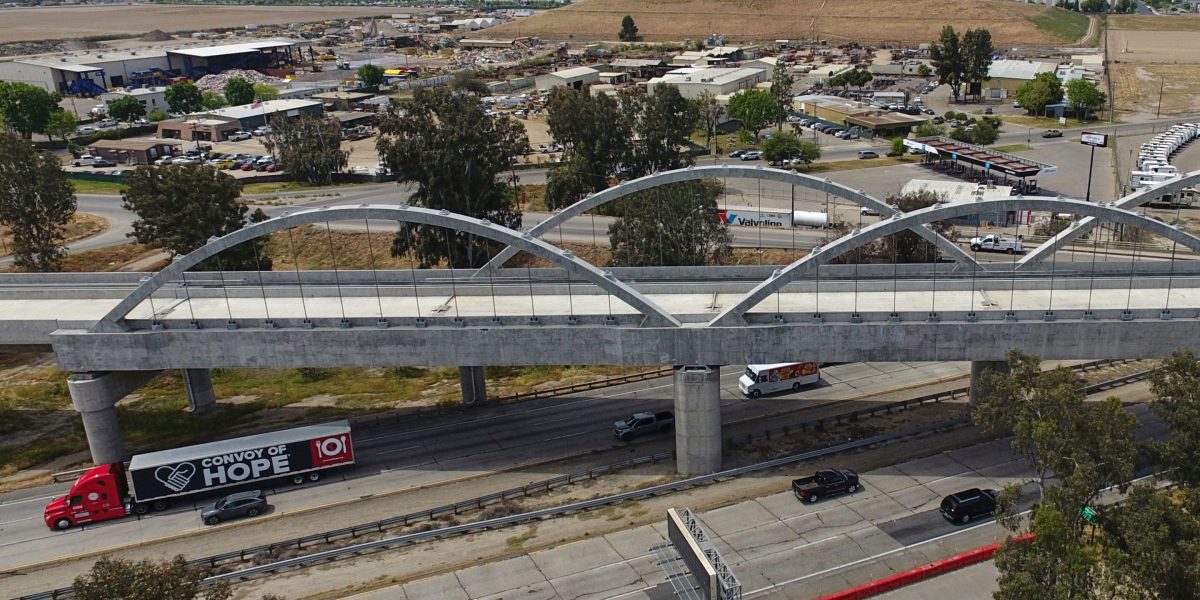
California this week dropped a lawsuit officials filed against the Trump administration over the federal government’s withdrawing of $4 billion for the state’s long-delayed high-speed rail project.

The U.S. Transportation Department slashed funds for the bullet train aimed at connecting San Francisco to Los Angeles in July. The Trump administration has said the California High-Speed Rail Authority had “ no viable plan ” to complete a large segment of the project in the farm-rich Central Valley.

The authority quickly filed a lawsuit, with Democratic Gov. Gavin Newsom calling the federal government’s decision “a political stunt to punish California.”

The authority said this week that it would focus on other funding sources to complete the project, which is estimated to cost more than $100 billion.

“This action reflects the State’s assessment that the federal government is not a reliable, constructive, or trustworthy partner in advancing high-speed rail in California,” an authority spokesperson said in a statement.

The Transportation Department did not respond to a request for comment. President Donald Trump and Transportation Secretary Sean Duffy have both previously criticized the project as a “train to nowhere.”

“The Railroad we were promised still does not exist, and never will,” Trump said on his social media platform Truth Social in July. “This project was Severely Overpriced, Overregulated, and NEVER DELIVERED.”

The authority’s decision to drop the lawsuit comes as the group seeks private investors to support the bullet train. The project recently secured $1 billion in annual funding from the state’s cap-and-trade program through 2045.

The program sets a declining limit on total planet-warming emissions in the state from major polluters. Companies must reduce their emissions, buy allowances from the state or other businesses, or fund projects aimed at offsetting their emissions. Money the state receives from the sales funds climate-change mitigation, affordable housing and transportation projects, as well as utility bill credits for Californians.

The rail authority said its shift in focus away from federal funding offers “a new opportunity.”

“Moving forward without the Trump administration’s involvement allows the Authority to pursue proven global best practices used successfully by modern high-speed rail systems around the world,” a spokesperson said in a statement.

This story was originally featured on Fortune.com


Source link

Continue Reading

Business

Kennedy Center seeks $1 million in damages from musician who canceled show after Trump name added

Published

on


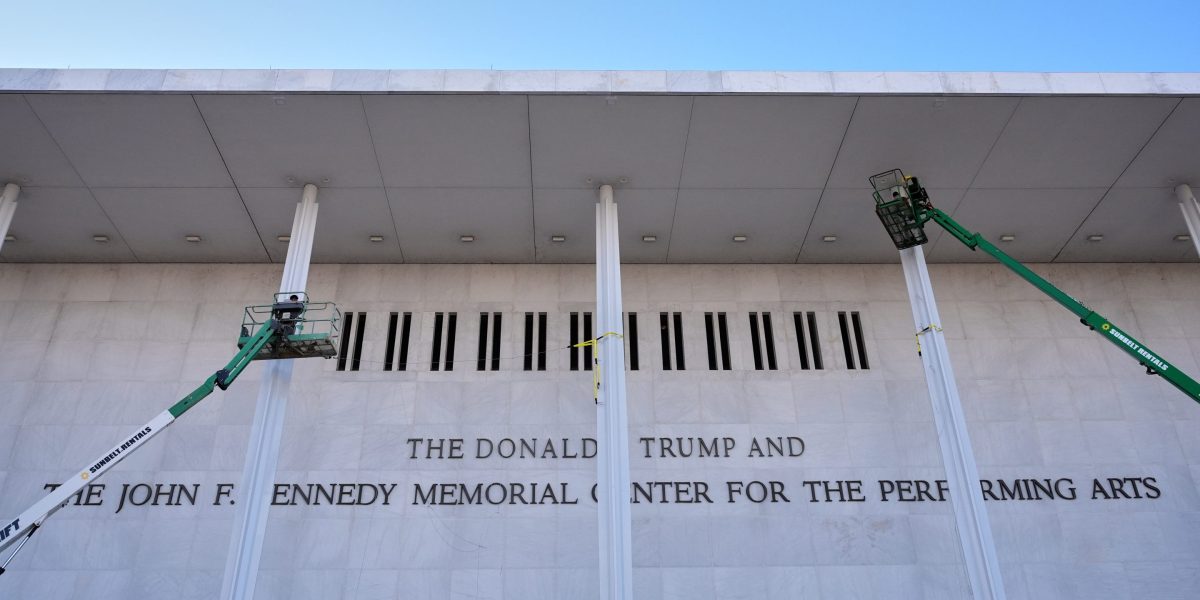
The president of the Kennedy Center on Friday fiercely criticized a musician’s sudden decision to cancel a Christmas Eve performance at the venue days after the White House announced that President Donald Trump’s name would be added to the facility.

“Your decision to withdraw at the last moment — explicitly in response to the Center’s recent renaming, which honors President Trump’s extraordinary efforts to save this national treasure — is classic intolerance and very costly to a non-profit Arts institution,” the venue’s president, Richard Grenell, wrote in a letter to musician Chuck Redd that was shared with The Associated Press.

In the letter, Grenell said he would seek $1 million in damages “for this political stunt.”

Redd did not immediately respond to a request for comment.

A drummer and vibraphone player, Redd has presided over holiday “Jazz Jams” at the Kennedy Center since 2006, succeeding bassist William “Keter” Betts. In an email Wednesday to The Associated Press, Redd said he pulled out of the concert in the wake of the renaming.

“When I saw the name change on the Kennedy Center website and then hours later on the building, I chose to cancel our concert,” Redd said. He added Wednesday that the event has been a “very popular holiday tradition” and that he often featured at least one student musician.

“One of the many reasons that it was very sad to have had to cancel,” he told the AP.

President John F. Kennedy was assassinated in 1963, and Congress passed a law the following year naming the center as a living memorial to him.

Grenell is a Trump ally whom the president chose to head the Kennedy Center after he forced out the previous leadership. According to the White House, Trump’s handpicked board approved the renaming, which scholars have said violates the law. Kennedy niece Kerry Kennedy has vowed to remove Trump’s name from the building once he leaves office, and former House historian Ray Smock is among those who say any changes would have to be approved by Congress.

The law explicitly prohibits the board of trustees from making the center into a memorial to anyone else, and from putting another person’s name on the building’s exterior.


Source link

Continue Reading

Trending

Copyright © Miami Select.