Shares of digital asset firm Hashkey Group start trading in Hong Kong today, following the firm’s IPO last week. The Chinese city has steadily embraced digital assets since 2022 as it tries to maintain its status as a global financial center.
Hashkey Group, founded in 2018, operates a Hong Kong-licensed crypto exchange, the city’s largest. According to its IPO prospectus, Hashkey’s exchange has facilitated 1.7 trillion Hong Kong dollars ($218 billion) in trading volume as of Sep. 30, 2025. The broader group also offers on-chain services, like staking and tokenization, as well as asset management services. Hashkey generated 283 million Hong Kong dollars ($36 million) in revenue for the first half of 2025, a 26% year-on-year drop, according to the prospectus.
Hashkey raised 1.6 billion Hong Kong dollars ($206 million) in its IPO, both Bloomberg and Reuters reported, citing an unnamed source.
Hong Kong has tentatively embraced cryptocurrencies and digital assets as a way to shore up its status as an international financial center. The city, alongside Singapore, was one of the first jurisdictions in Asia to set up a licensing regime for cryptocurrency exchanges. Eleven exchanges, including Hashkey’s, are currently licensed to operate in Hong Kong.
“Hong Kong has established one of Asia’s most clear and proactive regulatory frameworks for digital assets,” says Anna Liu, CEO of HashKey Tokenization, the group’s dedicated tokenization division. The Chinese city serves as a “strategic gateway,” linking “Eastern and Western markets” and “traditional finance with digital innovation.”
Hong Kong earlier this year set up a licensing scheme for stablecoins, which generated interest from crypto companies and investors due to the stability of the Hong Kong dollar. Hong Kong’s market regulator is considering allowing crypto firms to connect their local exchanges to their global platforms, allowing Hong Kong-based customers to trade with those based outside the city.
Measures like the stablecoin ordinance “provide the certainty that institutional capital requires,” Liu says. “This clearly transforms Hong Kong’s [crypto sector] from a speculative market into a predictable and compliant environment for serious builders and long-term investors.”
Hong Kong’s exploration of cryptocurrencies is in stark contrast to mainland China, which still bans trading of digital currencies. (The city’s governance system allows it to have separate policies and regulations from the rest of China). Crypto observers sometimes see Hong Kong’s embrace of digital currencies as a leading indicator of how Beijing might approach digital assets in the future.
While Liu didn’t share thoughts on China’s plans for digital assets, she noted that “regulatory clarity is good for the industry, so that we know which countries and regions we can do something in. It gives us more clarity on the boundaries and red lines.”
Several other crypto companies have gone public this year, including stablecoin provider Circle, and crypto exchanges Bullish and Gemini. Circle and Bullish raised over $1 billion in their IPOs, as investors gravitated to crypto following the Trump administration’s friendliness towards digital assets, including through measures like the GENIUS Act, which lays the groundwork for new U.S. dollar stablecoins.
Yet crypto shares have performed poorly in the second half of the year. Circle shares have lost 70% of their value since their peak in June. Bullish and Gemini shares have lost over 30% and 60% respectively since their trading debuts in the late summer.
Cryptocurrencies too have fallen since their peak in October, with Bitcoin down about 30% and Ether down about 40%, amid broader jitters about geopolitical tensions, fears of an AI bubble, and hidden weaknesses in financial markets.
HashKey’s trading debut is the latest in a flurry of debuts in Hong Kong, as companies flood back to the city’s stock exchange hoping to tap the city’s connections to both mainland Chinese and global pools of capital. Hong Kong is back on top of the world’s IPO rankings for the first time since 2019, according to KPMG, with the two major U.S. exchanges in second and third place.
Tennessee’s governor pardoned country star Jelly Roll on Thursday for his criminal past in the state, acknowledging the Nashville native’s long road back from drugs and prison through soul-searching, songwriting and advocacy for second chances.
The rapper-turned-singer whose legal name is Jason Deford has spoken for years about his redemption arc before diverse audiences, from people serving time in correctional centers to concert crowds and even in testimony before Congress.
Republican Gov. Bill Lee issued the pardon after friends and civic leaders of the Grammy-nominated musician joined in an outpouring of support.
Jelly Roll’s convictions include robbery and drug felonies. He has said a pardon would make it easier for him to travel internationally for concert tours and to perform Christian missionary work without filling out burdensome paperwork.
He was one of 33 people to receive pardons Thursday from Lee, who for years has issued clemency decisions around the Christmas season. Lee said Jelly Roll’s application underwent the same monthslong thorough review as other applicants. The state parole board gave a nonbinding, unanimous recommendation for Jelly Roll’s pardon in April.
“His story is remarkable, and it’s a redemptive, powerful story, which is what you look for and what you hope for,” Lee told reporters.
Jelly Roll and Lee meet at the governor’s mansion
Lee said he never met Jelly Roll until Thursday, when the musician visited the governor’s mansion over the pardon news. The two hugged in front of a lit Christmas tree and a fireplace decorated with holiday garlands.
Unlike recent high-profile federal pardons, which let people off the hook for prison, a Tennessee pardon serves as a statement of forgiveness for someone who has already completed a prison sentence. Pardons offer a path to restoring certain civil rights such as the right to vote, although there are some legal limitations, and the governor can specify the terms.
Jelly Roll broke into country music with the 2023 album “Whitsitt Chapel” and crossover songs like “Need a Favor.” He has won multiple CMT Awards, a CMA Award and also picked up seven career Grammy nominations.
Much of his music deals with overcoming adversity, like the song “Winning Streak” about someone’s first day sober. Or the direct-and-to-the-point, “I Am Not Okay.”
“When I first started doing this, I was just telling my story of my broken self,” he told The Associated Press in an interview. “By the time I got through it, I realized that my story was the story of many. So now I’m not telling my story anymore. I’m getting to pull it right from the crevices of the people whose story’s never been told.”
Jelly Roll: ‘‘I was a part of the problem’
Before the parole board, Jelly Roll said he first fell in love with songwriting while in custody, calling music a therapeutic passion project that “would end up changing my life in ways that I never dreamed imaginable.”
Outside of sold-out shows, he’s testified before the U.S. Senate about the dangers of fentanyl, describing his drug-dealing younger self as “the uneducated man in the kitchen playing chemist with drugs I knew absolutely nothing about.”
“I was a part of the problem,” he told lawmakers at the time. “I am here now standing as a man that wants to be a part of the solution.”
Jelly Roll’s most serious convictions include a robbery at 17 and drug charges at 23. In the first case, a female acquaintance helped Jelly Roll and two armed accomplices steal $350 from people in a home in 2002. Because the victims knew the female acquaintance, she and Jelly Roll were quickly arrested. Jelly Roll was unarmed, and was sentenced to one year in prison plus probation.
In another run-in 2008, police found marijuana and crack cocaine in his car, leading to eight years of court-ordered supervision.
Sheriff whose jail held Jelly Roll urged a pardon
Friends and civic leaders cited his transformation in backing a pardon.
Davidson County Sheriff Daron Hall, who runs Nashville’s jail, wrote that Jelly Roll had an awakening in one of the jails he managed. Live Nation Entertainment CEO and President Michael Rapino cited Jelly Roll’s donations from his performances to charities for at-risk youth.
“I think he has a chance and is in the process of rehabilitating a generation, and that’s not just words,” Hall said in a phone interview Thursday. “I’m talking about what I see we need in our country, is people who accept responsibility, accept the fact that they make mistakes and accept the fact that they need help.”
The parole board began considering Jelly Roll’s pardon application in October 2024, which marks the state’s five-year timeline for eligibility after his sentence expired. Prominent Nashville attorney David Raybin represented Jelly Roll in the pardon case.
Lee’s office said no one was pardoned Thursday who had a homicide or a sex-related conviction, or for any crime committed as an adult against a minor.
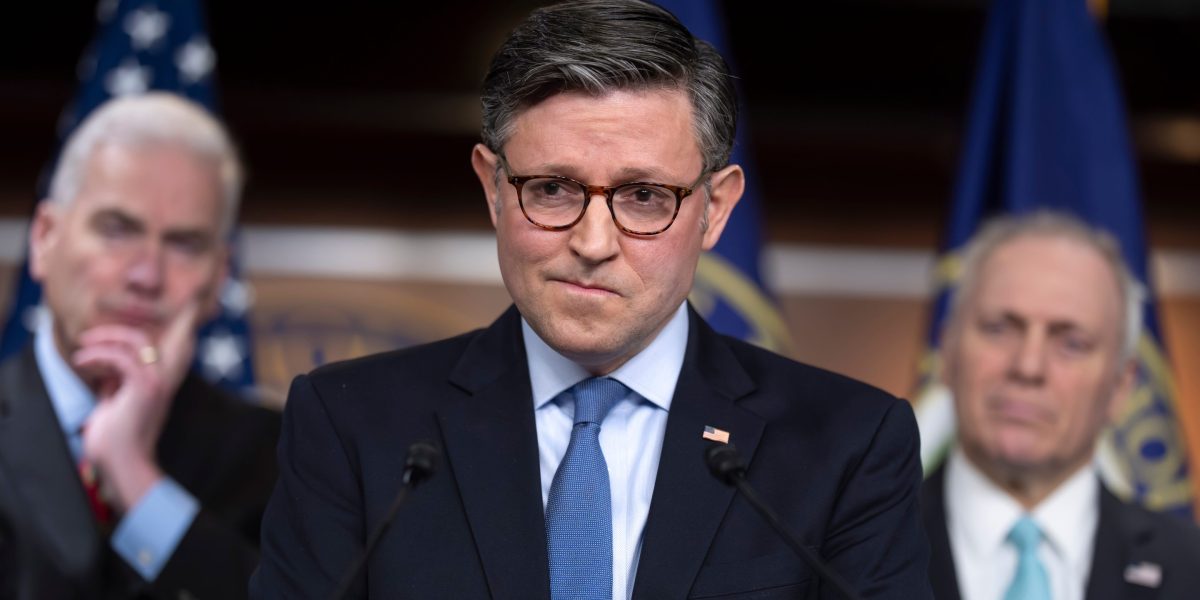
Speaker Mike Johnson had a ready-made refrain when asked why Republicans weren’t moving to extend federal health care subsidies: their party wanted to help 100% of Americans with their costs, not just the 7% of Americans enrolled in Affordable Care Act plans.
A rare revolt from the moderate wing of the party has upended Johnson’s plans. Four Republicans this week signed onto a Democratic discharge petition that guarantees that the House will vote on extending the ACA subsidies sometime in January, with Republican leaders now powerless to stop it.
For Democrats, it was vindication of a months-long strategy, starting with the government shutdown in the fall, that pushed the expiration of the ACA support to the forefront of politics. Republicans from competitive districts most at risk of losing their seats in next year’s midterms felt the political pressure as they heard from constituents about their skyrocketing premiums.
“Nothing has changed with House Republican leadership, but something has changed within their own ranks,” said Rep. Pete Aguilar, chair of the House Democratic Caucus.
Flanked by his caucus Thursday on the Capitol steps, House Democratic Leader Hakeem Jeffries demanded that Johnson allow a vote on the three-year extension of ACA subsidies before lawmakers leave for the holidays: “Not tomorrow. Not next week. Not next year. Today.”
Johnson refused, saying it will “be on the floor that first week of January when we return.”
Lawmakers prepare to leave in limbo
The impasse left lawmakers with a cliffhanger as they headed home for the holiday break. Republican leaders now face growing pressure to appease centrist members who are threatening to side with Democrats to approve an extension of Affordable Care Act subsidies for three years.
Senate Majority Leader John Thune has to confront the issue as well. Any ACA bill clearing the House would simply push the fight to the Senate, which has already rejected a three-year extension.
A bipartisan group of senators has been meeting and discussing possible compromise bills that would extend the subsidies but put new limitations on them. But they would not consider anything until January.
Thune told reporters Thursday that a three-year extension of “a failed program that’s rife with fraud, waste and abuse is not happening.”
Yet Republican leaders in both chambers have not offered a plan that fully addresses members’ concerns about the sharp insurance cost increases many Americans are expected to face in 2026 and potentially beyond.
The White House has been engaged in discussions about the healthcare proposals but has largely allowed House Republicans to sort out their internal divisions and coalesce around a plan on their own, according to a senior administration official involved in the talks who was granted anonymity to discuss private discussions.
House Republicans on Wednesday passed a 100-plus-page health care package centered on long-standing GOP priorities, including expanding coverage options for small businesses and the self-employed. The bill would also rein in pharmacy benefit managers — middlemen that manage drug costs and process insurance claims.
Johnson touted the measure as “a bigger and better and more important thing for 100% of Americans, not just 7% of Americans.” But some Republicans who face tough reelection bids remain fixated on the looming spike in ACA costs.
The holidays provide Johnson with a brief window to try to persuade moderates to abandon the effort. The discharge petition froze once it reached the 218-signature threshold, meaning that while only four Republicans have publicly signed on, more may be willing to support the Democratic bill.
Rep. Ryan Mackenzie, one of the four Republicans who signed the Democratic petition, said it has “generated more conversations” and that “hopefully over the next three weeks, we will actually see some changes in some bipartisan efforts that actually can generate a meaningful vote that gets 218 in the House and 60 in the Senate.”
“I think allowing a vote is critically important,” Mackenzie said. “I think everybody should be able to put up their votes on the board, and they should be able to let everybody in the American public see how they voted on these individual issues.”
Leader Jeffries’ waiting game pays off
For months, Jeffries refused to support a one-year extension of ACA subsidies that a bipartisan group of lawmakers had been pursuing, dismissing it as a “non-starter” and “a laughable proposition.”
Instead, he held firm on a three-year extension with no income caps or cost offsets. That strategy paid off, as GOP moderates were forced to move in his direction when Johnson refused to allow any vote on an ACA extension.
Jeffries has faced criticism this year from progressive members of his caucus and grassroots groups who have urged him to push back more forcefully against Trump and Republicans. But on Thursday, much of the party rallied behind him on the Capitol steps, with several lawmakers praising his approach.
“As Leader Jeffries has said all along, this is the only real plan on the table,” said Aguilar.
Still, while Democrats have secured a vote, insurance costs for millions are set to rise next year, and passage of a three-year ACA subsidies extension remains a long shot even if it does pass the House. Senate Republicans have already rejected the three-year extension, but some GOP senators who are open to a deal on the subsidies said a House vote could provide momentum.
“We could have a vehicle — if we could get Republicans and Democrats behind it — then we could send it back,” said GOP Sen. Thom Tillis, adding that it “means that there’s still a chance.”
For Democrats, the fight has also allowed them to unify around a message they believe could prove potent on the campaign trail.
“The Republican health care crisis is unacceptable, unconscionable, and un-American,” Jeffries said.
A Republican House divided
The decision by four Republicans to break with party leadership and join Democrats is only the latest sign of discontent in the narrowly divided House.
Johnson has argued that the criticism directed at his leadership — and lawmakers repeatedly bypassing leadership to force votes — is inevitable given the slim GOP majority. He said he lacks the advantages of a large majority, where “the speaker had a long stick that he would administer punishment.”
“I don’t have that, because we have a small margin,” he said. Of the ACA extensions, Johnson said leadership had “talked about it at length” with GOP moderates, describing the conversations as “some intense fellowship.”
“Everybody’s in good spirits now and everybody understands what’s happening,” he added.
Some GOP members, however, don’t appear to share that assessment. There was lingering discontent as lawmakers headed home for the holidays.
“I don’t know how we did not vote on a good bipartisan extension,” said GOP Rep. Don Bacon, adding that Democrats will use the health care issue “like a sledgehammer” on the campaign trail.
House Majority Leader Steve Scalise, R-La., insisted that Republicans are finishing the year “as united as we’ve ever been.”
“We set out on a course to do big things, not little things, and that means we’re going to have some differences along the way.”
___
Associated Press reporter Mary Clare Jalonick and Kevin Freking contributed to this report.
The financially struggling Trump Media & Technology Group’s shocking, $6 billion merger with a nuclear fusion developer represents either a bet on more taxpayer dollars being invested in the first fusion player to go public—soon owned in part by the Trump family—or a belief that an influx of capital will speed up the launch of clean, limitless electricity that eventually will transform the global grid.
Trump Media’s struggling stock had plummeted nearly 70% year-to-date prior to the announcement. But the stock value spiked over 40% on the deal news with the market cap rising back above $4 billion on Dec. 18—even though TAE Technologies doesn’t plan to bring its first power plant online until 2031 to start generating revenues.
TAE Technologies CEO Michl Binderbauer recognizes the potential negative perception, but he told Fortune he’s eager to speed up the clean energy revolution that he is confident will come with the so-called merger of equals with Trump Media, which will become a Truth Social media, cryptocurrency, and fusion power conglomerate.
“In the end, if we get more scrutiny because of the deal we did, I actually don’t mind that,” Binderbauer said. “It’s perversely sounding, but I welcome it in a way because we let the technology speak.
“It’s big, bold and fast. You make a big bet with boldness at heart, and it allows you to run really fast,” he said. “I know our technology will succeed. Let it be adjudicated on a perhaps even deeper level. We need more energy; we need clean, scalable power.”
Robert Weissman, co-president of Public Citizen government watchdog group, sees it quite differently as an obviously unethical cash grab by the president and his family.
“It’s a ridiculous merger. Why in the world would those two companies merge, and why would the markets respond positively?” Weissman said. “The markets are betting on the prospect of the Trump grift expanding and for … direct federal government payments to a company whose leading shareholder is the president of the United States.”
TAE has received federal Department of Energy grants dating back to Trump’s first term and continuing through the Biden administration. As part of a reorganization announced in November, the DOE is opening a new Office of Fusion.
The deal would value the merged company at $6 billion, including debt, and Binderbauer and Trump Media head Devin Nunes would serve as co-CEOs, they said. Shareholders of each company would own about 50% of the combined company. Donald Trump Jr. would take one of the nine board seats.
Trump Media will invest up to $200 million in TAE up front and another $100 million before the deal closes in mid-2026, they said.
TAE aims to select a site for its first power plant by the end of 2026 and generate first power by late 2031, on par with the goals of some of its top competitors.
In a statement, White House Press Secretary Karoline Leavitt said the media is irresponsibly trying to fabricate conflicts of interest.
“Neither the president nor his family have ever engaged, or will ever engage, in conflicts of interest,” Leavitt said.
The DOE, Trump Org, and Trump Media did not respond to interview or comment requests.
In a media call during which no questions were allowed, Nunes said fusion power will lower energy prices, bolster national defense, and support “America’s dominance” of AI.
“Why is fusion power revolutionary? It’s because fusion power plants are now feasible at commercial scale, and they will produce reliable, cost-effective, dispatchable, and carbon-free electricity, and industrial heat with no nuclear meltdown risk or radioactive waste,” Nunes added.
The potential of fusion
The joke about fusion energy is it’s always 30 years away and not getting any closer.
However, the breakthrough scientific moment came at the end of 2022 when scientists at Lawrence Livermore National Laboratory successfully achieved “first ignition,” fusing atoms through extreme heat to generate more energy than the setup consumes for the first time ever.
Since then, TAE and other competitors have continued to make greater fusion progress on their various scientific approaches to fusion power generation.
Whereas traditional nuclear fission energy creates power by splitting atoms, fusion uses heat to create energy by melding them together. In the simplest form, it fuses hydrogen found in water into an extremely hot, electrically charged state known as plasma to create helium—the same process that powers the sun. When executed properly, the process triggers endless reactions to make energy for electricity. But stars rely on overwhelming gravitational pressure to force their fusion. Here on Earth, creating and containing the pressure needed to force the reaction in a consistent, controlled way remains an engineering challenge.
While TAE and others are targeting the early 2030s to bring the first commercial fusion power plants online, industry analysts agree it will take several additional years at least to start making a notable dent in the nationwide or even global energy grid. Still, the long-term potential remains huge.
“Fusion power is the answer to providing reliable, cost-effective, carbon-free electricity,” Binderbauer said.
TAE was founded 27 years ago—originally as Tri Alpha Energy—but stayed in stealth mode until 2015. Actor turned entrepreneur and angel investor Harry Hamlin was even a cofounder back in 1998. An Austrian-American physicist, Binderbauer served as the founding chief technology officer, eventually rising to CEO in 2018.
“Do you raise $1 billion in scaled capital over multiple years? Or do you have it come at high velocity?” Binderbauer asked. “The high velocity is critical if you want to build something quickly and efficiently.
“The concerns are very secondary.”
That’s what makes the Trump Media deal so critical, he said.







 Politics8 years ago