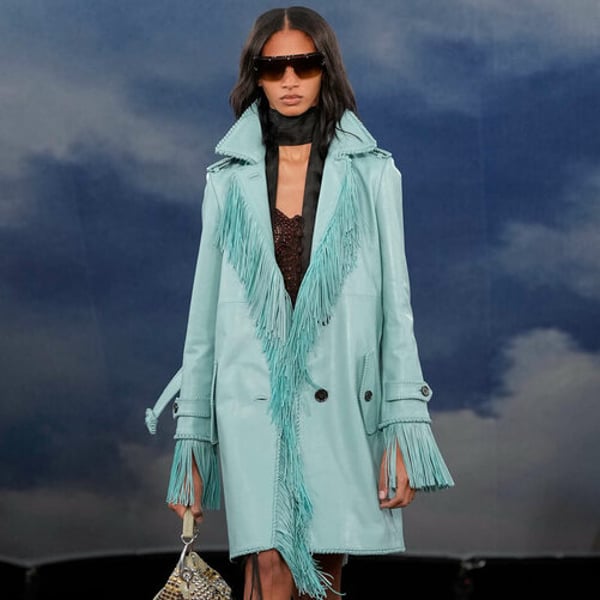
But he was hard-pressed to highlight the key trends because he said that “London resists strict categorisation, and this season reinforced that strength. From sculptural tailoring to romantic craftsmanship to youth-driven festival references at Burberry, the diversity of aesthetics underlined a city thriving on individuality rather than homogenised trends”.
Yet his must-Have Pieces included “standout gowns at Roksanda, refined yet powerful tailoring at Emilia Wickstead, and romantic, wearable separates at Simone Rocha [that] combined artistry with strong commercial appeal”.
Looking at his favourite shows, he said Roksanda was his top pick. “Roksanda’s 20th anniversary stood out as a true celebration of her signatures—dramatic tailoring, elegant gowns, and the striking interplay between form-fitting silhouettes and exaggerated volume, all brought together with her masterful use of colour,” he explained.
Meanwhile Erdem’s 20th anniversary show “reaffirmed his exceptional skill in form, fabrication, and workmanship”. And Longland praised the label’s show format with the event at the British Museum “a landmark moment, perfectly balancing grandeur and intimacy, offering an immersive backdrop that enhanced the storytelling of the collection”.
On Burberry, he said Daniel Lee’s collection “felt like a confident embrace of a younger client, rooted firmly in British culture and the energy of music festivals. Iconic coats, jackets and trenches ran throughout, with leather emerging as a real strength — adding structure, attitude and a modern edge to the brand’s heritage. What stood out was the balance between authenticity and relevance; it wasn’t simply about repeating house codes, but about reinterpreting them for today’s culture. For Harrods, this signals a Burberry that is not only honouring its legacy but actively investing in its future audience”.
And talking of the future, Longland believes Patrick McDowell and Priya Ahluwalia are the labels “to watch”. He said they presented “compelling, individualistic collections that underline the strength of London’s emerging scene. At Harrods, our work begins with careful observation—recognising and championing creativity at its early stages, with the possibility of deeper collaborations in the future”.
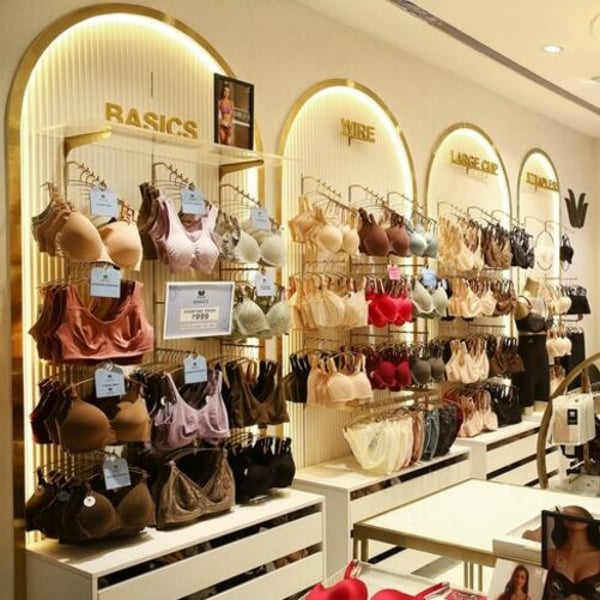
Japanese lingerie brand Wacoal has bolstered its retail presence in Delhi NCR by launching a 300 square foot store in DLF Mall of India in Noida as part of its nationwide growth ambitions.
Inside Wacoal’s new store inside DLF Mall of India – Wacoal
“At Wacoal, we are dedicated to offering women exceptional fit, quality, and an elevated shopping experience,” said Wacoal India’s COO Pooja Merani in a press release. “With the launch of our store at DLF Mall of India, we are not only strengthening our presence in the Delhi-NCR region but also marking our entry into the city’s mall retail space. This expansion is an important step in bringing Wacoal’s distinct experience closer to our consumers.”
The store has a cream and gold interior and private fitting rooms, designed to promote well-fitting intimate wear for women. Following the launch, Wacoal counts 18 exclusive brand outlets in India and plans to open more in the near future, including in North India. The brand also aims to expand its omni-channel footprint, supported by its digital presence and multi-brand outlet partnerships.
“Our rapid growth in Delhi-NCR is driven by a strong and rising demand for premium, expertly crafted lingerie,” said Wacoal India’s CEO Hirokuni Nagamori. “The opening of our first mall store in Delhi at DLF Mall of India represents a significant milestone for Wacoal, reinforcing our commitment to the North India market. With several more stores in the pipeline for Delhi, we are accelerating our momentum and laying a solid foundation for Wacoal India’s long-term growth.”
Founded in 1946 in Japan, Wacoal began expanding into other Asian countries in the 1970s, then into the US in 1985 and Europe in 1990. The label’s first India store opened its doors in December 2015, retailing bras, panties, shapewear, and sleepwear.
The Calida Group is strengthening its Board of Directors. This move aims to broaden the Board’s expertise in retail and the textile industry and to reinforce the Group’s strategic direction. The focus is on increasing efficiency in product development and brand communications for Calida and Aubade.
Chairman of the Board of Directors Felix Sulzberger regards the strengthening of the Board as a major opportunity to provide fresh impetus. – CALIDA GROUP
With this in mind, the Board of Directors intends to propose to the shareholders of the Swiss lingerie company at the Annual General Meeting on April 15, 2026 the election of Caroline Forster and Nicole Loeb as additional members.
Caroline Forster is an experienced leader and, since 2008, has served as co-CEO of the St. Gallen-based Forster Group, which operates globally. The family-owned company, with around 850 employees, produces embroidery for haute couture, prêt-à-porter, interiors, and lingerie, as well as technical textiles. She brings many years of leadership experience in both operational and strategic roles and has held various board and industry positions since 2007. She was also a member of the Executive Committee of economiesuisse until the end of 2024.
Nicole Loeb is an experienced entrepreneur and a prominent leader in Swiss retail. Since 2005, as delegate of the Board of Directors of Loeb Holding and chair of the Board of Directors of Loeb AG, she has shaped the strategic development of the long-established, independent Swiss retail company headquartered in Bern. She holds a degree in textile business management and is also active in key industry and business organisations, including as a board member of the Swiss Retail Federation and on the regional economic advisory board of the Swiss National Bank.
“I am delighted that, with Caroline Forster and Nicole Loeb, we can propose two renowned and successful entrepreneurs and leaders for election to the Board of Directors. Thanks to their proven experience in the textile industry and retail, they will provide valuable impetus for the strategic development of the Calida Group. I am convinced that, drawing on insights from their own family businesses, they will help shape our Group’s future strategic direction in a lasting way,” said Felix Sulzberger, chairman of the Board of Directors.
This article is an automatic translation. Click here to read the original article.
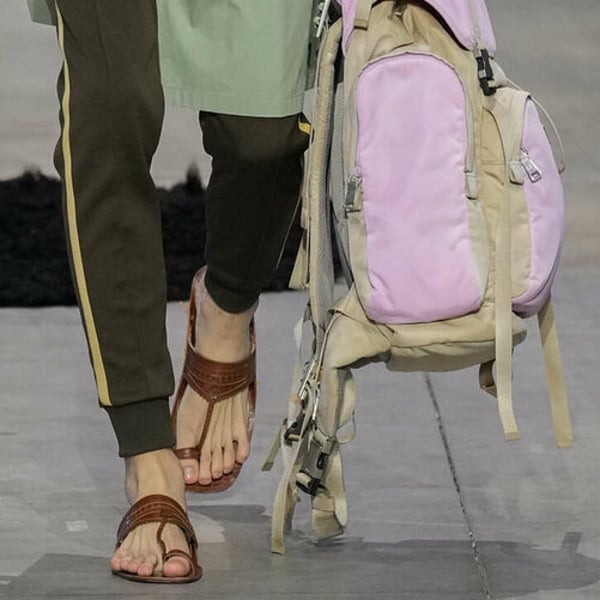
Prada will make a limited-edition collection of sandals in India inspired by the country’s traditional footwear, selling each pair at around 800 euros ($930), Prada senior executive Lorenzo Bertelli told Reuters, turning a backlash over cultural appropriation into a collaboration with Indian artisans.
The Italian luxury group plans to make 2,000 pairs of the sandals in the regions of Maharashtra and Karnataka under a deal with two state-backed bodies, blending local Indian craftsmanship with Italian technology and know-how.
“We’ll mix the original manufacturer’s standard capabilities with our manufacturing techniques,” Bertelli, who is chief marketing officer and head of corporate social responsibility, told Reuters in an interview. The collection will go on sale in February 2026 across 40 Prada stores worldwide and online, the company said. Prada faced criticism six months ago after showing sandals resembling 12th-century Indian footwear, known as Kolhapuri chappals, at a Milan show. Photos went viral, prompting outrage from Indian artisans and politicians. Prada later admitted its design drew from ancient Indian styles and began talks with artisan groups for collaboration.
It has now signed an agreement with Sant Rohidas Leather Industries and Charmakar Development Corporation (LIDCOM) and Dr Babu Jagjivan Ram Leather Industries Development Corporation (LIDKAR), which promote India’s leather heritage. “We want to be a multiplier of awareness for these chappals,” said Bertelli, who is the eldest son of Prada founders Miuccia Prada and Patrizio Bertelli.
A three-year partnership, whose details are still being finalised, will be set up to train local artisans. The initiative will include training programmes in India and opportunities to spend short periods at Prada’s Academy in Italy.
Chappals originated in Maharashtra and Karnataka and are handcrafted by people from marginalised communities. Artisans hope the collaboration will raise incomes, attract younger generations to the trade and preserve heritage threatened by cheap imitations and declining demand.
“Once Prada endorses this craft as a luxury product, definitely the domino effect will work and result in increasing demand for the craft,” said Prerna Deshbhratar, LIDCOM managing director. Bertelli said the project and training programme would cost “several million euros”, adding that artisans would be fairly remunerated.
Bertelli said Prada, which opened its first beauty store in Delhi this year, has no plans for new retail clothing shops next year or factories in India. “We have not planned yet any store openings in India, but it’s something that we are strongly taking into consideration,” he said, adding that this could come in three to five years.
The luxury goods market in India was valued at around $7 billion in 2024 and is expected to reach about $30 billion by 2030, according to Deloitte, as economic growth accelerates to 7% this year and disposable income among the middle and upper classes rises. The market, however, is dwarfed by China, which generated about 350 billion yuan ($49.56 billion) in value in 2024, according to Bain.
Most global brands have entered India through partnerships with large conglomerates like Mukesh Ambani’s Reliance group and Kumar Mangalam Birla’s Aditya Birla Group. Bertelli said that Prada would prefer to enter the country on its own, even if it took longer, describing India as “the real potential new market.”