A Gustav Klimt portrait painting that helped save the life of its Jewish subject during the Holocaust sold Tuesday for $236.4 million, a record for a modern art piece.
Klimt’s “Portrait of Elisabeth Lederer” sold after a 20-minute bidding war at Sotheby’s in New York, where the flashiest item of the night was a solid gold, fully functioning toilet that went for $12.1 million.
The 6-foot-tall (1.8-meter-tall) portrait, painted over three years between 1914 and 1916, depicts the daughter of one of Vienna’s wealthiest families adorned in an East Asian emperor’s cloak. It is one of two full-length portraits by the Austrian artist that remain privately owned. The work was kept separate from other Klimt paintings that burned in a fire at an Austrian castle.
The colorful painting depicts the Lederer family’s life of luxury before Nazi Germany annexed Austria in 1938. Nazis looted the Lederer art collection, leaving only the family portraits, which were considered “too Jewish” to be worth stealing, according to the National Gallery of Canada, where the painting was previously on loan.
In an attempt to save herself, Elisabeth Lederer made up a story that Klimt, who was not Jewish and died in 1918, was her father. It helped that the artist spent years working meticulously on her portrait.
With help from her former brother-in-law, a high-ranking Nazi official, she convinced the Nazis to give her a document stating that she descended from Klimt. That allowed her to remain safely in Vienna until she died of an illness in 1944.
The portrait was part of the collection of billionaire Leonard A. Lauder, heir to cosmetics giant The Estée Lauder Companies. He died this year at 92, leaving behind an impressive collection worth more than $400 million.
Sotheby’s declined to share the identity of the portrait’s buyer. The sale topped a previous record for 20th-century art set by an Andy Warhol portrait of Marilyn Monroe, which sold for $195 million in 2022.
Five Klimt pieces from Lauder’s collection sold at the auction for a total of $392 million, Sotheby’s said.
Pieces by Vincent van Gogh, Henri Matisse and Edvard Munch were among other notable sales.
Later in the evening, an 18-karat-gold toilet by Maurizio Cattelan — the provocative Italian artist known for taping a banana to a wall — hit the auction block. Cattelan has said the 223-pound (101-kilogram) piece, titled “America,” satirizes superwealth.
“Whatever you eat, a $200 lunch or a $2 hot dog, the results are the same, toilet-wise,” he once said.
The toilet, owned by an unnamed collector, was one of two that Cattelan created in 2016. The other was displayed in 2016 at New York’s Guggenheim Museum, which pointedly offered to lend it to U.S. President Donald Trump when he asked to borrow a Van Gogh painting.
Then the piece was stolen while on display in England at Blenheim Palace, the country manor where Winston Churchill was born. Two men were convicted in the toilet heist, but it’s unclear what they did with the loo. Investigators aren’t privy to its whereabouts but believe it was likely broken up and melted down.
“America” was exhibited at Sotheby’s New York headquarters in the weeks leading up to the auction. Sotheby’s called the commode an “incisive commentary on the collision of artistic production and commodity value.”
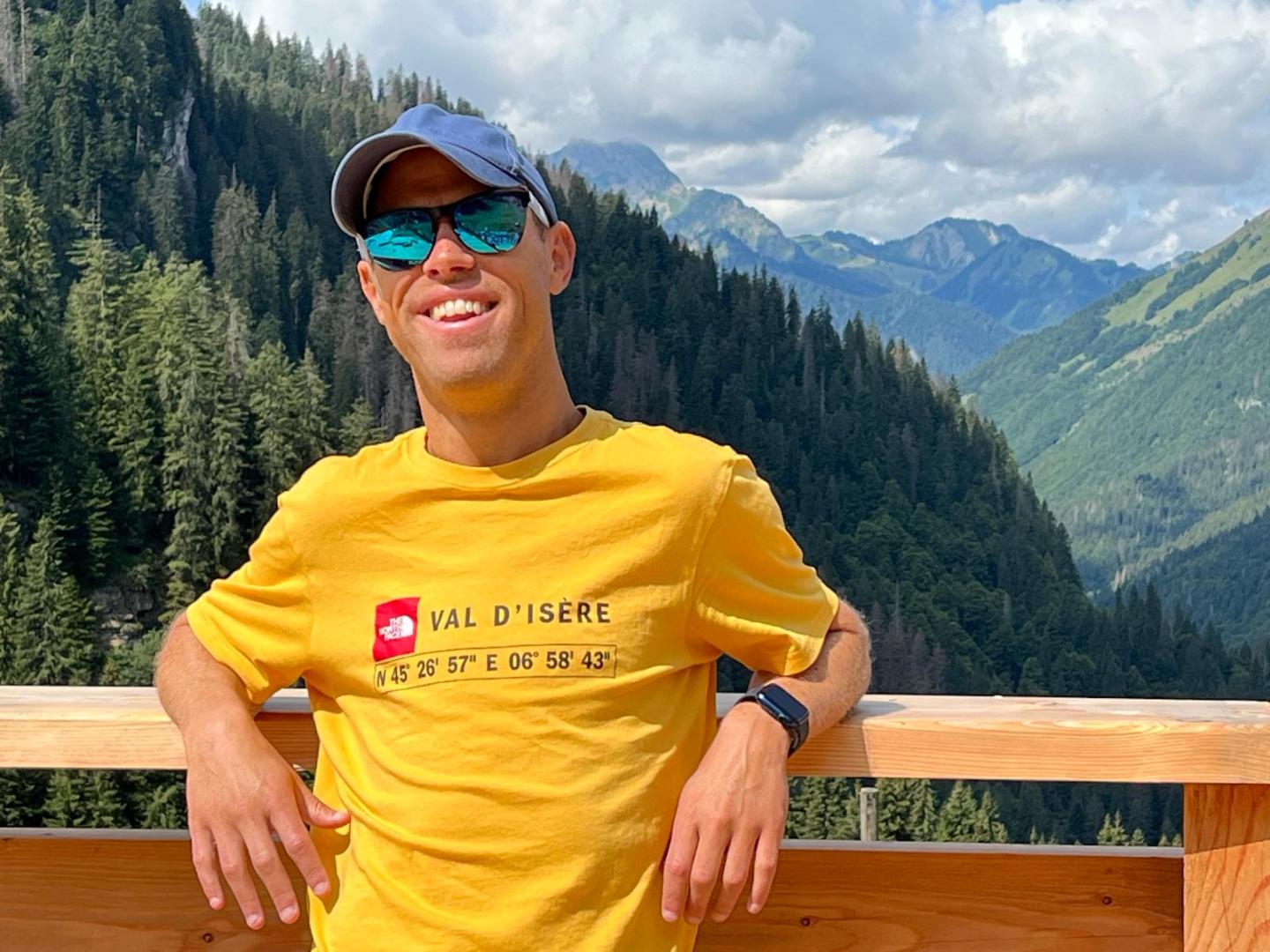
Today, we meet James Eder, the 42-year-old cofounder of Student Beans (a discount coupon company targeting the college crowd), who is now a work-life coach splitting his time between London and the French Alps, and author of The Collision Code.
Eder was inspired to build Student Beans in 2005 after organising his university’s summer ball—a party for over 600 students where he was responsible for sponsorship. Seeing how much brands wanted access to students—and how much students loved a deal—sparked the idea.
“My calls to big brands led to me asking for samples and raffle prizes,” Eder recalls to Fortune. “Soon, my student hall bedroom was filled with condoms from Durex, Jelly Belly Jelly Beans, Coffee from Starbucks, Pot Noodles and Lush soaps that made it fragrant for months after.”
At the same time, Eder was working as a brand manager for Yell, where he says he’d already worked with more than 30 brands. A business plan assignment in his degree became the perfect place to shape the concept.
So after graduating, he and his older brother—who worked at an investment bank and had his own side hustle, selling titanium power on Ebay—bootstrapped what became one of the U.K.’s defining student platforms, with a £3,000 loan.
Over 15,000 students signed up to get exclusive discount vouchers from over 200 local businesses in its first year. By year three, Student Beans had 150,000 users. And today? It’s rebranded as Pion, works with over 3,500 brands from Gymshark to Uber, with over 5 million customers in more than 100 countries.
While Eder still holds a 35% stake in the £30-million-a-year turnover company, he walked away from day-to-day operations 10 years ago to pursue another idea: A location-based rival to LinkedIn called Causr, where you’d be able to see professionals nearby and connect.
But despite raising £500,000 and attracting 3,000 users, Eder’s second startup collapsed. A heart condition diagnosis forced him to rethink everything.
Having a defibrillator implanted in his chest quietly reshaped how he approaches purpose, work, and the limited resource none of us get back: time.
Today, Eder spends up to half the year in Méribel. He skis most mornings, and is fresh off the launch of The Collision Code—his book, which hit No. 1 on Amazon’s “Most Gifted” list and has already raised more than £8,500 for heart-health charities.
Yet even with the mountain air and flexible schedule, he says the real “good life” is less about escape, and more about learning how to design a life you don’t need to run away from.
The finances
What’s been your best-ever investment?
The best investment I ever made was £400 on a three-day personal development programme called The Landmark Forum in 2009. A friend invited me to an introductory evening. I was sceptical, but I also knew I had nothing to lose. At the very least, I thought it would be three days of reflection, learning about myself and meeting new people.
But it helped me understand how I operate, why I behave the way I do and which beliefs were holding me back. It shifted how I showed up for myself and for others. It gave me the confidence to speak up, build meaningful relationships and say yes to opportunities that scared me. Everything I have done since, from founding companies to writing my book The Collision Code, traces back to the moment I decided to invest in myself.
Once I became a qualified coach, these stepping stones enabled me to design a life that means I live in the French Alps up to six months of the year, enjoying the mountain air and skiing whilst balancing my clients and health.
And the worst?
My second startup, Causr. I raised £150,000, registered for VAT (value added tax) and qualified for R&D tax credits, which brought the total investment closer to £200,000. I also invested three years of my life. We built an app for both Apple and Android and attracted around 3,000 users, but engagement was almost non-existent.
I thought with the success behind me, having built Student Beans, I was so confident the world needed this and I could make this work. But I made the mistake of moving too fast. The moment the funding landed, I felt pressure to spend it and scale immediately. If I could go back, I would have continued testing, validating and learning with a much smaller audience before committing to a full build.
What are your living arrangements like?
I’m fortunate to spend time in between London, Kentish Town, in an old converted school with floor-to-ceiling windows, and a roof terrace that gets the sun for most of the day. I moved there when we relocated the Student Beans offices to Kentish Town and when I was there day-to-day it was just a ten-minute walking commute.
For almost half the rest of the year I’ve chosen to live in the French Alps in a beautiful studio apartment just above Meribel Centre in one of the best and largest ski areas of the world, The Three Valleys. I first fell in love with the mountains, skiing in the same area at around four or five. When I was diagnosed with my heart condition, it was a dream to be able to go back there and make this happen. I feel like I’ve got the perfect balance of the buzz of London and having everything on my doorstep, then mountain escape.
What’s in your wallet?
I never carry any cash. I have two default bank cards I use: The Virgin Atlantic Credit card which affords me to travel regularly in premium and upperclass, or my Revolut, which offers such convenience for different currencies whilst travelling and a brilliant interface.
Do you invest in shares?
I used an advisor for a number of years, making sure I benefited from the ISA tax-free allowances (similar to a Roth IRA in the U.S.). The most fantastic thing I did was invest in a money coach. For the first time, I understood how it works, what a bull and bear market is, what a tracker fund is … I now manage my funds and use Vanguard and Interactive Investor to do the work. I also invest in premium bonds, which are also tax-free investments.
What personal finance advice would you give your 20-year-old self?
I would emphasise the importance of monthly contributions, however small and maximising the tax-free ISA allowances as much as possible.
What’s the one subscription you can’t live without?
My EasyJet Plus subscription. Due to most of my European travel being short-haul with the majority served by EasyJet, it’s a useful perk—priority security, speedy boarding, seat selection and extra handheld luggage.
What’s your most ridiculous ongoing expense?
I don’t have ridiculous ongoing expenses, but I make up for it with travel. Most of my outgoings are on destination travel and related expenses. My annual ski pass for those who don’t ski might be questionable.
Courtesy of James Eder
The Necessities
How do you get your daily coffee fix?
I don’t drink coffee. I never got into it. My weakness is hot chocolate with cream, which I usually drink daily during the winter in the Alps, and it ranges in price from €5 to €10—so a habit of up to €40 a week.
What about eating on the go?
My go-to when I’m in the U.K. is PizzaExpress and Wagamama, reasonably priced and quick eats. I usually eat out three to four times a week. If I’m in town and in between meetings a Pret-A-Manger is a frequent destination. For meetings, I will often be at The Ivy, The Granary Square Brasserie in Kings Cross, The Wolseley or The Delaunay. Novikov or Sketch are also favourites.
Where do you buy groceries?
When I’m in London, I’ll grab food on the way home from being out—a stir fry, or salmon. In France, I do a weekly shop from Carrefour and feel like I have a better balanced diet as I have more time to spend planning and in the kitchen. It’s just a different way of living.
What’s a typical work outfit for you?
I’m usually in jeans from Citizens of Humanity with a shirt and a tailored jacket, polished but relaxed. Day-to-day, I’ve been leaning more casual and think Uniqlo is great for quality basics. I budget up to £1,000 a year on clothes and focus on things I’ll wear again and again.
The Treats
Are you the proud owner of any tech gadgets?
My Apple Watch has been a game-changer. I originally got it with my Vitality Health Care insurance plan and it has helped me identify when I had a change in heart rhythm as well as give me more confidence in exercising.
The one gadget that I think would really improve the quality of my life is a kitchen robot. Of course, there are private chefs, but the idea of having something in my kitchen that can cook with anything is wild.
How do you unwind from the top job?
What’s your take on work-life balance at the top?
In the early days of Student Beans, I was definitely working for over 12 hours a day and felt like I was always on. That was the same at Causr. Since I’m now a coach and author, work ebbs and flows.
Some days I’m out first thing for a breakfast meeting, working through the day, having an interview, doing a photo shoot, a lunch appointment, writing content, speaking at an event, recording a podcast and out for dinner. My take on work-life balance is to reframe it as being about life and whether you’re enjoying it or not.
How do you treat yourself when you get a promotion?
Because I have always worked for myself, promotions were never my milestone. Instead, I celebrated big moments like signing a major client, or raising investment. Those were the times I treated myself to something special. I love the art in my flat and choosing pieces that connect to a memory makes them even more meaningful. One of my favourites is an original limited edition Paul Kenton print of London and the Thames.
How many days annual leave do you take a year?
Whenever I am in France, it naturally feels like a holiday even though I am working. On top of that, I actively take around three months each year to travel and explore.
Take us on holiday with you, where did you go this year?
When I go on the heart transplant list, I’ll need to be within four hours of Cambridge and the transplant hospital at all times, so it’s made me focus on making the most of travelling.
I started 2025 in France, in March, visiting Tignes, another ski resort where I was a social host on European Snow Pride, a week-long gay festival. In April, I went to Gran Canaria for a few days. From there, I flew to Geneva and visited Meribel to get the keys to my new apartment, followed by a few days in Paris for my birthday. I spent a couple of weeks in Sardinia, including a sailing trip on a catamaran around Sardinia and Corsica. I then went to Wales for The Do Lectures, a few days of glamping with a community of over a hundred inspiring people.
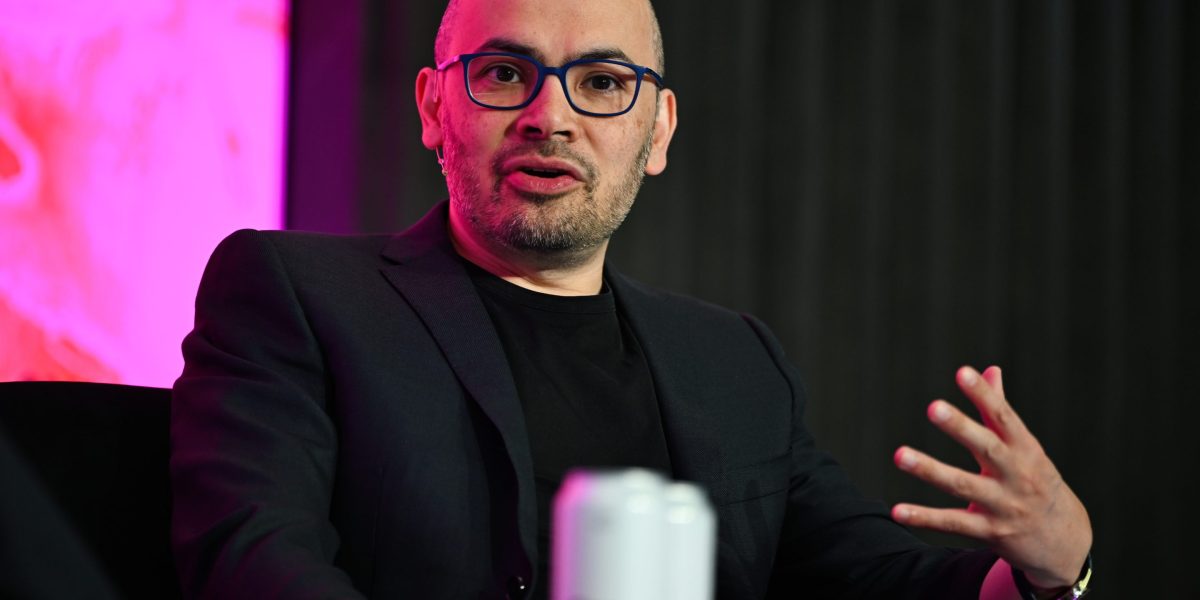
AI lab GoogleDeepMind announced a major new partnership with the U.K. government Wednesday, pledging to accelerate breakthroughs in materials science and clean energy, including nuclear fusion, as well as conducting joint research on the societal impacts of AI and on ways to make AI decision-making more interpretable and safer.
As part of the partnership, Google DeepMind said it would open its first automated research laboratory in the U.K. in 2026. That lab will focus on discovering advanced materials including superconductors that can carry electricity with zero resistance. The facility will be fully integrated with Google’s Gemini AI models. Gemini will serve as a kind of scientific brain for the lab, which will also use robotics to synthesize and characterize hundreds of materials per day, significantly accelerating the timeline for transformative discoveries.
The company will also work with the U.K. government and other U.K.-based scientists on trying to make breakthroughs in nuclear fusion, potentially paving the way for cheaper, cleaner energy. Fusion reactions should produce abundant power while producing little to no nuclear waste, but such reactions have proved to be very difficult to sustain or scale up.
Additionally, Google DeepMind is expanding its research alliance with the government-run U.K. AI Security Institute to explore methods for discovering how large language models and other complex neural network-based AI models arrive at decisions. The partnership will also involve joint research into the societal impacts of AI, such as the effect AI deployment is likely to have on the labor market and the impact increased use of AI chatbots may have on mental health.
British Prime Minister Keir Starmer said in a statement that the partnership would “make sure we harness developments in AI for public good so that everyone feels the benefits.”
“That means using AI to tackle everyday challenges like cutting energy bills thanks to cheaper, greener energy and making our public services more efficient so that taxpayers’ money is spent on what matters most to people,” Starmer said.
Google DeepMind cofounder and CEO Demis Hassabis said in a statement that AI has “incredible potential to drive a new era of scientific discovery and improve everyday life.”
As part of the partnership, British scientists will receive priority access to Google DeepMind’s advanced AI tools, including AlphaGenome for DNA sequencing; AlphaEvolve for designing algorithms; DeepMind’s WeatherNext weather forecasting models; and its new AI co-scientist, a multi-agent system that acts as a virtual research collaborator.
DeepMind was founded in London in 2010 and is still headquartered there; it was acquired by Google in 2014.
Gemini’s U.K. footprint expands
The collaboration also includes potential development of AI systems for education and government services. Google DeepMind will explore creating a version of Gemini tailored to England’s national curriculum to help teachers reduce administrative workloads. A pilot program in Northern Ireland showed that Gemini helped save teachers an average of 10 hours per week, according to the U.K. government.
For public services, the U.K. government’s AI Incubator team is trialing Extract, a Gemini-powered tool that converts old planning documents into digital data in 40 seconds, compared to the current two-hour process.
The expanded research partnership with the U.K. AI Security Institute will focus on three areas, the government and DeepMind said: developing techniques to monitor AI systems’ so-called “chain of thought”—the reasoning steps an AI model takes to arrive at an answer; studying the social and emotional impacts of AI systems; and exploring how AI will affect employment.
U.K. AISI currently tests the safety of frontier AI models, including those from Google DeepMind and a number of other AI labs, under voluntary agreements. But the new research collaboration could potentially raise concerns about whether the U.K. AISI will remain objective in its testing of its now-partner’s models.
In response to a question on this from Fortune, William Isaac, principal scientist and director of responsibility at Google DeepMind, did not directly address the issue of how the partnership might affect the U.K. AISI’s objectivity. But he said the new research agreement puts in place “a separate kind of relationship from other points of interaction.” He also said the new partnership was focused on “question on the horizon” rather than present models, and that the researchers would publish the results of their work for anyone to review.
Isaac said there is no financial or commercial exchange as part of the research partnership, with both sides contributing people and research resources.
“We’re excited to announce that we’re going to be deepening our partnership with the U.K. AISI to really focus on exploring, really the frontier research questions that we believe are going to be important for ensuring that we have safe and responsible development,” he said.
He said the partnership will produce publicly accessible research focused on foundational questions—such as how AI impacts jobs or how talking to chatbots effects mental health—rather than policy-specific recommendations, though the findings could influence how businesses and policymakers think about AI and how to regulate it.
“We want the research to be meaningful and provide insights,” Isaac said.
Isaac described the U.K. AISI as “the crown jewel of all of the safety institutes” globally and said deepening the partnership “sends a really strong signal” about the importance of engaging responsibly as AI systems become more widely adopted.
The partnership also includes expanded collaboration on AI-enhanced approaches to cybersecurity. This will include the U.K. government exploring the sue of tools like Big Sleep, an AI agent developed by Google that autonomously hunts for previously unknown “Zero Day” cybersecurity exploits, and CodeMender, another AI agent that can search for and then automatically patch security vulnerabilities in open source software.
British Technology Secretary Liz Kendall is visiting San Francisco this week to further the U.K.-U.S. Tech Prosperity Deal, which was agreed to during U.S. President Trump’s state visit to the U.K. in September. In November alone, the British government said the pact helped secure more than $32.4 billion of private investment committed to the U.K tech sector.
The Google-U.K. partnership builds on a £5 billion ($6.7 billion) investment commitment from Google made earlier this year to support U.K. AI infrastructure and research, and to help modernize government IT systems.
The British government also said collaboration supports its AI Opportunities Action Plan and its £137 million AI for Science Strategy, which aims to position the UK as a global leader in AI-driven research.
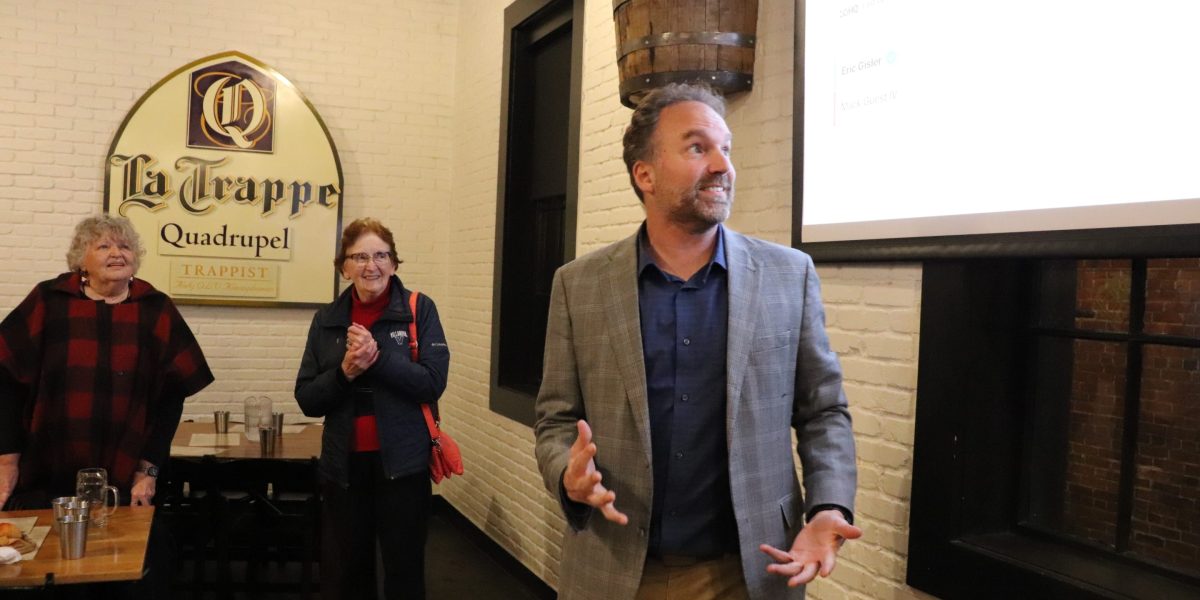
Democrat Eric Gisler claimed an upset victory Tuesday in a special election in a historically Republican Georgia state House district.
Gisler said he was the winner of the contest, in which he was leading Republican Mack “Dutch” Guest by about 200 votes out of more than 11,000 in final unofficial returns.
Robert Sinners, a spokesperson with the secretary of state’s office, said there could be a few provisional ballots left before the tally is finalized.
“I think we had the right message for the time,” Gisler told The Associated Press in a phone interview. He credited his win to Democratic enthusiasm but also said some Republicans were looking for a change.
“A lot of what I would call traditional conservatives held their nose and voted Republican last year on the promise of low prices and whatever else they were selling,” Gisler said. “But they hadn’t received that.”
Guest did not immediately respond to a text message seeking comment late Tuesday.
Democrats have seen a number of electoral successes in 2025 as the party’s voters have been eager to express dissatisfaction with Republican President Donald Trump.
In Georgia in November, they romped to two blowouts in statewide special elections for the Public Service Commission, unseating two incumbent Republicans in campaigns driven by discontent over rising electricity costs.
Nationwide, Democrats won governor’s races by broad margins in Virginia and New Jersey. On Tuesday a Democrat defeated a Trump-endorsed Republican in the officially nonpartisan race for Miami mayor, becoming the first from his party to win the post in nearly 30 years.
Democrats have also performed strongly in some races they lost, such as a Tennessee U.S. House race last week and a Georgia state Senate race in September.
Republicans remain firmly in control of the Georgia House, but their majority is likely fall to 99-81 when lawmakers return in January. Also Tuesday, voters in a second, heavily Republican district in Atlanta’s northwest suburbs sent Republican Bill Fincher and Democrat Scott Sanders to a Jan. 6 runoff to fill a vacancy created when Rep. Mandi Ballinger died.
The GOP majority is down from 119 Republicans in 2015. It would be the first time the GOP holds fewer than 100 seats in the lower chamber since 2005, when they won control for the first time since Reconstruction.
The race between Gisler and Guest in House District 121 in the Athens area northeast of Atlanta was held to replace Republican Marcus Wiedower, who was in the seat since 2018 but resigned in the middle of this term to focus on business interests.
Most of the district is in Oconee County, a Republican suburb of Athens, reaching into heavily Democratic Athens-Clarke County. Republicans gerrymandered Athens-Clarke to include one strongly Democratic district, parceling out the rest of the county into three seats intended to be Republican.
Gisler ran against Wiedower in 2024, losing 61% to 39%. This year was Guest’s first time running for office.
A Democrat briefly won control of the district in a 2017 special election but lost to Wiedower in 2018.
Gisler, a 49-year-old Watkinsville resident, works for an insurance technology company and owns a gourmet olive oil store. He campaigned on improving health care, increasing affordability and reinvesting Georgia’s surplus funds
Guest is the president of a trucking company and touted his community ties, promising to improve public safety and cut taxes. He was endorsed by Republican Gov. Brian Kemp, an Athens native, and raised far more in campaign contributions than Gisler.