Connect with us

Fashion

Gucci explores luxury health and wellness market

Published

on


By

Bloomberg

Published


January 12, 2026

If health is the new wealth, luxury brands need to command a share of this spending. From billionaires wanting to live forever to $300,000 facelifts, the uber-rich are splurging more than ever on what they put inside their bodies and how they exercise, rather than simply splashing out on clothes and accessories. This outlay competes with typical spending on material goods such as jewels and rare Birkin bags. But it also represents a lucrative market for luxury firms-  if they can find the right strategy in a business as perilous as an ice-bath plunge.

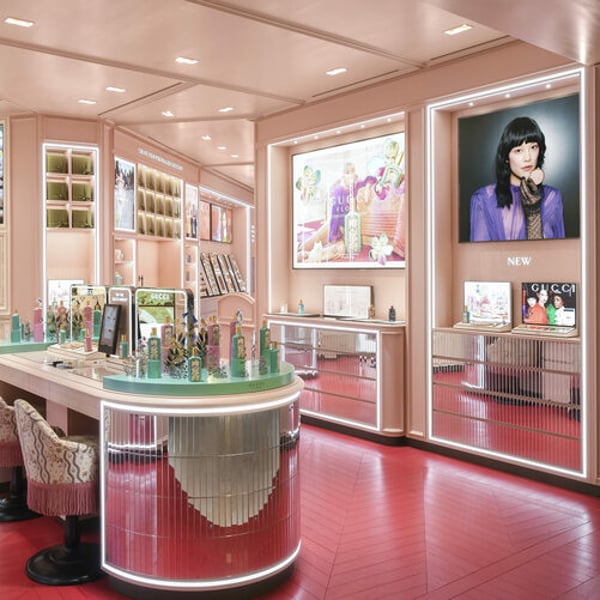
Gucci sold its beauty division to L’Oreal SA in October 2025 – DR

Global spending on wellbeing products and services promoting health, sleep, nutrition, fitness, mindfulness, and appearance totalled $2 trillion in 2024, according to McKinsey & Co., and the Business of Fashion’s State of Fashion 2026 report. That could reach as much as $2.5 trillion by 2028. McKinsey found that 84% of US consumers and 94% of those in China were prioritising wellness, with younger people leading.

Not all of the spending will be on the most top-end treatments. But winning even a fraction of that increased outlay would be a vitamin infusion for an industry that has undergone an unprecedented boom-and-bust over the past five years.

Beauty brands probably have the edge, and Kering SA, which has lagged peers as it seeks to revive Gucci, is one of the best placed. An overlooked aspect of the €4 billion ($4.7 billion) sale of its beauty division to L’Oreal SA in October is the accompanying creation of a joint venture to explore opportunities “at the intersection of luxury, wellness, and longevity.”

The two companies have so far given little away. But L’Oreal will likely contribute what it’s learned from 15 years of research into how our skin and scalp age. This has already enabled it to introduce sophisticated tools to  determine the skin’s biological age, and then identify which ingredients, and potentially oral beauty supplements, can improve the health of the body’s largest single organ. L’Oreal is also developing electronic beauty devices, such an LED mask, and has increased its investment in Galderma Group AG, which makes injectable fillers.

Kering, meanwhile, will help reach high-net-worth individuals, who it already serves through its brands and special events. Kering chief operating officer Jean-Marc Duplaix told investors in October that the company would contribute its expertise in finding suitable locations in major cities to offer top-notch experiences blending wellness, and to some extent medical care, in luxury settings.

LVMH Moet Hennessy Louis Vuitton SE’s Christian Dior brand has about 10 spas around the world, primarily in ritzy hotels. Notably, its first stand-alone spa and foray into US beauty services, at Dior’s revamped flagship store in New York, offers services such as a “happiness” program using light therapy to stimulate serotonin and dopamine- a taste of where “haute wellness,” as Dior describes it, might be headed.

But spas don’t have a monopoly. Other physical locations backed by fashion houses are catering to the desire to be fit and well. Golden Goose SpA, the Italian sneaker maker, created a Padel arena in Milan in September, with courts, a store and a social hub. Kith Ivy, a new members-only club opened by the streetwear label’s founder Ronnie Fieg in New York, combines wellness, Padel, dining, and retail in a single, exclusive spot in the West Village.

Delving into medically focused longevity programs would be a way to capitalise on the desires of the super rich to proactively manage their health. But there are risks, particularly if more extreme treatments- such as injecting the blood of teenagers for rejuvenation- go mainstream. As with fashion’s move into hospitality, where every meal or room that doesn’t meet an important client’s expectations hurts the brand, problems with, say, hormone therapy would be even more value destructive. If beauty or luxury companies do go down this route, they need to ensure treatments are backed by science and executed impeccably.

For those unwilling to take the cold plunge, offering wellness-inspired ranges or collaborations may be more palatable. LVMH’s Celine last year produced a pilates collection, including a $3,000 leather-covered kettlebell. Making technology-enhanced jewellery more stylish is another option, given the popularity of both health tracking and pricey baubles. And while swimwear has tended to focus on looking chic on Ibiza beaches, there’s scope for more functional yet fashionable swimsuits, wetsuits or thermal changing robes. Prada SpA’s Linea Rossa sports line, for example, could be a leader here.   

Alternatively, luxury brands could align themselves with wellness in their marketing, perhaps encouraging us to pause our busy lives to breathe and feel joy, Erwan Rambourg, an analyst at HSBC Holdings Plc, suggests. Louis Vuitton’s ship-shaped store in Shanghai is focused on physical travel; could the next “The Louis” be concerned with one’s inner journey?

With the rising use of weight-loss drugs encouraging strength training to preserve muscle mass, Claudia D’Arpizio, who leads the global fashion and luxury practice at Bain & Co., predicts more close-fitting styles, and sleeveless items that emphasise toned arms. Is it a coincidence that Demna Gvasalia’s first looks for Gucci included slim silhouettes?

And with the rich living longer, more active lives, they may have a greater appetite for physical goods. We treat ourselves most when we feel happy and wealthy, Mario Ortelli, chief executive officer of luxury advisory firm Ortelli & Co., told me. If aging well is added to this list, then spending on top-end goods, which tends to peak when we’re in our 50’s, could be extended for many more years.

From biohacking to adding bling to Oura rings, big luxury might make a new year’s resolution to get into shape.


Source link

Continue Reading

Fashion

Brunello Cucinelli full-year revenues up 11.5% driven by solid US and Asia sales

Published

on


By

Reuters

Published


January 12, 2026

Revenues at Italian luxury group Brunello Cucinelli rose 11.5% at constant exchange rates last year, in line with its most recent guidance, boosted by ⁠solid growth across all regions, and particularly in the Americas and ⁠in Asia.

Brunello Cucinelli is known for its Made in Italy designs

The cashmere brand, the first in the luxury sector to report 2025 preliminary sales, said ‍on ‌Monday its revenues rose to 1.41 billion euros ($1.65 ⁠billion) last year ‌and reaffirmed that revenues would increase ‌by 10% in 2026.

The company, which stands out in a luxury sector hit by slowing demand thanks to its focus ‍on wealthier consumers, reported a 11.9% increase in turnover in the fourth quarter alone. Both the ‌retail ⁠and ​wholesale channels contributed to the sales ⁠growth, ​though the latter at a more moderate pace.

In December, Cucinelli, whose cashmere jumpers ​can cost several thousand euros, raised its revenue growth forecast for 2025 ⁠to between 11% ⁠and 12% at constant exchange rates. The business has also recently confirmed its strong emphasis on the wholesale channel, seeing it as a good sales driver despite the challenging retail landscape. 

© Thomson Reuters 2026 All rights reserved.


Source link

Continue Reading

Fashion

Italy gears up to kick off the menswear season in Florence, then Milan

Published

on


Published


January 12, 2026

As ever, Italy kicks off the AW 2026–27 menswear weeks with two unmissable fixtures for industry professionals: Pitti Uomo 109 (Florence, January 13–16) and Milano Fashion Week Uomo, scheduled for January16–20.

Under the winter theme ‘Motion’, 750 brands (47% from abroad) present their collections at the Fortezza da Basso, spread across the event’s five signature sections (Fantastic Classic, Futuro Maschile, Dynamic Attitude, Superstyling, and I Go Out). Greeting visitors at the Fortezza is ‘Ancient/New Site,’ an installation by French architect Marc Leschelier, occupying 1,700 square metres of the central piazza with 18 monoliths measuring 5 metres high, 3 metres wide, and 9 metres deep.

Among the season’s key innovations is the new HiBeauty area, dedicated to niche perfumery; drawing on Pitti Fragranze’s expertise, it hosts a selection of 10 independent brands within the Futuro Maschile section. Also debuting is a strategic partnership between Pitti Immagine and Hyperscout, aimed at bringing AI-based matchmaking and profiling tools into the fair’s ecosystem from this edition onwards.

French architect Marc Leschelier’s 'Ancient/New Site' installation welcomes visitors to the Fortezza da Basso
French architect Marc Leschelier’s ‘Ancient/New Site’ installation welcomes visitors to the Fortezza da Basso

The Florentine fair features 43 new and returning names, including Save the Duck, Berwich, Bogner, Final Draft, Gabriel Stunz, Glenover, Hestra, Hippy Realisti, Inis Meáin Ireland, Jott, Mackie, Mallet, Santha, Snow Peak, Wyeth, Bareen, Alpe Piano, and Taakk. Notably, the Franco-German designer Gabriel Stunz, fresh from Paris Fashion Week, brings his eponymous brand, founded in 2011, to Florence with a collection inspired by Manon Lescaut. WP Lavori in Corso hosts, at the Fortezza, the official launch of the Baracuta Donna collection, while Roy Roger’s and Kappa unveil a co-lab ski suit that fuses denim DNA with technical innovation. For Schneiders Salzburg, the historic Austrian loden brand with 80 years of history, Pitti Uomo marks the first step in a global relaunch, driven by its new owner, the Biella-based entrepreneur Giovanni Schneider. Japanese sports giant Asics chooses the Fortezza to present its new Asics Walking model, reinterpreting the classic shoe with a technical sole.

Japanese designer Soshi Otsuki, Guest Designer at Pitti Uomo 109.

Significant attention is reserved for the international guest designers: Japanese designer Soshi Otsuki stages a runway event for his brand, which blends Japanese style and Made in Italy craftsmanship, while Hed Mayner presents a show with his label, defined by a conceptual, architectural approach. In addition, Tokyo-based designer Shinyakozuka, known for his meticulous focus on form and proportion, takes centre stage with work often hand-painted or hand-finished, headlining the fair’s Special Event: a runway show in collaboration with the Japan Fashion Week Organisation.

The Far East is also the focus of two further highlights: Consinee, a Chinese leader in cashmere fibres and precious yarns, presents the site-specific installation ‘Echoes of Craft’, curated by Sara Sozzani Maino alongside Georgian designer Galib Gassanoff; while Sebiro Sampo, a Made in Japan project launched by a group of six leading Japanese menswear companies, stages, in collaboration with Vitale Barberis Canonico, Europe’s first ‘walk-show’, setting off from the Fortezza da Basso and continuing through the streets of Florence’s historic centre.

Japan is also represented by the seventh edition of J∞Quality, the project dedicated to high-quality Japanese apparel curated by the Japan Apparel and Fashion Industry Association (JAFIC), and, in the Hall of Nations, by the Japan Leather Showroom initiative led by the Japanese Ministry of Economy, Trade, and Industry. For the second time, CODE Korea returns to the Fortezza with a special spotlight on contemporary creativity in fashion, design and cultural experiences from South Korea, and Nordic menswear will also be on show thanks to the Scandinavian Manifesto area, coordinated by CIFF.

Hed Mayner, Guest Designer at Pitti Uomo 109.

Overlapping Pitti by one day, Milano Fashion Week Uomo opens the men’s catwalk season on January 16, with a total of 76 appointments: 18 physical and 7 digital fashion shows, 39 presentations, and 12 events.

The official runway calendar features Ralph Lauren, Domenico Orefice, and Victor Hart for the first time. In the digital fashion show calendar, Absent Findings, Ajabeng, Kente Gentlemen, Raimondi, State Of Chaos, and Subwae appear as new additions. Zegna and Dsquared2 return to the défilé calendar, with a show that will be followed by a party. As for the presentation schedule, there are seven new brands: Bottega Bernard, Dunhill, K-Way, Plās Collective, Moarno, Sagaboi, and Stone Island, while Ferragamo returns.

The leading names in Italian menswear are confirmed, including Brunello Cucinelli, Prada, Giorgio Armani, Corneliani, Tod’s, Brioni, Lardini, Kiton, Mordecai, and Montecore. Anniversaries being marked include Blauer’s 25th, Pronounce’s 10th, and Marcello Pipitone-Bonola’s fifth, while, in terms of events, EA7 Emporio Armani will celebrate the Milano Cortina 2026 Olympic and Paralympic Games in store, and K-Way will present, with Vogue and GQ, “Montagna Milano: The Alpine Club in Town,” a three-day public event featuring panels, workshops, and après-ski experiences.

The communications campaign, produced with the City of Milan and Yes Milano, also highlights new talent and the city’s emblematic locations, developing a narrative that includes collaboration with Milano Cortina 2026. Shot by photographer Alessandro Burzigotti, the campaign features the brands Ascend Beyond, Cascinelli, Federico Cina, Gams Note, Meriisi, Moarno, Mordecai, Mtl Studio, Noskra, Setchu, and Viapiave33.

Finally, once again for this edition, the Sozzani Foundation will serve as CNMI’s space during Men’s Fashion Week, with the aim of supporting and promoting the next generation of designers. The venue will host shows by Domenico Orefice and Simon Cracker, and presentations by Bottega Bernard, Maragno, Marcello Pipitone-Bonola, Moarno, Mtl Studio, Pecoranera, and Sagaboi.

This article is an automatic translation.
Click here to read the original article.

Copyright © 2026 FashionNetwork.com All rights reserved.


Source link

Continue Reading

Fashion

VSP Vision appoints Nicola Zotta as head of both Marchon and Marcolin

Published

on


Published


January 12, 2026

US eyewear group VSP Vision, headquartered in Rancho California, has announced the appointment of Nicola Zotta as president of eyewear and managing director of both Marchon Eyewear and Marcolin. Following VSP Vision’s acquisition of Marcolin, completed last month, Zotta will lead the integration of Marcolin and Marchon, two groups that are global leaders in the design, production, and distribution of eyewear.

Nicola Zotta – Marcolin

“Nicola uniquely combines Italian roots with leadership experience in the US, a proven ability to drive growth, and a deep understanding of, and alignment with, our commitment to all stakeholders,” said Michael Guyette, president and CEO of VSP Vision. “In this new chapter for our eyewear business, we are confident that his guidance and vision will enable us to bring our customers the very best that Marchon and Marcolin can deliver together.”

Zotta succeeds Fabrizio Curci, who has chosen to step down after serving as CEO and general manager of Marcolin since June 2020. To facilitate the transition, Curci will work alongside Zotta as an adviser in the coming months.

In addition, Thomas Burkhardt, Marchon’s president since 2022, has also decided to leave his position and will continue as an adviser to Nicola Zotta, focusing on the integration of the respective brand portfolios of Marcolin and Marchon.

“Under Fabrizio’s leadership, Marcolin has accelerated its growth through the strategic expansion of its brand portfolio, improved operational efficiency and a strong focus on commercial excellence,” Guyette added. “We are grateful for the contribution he has made over the years and intend to build on the foundation laid during his tenure.”

Reporting directly to Guyette, Zotta returns to VSP Vision after serving as CEO of Artsana Group since 2022. A seasoned executive in the eyewear industry, Nicola Zotta was President of Marchon from 2016 to 2022, having previously held key roles at the company, including vice president and managing director for EMEA and APAC from 2009. Before joining Marchon, he gained more than a decade of experience at Safilo, where he held several leadership positions.

“It is an honour to lead two world-class eyewear companies: the combination of their strengths creates an exceptional portfolio of luxury, lifestyle, and performance brands,” said Zotta. “By bringing together complementary capabilities and distinctive strengths, we are ideally positioned to continue offering eyewear of the highest standards of design and quality, underpinned by craftsmanship and innovation.”

This article is an automatic translation.
Click here to read the original article.

Copyright © 2026 FashionNetwork.com All rights reserved.


Source link

Continue Reading

Trending

Copyright © Miami Select.