If health is the new wealth, luxury brands need to command a share of this spending. From billionaires wanting to live forever to $300,000 facelifts, the uber-rich are splurging more than ever on what they put inside their bodies and how they exercise, rather than simply splashing out on clothes and accessories. This outlay competes with typical spending on material goods such as jewels and rare Birkin bags. But it also represents a lucrative market for luxury firms- if they can find the right strategy in a business as perilous as an ice-bath plunge.
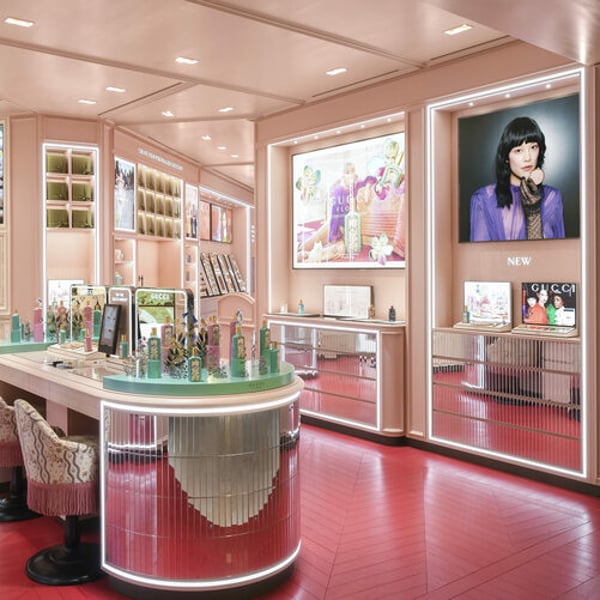
Gucci sold its beauty division to L’Oreal SA in October 2025 – DR
Global spending on wellbeing products and services promoting health, sleep, nutrition, fitness, mindfulness, and appearance totalled $2 trillion in 2024, according to McKinsey & Co., and the Business of Fashion’s State of Fashion 2026 report. That could reach as much as $2.5 trillion by 2028. McKinsey found that 84% of US consumers and 94% of those in China were prioritising wellness, with younger people leading.
Not all of the spending will be on the most top-end treatments. But winning even a fraction of that increased outlay would be a vitamin infusion for an industry that has undergone an unprecedented boom-and-bust over the past five years.
Beauty brands probably have the edge, and Kering SA, which has lagged peers as it seeks to revive Gucci, is one of the best placed. An overlooked aspect of the €4 billion ($4.7 billion) sale of its beauty division to L’Oreal SA in October is the accompanying creation of a joint venture to explore opportunities “at the intersection of luxury, wellness, and longevity.”
The two companies have so far given little away. But L’Oreal will likely contribute what it’s learned from 15 years of research into how our skin and scalp age. This has already enabled it to introduce sophisticated tools to determine the skin’s biological age, and then identify which ingredients, and potentially oral beauty supplements, can improve the health of the body’s largest single organ. L’Oreal is also developing electronic beauty devices, such an LED mask, and has increased its investment in Galderma Group AG, which makes injectable fillers.
Kering, meanwhile, will help reach high-net-worth individuals, who it already serves through its brands and special events. Kering chief operating officer Jean-Marc Duplaix told investors in October that the company would contribute its expertise in finding suitable locations in major cities to offer top-notch experiences blending wellness, and to some extent medical care, in luxury settings.
LVMHMoet HennessyLouis Vuitton SE’s Christian Dior brand has about 10 spas around the world, primarily in ritzy hotels. Notably, its first stand-alone spa and foray into US beauty services, at Dior’s revamped flagship store in New York, offers services such as a “happiness” program using light therapy to stimulate serotonin and dopamine- a taste of where “haute wellness,” as Dior describes it, might be headed.
But spas don’t have a monopoly. Other physical locations backed by fashion houses are catering to the desire to be fit and well. Golden Goose SpA, the Italian sneaker maker, created a Padel arena in Milan in September, with courts, a store and a social hub. Kith Ivy, a new members-only club opened by the streetwear label’s founder Ronnie Fieg in New York, combines wellness, Padel, dining, and retail in a single, exclusive spot in the West Village.
Delving into medically focused longevity programs would be a way to capitalise on the desires of the super rich to proactively manage their health. But there are risks, particularly if more extreme treatments- such as injecting the blood of teenagers for rejuvenation- go mainstream. As with fashion’s move into hospitality, where every meal or room that doesn’t meet an important client’s expectations hurts the brand, problems with, say, hormone therapy would be even more value destructive. If beauty or luxury companies do go down this route, they need to ensure treatments are backed by science and executed impeccably.
For those unwilling to take the cold plunge, offering wellness-inspired ranges or collaborations may be more palatable. LVMH’s Celine last year produced a pilates collection, including a $3,000 leather-covered kettlebell. Making technology-enhanced jewellery more stylish is another option, given the popularity of both health tracking and pricey baubles. And while swimwear has tended to focus on looking chic on Ibiza beaches, there’s scope for more functional yet fashionable swimsuits, wetsuits or thermal changing robes. Prada SpA’s Linea Rossa sports line, for example, could be a leader here.
Alternatively, luxury brands could align themselves with wellness in their marketing, perhaps encouraging us to pause our busy lives to breathe and feel joy, Erwan Rambourg, an analyst at HSBC Holdings Plc, suggests. Louis Vuitton’s ship-shaped store in Shanghai is focused on physical travel; could the next “The Louis” be concerned with one’s inner journey?
With the rising use of weight-loss drugs encouraging strength training to preserve muscle mass, Claudia D’Arpizio, who leads the global fashion and luxury practice at Bain & Co., predicts more close-fitting styles, and sleeveless items that emphasise toned arms. Is it a coincidence that Demna Gvasalia’s first looks for Gucci included slim silhouettes?
And with the rich living longer, more active lives, they may have a greater appetite for physical goods. We treat ourselves most when we feel happy and wealthy, Mario Ortelli, chief executive officer of luxury advisory firm Ortelli & Co., told me. If aging well is added to this list, then spending on top-end goods, which tends to peak when we’re in our 50’s, could be extended for many more years.
From biohacking to adding bling to Oura rings, big luxury might make a new year’s resolution to get into shape.