Connect with us

Politics

Greg Steube urges House to consider his marijuana rescheduling bill in wake of Donald Trump announcement

Published

on


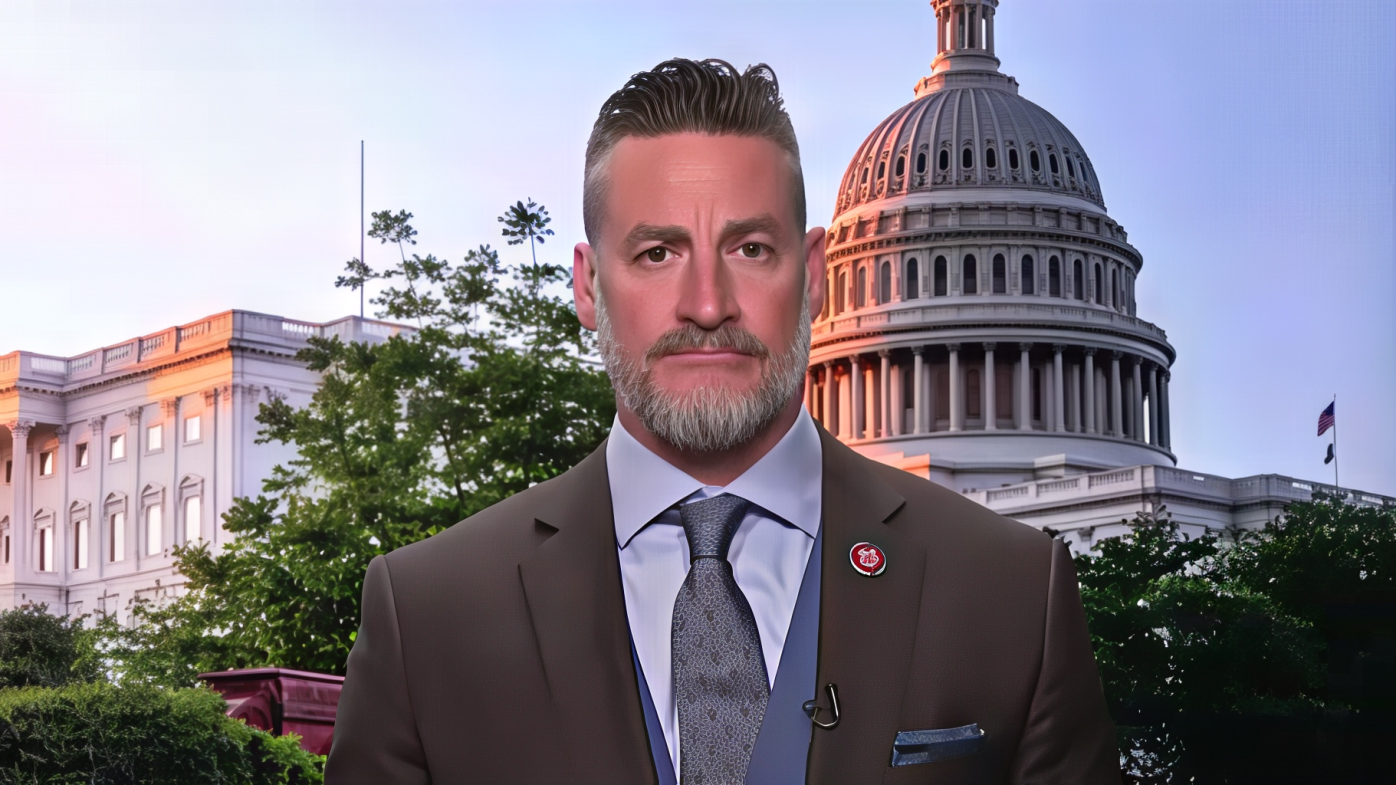
U.S. Rep. Greg Steube says President Donald Trump’s order to reschedule marijuana offers a window for Congress to pass his bill doing just that.

“President Trump is right. Now is the time to reclassify marijuana, and the Drug Enforcement Administration must open the door for scientific research into the plant’s medicinal value,” said Steube, a Bradenton Republican.

Trump’s order directs Attorney General Pam Bondi to “take all necessary steps to complete the rulemaking process related to rescheduling marijuana to Schedule III” of the Controlled Substances Act.

Steube says his bill (HR 4963) offers a pathway to expedite that, as it would reschedule the drug from current Schedule I to Schedule III within 60 days after it is enacted.

“My Marijuana 1-to-3 Act will deliver exactly what President Trump has requested: legislation that moves marijuana from Schedule I to Schedule III under the Controlled Substances Act,” Steube said.

“This bill will create new opportunities for scientists and physicians to develop treatments and cures for pain and disease. I am grateful for the White House’s leadership on this issue and call on my colleagues in Congress to bring the Marijuana 1-to-3 Act to the House floor immediately.”

Schedule I includes hard drugs, such as “heroin, lysergic acid diethylamide (LSD), marijuana (cannabis), 3,4-methylenedioxymethamphetamine (ecstasy), methaqualone, and peyote.”

Schedule III includes “drugs with a moderate to low potential for physical and psychological dependence” like “products containing less than 90 milligrams of codeine per dosage unit (Tylenol with codeine), ketamine, anabolic steroids, testosterone.”

Steube has filed this bill for the last four years.


Source link

Continue Reading

Politics

Donald Trump’s handpicked Board votes to rename Washington performing arts center the Trump-Kennedy Center

Published

on


President Donald Trump’s handpicked board voted Thursday to rename Washington’s leading performing arts center as the Trump-Kennedy Center, the White House said, in a move that was quickly denounced as a “disgrace” by the Democratic Leader of the House, who is on the Board.

Press secretary Karoline Leavitt announced the vote on social media, attributing it to the “unbelievable work President Trump has done over the last year in saving the building. Not only from the standpoint of its reconstruction, but also financially, and its reputation.”

Trump, a Republican who’s Chairman of the Board, said at the White House that he was “surprised” and “honored” by the vote.

“The Board is a very distinguished Board, most distinguished people in the country and I was surprised by it and I was honored by it,” he said.

House Democratic Leader Hakeem Jeffries told reporters that Trump’s handpicked Board has no authority to rename the center in the absence of legislative action, “and we’re going to make that clear.” The New York Democrat is an ex officio member of the Board because of his position in Congress.

Trump often refers to the John F. Kennedy Center for the Performing Arts, which is named for a Democratic predecessor, as the “Trump Kennedy Center.”

Asked Dec. 7 as he walked the red carpet for the Kennedy Center Honors program whether he would rename the venue after himself, Trump said such a decision would be up to the Board.

Earlier this month, Trump talked about a “big event” happening at the “Trump Kennedy Center” before saying, “excuse me, at the Kennedy Center,” as his audience laughed. He was referring to the FIFA World Cup soccer draw for 2026, in which he participated.

A name change won’t sit well with some Kennedy family members.

Maria Shriver, a niece of John F. Kennedy, referred to the legislation introduced in Congress to rebrand the Kennedy Center as the Donald J. Trump Center for the Performing Arts as “insane” in a social media post in July.

“It makes my blood boil. It’s so ridiculous, so petty, so small minded,” she wrote. “Truly, what is this about? It’s always about something. ‘Let’s get rid of the Rose Garden. Let’s rename the Kennedy Center.’ What’s next?”

Trump earlier this year turned the Kennedy-era Rose Garden at the White House into a patio by removing the lawn and laying down paving stones.

Another Kennedy family member, Robert F. Kennedy Jr., serves in Trump’s Cabinet as secretary of the Department of Health and Human Services.

Trump showed scant interest in the Kennedy Center during his first term as President, but since returning to office in January he has replaced Board members appointed by Democratic Presidents with some of his most ardent supporters, who then elected him as Board Chairman.

He also has criticized the center’s programming and its physical appearance and has vowed to overhaul both.

Trump secured more than $250 million from the Republican-controlled Congress for renovations of the building.

He attended opening night of the musical “Les Misérables,” and last week he served as host of the Kennedy Center Honors program after not attending the show during his first term as President. The awards program is scheduled to be broadcast by CBS and Paramount+ on Dec. 23.

Sales of subscription packages are said to have declined since Trump’s takeover of the center, and several touring productions, including “Hamilton,” have canceled planned runs there. Rows upon rows of empty seats have been seen in the Concert Hall during performances by the National Symphony Orchestra.

Some performers, including actor Issa Rae and musician Rhiannon Giddens, have scrapped scheduled appearances, and Kennedy Center consultants including musician Ben Folds and singer Renée Fleming have resigned.

___

Republished with permission of The Associated Press.


Source link

Continue Reading

Politics

Donald Trump signs executive order that could reclassify marijuana as a less dangerous drug

Published

on


President Donald Trump signed an executive order Thursday that could reclassify marijuana as a less dangerous drug and open new avenues for medical research, a major shift in federal drug policy that inches closer to what many states have done.

The switch would move marijuana away from its current classification as a Schedule I drug, alongside heroin and LSD. Cannabis would instead be a Schedule III substance, like ketamine and some anabolic steroids.

Reclassification by the Drug Enforcement Administration would not make it legal for recreational use by adults nationwide, but it could change how the drug is regulated and reduce a hefty tax burden on the cannabis industry.

The Republican President said he had received a deluge of phone calls supporting the move and its potential to help patients. “We have people begging for me to do this. People that are in great pain,” he said.

Medical marijuana is now allowed by 40 states and Washington, D.C., and many states have also legalized it for recreational use. But U.S. laws have remained stricter, potentially leaving people subject to federal prosecution.

The Justice Department under Trump’s Democratic predecessor, Joe Biden, previously proposed reclassifying marijuana to a Schedule III substance. Unlike Biden, Trump did not have open encouragement from across his party for the move. Some Republicans have spoken out in opposition to any changes and urged Trump to maintain current standards.

Such a switch typically requires an arduous process, including a public comment period that has drawn tens of thousands of reactions from across the U.S. The DEA was still in the review process when Trump took office in January. Trump ordered that process to move along as quickly as legally possible, though an exact timeline remained unclear.

Polling from Gallup shows Americans largely back a less restrictive approach: Support for marijuana legalization has grown from just 36% in 2005 to 64% this year. Yet that’s down slightly from a couple of years ago, primarily because of declining support among Republicans, Gallup said.

Trump’s order also calls for expanded research and access to CBD, a legal and increasingly popular hemp-derived product whose benefits to treat things like pain, anxiety and sleep issues are debated by experts.

A new Medicare pilot program would allow older adults to access legal hemp-derived CBD at no cost, if recommended by a doctor, said Dr. Mehmet Oz, who heads the Centers for Medicare and Medicaid Services.

Still, the marijuana changes are not universally welcomed. More than 20 Republican senators, several of them staunch Trump allies, signed a letter this year urging the President to keep marijuana a Schedule I drug.

Led by North Carolina Sen. Ted Budd, the group argued that marijuana continues to be dangerous and that a shift would “undermine your strong efforts to Make America Great Again.” They argued, too, that marijuana negatively affects users’ physical and mental health, as well as road and workplace safety.

“The only winners from rescheduling will be bad actors such as Communist China, while Americans will be left paying the bill,” the letter said, referring to China’s place in the cannabis market.

In the early days of the second Trump administration, the Justice Department showed little interest in discussing marijuana rescheduling, which had encountered strong resistance from inside the DEA under Biden, according to a former U.S. official who spoke on the condition of anonymity in an effort to avoid retaliation.

Trump has made his crusade against other drugs, especially fentanyl, a feature of his second term, ordering U.S. military attacks on Venezuelan and other boats the administration insists are ferrying drugs. He signed another executive order declaring fentanyl a weapon of mass destruction.

Jack Riley, a former deputy administrator of the DEA, backed the focus on the drug war as a national security priority, but said marijuana rescheduling sends a conflicting message.

“He’s blowing up boats in Latin America that he says are full of fentanyl and cocaine but on the other hand loosening the restrictions that will allow wider exposure to a first-level drug,” said Riley, who was in the running to lead the DEA upon Trump’s return to the White House. “That is clearly a contradiction.”

Opponents like the group Smart Approaches to Marijuana vowed to sue if the reclassification goes through.

On the other end of the spectrum, some pro-marijuana advocates want to see the government go further and treat cannabis more like alcohol. Trump hasn’t committed to bigger steps like decriminalizing marijuana, and said Thursday that he encouraged his own children not to use drugs.

Still, he said “the facts compel” the government to recognize that marijuana can have legitimate medical applications. And it has become a part of the health care environment in many states.

Currently, 30,000 licensed health care practitioners are authorized to recommend its use for more than 6 million patients for at least 15 medical conditions, the U.S. Department of Health and Human Services found.

The Food and Drug Administration has found credible scientific support for its use to treat anorexia-related medical conditions, nausea, vomiting and pain. Older adults, in particular, are using it for chronic pain, which afflicts 1 in 3 from that age group.

___

Republished with permission of The Associated Press.


Source link

Continue Reading

Politics

Judge dismisses complaint against Miami land transfer for Donald Trump library

Published

on


A Judge in Miami has dismissed a complaint challenging a college’s decision to gift prime downtown real estate for Donald Trump’s future presidential library, clearing the way for the real estate developer-turned-President to build a towering monument to his political rise in an iconic stretch of the city.

A local activist brought the lawsuit against Miami Dade College, arguing the school’s Board didn’t give sufficient public notice and violated the state’s open government law when Board members voted in September to give away the nearly 3-acre (1.2-hectare) property in downtown Miami.

The site is a developer’s dream and is valued at more than $67 million, according to a 2025 assessment by the Miami-Dade County property appraiser. One real estate expert wagered that the parcel — one of the last undeveloped lots on a palm tree-lined stretch of Biscayne Boulevard — could sell for hundreds of millions of dollars more.

Circuit Judge Mavel Ruiz had initially sided with Marvin Dunn, the retired professor and chronicler of local Black history who filed the case. In October, Ruiz temporarily blocked the college from formally transferring the land while the challenge played out, setting a trial for next August.

But on Thursday, Ruiz ruled in favor of the college, dismissing Dunn’s complaint without prejudice after the Board redid the vote on the land giveaway earlier this month at a more than four-hour-long public meeting that included fiery testimony on the issue.

Attorneys for the college maintain that the board did not violate state law, but argued that any alleged violation had been “fully cured” following the redo vote.

After the college voted in September to transfer the property to a fund controlled by Republican Gov. Ron DeSantis and the Florida Cabinet, the GOP officials voted to transfer the land again, effectively putting the property under the control of the Trump family when they deeded it to the foundation for Trump’s library. That foundation is led by three trustees: Eric Trump; Tiffany Trump’s husband, Michael Boulos; and the President’s attorney, James Kiley.

Eric Trump has pledged the future library will be “one of the most beautiful buildings ever built” and “an Icon on the Miami skyline.” Under local zoning rules, the best use of the property would be a towering condo building, according to one Miami real estate expert, who described the site as a potential “cash cow.”

___

Republished with permission of The Associated Press.


Source link

Continue Reading

Trending

Copyright © Miami Select.