
Politics
Gov. DeSantis wants fix to ‘flawed census’ he says shorted Florida congressional representation

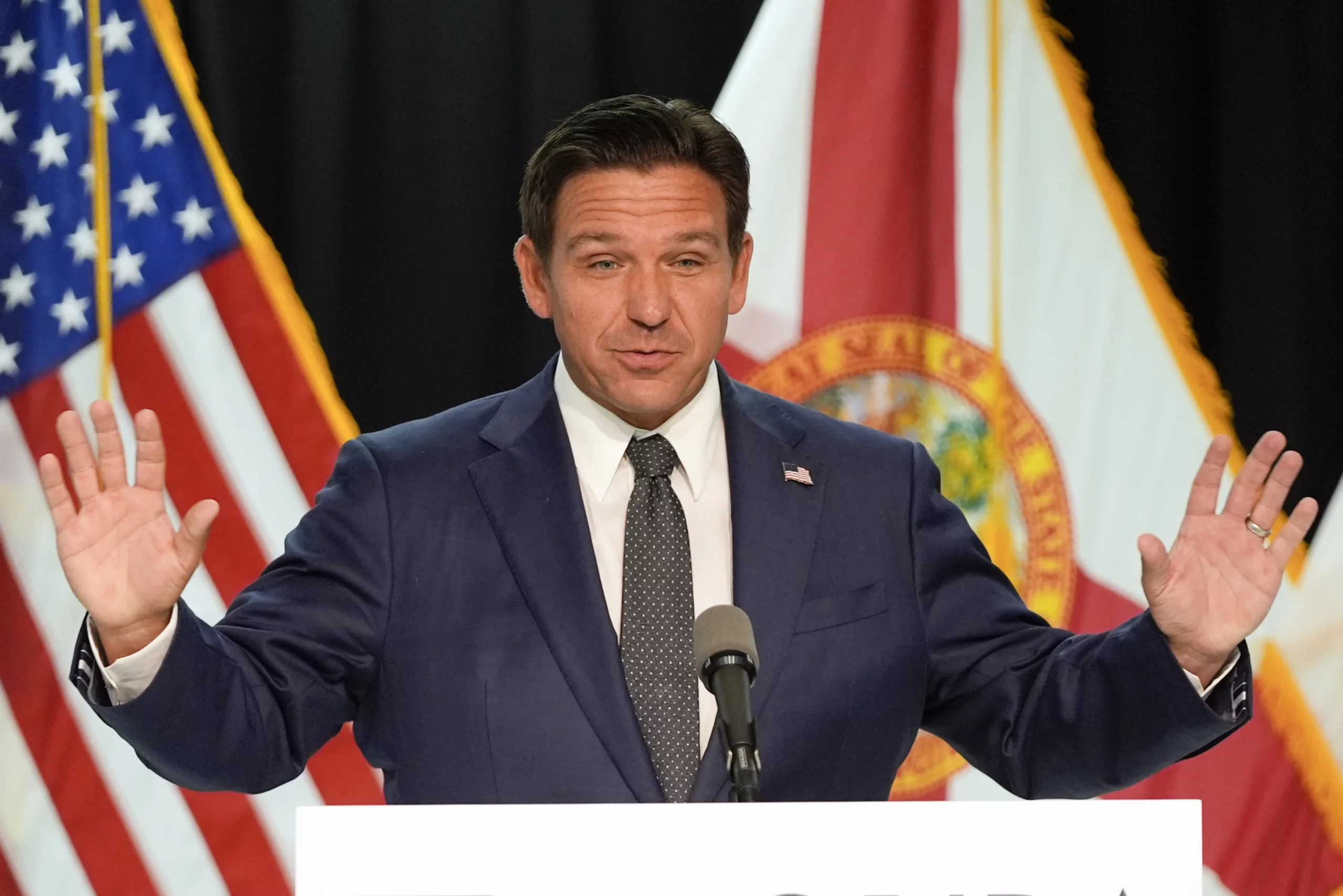
As the U.S. Commerce Department faces a federal lawsuit regarding the 2020 census, Gov. Ron DeSantis is suggesting a solution much simpler than going through court proceedings.
“Fix it,” DeSantis advised the defendants, Commerce Secretary Howard Lutnick and acting U.S. Census Bureau Acting Director Ron S. Jarmin.
“The Commerce Department should just acknowledge the flawed census and correct it on its own. No need to go through litigation if both sides agree that states like Florida got shortchanged.”
The lawsuit was filed last month by the University of South Florida College Republicans and the Pinellas County Young Republicans. An answer is due Nov. 17, but the government shutdown could delay that, as is the case with many federal suits right now.
The plaintiffs request injunctive relief from a three-Judge panel, claiming “unconstitutional population counts” and “unlawful and unconstitutional statistical methods” on the grounds that “due to the COVID lockdown, individuals who might otherwise have resided in short-term institutional living arrangements were instead residing at their permanent household, located elsewhere.”
They demand “a new 2020 Census report that does not use statistical sampling or statistical methods.”
Questions remain as to whether a count that complies with even the 2020 practices could be done before qualifying deadlines.
In 2020, data collection took seven months, starting in March of that year and ending in October. Preliminary work started the previous year, including address verification. Yet it took until April 26, 2021, to deliver redistricting counts to the states.
DeSantis previously said the White House could “award” Florida a seat, as well as using an archaic ethnic slur and saying the state was “gypped” out of a seat. He has also blamed former President Barack Obama, who served from 2009 to 2017, for Florida’s post-2020 census map that his office drew up and compelled the Legislature to approve ahead of the 2022 elections.
Florida was cheated, according to DeSantis, despite the 20-8 majority Republicans now hold in the congressional delegation. To put that supermajority in perspective, there are a little more than 1.3 million more Republicans than Democrats in a state with nearly 13.6 million registered voters.

“If you look at a state like Florida, we’re a red state with a few blue dots, right? And so if you do fair maps, Republicans are going to do much better,” he said, conflating land mass with population concentration.
House Speaker Daniel Perez has already announced plans for a Select Committee on Congressional Redistricting. That means the work has begun independently of DeSantis’ Office, and independently of any move to “fix” the previous Census that could emerge, in theory, as a compromise solution to the lawsuit.
Prior to taking this position, DeSantis acknowledged a more protracted process awaited.
“It’ll happen in the Spring, and the Legislature, I fully anticipate, will produce a revised congressional map — maybe with 29 seats, maybe with the current 28, maybe with the VRA district, maybe eliminating that,” he told interviewer Mark Levin back in August.
DeSantis previously argued that a Florida Supreme Court ruling that upheld the current congressional map means Florida should take another look at South Florida districts to see if any jurisdictions were crafted with race as a motivating factor.
Meanwhile, the U.S. Supreme Court appears likely to look at a case (Louisiana v. Callais) that could overturn prohibitions against racial gerrymandering of the sort DeSantis has battled in recent years. It remains to be seen whether any ruling would affect the 2026 midterms, which could present troubles for the slim Republican Congressional majority if maps aren’t redrawn to protect it.
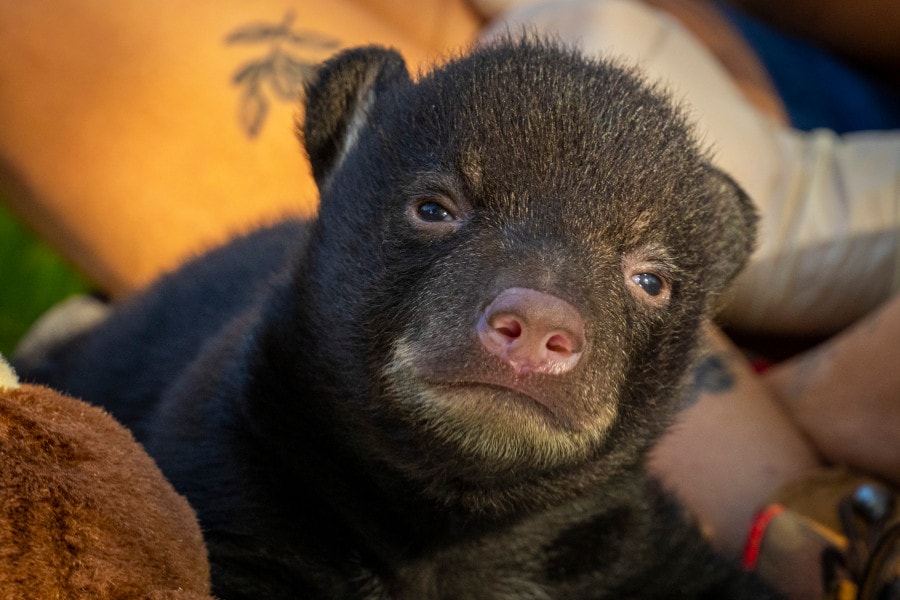
For the first time in a decade, hunters armed with rifles and crossbows are fanning out across Florida’s swamps and flatwoods to legally hunt the Florida black bear, over the vocal opposition of critics.
The state-sanctioned hunt began Saturday, after drawing more than 160,000 applications for a far more limited number of hunting permits, including from opponents who are trying to reduce the number of bears killed in this year’s hunt, the state’s first since 2015.
The Florida Fish and Wildlife Conservation Commission awarded 172 bear hunt permits by random lottery for this year’s season, allowing hunters to kill one bear each in areas where the population is deemed large enough. At least 43 of the permits went to opponents of the hunt who never intend to use them, according to the Florida chapter of the Sierra Club, which encouraged critics to apply in the hopes of saving bears.
The Florida black bear population is considered one of the state’s conservation success stories, having grown from just several hundred bears in the 1970s to an estimated more than 4,000 today.
The 172 people who were awarded a permit through a random lottery will be able to kill one bear each during the 2025 season, which runs from Dec. 6 to Dec. 28. The permits are specific to one of the state’s four designated bear hunting zones, each of which have a hunting quota set by state officials based on the bear population in each region.
In order to participate, hunters must hold a valid hunting license and a bear harvest permit, which costs $100 for residents and $300 for nonresidents, plus fees. Applications for the permits cost $5 each.
The regulated hunt will help incentivize maintaining healthy bear populations, and help fund the work that is needed, according to Mark Barton of the Florida chapter of Backcountry Hunters and Anglers, an advocacy group that supported the hunt.
Having an annual hunt will help guarantee funding to “keep moving conservation for bears forward,” Barton said.
According to state wildlife officials, the bear population has grown enough to support a regulated hunt and warrant population management. The state agency sees hunting as an effective tool that is used to manage wildlife populations around the world, and allows the state to monetize conservation efforts through permit and application fees.
“While we have enough suitable bear habitat to support our current bear population levels, if the four largest subpopulations continue to grow at current rates, we will not have enough habitat at some point in the future,” reads a bear hunting guide published by the state wildlife commission.

___
Republished with permission of the Associated Press.


Tucker Wetmore’s Song ‘Proving Me Right’ is About Model Bryana Ferringer

‘Bachelor’ Winner Cassie Randolph Marries Brighton Reinhardt

Kanye West and Bianca Censori Travel to South Korea Together
-

 Politics8 years ago
Congress rolls out ‘Better Deal,’ new economic agenda
-
Entertainment8 years ago
New Season 8 Walking Dead trailer flashes forward in time
-
Politics8 years ago
Poll: Virginia governor’s race in dead heat
-
Entertainment8 years ago
The final 6 ‘Game of Thrones’ episodes might feel like a full season
-
Entertainment8 years ago
Meet Superman’s grandfather in new trailer for Krypton
-
Politics8 years ago
Illinois’ financial crisis could bring the state to a halt
-
Business8 years ago
6 Stunning new co-working spaces around the globe
-
Tech8 years ago
Hulu hires Google marketing veteran Kelly Campbell as CMO