Connect with us

Politics

Gov. DeSantis names his appointments and reappointments to FAMU Trustees panel

Published

on


All four names picked by DeSantis have steep backgrounds in public service.

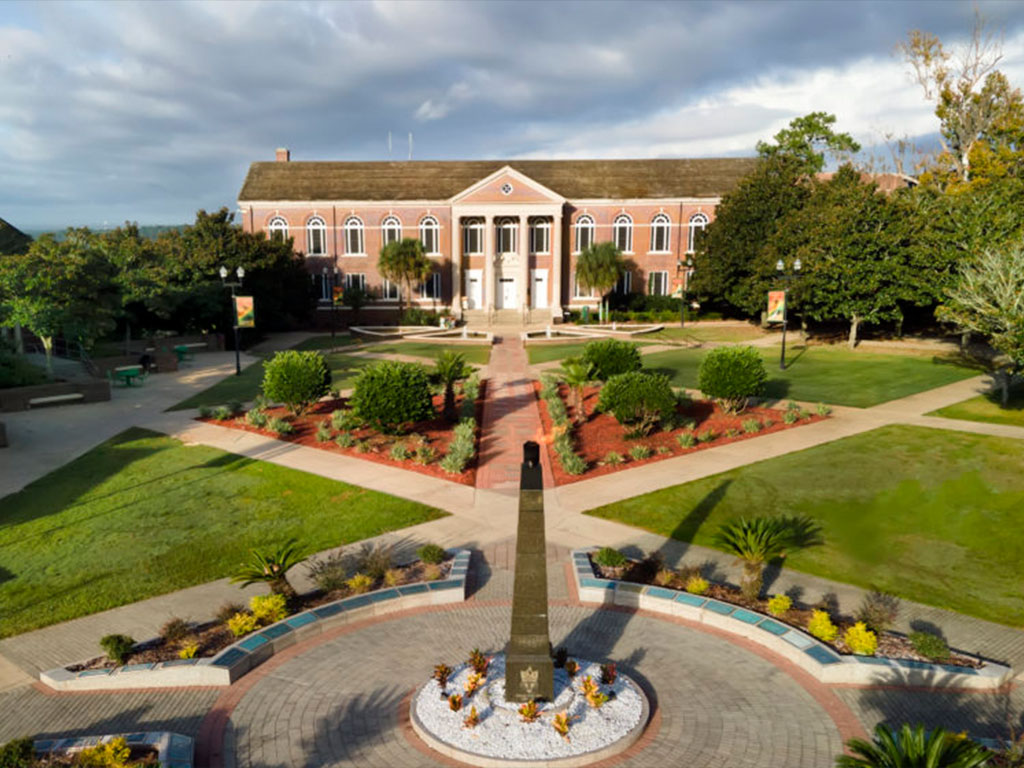
The Florida A&M University (FAMU) Board of Trustees has two new members and two that are coming back for renewed terms.

Gov. Ron DeSantis appointed of Roderick Harris and Kenneth Johnson to the panel while also reappointing Natalie Figgers and Michael White to the FAMU panel. The moves still need final approval from the Florida Senate. The FAMU Board of Trustees sets policy for the school based in Tallahassee.

Harris is the Director of System Innovation at the Florida Department of Juvenile Justice and he’s also steeped in business. He’s the Senior Business Analyst and Project Manager for Five Points Technology Group, which specializes in behavioral Health data for the Northwest Florida Health Network. Harris has previous experience with FAMU where he was the Secretary of the school’s Social Work Community Advisory Council.

Jones joins the FAMU board with backing in experience as the CEO of HCA Florida Northwest Hospital in Broward County. He was also the previous President of AMITA Health St. Francis Hospital and had a stint as the CEO of Southeast Orthopedic Specialists.

Figgers if the Founder of her own law firm based in Fort Lauderdale. She’s also a community activist as she serves as Secretary and Treasurer of the Figgers Foundation Inc. and received the Most Ardent Community Advocate in 2022 from Florida Memorial University.

White is the Co-Founder and Chief Business Development Officer of Indelible Solutions, a personal and human services firm based in Tallahassee. White is also a member of the Florida Institute of Certified Public Accountants. His work and expertise earned him the honor of being a finalist for the Ernst & Yount Entrepreneur of the Year Award in 2023.

Members of the FAMU Board of Trustees work on the panel as volunteers as none of the members of the panel receive any compensation for their service.


Source link

Continue Reading

Politics

Erika Booth starts 2026 with commanding cash lead in HD 35

Published

on


Rep. Erika Booth is starting 2026 with a sizable financial edge in one of the most closely watched House races in the state.

Campaign finance reports show the St. Cloud Republican closed 2025 with $111,752 raised in her campaign account and an additional $98,971 on hand in Booth PAC for an overall total of $192,119 on hand.

Booth’s lone challenger so far, Eric Gray, is starting the year with significantly fewer resources. Gray, a Democrat, entered the House race in October after previously running for Orange County Commission. He showed $15,860 raised in his first reporting period and spent $11,957, leaving him with less than $4,000 on hand at the end of the 2025.

Republican leaders have already signaled HD 35 remains a priority district this cycle. Booth is expected to receive full support from House Speaker-designate Sam Garrison and the Florida House Republican Campaign Committee, the primary campaign arm for state House Republicans.

Before her election to the House, Booth spent more than 20 years working as an elementary school teacher and previously served on the Osceola County School Board.

Gray has spent decades leading nonprofit organizations in Orange County and has cited opposition to HB 1365, a 2024 homelessness-related measure sponsored by Garrison, as a central motivation for his campaign.

HD 35 covers parts of Orange and Osceola counties. According to the most recent L2 voter data, the district is home to 42,837 Republicans and 41,806 Democrats as well as 48,995 third- and no-party voters.

The incumbent won the seat in 2024, defeating Democrat Tom Keen 52%-48% in a rematch after Keen prevailed in a 2023 Special Election. At the top of the ticket, Donald Trump carried the district with 52% in 2024, while Gov. Ron DeSantis won it with 56% two years earlier.


Source link

Continue Reading

Politics

Gov. DeSantis names an appointment and reappointmen to the UWF Board of Trustees

Published

on


The appointment, Kevin Mason, is an alumnus of University of West Florida.

The University of West Florida (UWF) Board of Trustees is getting a new member while another is returning to the panel for continued service.

Gov. Ron DeSantis announced this month that he’s appointed Kevin Mason to the panel that oversees policy for UWF. DeSantis also reappointed Paul Bailey to the Board of Trustees for the campus located in Florida’s Panhandle.

Mason is an alumnus of UWF where he earned his bachelor’s degree in business administration and management from the school. Mason is also steeped in business.

Mason is the CEO and Co-Founder of Acentria Insurance which is based in Destin. The company now has offices and services throughout the Southeast United States and has grown to about 50 locations. Mason was also a Producer and Managing Partner of the North Florida Operations for the Insurance Office of America.

Bailey will return to the board following the reappointment. Bailey is a lawyer for Welton Law Firm. Welton is based in Crestview and provides multiple legal services.

Bailey is also a registered firearms instructor with the National Rifle Association. He’s also an Adjunct Professor at Pensacola Christian College. Bailey earned his pre-law bachelor’s degree from that school and went on to get his law degree from Regent University.

The UWF Board of Trustees has 13 members that sit on the panel.The board is the governing body for the institution.  Florida’s Governor appoints six of those members while the board itself votes on appointments for the other five members.

The President of the Faculty Senate occupies one of those seats while another is held by the President of the Student Government Association.

The UWF campus had a student enrollment of nearly 16,000 as of Fall Semester.

The appointment and reappointment named by DeSantis still have to get final approval by the Florida Senate.


Source link

Continue Reading

Politics

New College of Florida is Sarasota–Bradenton’s quiet economic engine

Published

on


When people think about the economic engines of Sarasota and Bradenton, they often point to tourism, health care, construction, or the arts. Each sector is essential to the region’s identity and prosperity. But another driver of economic vitality exists — one that is stable, scalable, and compounding year after year — sitting on Sarasota Bay.

That driver is New College of Florida.

As Chief of Staff and Vice President of Finance and Administration, my role requires evaluating how public investment translates into real outcomes for students, families, employers, and communities. From that vantage point, New College’s economic trajectory in recent years is notable not only for its growth but for the clarity of its return.

According to a recent independent economic impact analysis, New College’s direct economic impact grew from $61.2 million in fiscal year 2023 to $104.5 million in 2025, a 71% increase in just two years. With responsible enrollment growth and continued strategic investment, direct impact is projected to reach $159.6 million by 2027–2028 and $270.9 million by 2033–2034 — more than 400% growth over a decade.

Those numbers are significant, but they tell only part of the story.

When indirect and induced effects are included — local spending by students, employees, visitors, and vendors — the regional impact becomes even more compelling. In 2024–2025, New College generated a total economic impact of $209.1 million. That figure is projected to rise to $319.2 million by 2027–2028 and to approximately $542 million annually by 2033–2034.

This growth reflects deliberate choices: strengthening academic programs, investing in campus infrastructure, and aligning the college’s mission with Florida’s workforce and civic priorities. Today, New College educates more students, attracts more talent, and draws more families, visitors, and investment into the Sarasota–Bradenton region than at any point in its history.

Universities also provide something increasingly rare in a volatile economy: permanence. They do not relocate when markets fluctuate. They create long-term jobs, attract research funding, and generate consistent demand for housing, services, and cultural amenities. Every student who chooses New College represents years of local economic participation, often followed by long-term residency and workforce contribution. More than 1,100 New College alumni live in Sarasota today, reinforcing the institution’s lasting imprint on the region.

Higher education remains one of the most reliable vehicles for public return on investment. Independent analysis shows New College delivers substantial returns on a relatively modest public investment. That is not theoretical. It is measurable, repeatable, and already underway.

Geography amplifies that impact. Situated between Sarasota and Bradenton, New College functions as a connective institution and a key driver of cross-county collaboration, supporting a truly regional economy. Students live, work, intern, and volunteer throughout both communities. Faculty and staff serve on nonprofit boards, contribute to civic leadership, and support local businesses across Sarasota and Manatee counties.

This is where investment matters most.

Institutions either capitalize on momentum or allow it to stall. Every additional dollar invested in New College does not simply preserve what exists; it multiplies regional return. Enrollment growth drives housing demand. Academic programs strengthen workforce pipelines. Campus development supports local contractors and suppliers. A thriving public liberal arts college enhances the region’s ability to attract employers who value talent, innovation, and quality of life.

Communities that transformed their economic futures — Austin, Pittsburgh, Raleigh — did not do so by accident. They made sustained, disciplined commitments to higher education as a cornerstone of growth. Sarasota and Bradenton face that same choice today.

From my seat overseeing budgets, strategy, and long-term planning, one conclusion is clear: New College of Florida is not a cost center. It is a growth engine. The returns are visible in the data, evident in neighborhoods, and reflected in the people who choose to live, work, and build their futures here.

When Florida invests in New College and regional leaders align on its continued growth, the result is not incremental benefit but compounding value. The impact is durable. The returns are shared. The opportunity is substantial.

That is not optimism.

That is strategy.

___

Christie Fitz-Patrick is Chief of Staff and Vice President of Finance and Administration at New College of Florida.


Source link

Continue Reading

Trending

Copyright © Miami Select.