Connect with us

Politics

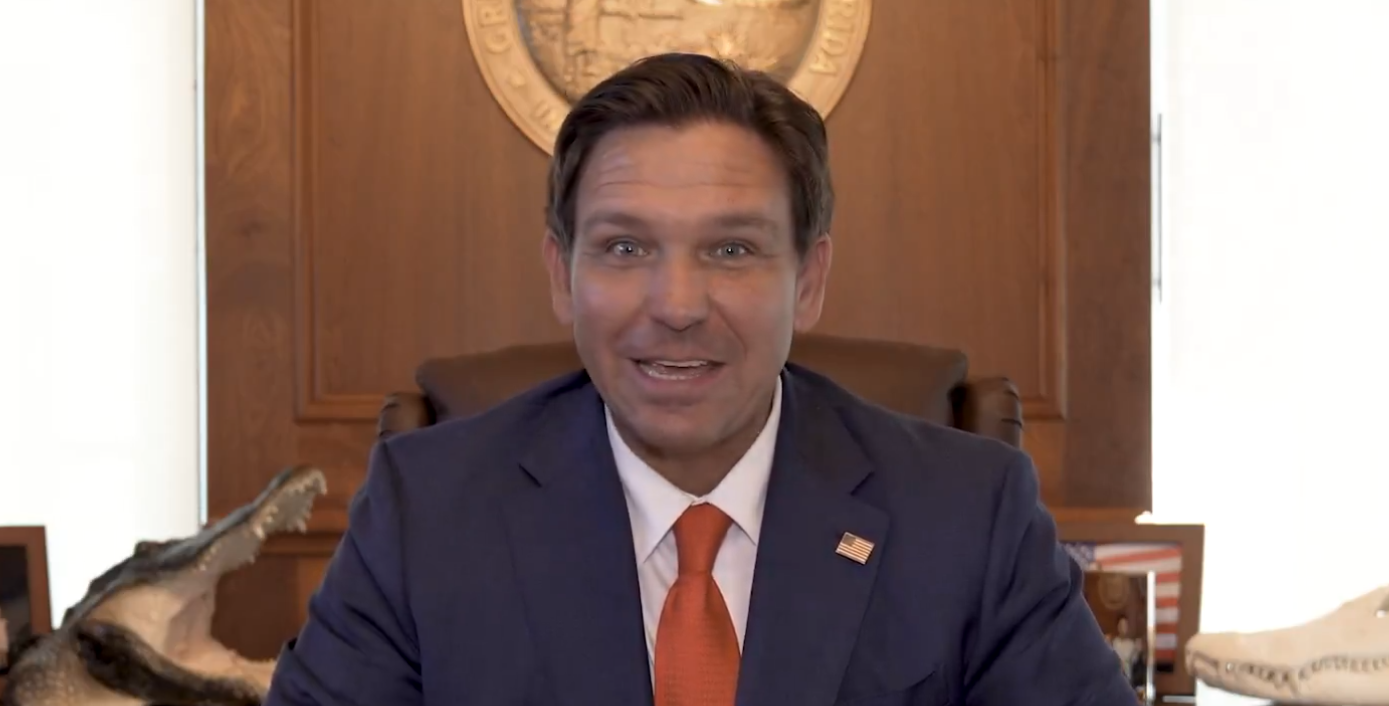
Gov. DeSantis, James Uthmeier hail appellate decision on Alligator Alcatraz
Published

on


Yet again, an appeals court is offering a reprieve to a decision that goes against the Ron DeSantis administration..

The 11th Circuit Court of Appeals has issued a preliminary injunction against a decision by Judge Kathleen Williams that would have required the state of Florida and Department of Homeland Security to shut down Alligator Alcatraz, a pre-deportation prison for suspected illegal immigrants, pending appeal.

After the favorable ruling, Gov. Ron DeSantis and Attorney General James Uthmeier trumpeted their vindication.

“Some leftist judge ruled implausibly that somehow Florida wasn’t allowed to use our own property to help the federal government in this important mission (because the state) didn’t do an environmental impact statement,” DeSantis said.

“Well, we said we would fight that, we said the mission would continue, and I’m pleased to say that the 11th Circuit Court of Appeals has just stayed that ruling and stayed the case. So alligator Alcatraz is in fact, like we’ve always said, open for business. The mission continues, and we’re going to continue leading the way when it comes to immigration enforcement.”

In a post to X, Uthmeier hailed the “win for Florida and President Trump’s agenda.”

“Victory secured against (an) activist judge who held me in contempt! The 11th Circuit not only blocked Judge Williams’ order to close Alligator Alcatraz, but they blocked her from proceeding with the case until the appeal is complete,” he declared.

Soon after, he said he knew there would be legal challenges, again invoking Donald Trump.

“Looking back at our initial proposal for Alligator Alcatraz, we knew the left would try to shut us down. But they failed. Great win for Florida and our mission to help President Trump detain, deport, and deliver for the American people.”

DeSantis also had harsh words for the press.

“The media was giddy that somehow Alligator Alcatraz was shutting down. And we told them that that wasn’t true. There have been illegal aliens continuing to be there and being removed and returned to their home country. But they ran with the narrative,” he said.

Lt. Gov. Jay Collins also celebrated.

“Big win for Florida: Alligator Alcatraz stays open, powering our mission to lead deportation efforts and crack down on illegal immigration.”

Though state officials are excited that their pilot prison for undocumented immigrants received a favorable ruling, questions remain about its future use.

Independent journalist Jason Garcia notes that more than $350 million in contracts have been signed.

The vendor-managed project was projected to cost $245 per bed, or $450 million a year, and was scheduled to be reimbursed from the Federal Emergency Management Agency. Initial expectations were that 5,000 people would be housed in those swampland tents with makeshift air conditioning and improvised plumbing, but numbers have fallen far short of initial estimates.

An administration official, Department of Emergency Management Executive Director Kevin Guthrie, previously said the tent prison on the edge of the Everglades will soon have zero inmates.

The state also has at least two more facilities on deck, which will be supplemented by copycat clinks around the country.

Deportation Depot in Baker County has a capacity of 1,300 people. The newly announced Panhandle Pokey west of there will ultimately be able to house people as well.


Post Views: 0


Source link

Continue Reading

Politics

Florida shouldn’t gamble with patient safety on false promises

Published

on


Florida lawmakers are once again being asked to expand unsupervised anesthesia practice, this time under the familiar banner of “access,” “cost savings,” and “modernization.” We are told this is inevitable — that “48 states already have similar laws,” and Florida is simply behind the curve.

That claim collapses under even minimal scrutiny.

Let’s be clear about what is being proposed: allowing Certified Registered Nurse Anesthetists to practice independently, without physician anesthesiologist supervision, in all settings. This is not a minor regulatory tweak. It is a fundamental change in how anesthesia care — one of the riskiest aspects of modern medicine — is delivered.

If lawmakers want to make policy based on evidence rather than talking points, three facts matter most.

Physician-led anesthesia care is the safest model.

Anesthesia is not just about “putting patients to sleep.” It involves managing complex physiology, responding to sudden, life-threatening emergencies, and caring for patients with multiple comorbidities — often when things go wrong quickly. Physicians who practice anesthesiology complete four years of medical school, four years of residency, and often additional fellowship training. That depth of training matters when seconds count.

The safest anesthesia outcomes consistently occur in physician-led teams, where anesthesiologists work alongside Certified Registered Nurse Anesthetists. Team-based care maximizes patient safety by matching expertise to the complexity of each patient’s care. Eliminating physician oversight does not improve safety; it removes a critical layer of protection.

Florida should be strengthening team-based care — not dismantling it.

Unsupervised anesthesia is not more cost-effective.

Proponents often claim that removing physician supervision lowers costs. The data do not support this. Medicare pays the same for anesthesia services regardless of whether a physician anesthesiologist is involved. Further, having an anesthesiologist present to manage complications helps control costs by reducing hospital stays and downstream medical expenses.

The cheapest anesthesia is the one that goes right the first time — and the safest model is also the most cost-effective in the long run.

These laws do not help rural communities.

This is where rhetoric diverges most sharply from reality. State “opt-out” laws allowing unsupervised anesthesia have been studied for more than a decade. The conclusion is consistent: they do not increase access to anesthesia services in rural or underserved areas.

Certified Registered Nurse Anesthetists, like all health care professionals, tend to practice where hospitals are well-resourced and professionally supportive. Opt-out states did not see a meaningful expansion of anesthesia services in rural hospitals. Workforce shortages remained unchanged.

If unsupervised practice were the solution, rural access problems would already be solved. They are not.

Supporters now claim that nearly every state has “similar” laws — a creative redefinition that lumps together wildly different regulatory frameworks. Supervised practice, delegated authority, limited opt-outs, and emergency exceptions are being counted as “unsupervised care.” Florida should not make major patient-safety decisions based on inflated numbers and fuzzy definitions.

This proposal is not about modernization. It is not about rural access. And it is not about saving money. It is about replacing the safest, most cost-effective anesthesia model with one that offers no proven benefit — and real risk.

Florida’s patients deserve policies grounded in evidence, not exaggeration. Lawmakers should reject unsupervised anesthesia and instead invest in physician-led, team-based care that puts safety first — every time.

___


Rebekah Bernard, M.D., is a family physician in Fort Myers and a Board member of Physicians for Patient Protection.


Source link

Continue Reading

Politics

Adam Anderson’s push for more genetic counselors in Florida clears first hurdle

Published

on


Rep. Adam Anderson has successfully ushered through its first committee stop legislation that would address a shortage of genetic counselors and strengthen the state’s capacity for advanced medical care and genetic research.

Anderson’s bill (HB 1115) cleared the Careers and Workforce Subcommittee. It would establish the Genetic Counseling Education Enhancement Grant Program within Florida’s State University System to support the development of American Board of Genetic Counseling-accredited graduate-level genetic counseling programs to eliminate Florida’s status as a genetic counseling desert.

“The need for health care professionals in the Sunshine State cannot be understated,” Anderson said.

“But specialization is the true hurdle for families praying for the next innovation that will help their child. Genetic counselors guiding difficult diagnoses are in short supply. However, Florida aims to right-set our specialization efforts at the intersection between education and employment. We’re standing by Florida families and those students willing to take the next step.”

With just 179 licensed genetic counselors in the state, patient demand is not being met. Genetic counselors guide families facing complex genetic diagnoses, and they serve as essential partners in research, innovation and precision medicine.

Sen. Danny Burgess is sponsoring an identical measure (SB 1376) in the upper chamber, though it has not yet been heard in committee. Still, he celebrated initial support for the measure in the House.

“This is legislation every Floridian can get behind,” Burgess said. “Developing our workforce is step one, but retaining specialized genetic counselors in the State of Florida to help Floridians is the entire picture. Aid shouldn’t be a state away. This grant program realizes that comfort and care for Florida families should be available within Florida.”

The bill would allow grant funds to be used to recruit and retain qualified faculty, provide financial aid to students, and establish or expand clinical rotations required to obtain a master’s degree in genetic counseling. The funds would be barred from use for general administrative costs, new facility construction and non-program-related activities.

Participating universities under the bill would be required to maintain detailed compliance records and submit annual reports on expenditures and program outcomes. The state Board of Governors would then compile the information from reports into a statewide submission.

“The progress Representative Anderson has ignited is contagious. Florida is on the cusp of developing a genetic counseling workforce that meets a crucial need for families facing uncertainty,” said Dr. Pradeep Bhide, Director of the Florida State University Institute for Pediatric Rare Diseases. “FSU is all for it.”

Under Bhide’s leadership, the Institute is developing a new master’s degree program in genetic counseling.

Currently, the University of South Florida is the only state school with an active genetic counseling program, with FSU’s program awaiting approval.

“New education programs are what drive the innovations and patient care required to address complex genetic issues. Rep. Anderson and the State of Florida have time and time again seen the value in the educational framework that leads to great progress,” said Charles J. Lockwood, executive vice president at USF Health and dean of the USF Health Morsani College of Medicine.

“USF Health has long understood the need for genetic counselors in Florida, and we are excited at the prospect of further collaboration with Florida’s other universities.”

Anderson’s bill heads next to the Higher Education Budget Subcommittee. If approved by the full Legislature and signed by Gov. Ron DeSantis, the measure would take effect July 1.


Source link

Continue Reading

Politics

Miami Beach committee leadership reshuffle excludes women from every top post

Published

on


Miami Beach Mayor Steven Meiner unveiled his new committee appointments for 2026, and there’s a commonality among them: no women Chairs.

In all three of the city’s Commission committees, which are appointed solely by the Mayor and composed exclusively of City Commission members, men hold the top post.

That’s despite three of the Commission’s six non-Mayor members being women.

On the Land Use and Sustainability Committee, Meiner elevated previous Vice Chair David Suarez to Chair and demoted prior Chair Alex Fernandez to Vice Chair.

He did the same with the Public Safety and Neighborhood Quality of Life Committee, where Fernandez rose from Vice Chair to Chair, and Laura Dominguez switched to Vice Chair.

Only on the Finance and Economic Resiliency Committee did last year’s arrangement remain the same, with Joseph Magazine keeping his Chairmanship, with Suarez staying on as the panel’s second-in-command.

Commissioner Tanya Bhatt holds membership posts in two of the three committees and is an alternate member for a third, in which Monica Matteo-Salinas — who won election to the City Commission in December — serves as a member.

Florida Politics contacted Meiner, Bhatt, Dominguez and Matteo-Salinas for comment, but received no response by press time. We also reached out to Lynette Long, who chairs the Miami Beach Commission for Women, but she did not immediately respond.

Suarez said by text that he doesn’t believe Meiner’s appointments have anything to do with gender.

“Commission committee assignments rotate and are based on merit and experience, and suggesting otherwise leans into a false narrative where none exists,” he said. “Women have long chaired committees — both Commission committees and other City committees — and continue to serve today as chairs and vice chairs on both.”

Magazine said he looks forward to continuing his work leading on economic resiliency.

“Given my long financial background in the private sector and our success in the last two budget seasons, I’m happy to be appointed Chair again,” he said. He declined to comment on other appointments.

Fernandez said he is proud of the record he built as Chair of the Land Use and Sustainability Committee, which secured critical exemptions from the 2024 Resiliency and Safe Structures Act, helped preserve architectural design standards under the Live Local Act and modernized historic preservation regulations, among other accomplishments.

“Serving as Chair of the Land Use Committee was something I was proud of and I will continue to be proud of the committee’s record of accomplishments during my tenure,” he wrote in a statement that did not touch on the women-as-Chairs subject.

Last year, Dominguez and Matteo-Salinas each defeated opponents who participated in a campaign event for Meiner also attended by one of the officers who questioned resident-activist Raquel Pacheco at her home last week after she wrote disparagingly about the Mayor on Facebook.

The visit has since made national headlines.


Source link

Continue Reading

Trending

Copyright © Miami Select.