Republican voters have two people to choose from on Tuesday in a Special Election Primary for House District 90, which spans a coastal portion of Palm Beach County.
Unlike some races, where the difference between candidates is a matter of degrees, voters should have a clear choice in this contest depending on their ideological inclinations and affinity for conspiracy theories.
In one corner is businessman Bill Reicherter, a former member of the Palm Beach County Zoning Board and who has mounted yet another run at public office after falling short against late Rep. Joe Casello last year.
He’s facing Maria Zack, a longtime Georgia lobbyist-turned-software company executive who hopes to make the jump from political operative to elected official before the 2026 Legislative Session commences in full.
The winner of Tuesday’s election will face Delray Beach Commissioner Rob Long, a Democrat, and no-party candidate Karen Yeh, a serial litigant, in a Dec. 9 General Election.
Locally and electorally, Reicherter, a 56-year-old signage company executive and Realtor, should be the better-known commodity. He runs a local nonprofit, the Reicherter-Tozzi Foundation, which assists underserved communities through housing, youth services, historic preservation, veteran support and disaster relief initiatives.
Bill Reicherter has long been an active member of the South Florida community and hopes to serve the area in Tallahassee with a win this year. Image via Bill Reicherter campaign.
He has also served on numerous local nonprofit Boards, including those of ChildNet, Junior Achievement of South Florida, the FLIGHT Center, Women and Wishes and the YMCA of Broward County — where state records show he’s long lived in a homesteaded property outside HD 90’s bounds.
It isn’t illegal for candidates to run in a district where they don’t live, but they must have moved into the district by the time they take office. And it appears Reicherter, a Coral Springs resident, has been contemplating a move for some time; he challenged Casello last year, losing by 12 percentage points. In 2022, he ran unsuccessfully against Boca Raton Democratic Sen. Tina Scott Polsky.
Before switching to the HD 90 contest this year, he was briefly in the crowded 2026 race for Governor.
Zack, 61, has worked in lobbying and government relations since the early 1980s in various capacities, including as President of the Strollo Group, whose clients have included Johnson & Johnson, AT&T, Pfizer and the Greater Atlanta Homebuilders Association, among others.
In her campaign for HD 90, she’s leaning on her political bona fides, which include her leadership of Atlanta-based Stand for Principle PAC, which raised and spent nearly $420,000 through 2017 backing U.S. Sen. Ted Cruz’s failed presidential bid.
State records show that Zack was registered to vote in Broward County between 2018 and 2021, when she moved from Pompano Beach to Palm Beach, where she has since been registered.
Her campaign website features pictures of her rubbing elbows with numerous GOP notables, from U.S. Rep. Jim Jordan, U.S. Ambassador to Israel Mike Huckabee and embattled border czar Tom Homan to late presidential candidate Herman Cain and former New York City Mayor Rudy Guiliani, who this week settled a $1.3 billion defamation lawsuit with voting systems company Dominion over his claim that its machines were rigged to flip votes from Trump to Joe Biden in 2020.
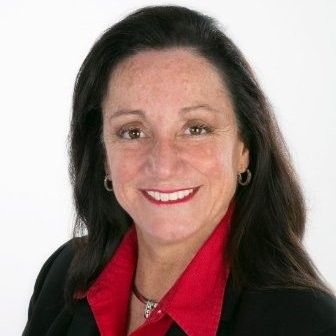
Lobbyist and political operative Maria Zack has supported high-profile presidential campaigns. She has also promoted unfounded pandemic and election conspiracies. Image via Maria Zack.
Zack herself is a staunch 2020 election skeptic who has worked to spread several other unverified claims through her Lantana-based nonprofit, Nations in Action. Among other things, the organization purports to have uncovered evidence of “shadow government” conspiracies to “depopulate countries through a COVID attack” and fix the 2020 election by beaming software hacks from foreign satellites over Italy into voting machines.
Despite her objections to the label, which she described to the South Florida Sun Sentinel as “very ridiculous and very unprofessional,” Zack still says she’s unconvinced Biden legitimately won in 2020, telling the outlet she “can’t tell” who won but still assumes it was Trump.
She also insisted that eliminating property taxes in Florida — a proposal backed by Gov. Ron DeSantis, CFO Blaise Ingoglia and many GOP lawmakers — would lower the rate of teen pregnancies, since parents would have more money and be able to spend additional time at home, and lead to an “11% decrease in crime,” citing her own research.
Reicherter’s comments on hot-button issues, meanwhile, indicate he’d bring a moderate but conservative voice from South Florida to Tallahassee.
In an interview with the Sun Sentinel, which later endorsed him, he cautioned against eliminating property taxes, reasoning they’d leave localities without a sufficient alternative to pay for necessary services, and called DeSantis’ soon-to-be-shuttered Alligator Alcatraz immigrant detention center in the Everglades an ill-conceived “political stunt.”
He is also for keeping Florida’s mandate on vaccinating children against diseases like polio and measles, the safety of which he said is long-established, but doesn’t support requiring residents to take “new vaccines,” such as those for COVID.
Reicherter’s campaign sitesays that, if elected, he’ll support legislation providing aid to seniors and helping more skilled worker training, stand up for local home rule, protect the environment and local resiliency and back the creation of an “insurance fraud task force.”
Zack promises, if elected, to support ridding Florida of property taxes, purging the state of undocumented immigrants and empowering parents in education.
Both want to strengthen the local economy, support veterans and first responders and help to curb the burden of property taxes, albeit in different ways.
A detailed map of House District 90 in Palm Beach County. Image via Florida House.
Through Sept. 25, Reicherter reported raising about $5,300 in outside contributions and lending his campaign $104,000, the unspent portion of which is refundable. His donors included Associated Builders and Contractors, whose Florida East Coast chapter endorsed him, and the farming company of former state Rep. Rick Roth, who is also backing him.
By Thursday, less than a week before Election Day, he spent close to $32,000.
Reicherter’s other endorsers include Palm Beach County Commissioner Marci Woodward, Delray Beach Mayor Tom Carney, Boynton Beach Commissioner Thomas Turkin, former Palm Beach City Commissioner Mack McCray and BLU-PAC of Boca Raton.
Zack raised close to $15,300, about 45% of which was self-given. Notable donors included serial entrepreneur Sharon Amezcua and Marla Maples, a former wife of Trump’s who successfully urged state lawmakers to pass legislation this year banning weather modification activities in Florida, including cloud-seeding and the use of so-called chemtrails.
Her political committee, Friends of Maria Zack, was formed in August but has reported no campaign finance activity so far.
Former U.S. House Speaker Newt Gingrich, whom Zack worked for in Atlanta during the 2012 presidential race, has endorsed Zack for HD 90, as has anti-abortion nonprofit Florida Right to Life.
The Special Election for HD 90 was triggered by Casello’s death in July.
HD 90 is a Democratic-leaning district that spans Boynton Beach, Delray Beach, Golf, Gulf Stream, Briny Breezes and parts of Highland Beach, Manalapan and Ocean Ridge.
A House subcommittee unanimously approved a bill to restore the Ocklawaha River that drew strong praise from environmentalists and fierce opposition from local officials in Putnam County.
The mixed public feedback on HB 981 makes it clear that the legislation to remove the river’s dam remains controversial after Gov. Ron DeSantis vetoed $6.25 million in funding for Ocklawaha River restoration during the 2025 Session.
“It’s a local decision. It’s a local issue. It needs to stay local,” said Putnam County Commissioner Larry Harvey, who voiced concerns about West Putnam lakes drying up.
“Putnam County wasn’t considered locally. We’ve never been asked about this. We don’t want this.”
Rep. Wyman Duggan, a Jacksonville Republican, defended his bill and argued the restoration project carries a greater importance since the Ocklawaha is the primary tributary running into the St. Johns River.
“This is, at a minimum, a regional issue. The Ocklawaha River touches 12 counties, but I submit it’s a state level issue. The St. Johns River is the longest river in the state and it’s the most significant,” Duggan said.
Behind the Everglades and the Kissimmee River Basin restoration projects, the Ocklawaha River will become “the third-greatest restoration in the state of Florida’s history,” said Rep. Jim Mooney Jr., an Islamorada Republican.
“I will be a strong supporter of it, and hope we can get this across the finish line this year,” said Cross, a St. Petersburg Democrat.
Duggan added that the Department of Environmental Protection (DEP) will oversee the river restoration and will take into account local residents’ concerns with water level impacts.
Duggan’s bill would require the DEP to develop a plan to restore the Ocklawaha River by Jan. 1, 2027, then finish the work by Dec. 31, 2032.
What made the bill necessary, Duggan said, was the U.S. Army Corps of Engineers designating the dam as a high hazard.
Living beyond its 50-year life span, the 58-year-old Rodman Dam doesn’t perform any flood control or generate electricity, Duggan said.
“There is no alarm system in place to warn the downstream communities in the event of a dam failure,” Duggan said. “It’s not even clear that if we try to reconstruct the dam, bring it up to code, that the Army Corps of Engineers would permit that effort.”
The dam is also known as the Kirkpatrick Dam.
Restoring the Ocklawaha would put 21 billion gallons of water into the St. Johns River, which environmentalists said will improve the water and help the fisheries and the manatees, Duggan explained.
Environmentalists also said removing the dam would bring back 20 lost springs.
Another major component of Duggan’s bill is to beef up economic development in Clay, Marion, Putnam and St. Johns counties to promote water and nature activities from swimming to fishing and wildlife viewing. The bill would create the Northeast Florida River and Springs Recreation and Economic Development Council and create a grant program to fund the council’s outdoor recreation plan.
“The bill shows people what they gain and not what they lose,” said Chip Laibl, Vice President of the Great Florida Riverway Trust. “It’s time to quit kicking this issue down the road for a vocal minority and consider the safety, economic needs, and recreation facilities for all of Putnam County and beyond.”
Laibl argued that HB 981 will make “Putnam County the outdoor recreation hub of the state.”
Hispanic Floridians have played a pivotal role in building our state, and today their impact is stronger than ever. Increasing numbers of Hispanic families, business owners, seniors, retirees, and veterans call Florida home.
As our community grows, public policy must keep pace in protecting those most at risk.
Florida has a longstanding record of defending seniors, veterans, and retirees — from expanded homestead exemptions to laws guarding against elder abuse and financial exploitation. HB 427 and SB 266 build on that tradition by addressing a pressing problem: predatory public adjuster contracts targeting vulnerable residents after home damage.
When fires, plumbing disasters, or storms strike, seniors, retirees, and veterans often face pressure to sign complicated contracts quickly — sometimes while recovering from hospitalization or other emergencies.
Many Hispanic seniors face an additional hurdle: English is not their primary language, yet contracts are not required to be available in Spanish or other easy-to-understand formats.
Too often, elderly Hispanic residents are navigating these high-stakes decisions alone. Adult children may live far away and cannot assist immediately. Contracts must be reviewed and signed quickly, leaving residents exposed to confusing terms or high-pressure tactics.
HB 427 and SB 266 provide common sense relief. They allow seniors, retirees, and veterans to cancel public adjuster agreements — without penalty — if they are unable to fully understand the contract. This safeguard is especially important for Spanish-speaking residents and others facing language or comprehension challenges.
Ethical public adjusters have nothing to worry about. The bills target exploitative practices, not responsible business operations. They strike a balance: protecting Floridians while leaving legitimate professionals free to do their work.
At its core, this legislation is about fairness, clarity, and respect. It ensures that those who have contributed to Florida — Hispanics, seniors, retirees, and veterans alike — are not taken advantage of in moments of vulnerability.
Florida can once again demonstrate leadership in consumer protection. HB 427 and SB 266 offer practical, balanced reforms that reflect our values and protect those who need it most.
On behalf of Hispanic seniors, and all of Florida’s retirees and veterans, I urge lawmakers to act in support of these commonsense protections.
___
Julio A. Fuentes is president and CEO of the Florida State Hispanic Chamber of Commerce (FSHCC).
Business leader John Harshman has entered the race for the Sarasota City Commission, running for an at-large seat in the city’s next municipal election.
Harshman, a longtime Sarasota commercial real estate executive, said decades of local business experience and civic involvement have prepared him for his bid for office. He faces incumbent Jen Ahearn-Koch, Flo Entler and Rob Rominiecki for two at-large seats.
“I fell in love with Sarasota and have built my career and life here,” Harshman said in a statement. “It would be my privilege to serve all members of our community on the city commission.”
Harshman, who moved to Sarasota more than five decades ago, founded Harshman & Co., Inc. in 1989. The firm has since grown into one of Southwest Florida’s top commercial real estate companies.
In his announcement, Harshman emphasized land-use policy and fiscal responsibility as core issues driving his candidacy. Harshman said he decided to run after completing a 45-day “listening tour,” during which he met with neighborhood leaders, business owners, arts organizations, environmental advocates and local government officials.
“The encouragement that I received from this very diverse group convinced me that my decades of living, working, and volunteering in the Sarasota community have prepared me for serving the citizens of the town I dearly love,” Harshman said.
Beyond his business career, Harshman has held leadership or volunteer roles with civic and nonprofit organizations, including the Sarasota Chamber of Commerce; Association of Downtown Commercial Property Owners, Inc.; Downtown Sarasota Alliance, Girls, Inc.; The Pines of Sarasota, Inc.; Sarasota County Public Facilities Finance Advisory Board; Sarasota Community Redevelopment Advisory Board; Sarasota County Environmental Lands Oversight Committee; City of Sarasota Tree Advisory Committee; National Estuary Program Volunteer; Sarasota Ballet Board; and John and Mable Ringling Museum of Art.
Harshman is a graduate of the University of South Florida and a Leadership Sarasota alumnus. He is also an honorary alumnus of New College of Florida.
Outside of his professional and civic work, Harshman also taught Taekwondo to hundreds of local families and earned a fifth-degree black belt — winning several national championships as a competitor.